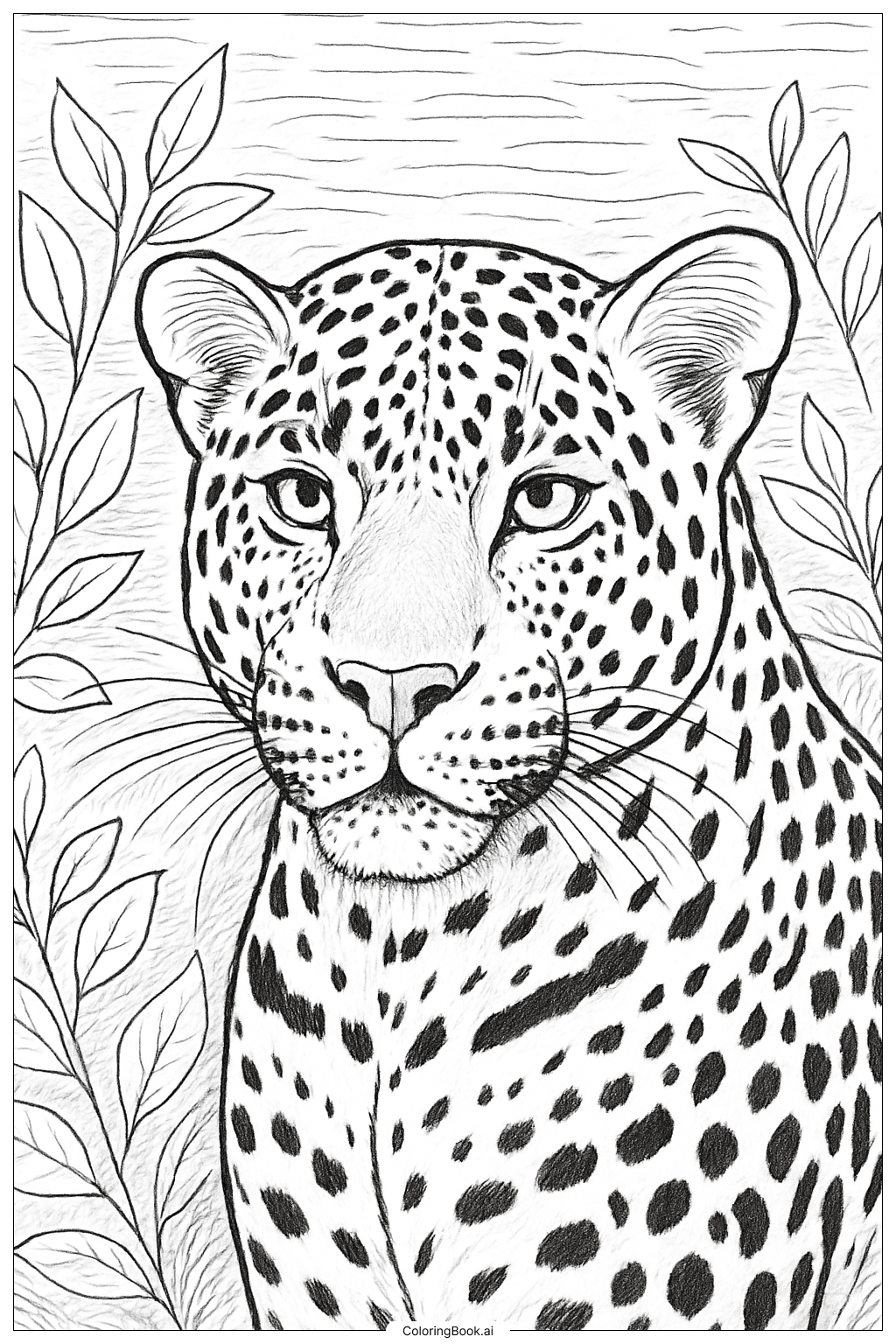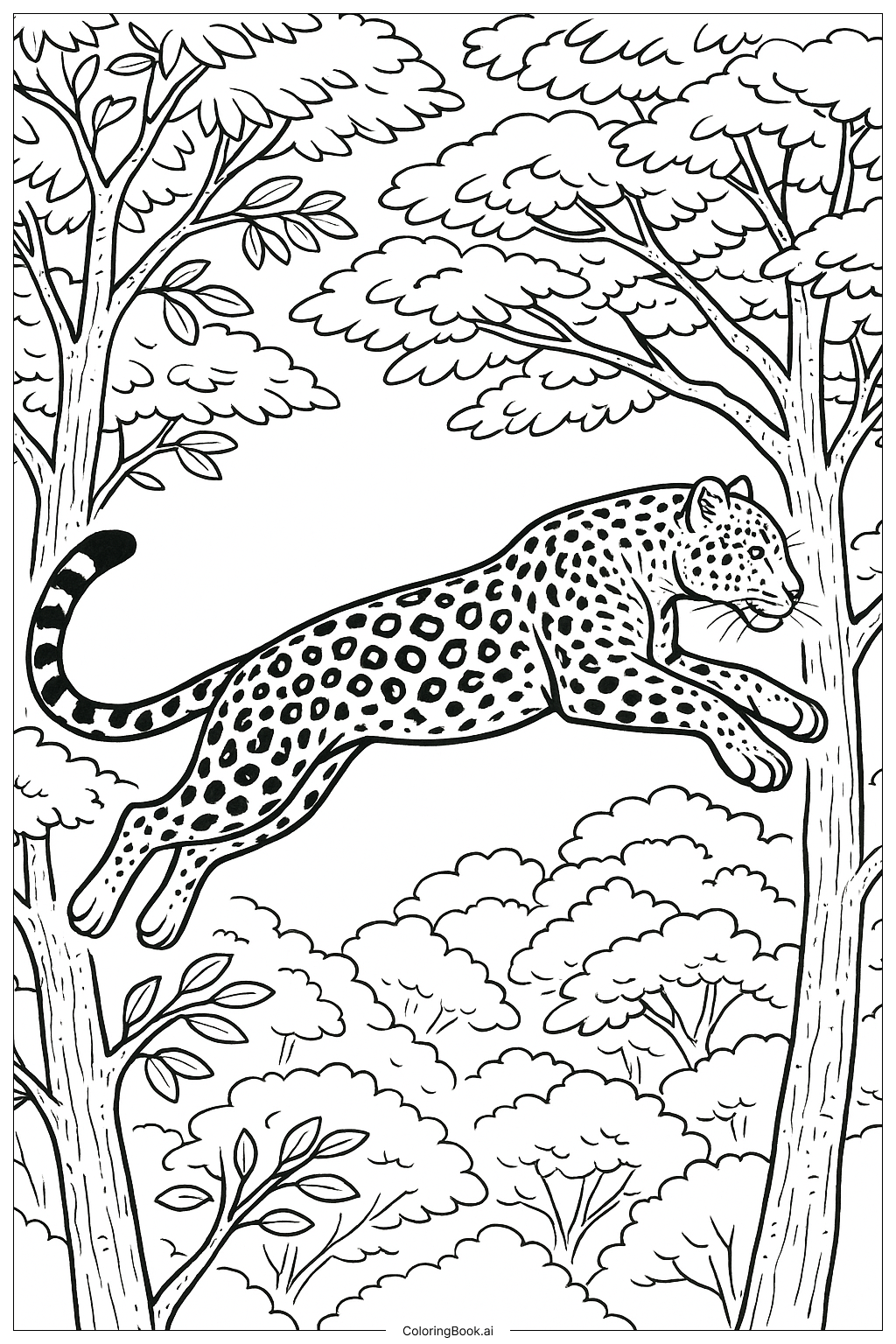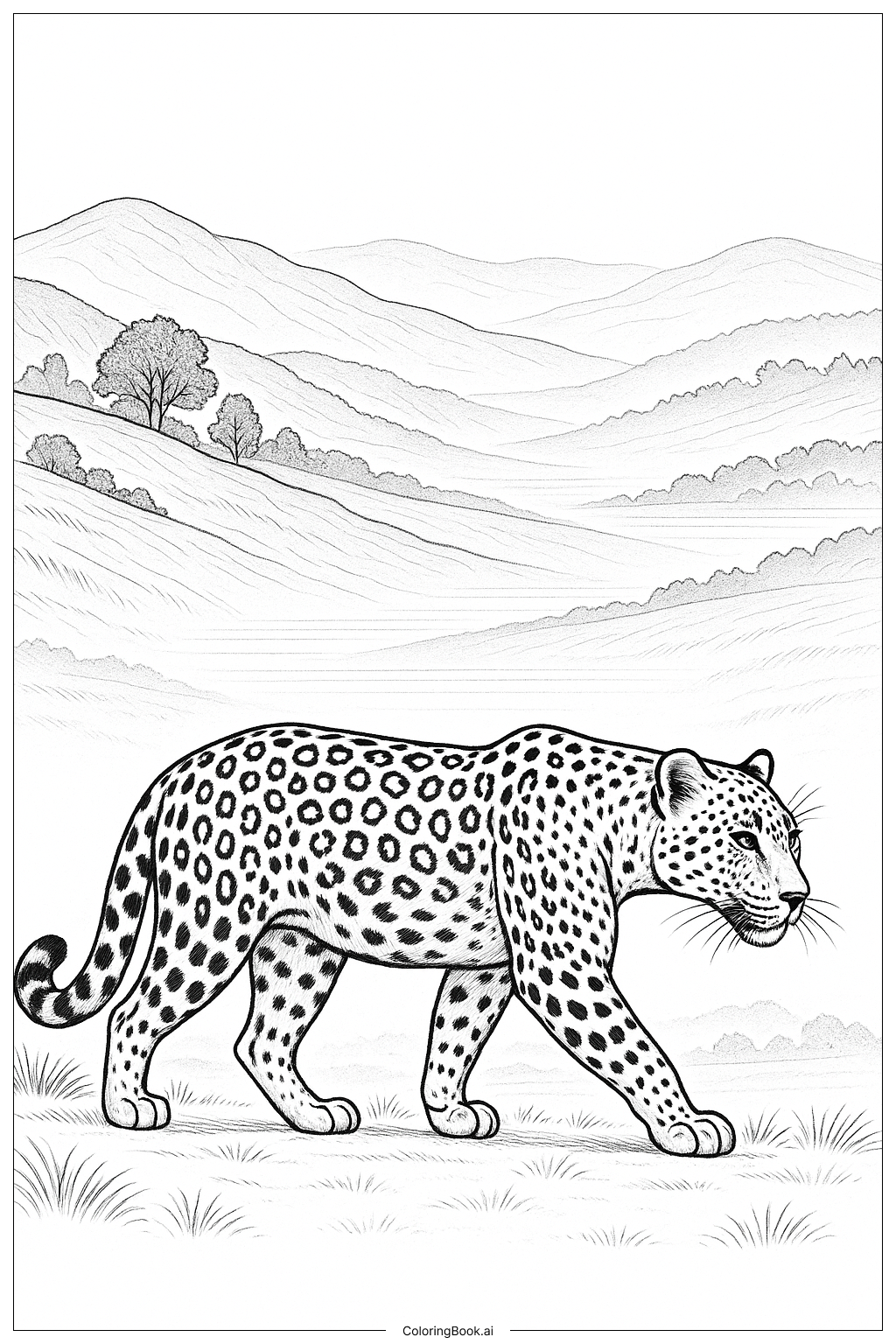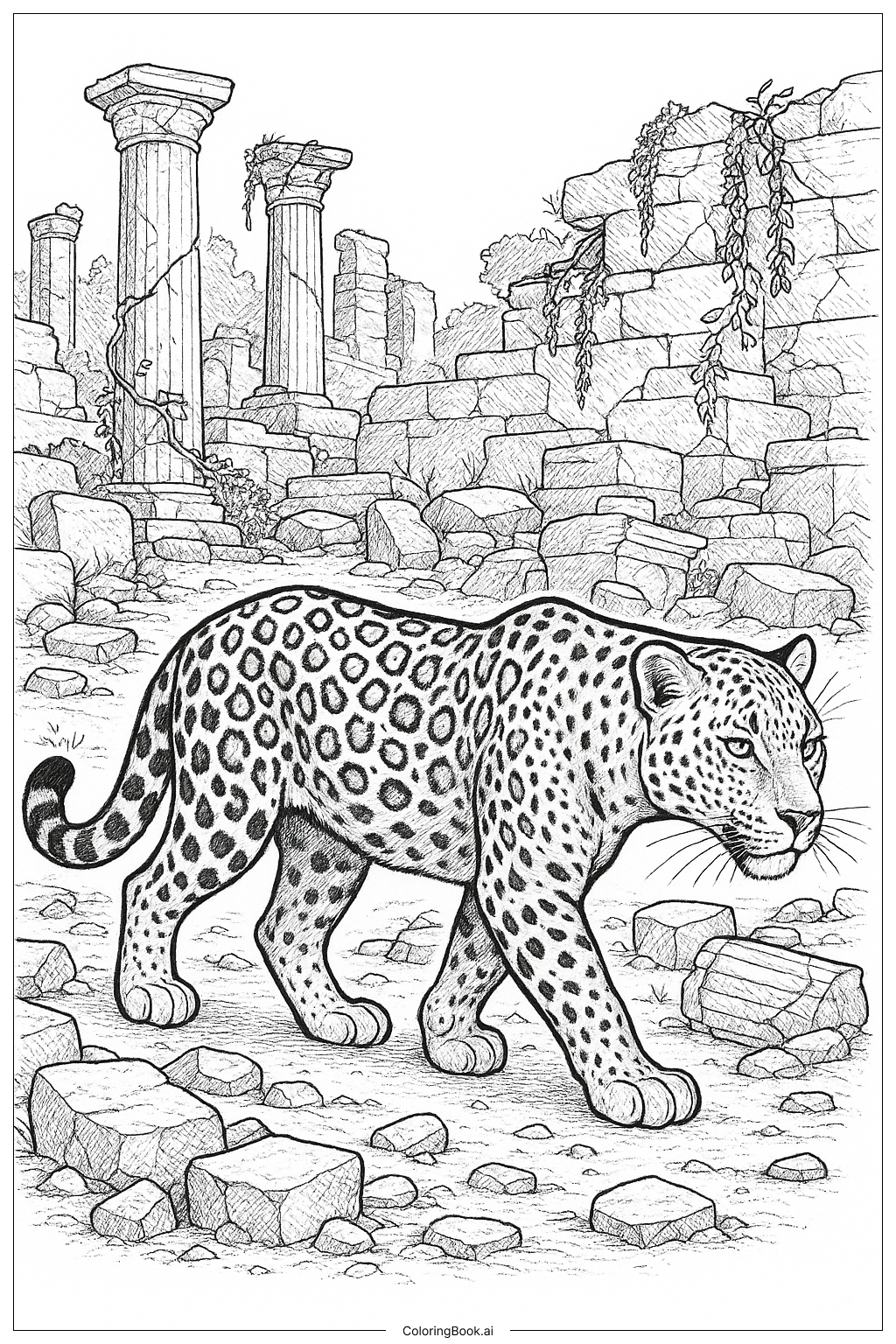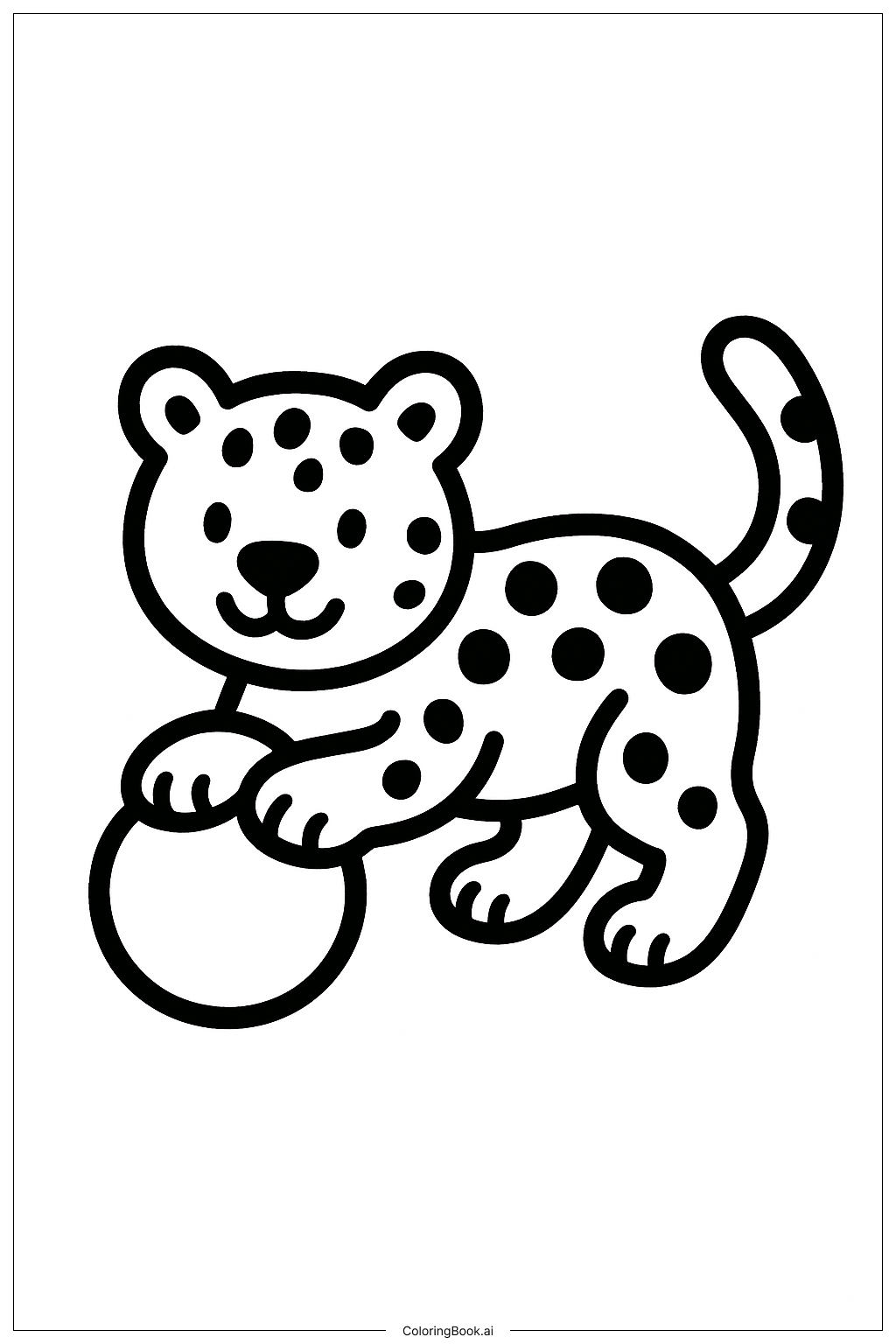
Coloring tips: How to color Playful Leopard With Ball coloring page well?
For this playful leopard, try using warm shades of yellow and orange for the fur to capture its natural colors. You can use brown or dark orange to highlight the spots on its body. The eyes can be bright green or amber to make them stand out. The ball can be colored in bright, contrasting colors like red, blue, or green to emphasize its playful nature. Don’t forget to shade the leopard’s belly and paws with lighter tones like cream or pale yellow to add dimension. Use a soft green or light blue for the background to give the impression of a natural outdoor setting. Feel free to experiment and add your own creative colors to make the image really come to life.
Coloring challenges: Which parts are difficult to color and need attention for Playful Leopard With Ball coloring page?
• Spot Patterns: The leopard’s numerous spots vary in size and shape, requiring careful coloring to stay within their borders while maintaining an even look.
• Small Details: The facial features like eyes, nose, and ears have fine lines that need precise coloring to keep the leopard’s expression clear and lively.
• Curved Lines: The tail and limbs have curved outlines that can be tricky to follow neatly, especially for younger children still developing motor skills.
• Ball Contrast: Coloring the smooth ball evenly and making it look round with shading can be challenging without proper gradual color blending.
• Fur Texture: Suggesting the soft texture of the fur through shading takes practice to avoid making the leopard look flat or overly harsh in appearance.
Benefits of coloring books: Advantages of drawing Playful Leopard With Ball coloring page
Coloring this playful leopard image helps improve fine motor skills as children carefully color intricate spots and facial details. It encourages attention to detail and hand-eye coordination through the curved lines and textured fur areas. Choosing colors for the leopard and the ball supports creativity and decision-making, allowing young artists to experiment with natural and imaginative palettes. This activity can also help children develop patience and focus because the image requires controlled, thoughtful coloring. Finally, it offers a fun way to learn about animals and their markings, making the experience educational as well as enjoyable.