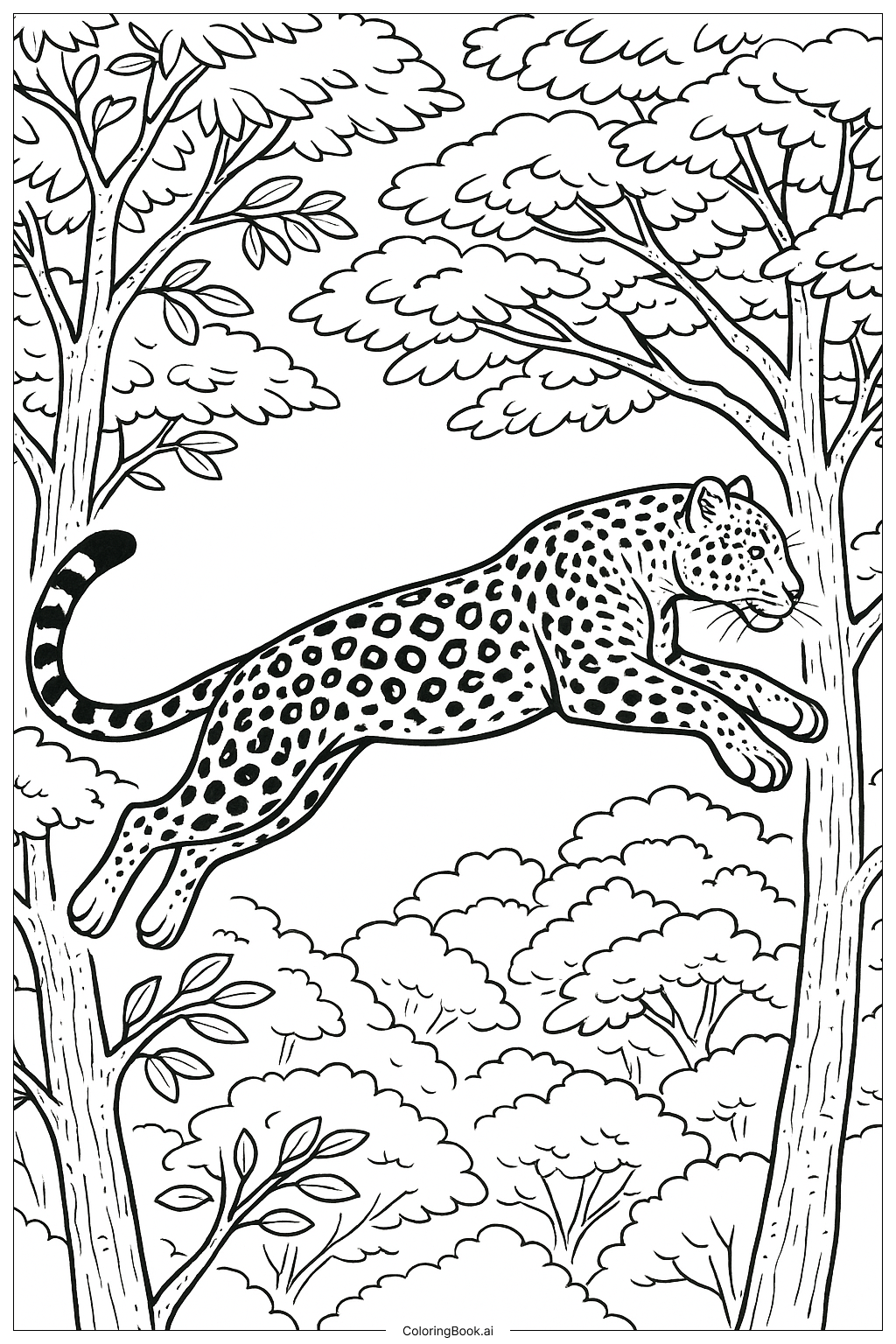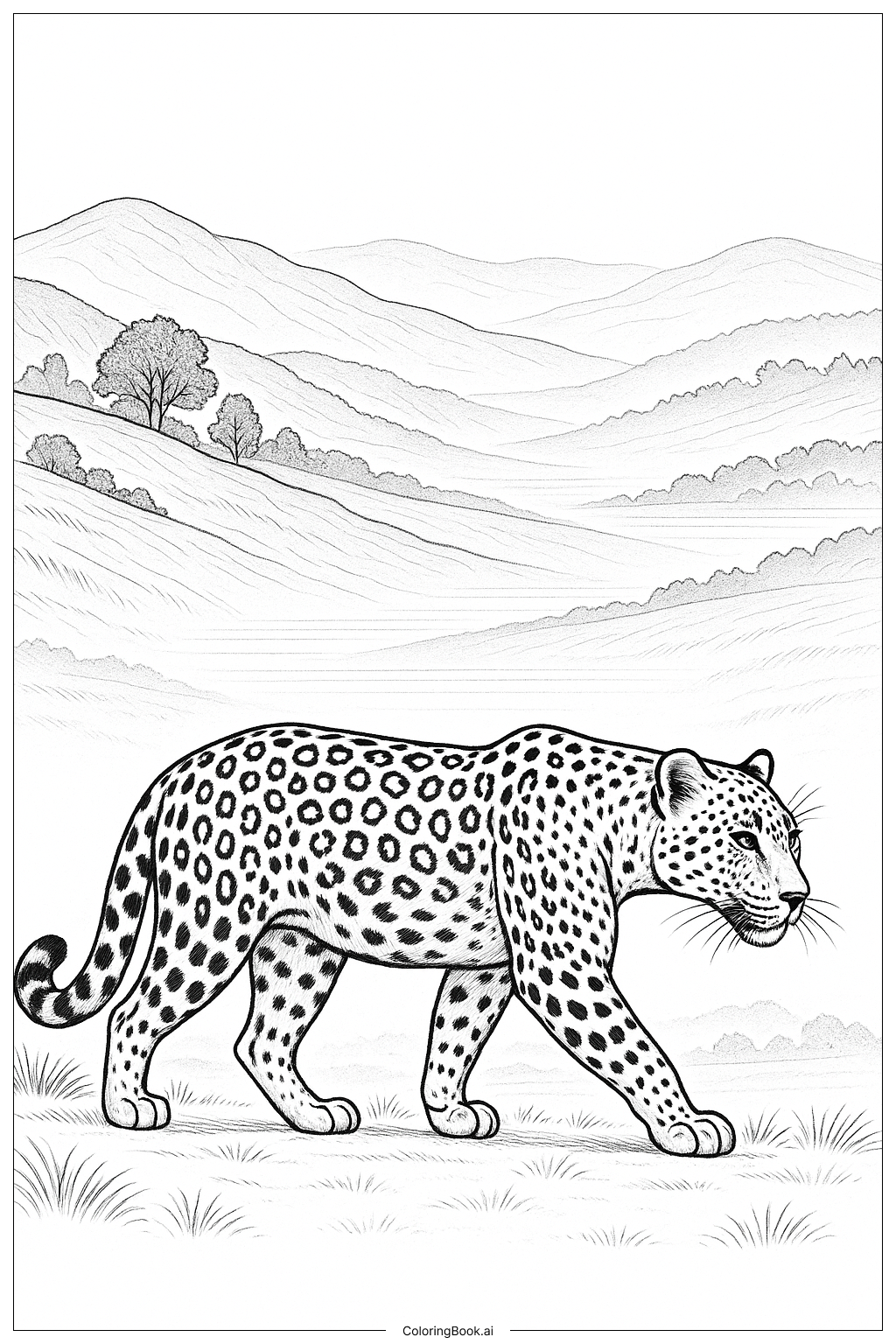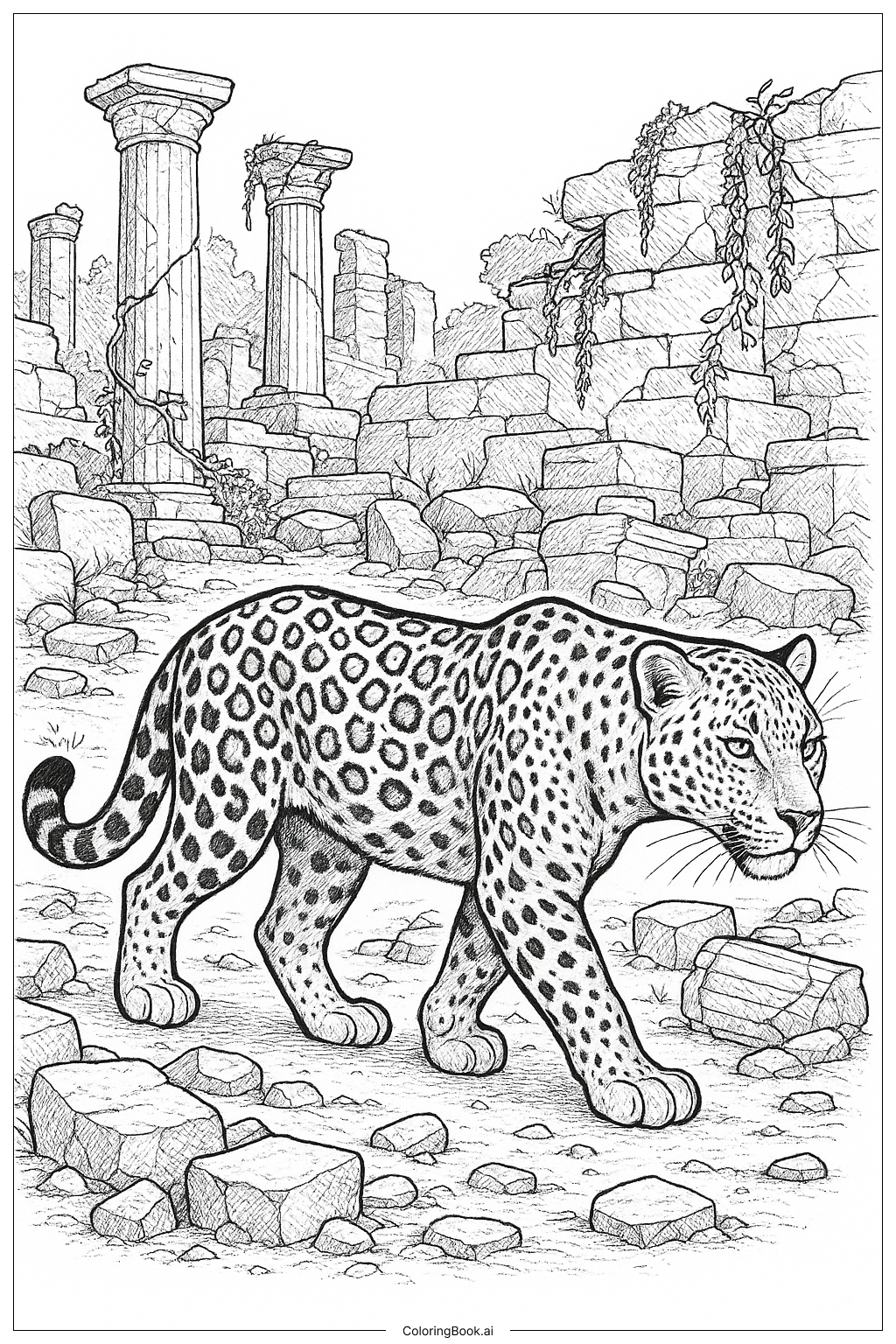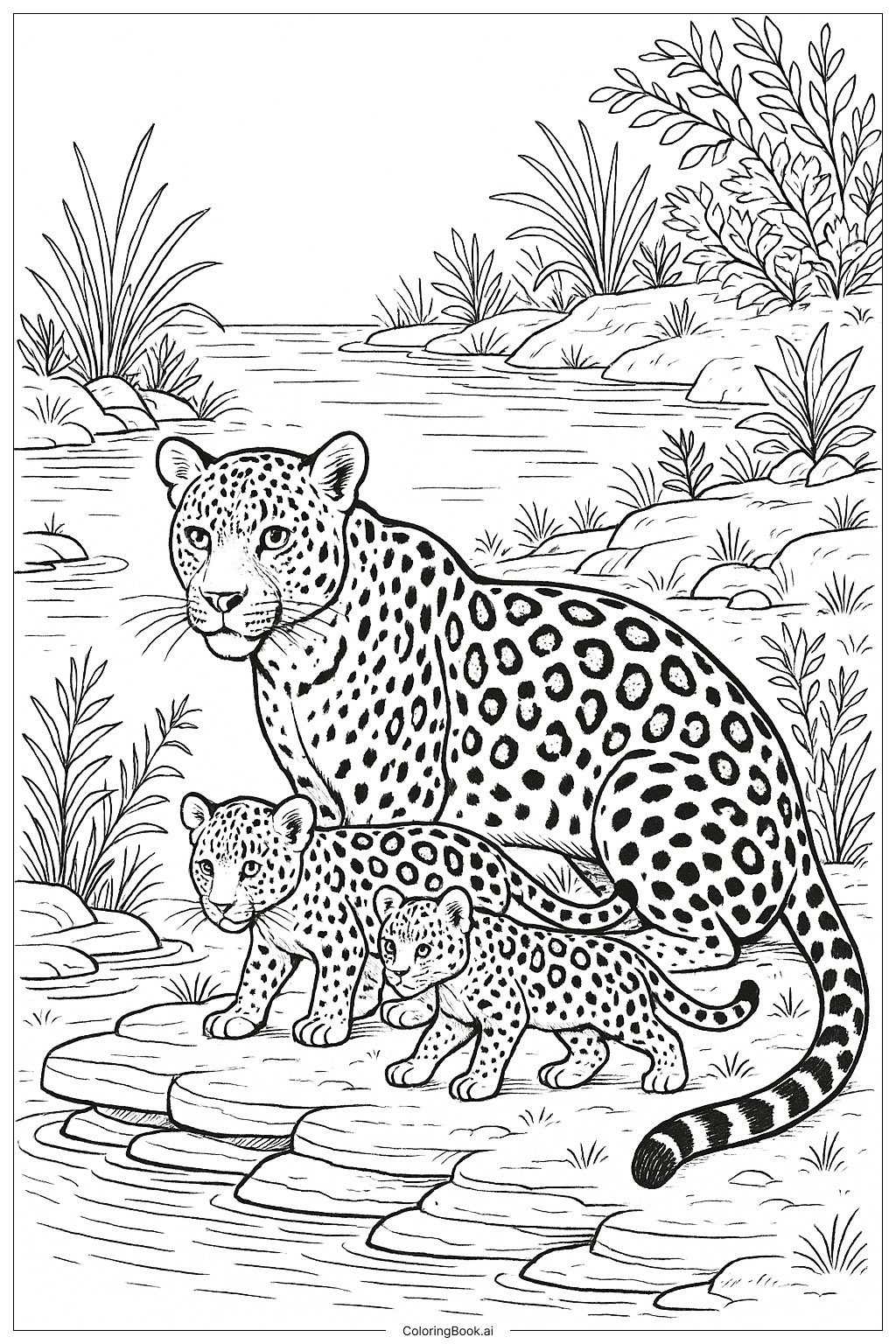
Coloring tips: How to color Leopard Portrait With Patterned Fur coloring page well?
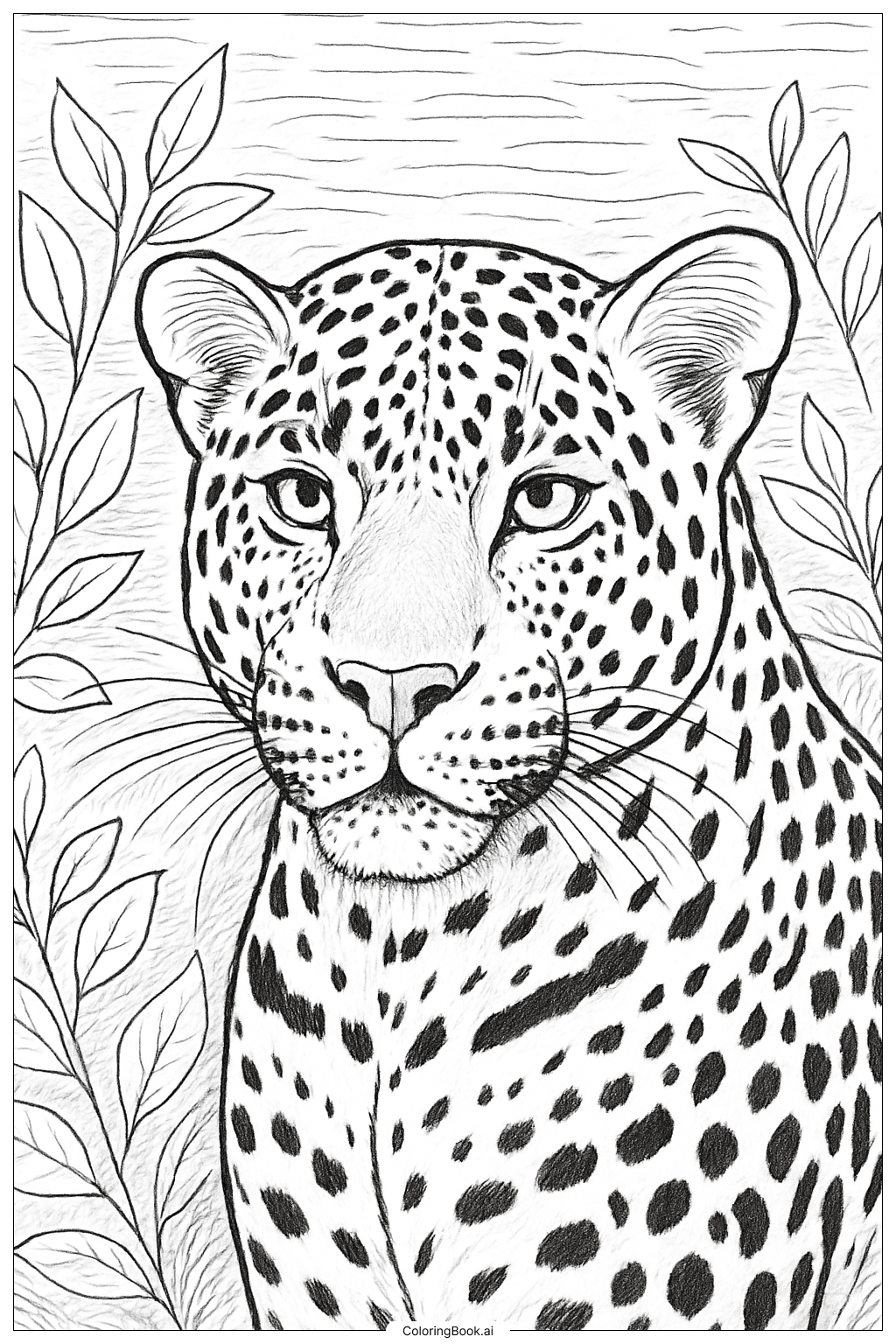
Use warm colors like golden yellows and oranges for the leopard's fur to make it look realistic. For the spots, use deep browns or blacks for contrast. You can color the eyes with bright green or amber to make them stand out. The leaves around the leopard can be colored with different shades of green to add natural beauty. Try using lighter colors in the background so the leopard remains the center of attention. Using colored pencils or markers with a fine tip will help you stay inside the lines, especially around the spots and whiskers.
Coloring challenges: Which parts are difficult to color and need attention for Leopard Portrait With Patterned Fur coloring page?
1. The many small spots on the leopard's fur can be tricky to color carefully without going outside the lines.
2. Coloring the whiskers and fine lines around the face requires a steady hand to keep details clear.
3. The contrast between light and dark areas on the fur must be managed well to show the texture correctly.
4. Making the eyes look lively and realistic needs attention to shading and color blending.
5. Coloring the leaves with different shades can be challenging to make them look natural and varied.
Benefits of coloring books: Advantages of drawing Leopard Portrait With Patterned Fur coloring page
Coloring this picture helps improve your attention to detail because you need to carefully fill in many small spots. It also encourages patience and focus as you take time to color the fine lines on the face and whiskers. By choosing colors, you practice creativity and learn about the colors found in animals and nature. This activity can also be relaxing and fun, helping you feel calm while making a beautiful piece of art.