Coloring tips: How to color Leopard Among Ancient Ruins coloring page well?
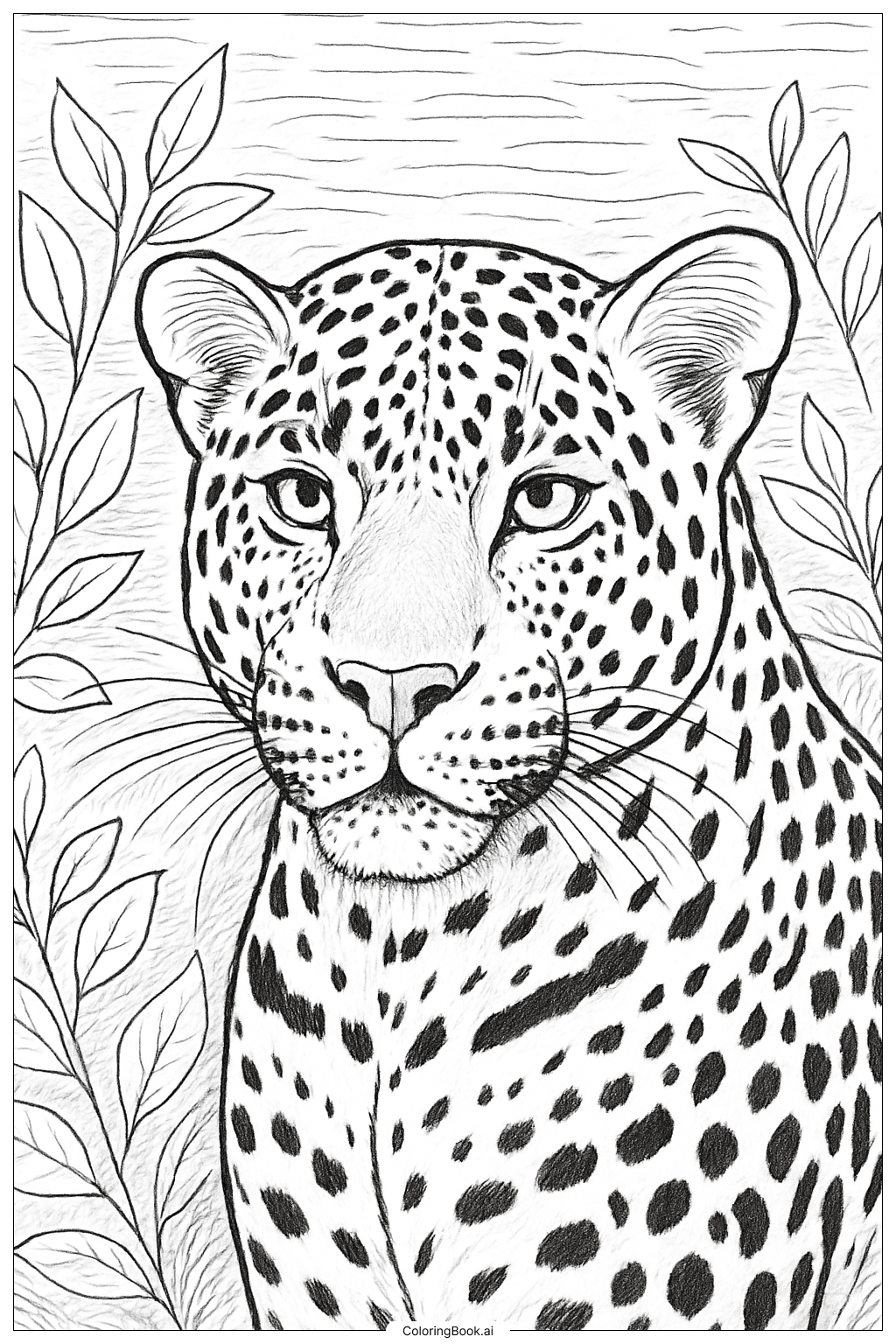
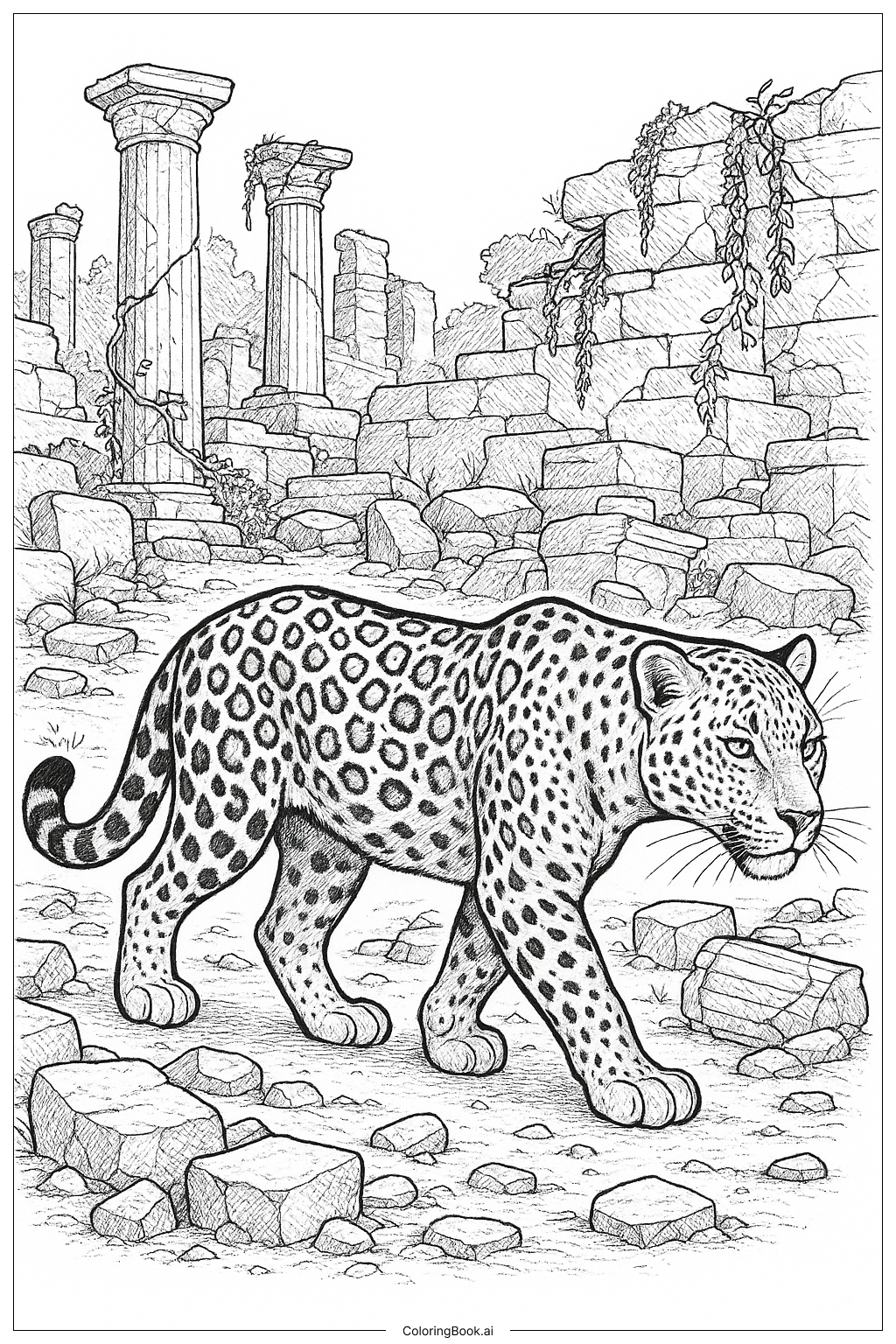
Use warm yellows, browns, and oranges for the leopard’s fur to show its natural look. Add darker brown or black for the spots. Color the ancient stones in light gray and beige shades to look like old weathered rocks. Use greens and browns for the plants growing on the ruins. You can add blue or soft colors for the sky or background. Try to keep the colors soft and natural to create a calm and thoughtful mood.
Coloring challenges: Which parts are difficult to color and need attention for Leopard Among Ancient Ruins coloring page?
1. Spot Pattern: The leopard's spots are many and small, and they need careful coloring to stay inside the lines and keep the pattern clear.
2. Stone Texture: The ancient stones have detailed cracks and shapes that require gentle shading and blending to look realistic.
3. Small Plants: The vines and leaves hanging from the ruins are thin and detailed, so it takes patience to color them without mixing colors.
4. Background Complexity: The many stones and ruins overlap, making it a challenge to pick different shades to show depth.
5. Leopard’s Face: The face has many fine lines showing expressions and small features, needing careful attention to keep it lifelike.
Benefits of coloring books: Advantages of drawing Leopard Among Ancient Ruins coloring page
Coloring this image helps improve focus and patience due to the detailed spots and textures. It encourages learning about animals and history through the ancient ruins setting. Children practice fine motor skills by coloring tiny areas carefully. This scene also inspires creativity when choosing natural colors for the leopard and ruins. Finally, it brings a sense of calm as kids imagine the quiet life of the leopard exploring old places.