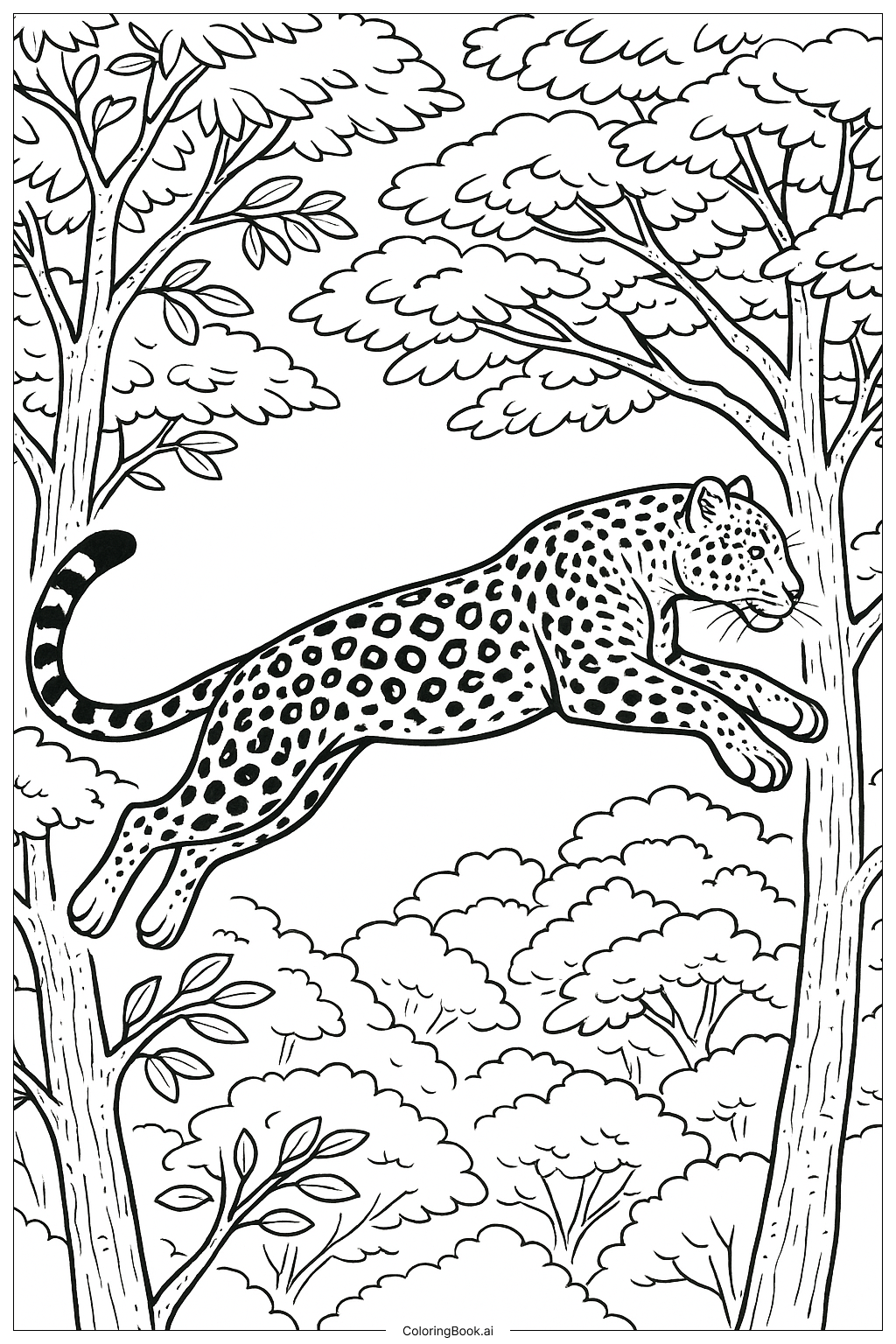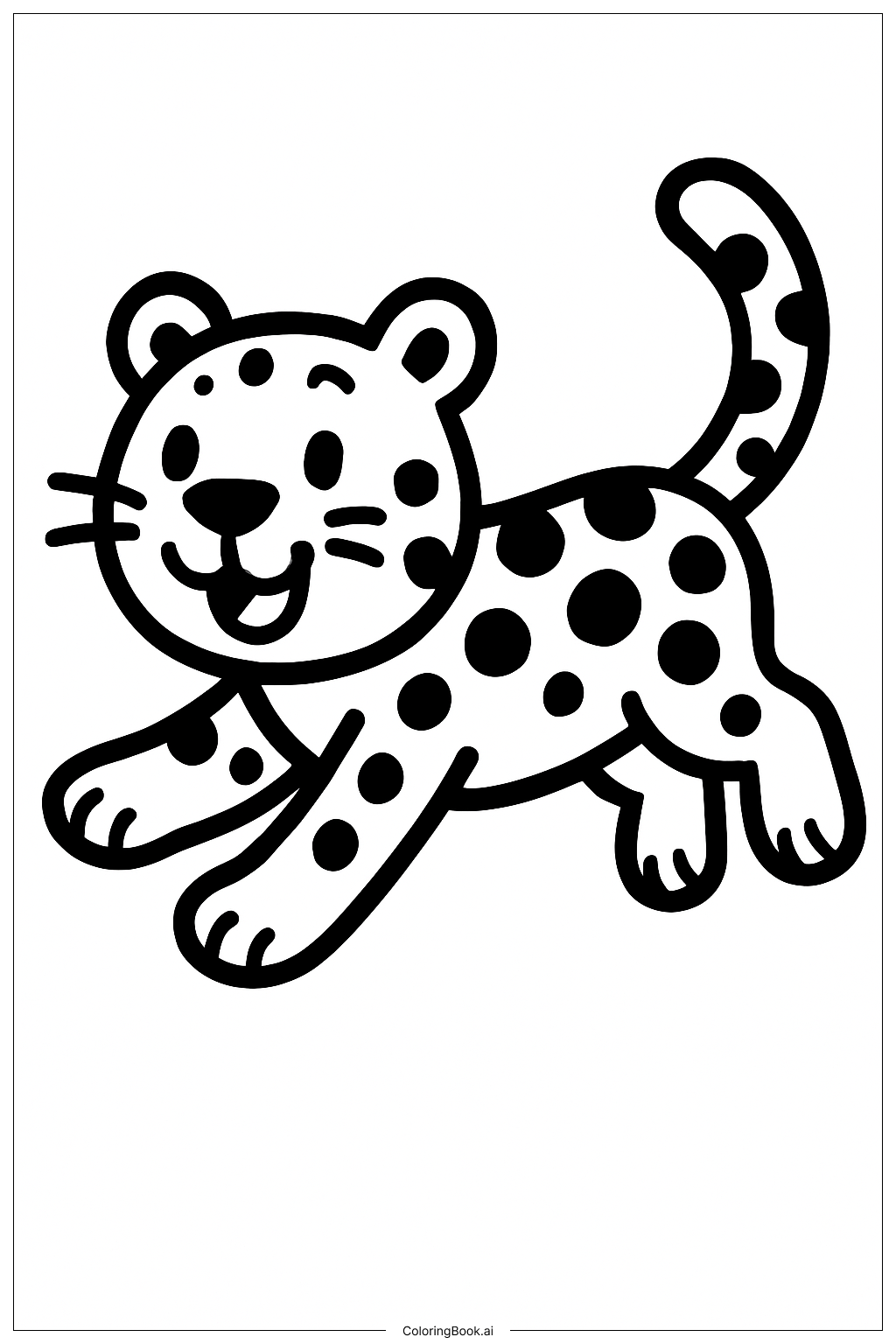
Coloring tips: How to color Leopard Jumping Joyfully coloring page well?
Start with the leopard's base coat. Use a warm golden yellow or tan for the main body. This gives the leopard a natural, sun-kissed look. Next, add the spots. Use dark brown or black for the rosette outlines. Leave the center of each rosette slightly lighter to show depth. For the belly and inner legs, use a pale cream or white. This makes the leopard look three-dimensional. Color the eyes a bright amber or green to give life and energy to the face. Use a soft pink for the nose and the inside of the mouth. The tongue, if visible, can be a deeper pink or red. For the tail, follow the same spotted pattern as the body. Keep the background light and simple. A soft sky blue, pale green, or light yellow works well. This helps the leopard stand out. If you want to show motion, try adding short streaks of color around the paws and tail.
Coloring challenges: Which parts are difficult to color and need attention for Leopard Jumping Joyfully coloring page?
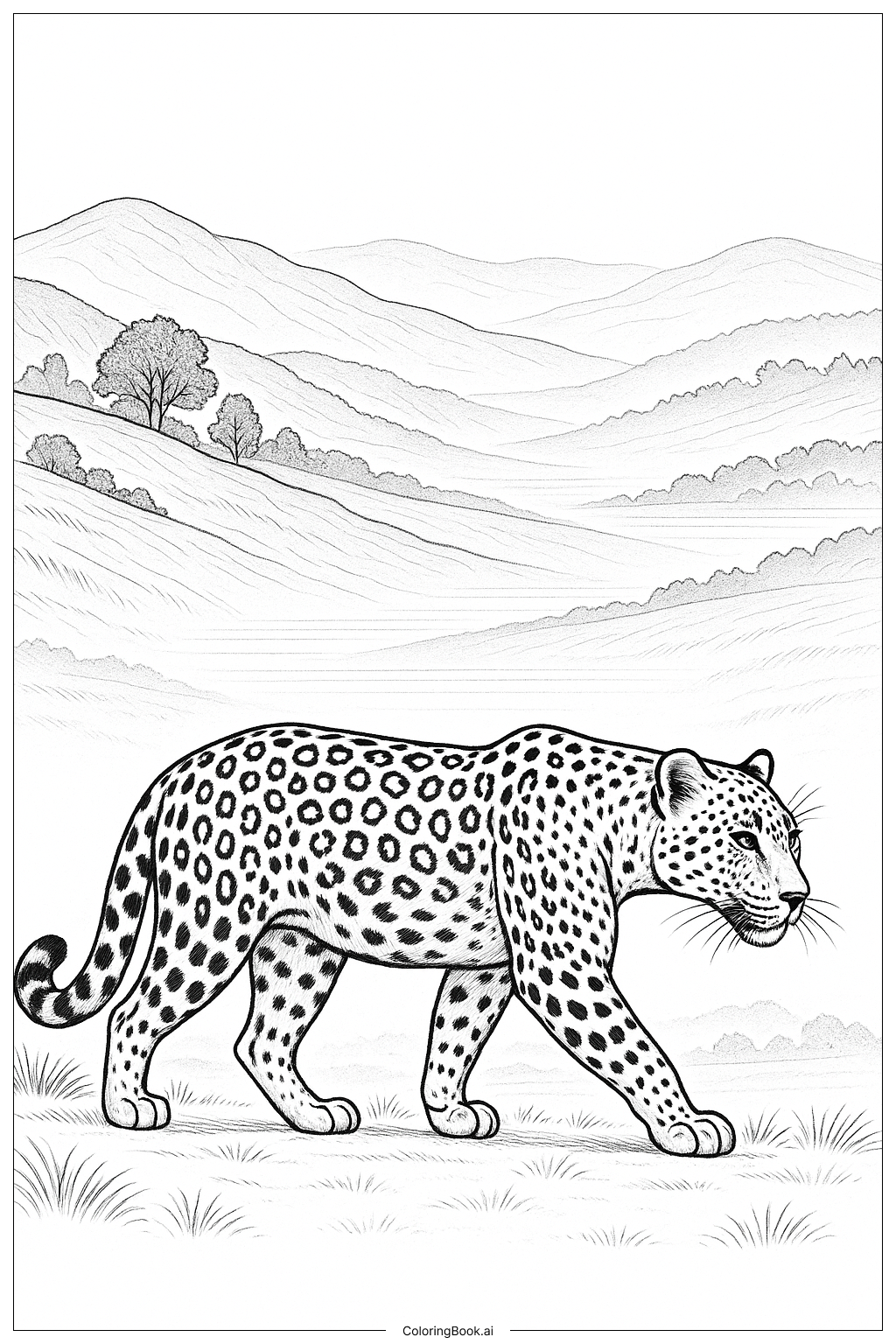
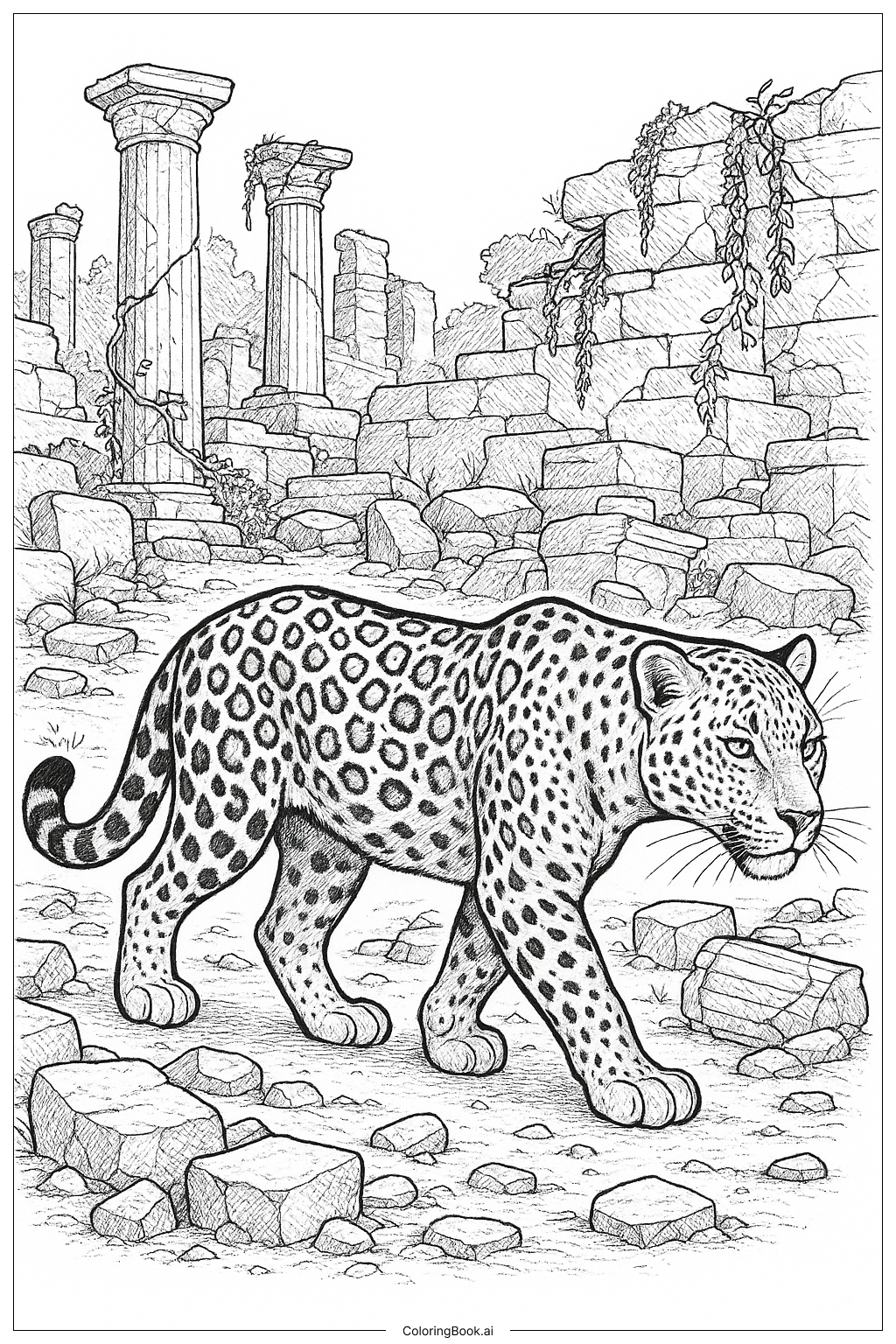
• Rosette Spot Pattern: The leopard's coat is covered in complex rosette markings. Each rosette has a dark outer ring and a slightly lighter center. Coloring these accurately takes patience and a steady hand. Using two shades of brown or black helps create the right look. Rushing through the spots can make the coat look flat or uneven.
• Body Shading and Depth: The leopard's body is mid-jump, which means different parts of the body catch light differently. The top of the back may be brighter, while the belly and underside are darker. Adding subtle shading with colored pencils or watercolors helps bring out the three-dimensional form. Without shading, the figure can look like a flat outline.
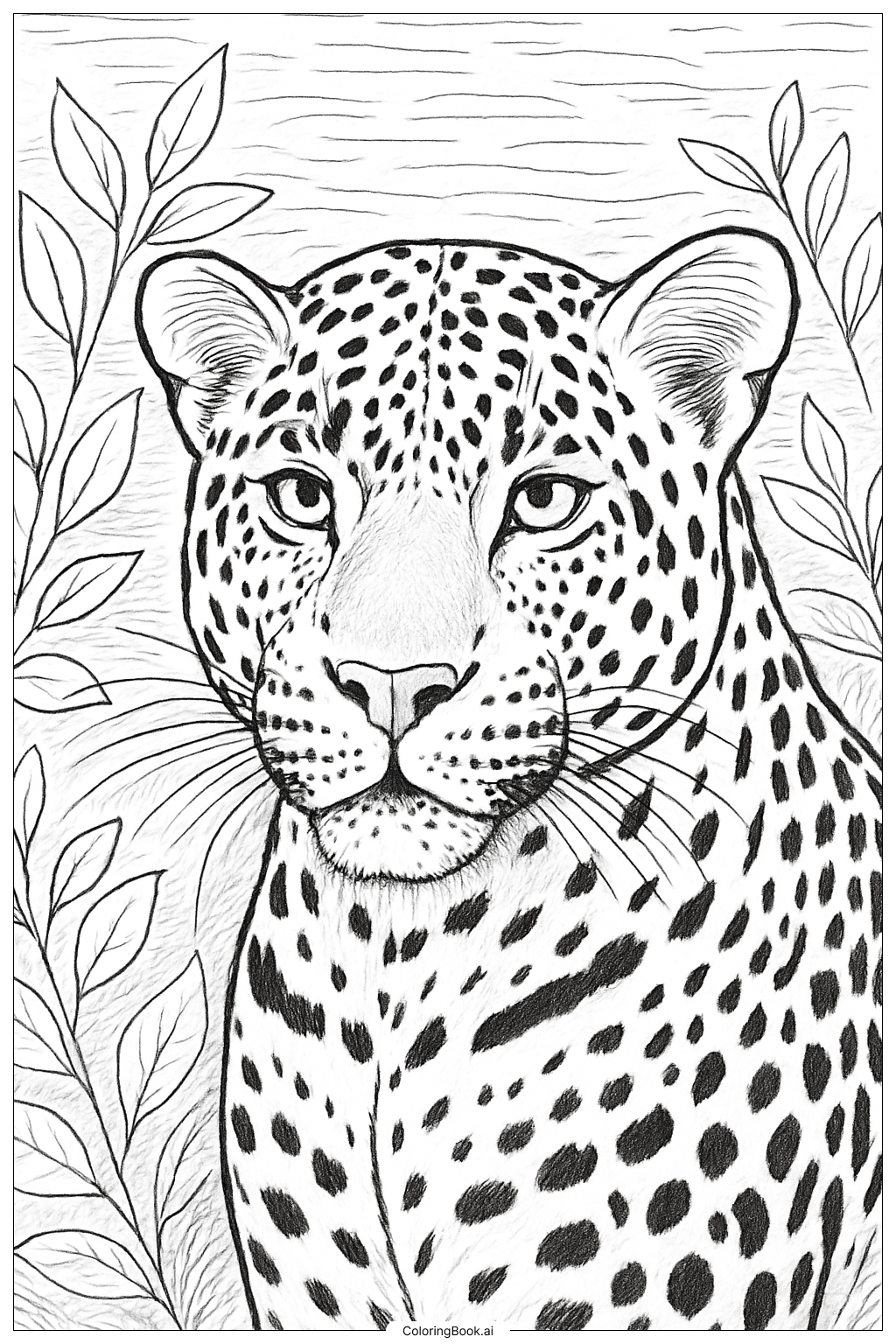
• Small Facial Details: The face of the leopard has many small details packed close together. The eyes, nose, mouth, whisker dots, and fur texture all need careful attention. These areas are small and easy to smear or color outside the lines. Using sharp, fine-tipped tools is important here.
• Motion and Energy: Because the leopard is jumping, the coloring should reflect a sense of movement and joy. This means the colors should feel alive and dynamic, not dull or static. Choosing bright, warm tones and adding subtle streaks or blending effects near the paws and tail can help capture this energy. It requires more creative thinking than a still pose.
• Background Balance: The background should complement the leopard without taking attention away from it. Choosing the right colors that contrast well with the golden coat while still feeling natural is a visual challenge, especially for younger colorists.
Benefits of coloring books: Advantages of drawing Leopard Jumping Joyfully coloring page
Coloring this joyful jumping leopard image offers many great benefits for kids and adults alike. First, it helps build fine motor skills. Staying inside the lines and coloring small details like the rosette spots trains hand-eye coordination and pencil control. These skills are useful in school and everyday life. Second, it sparks creativity. Choosing colors for the coat, eyes, and background encourages kids to make their own artistic choices. There is no single right answer, so every child can create a unique version. Third, it teaches focus and patience. The leopard's detailed spot pattern requires careful, step-by-step work. This helps children practice sitting still and concentrating on a task from start to finish. Fourth, it introduces kids to wildlife and nature. Coloring a leopard is a fun way to learn about big cats, their habitats, and their markings. It can inspire curiosity about animals and the natural world. Fifth, it supports emotional well-being. The joyful pose of the leaping leopard is uplifting and fun to color. The calm, repetitive act of coloring helps reduce stress and brings a sense of accomplishment when the page is complete. It is a rewarding activity for all ages.