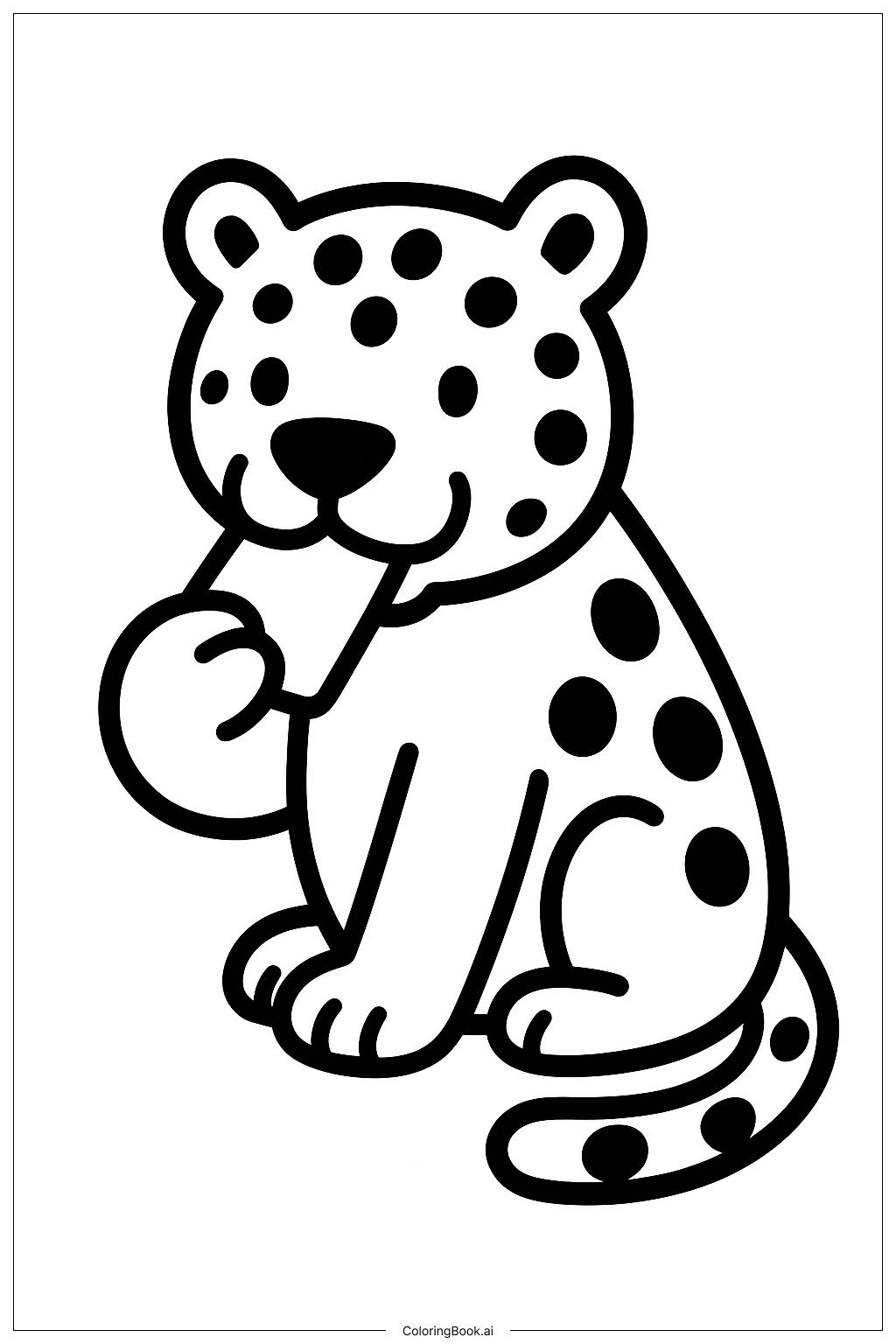
Coloring tips: How to color Leopard Eating Snack coloring page well?
Use shades of yellow, orange, and tan to color the leopard's fur, as leopards usually have a golden-yellow coat. Color the spots black to create a strong contrast. The nose can be black or dark brown. The snack could be colored brown to look like a tasty treat. Use different shades of the same color to add depth and interest. To make the picture lively, add a light green or blue background as if the leopard is in nature. Try using crayons, colored pencils, or markers for a smooth finish.
Coloring challenges: Which parts are difficult to color and need attention for Leopard Eating Snack coloring page?
1. Coloring around the small spots on the leopard’s fur can be tricky because they are close together and require precise coloring to avoid going outside the lines. 2. The snack held by the leopard is small and narrow, so it needs careful attention to color neatly inside the lines. 3. Coloring the paws and claws might be challenging as they have small curved lines that need steady hand control. 4. The tail has several spots, and coloring each shape evenly without mixing colors can be difficult. 5. Balancing different shades to make the leopard look natural while keeping spots bold might require some patience.
Benefits of coloring books: Advantages of drawing Leopard Eating Snack coloring page
Coloring this picture helps children improve their fine motor skills because they need to carefully color small areas like spots and paws. It also encourages creativity while choosing different colors for the leopard and the background. This activity can teach kids about animals and their patterns in a fun way. Coloring helps with focus and patience as kids work to stay inside the lines. Overall, it’s a relaxing and enjoyable experience that promotes artistic growth.