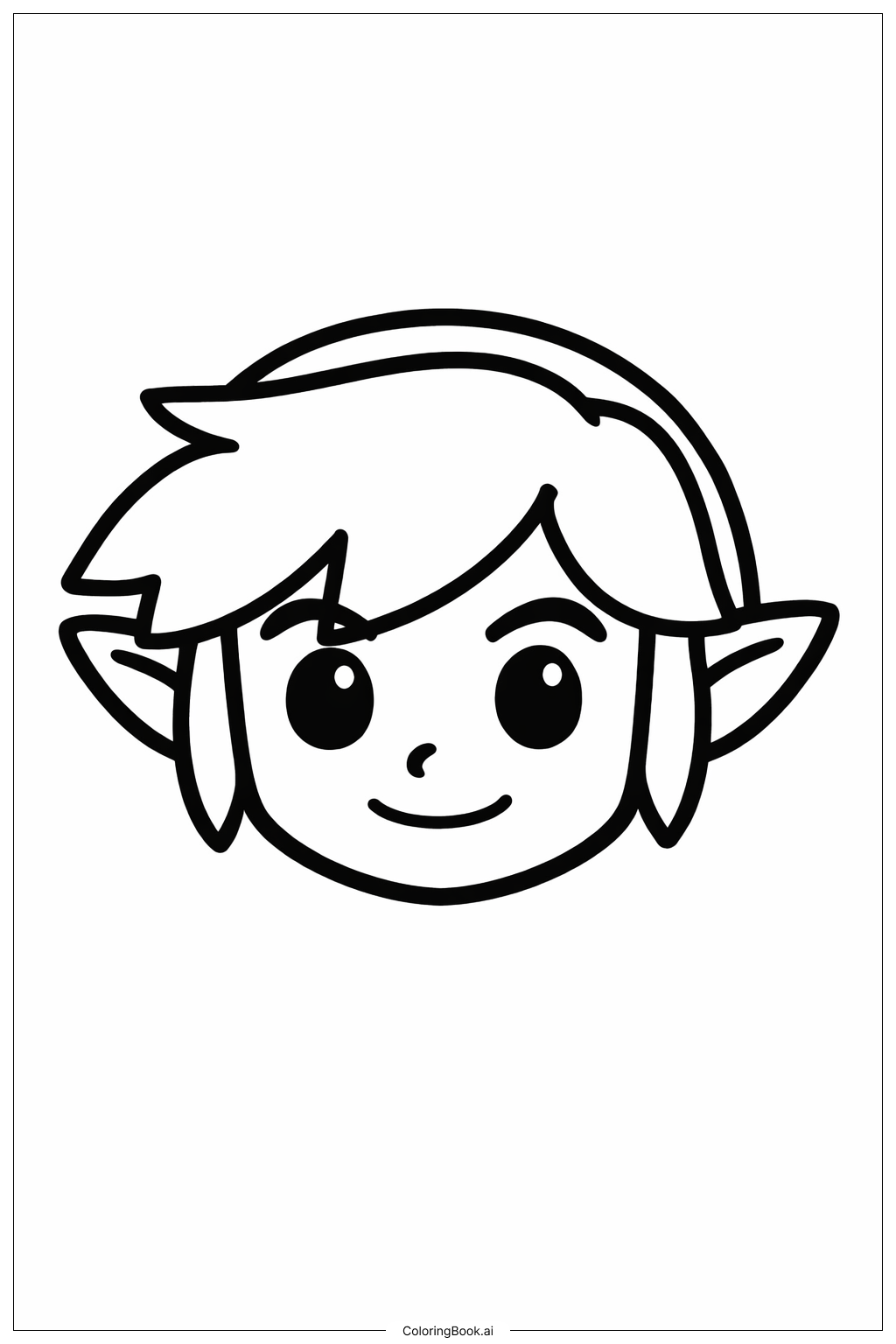
Coloring tips: How to color Legend Of Zelda Simple Link Face coloring page well?
To bring this Legend Of Zelda Simple Link Face to life with color, start with Link’s hat, traditionally green, but feel free to try other shades like blue or red for a creative twist. Use light peach or tan tones for his skin. His hair can be colored blonde or brown depending on your favorite version. The eyes are a great place to add lively blues or greens to show personality. Don’t forget to shade the inside of his pointed ears with a soft pink or peach. You can also add shadows or highlights to make the face appear more dimensional. Remember to keep colors light and bright to match the cheerful and youthful look of Link’s face.
Coloring challenges: Which parts are difficult to color and need attention for Legend Of Zelda Simple Link Face coloring page?
• Facial Proportions: Maintaining the correct scale between Link’s eyes, nose, and mouth requires attention to detail to avoid distorting his friendly expression. • Points on the Hat: The edges and folds of Link’s cap have fine lines that need careful coloring to avoid overlapping or uneven shading. • Ears Detailing: Link’s pointed ears are small and require precision to color inside the lines without spilling onto adjacent areas. • Eye Coloring: Coloring the eyes to look lively demands care in selecting shades and blending without going outside the outline. • Simplified Style: The minimalistic style offers fewer texture cues, so adding depth and detail with color can be challenging for beginners.
Benefits of coloring books: Advantages of drawing Legend Of Zelda Simple Link Face coloring page
Coloring this simple face of Link helps improve fine motor skills as children focus on staying within clear lines. It encourages creativity by allowing them to choose colors and experiment with different combinations. The image’s friendly and recognisable character connects kids to the Legend Of Zelda world, inspiring imagination and storytelling. Coloring also promotes concentration and patience, especially in detailed areas like the ears and eyes. Overall, it offers a fun and relaxing activity that builds confidence and artistic skills for children aged 4 to 16.