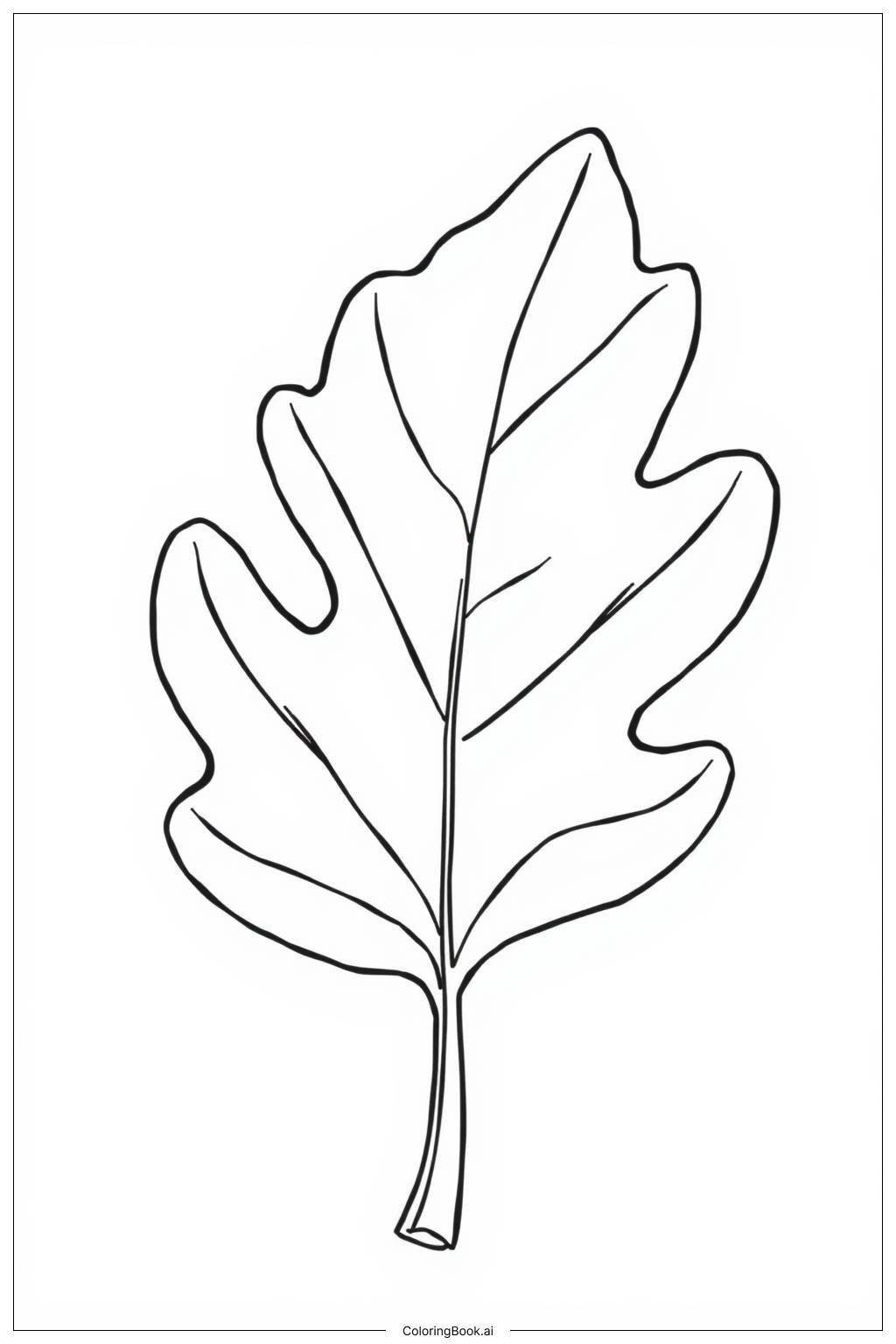
Coloring tips: How to color Single Oak Leaf coloring page well?
Start by picking your main leaf color. Real oak leaves can be many colors depending on the season. In spring and summer, they are bright or deep green. In autumn, they turn orange, red, brown, or golden yellow. Pick the season you like most and choose your colors from there. Use a lighter shade for the center areas of each lobe and a darker shade near the edges and veins to give the leaf depth and a lifelike look. Color the midrib and veins in a slightly darker or contrasting tone so they stand out clearly. If you want to make the page feel more alive, add a soft shadow underneath the leaf using gray or light brown. Keep your strokes smooth and follow the direction of the veins for a natural finish. This page is great for crayons, colored pencils, or watercolors.
Coloring challenges: Which parts are difficult to color and need attention for Single Oak Leaf coloring page?
• Vein Details: The oak leaf has a central midrib and many smaller veins branching out across the surface. Coloring around these thin lines without accidentally covering them can be tricky. Use a fine-tipped tool like a colored pencil or a thin marker to carefully fill in the spaces between the veins. Take your time and work in small sections to keep the lines clean and visible.
• Lobed Edges: The sides of the oak leaf have multiple rounded lobes with curves going in and out. Staying inside these bumpy edges while coloring requires steady hand control. Younger children may find it helpful to trace along the edge slowly before filling in, while older kids and adults can try outlining each lobe with a slightly darker shade first.
• Creating Depth and Texture: A flat green leaf can look dull if only one color is used. Showing the natural texture and three-dimensional shape of the leaf means using at least two or three shades of the same color. Blending lighter tones in the middle and darker tones near the edges adds a realistic look, but smooth blending takes practice.
• Vein Contrast: Keeping the veins a different and visible color from the rest of the leaf is an important challenge. If the vein color is too close to the fill color, the details get lost. Choosing a clearly contrasting shade for the veins, such as a darker green or light tan, helps them stay defined and adds to the overall quality of the finished piece.
Benefits of coloring books: Advantages of drawing Single Oak Leaf coloring page
Coloring a single oak leaf is a calm and rewarding activity for kids and adults alike. Because the design focuses on one natural subject, it is easy to sit with and finish without feeling overwhelmed. This makes it a great choice for beginners or for anyone who wants a relaxing break during a busy day.
Working on the leaf's curved edges and detailed veins helps build fine motor skills and hand-eye coordination. Children who practice coloring shapes like this get better at controlling their pencils and crayons, which supports their writing skills too.
Choosing colors for the leaf also encourages creative thinking. Kids learn that leaves change color with the seasons and can experiment with green, orange, red, or brown to show different times of year. This small creative choice helps develop decision-making and artistic confidence.
For older kids and adults, trying to add shading and depth to the leaf is a satisfying challenge that builds patience and attention to detail. Focusing on a single, beautiful shape from nature can feel meditative and stress-relieving.
Overall, this page connects coloring with a love of the natural world, making it both fun and educational for anyone who picks it up.