Coloring tips: How to color Hummingbird Perched On Twig coloring page well?
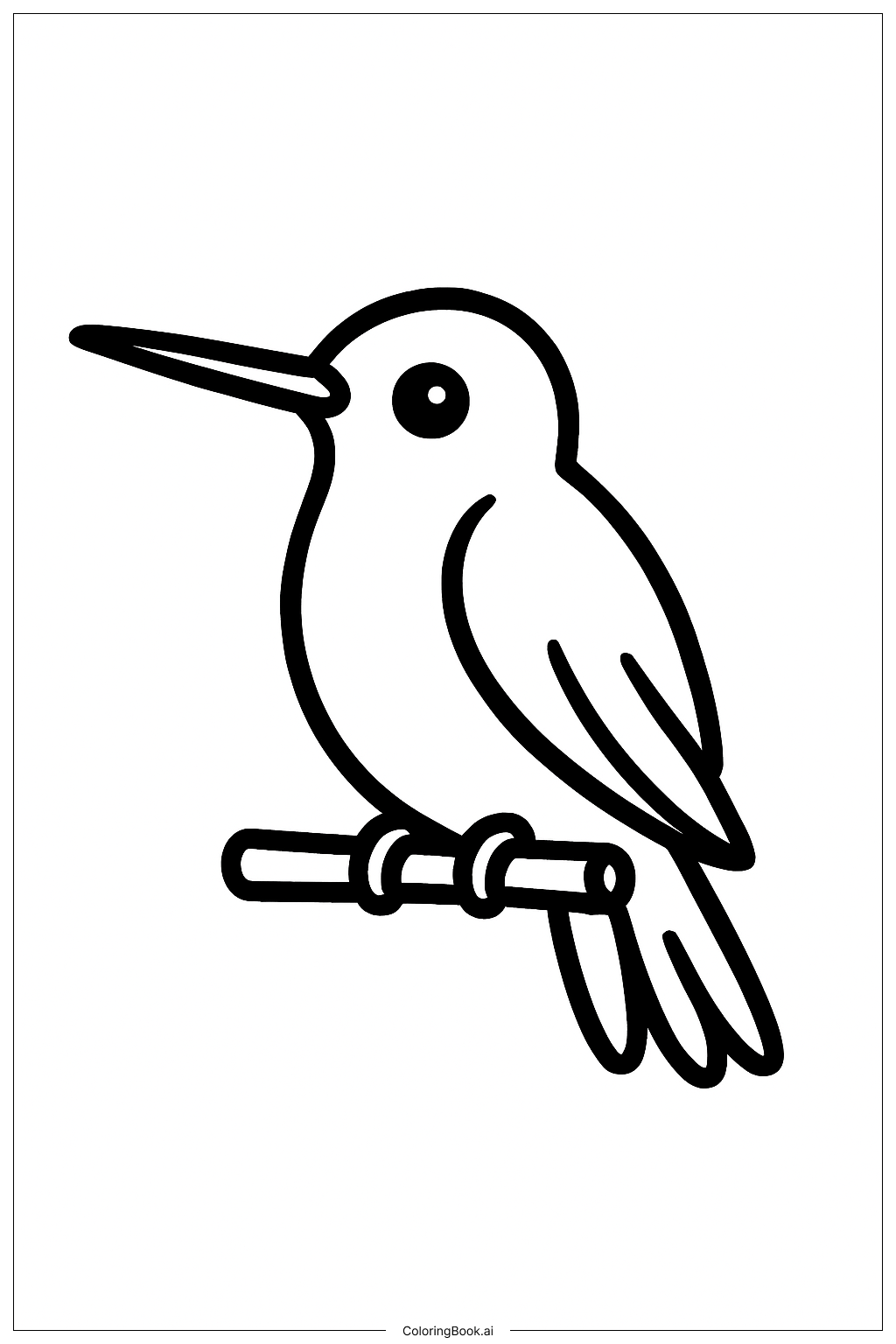
Try using bright and shiny colors for the hummingbird, like green, blue, or red, to make it look lively. You can add lighter shades on the wings and tail for a nice effect. For the twig, choose brown or green colors to show it is a natural perch. Feel free to use different shades for the bird’s body to create a cool gradient look. Don't forget to color the eye black with a small white spot left for shine. You can also add a soft background in light blues or greens to make the scene more attractive.
Coloring challenges: Which parts are difficult to color and need attention for Hummingbird Perched On Twig coloring page?
1. The bird's small details like the thin beak and claws may require careful coloring to avoid going outside the lines. 2. The space inside the wing and tail feathers is narrow, so it can be tricky to stay neat while coloring these areas. 3. Creating smooth color gradients on the bird’s body might be challenging for beginners because it needs gentle blending of colors. 4. Coloring the round eye with a small shine spot without coloring over it requires concentration. 5. The twig is thin, so coloring without crossing the edge needs some patience and control.
Benefits of coloring books: Advantages of drawing Hummingbird Perched On Twig coloring page
Coloring this hummingbird picture helps improve fine motor skills by requiring careful strokes in small spaces. It encourages children to use their creativity with colors and practice blending shades smoothly. The clear lines and simple shapes make it suitable for beginners and more advanced colorers. It also teaches focus and concentration while paying attention to details, such as the bird’s claws and eye. Overall, coloring this image is a fun way to learn about nature and develop artistic skills.