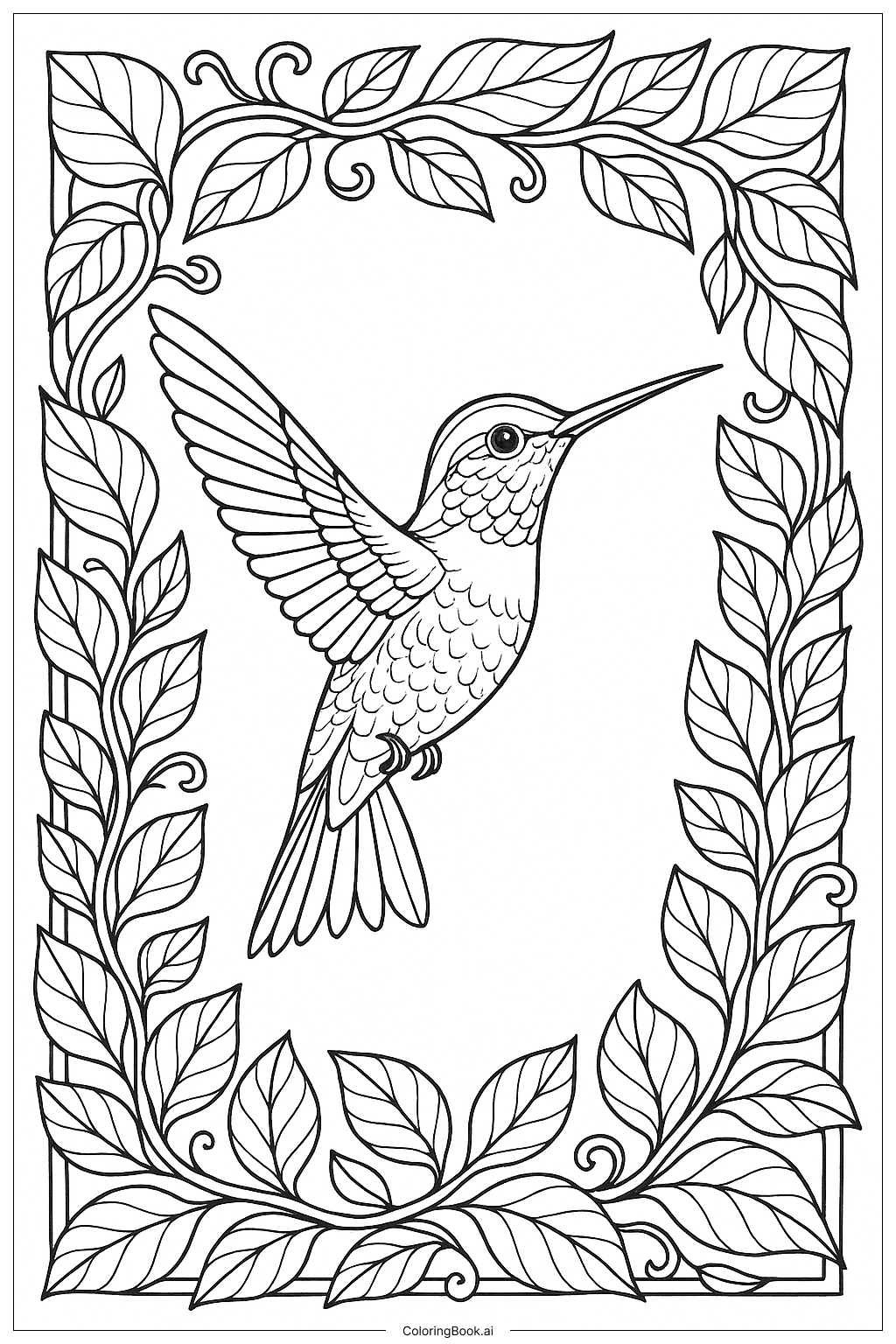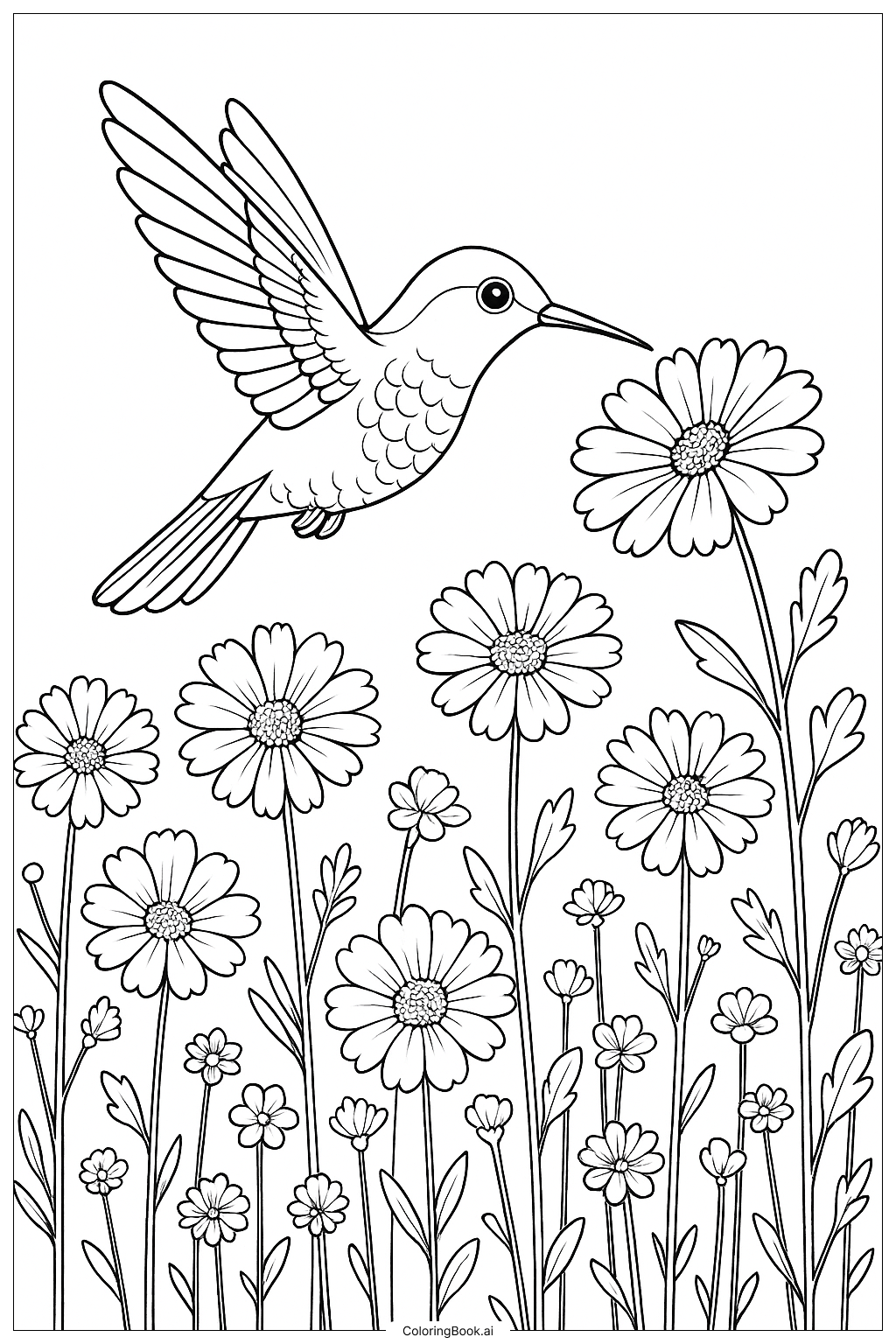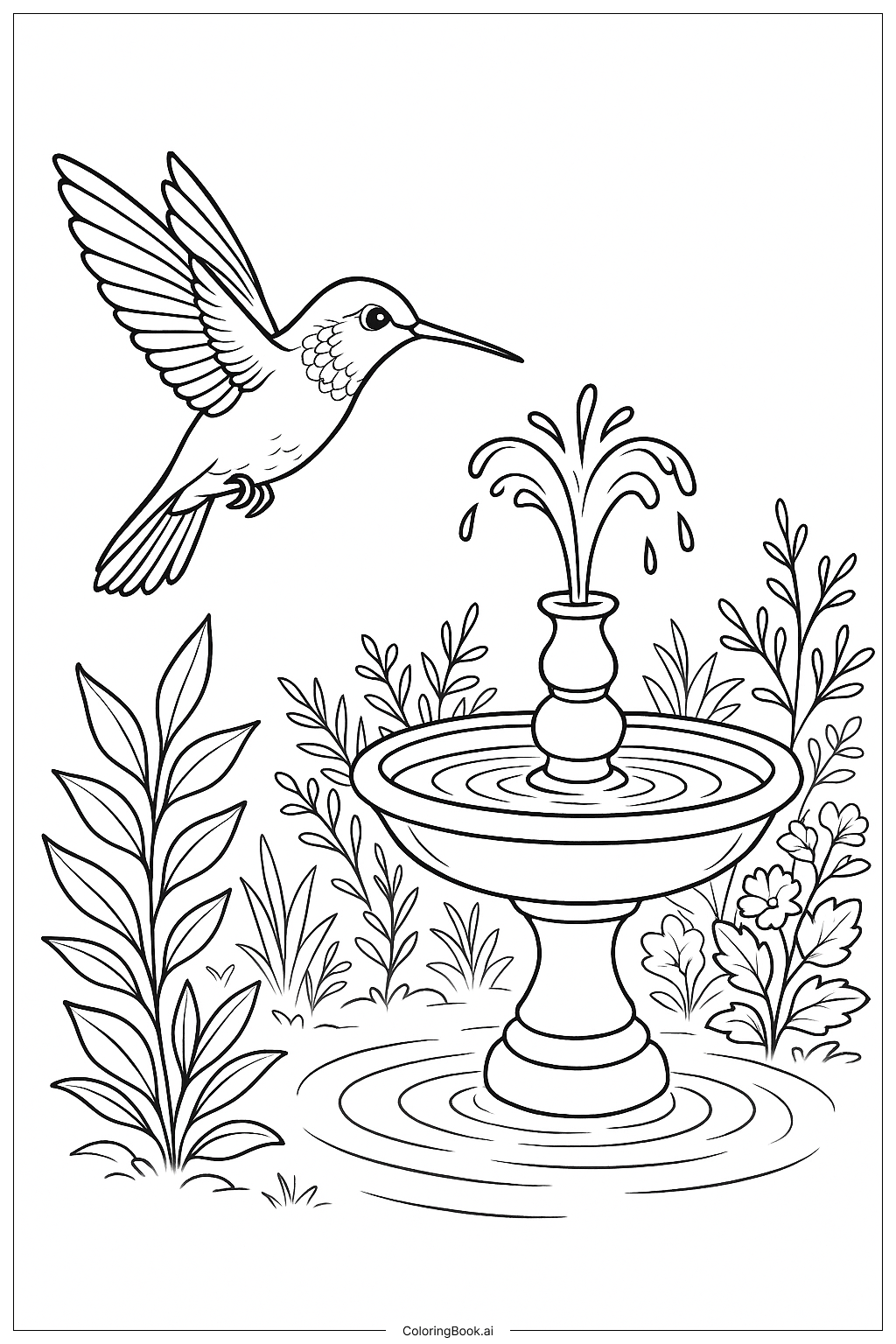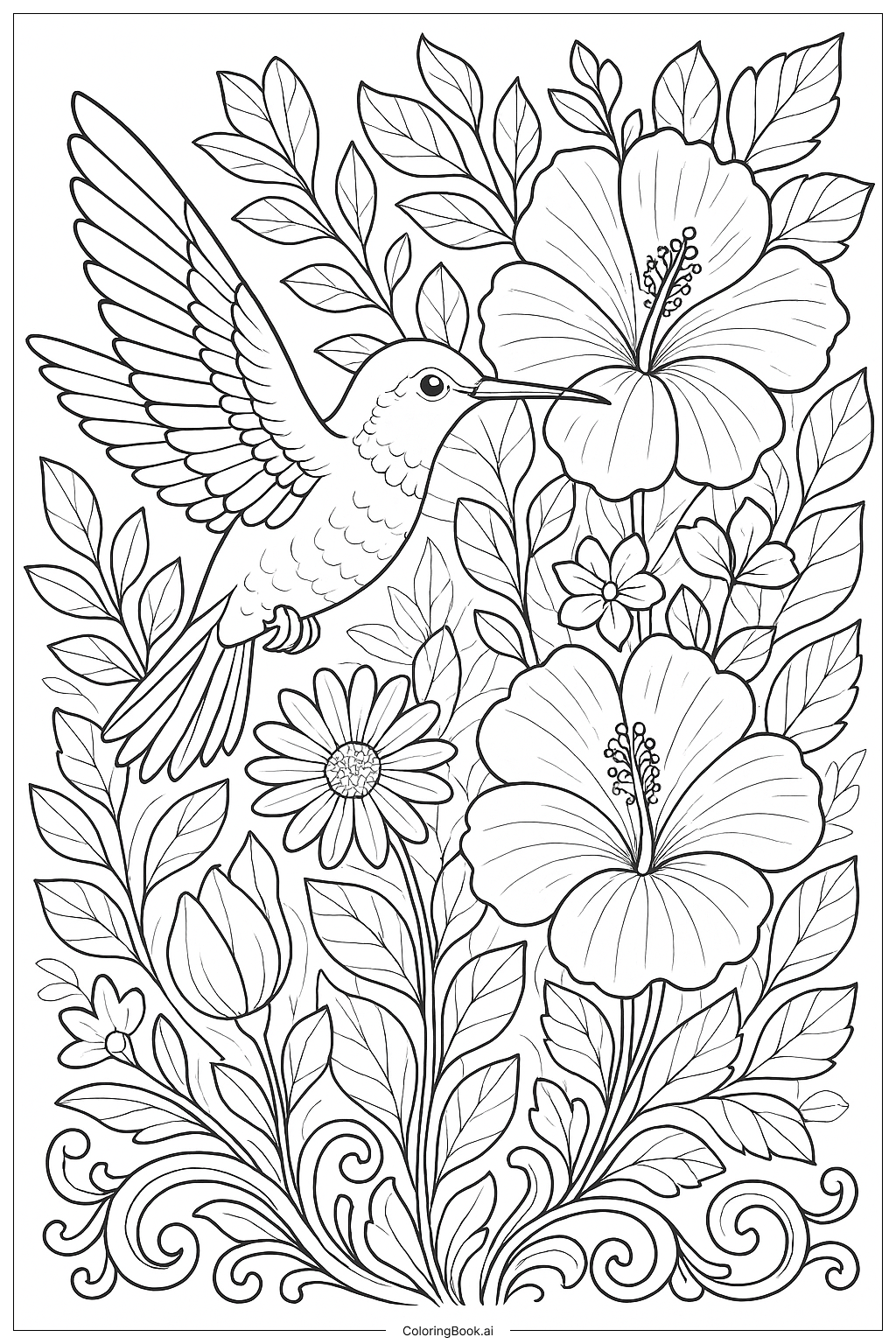
Coloring tips: How to color Hummingbird In Botanical Conservatory coloring page well?
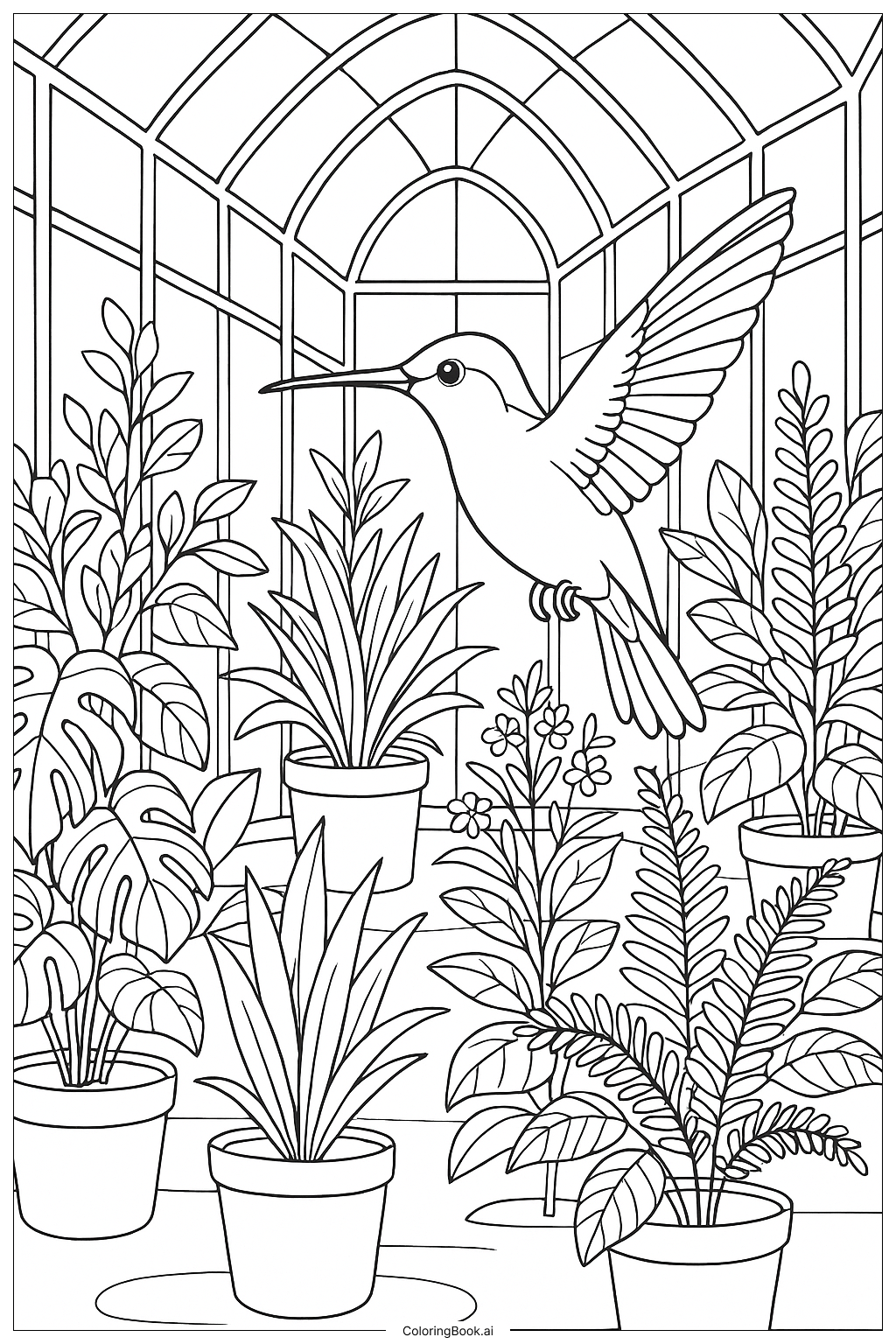
Start with the hummingbird itself. Use bright, jewel-like colors for its feathers — emerald green, sapphire blue, or ruby red work beautifully. The throat patch can be a vivid iridescent color like magenta or violet. Keep the beak and feet a soft gray or tan.
For the flowers, pick warm, bold shades — deep reds, bright oranges, soft pinks, and sunny yellows. Use lighter tints near the center of each bloom and darker shades toward the edges to add depth.
The leaves and vines look great in many shades of green — lime, forest green, and olive all work well together. Add a touch of yellow-green to show where light hits the leaves.
For the conservatory structure in the background, try warm ivory or light gray for the ironwork and a soft pale blue or white for the glass panels. This keeps the background calm so the hummingbird and flowers stand out as the stars of the scene.
Coloring challenges: Which parts are difficult to color and need attention for Hummingbird In Botanical Conservatory coloring page?
• Hummingbird Feather Detail: The hummingbird's body is covered in tiny, closely packed feather lines. Coloring each section neatly without going outside the lines takes a steady hand. Using a sharp colored pencil or a fine-tip marker helps keep each area clean and precise.
• Iridescent Throat Patch: One of the trickiest parts is capturing the shimmering, color-shifting quality of the throat feathers. Real hummingbirds shift from green to red to purple depending on the light. To mimic this effect, try layering two or three colors gently on top of each other and blending them softly at the edges.
• Wings in Motion: The wings are drawn mid-flutter, which means they have a complex, layered shape with overlapping lines. Deciding where one wing ends and another begins can be confusing. Take your time studying the lines before you start, and use slightly different shades for each wing layer to separate them visually.
• Dense Plant Foliage: The conservatory is packed with leaves, petals, and trailing vines. With so many plant elements overlapping, it can be hard to keep each one a distinct color without the scene looking muddy. Plan your color choices ahead of time and alternate light and dark greens so each leaf reads clearly.
• Background Architecture: The glass and ironwork panels behind the plants have fine geometric lines. Coloring them neatly without accidentally spilling into the plant areas requires patience. A ruler-guided fine liner or a very controlled hand works best for these straight structural details.
Benefits of coloring books: Advantages of drawing Hummingbird In Botanical Conservatory coloring page
Coloring this Hummingbird In Botanical Conservatory page offers a wonderful mix of fun and learning for kids and adults alike.
For younger children, tracing the outlines of the bird, flowers, and leaves builds fine motor skills and helps develop hand-eye coordination. Choosing colors for each part of the scene encourages creative thinking and decision-making in a low-pressure, playful way.
For older kids and teens, the intricate details of the feathers, petals, and conservatory structure offer a satisfying challenge. Working through complex sections builds patience and focus — skills that carry over into school and everyday life.
For adults, this page is a calming, meditative activity. Concentrating on coloring quiets busy thoughts and helps reduce stress. Many people find that a coloring session feels like a small, peaceful break from a hectic day.
Beyond relaxation, this image also sparks curiosity about the natural world. Kids may become interested in hummingbirds, tropical plants, or botanical gardens after spending time with this scene. That curiosity can inspire reading, nature walks, or even a visit to a real conservatory.
Overall, this coloring page is a simple, joyful way to connect with nature, practice artistic skills, and find a moment of calm — all at the same time.