Coloring tips: How to color Hummingbird With Decorative Vine Frame coloring page well?
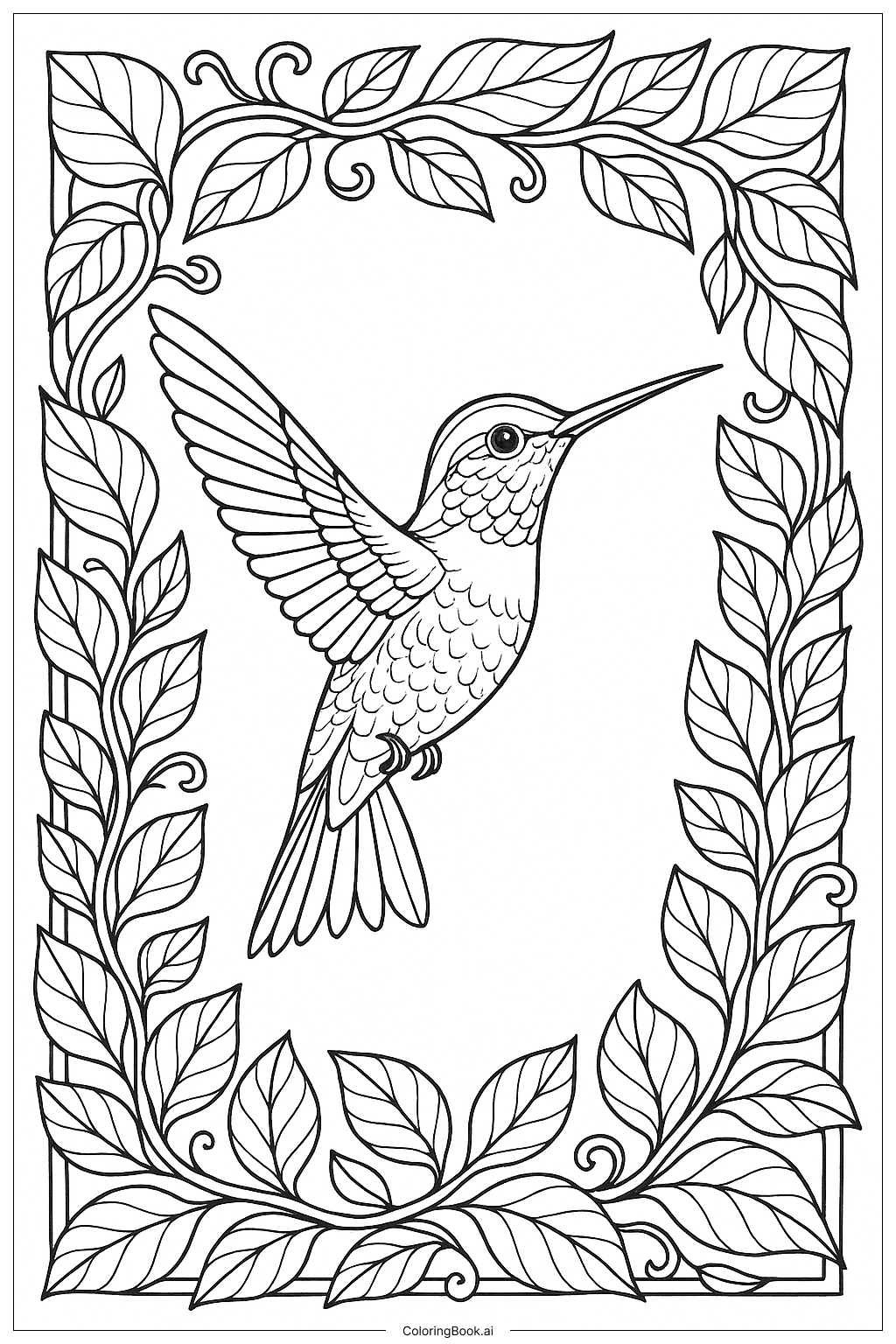
Start by choosing bright colors for the hummingbird, such as shades of green, blue, or red to make it stand out. Use light and dark colors to add depth to the feathers. For the vines, use different shades of green to give a natural look. The leaves can be colored with gradients or patterns to create interesting effects. You can also add small details like light shading on the vines to make the image more lively. Try to keep the colors inside the lines for a neat result.
Coloring challenges: Which parts are difficult to color and need attention for Hummingbird With Decorative Vine Frame coloring page?
1. The small size of the hummingbird's feathers may require careful coloring to avoid going outside the lines. 2. The many leaves in the decorative vine frame can be tricky to color because they are close together and need different shades to look realistic. 3. The curved lines of the vines need smooth and even coloring, which might be challenging for younger children. 4. Balancing colors between the hummingbird and the vine frame to avoid making the image look too busy or dull. 5. Adding depth and shading in small areas to enhance the 3D effect of the bird and leaves can be difficult for beginners.
Benefits of coloring books: Advantages of drawing Hummingbird With Decorative Vine Frame coloring page
Coloring this page helps improve fine motor skills by practicing precise coloring within small areas like feathers and leaves. It encourages creativity by letting kids choose colors for both the bird and the natural frame. The image inspires focus and patience because of its detailed design. Coloring nature elements, such as the hummingbird and vines, can also promote a sense of calm and connection with the environment. Overall, it is a fun way to develop artistic skills and relax.