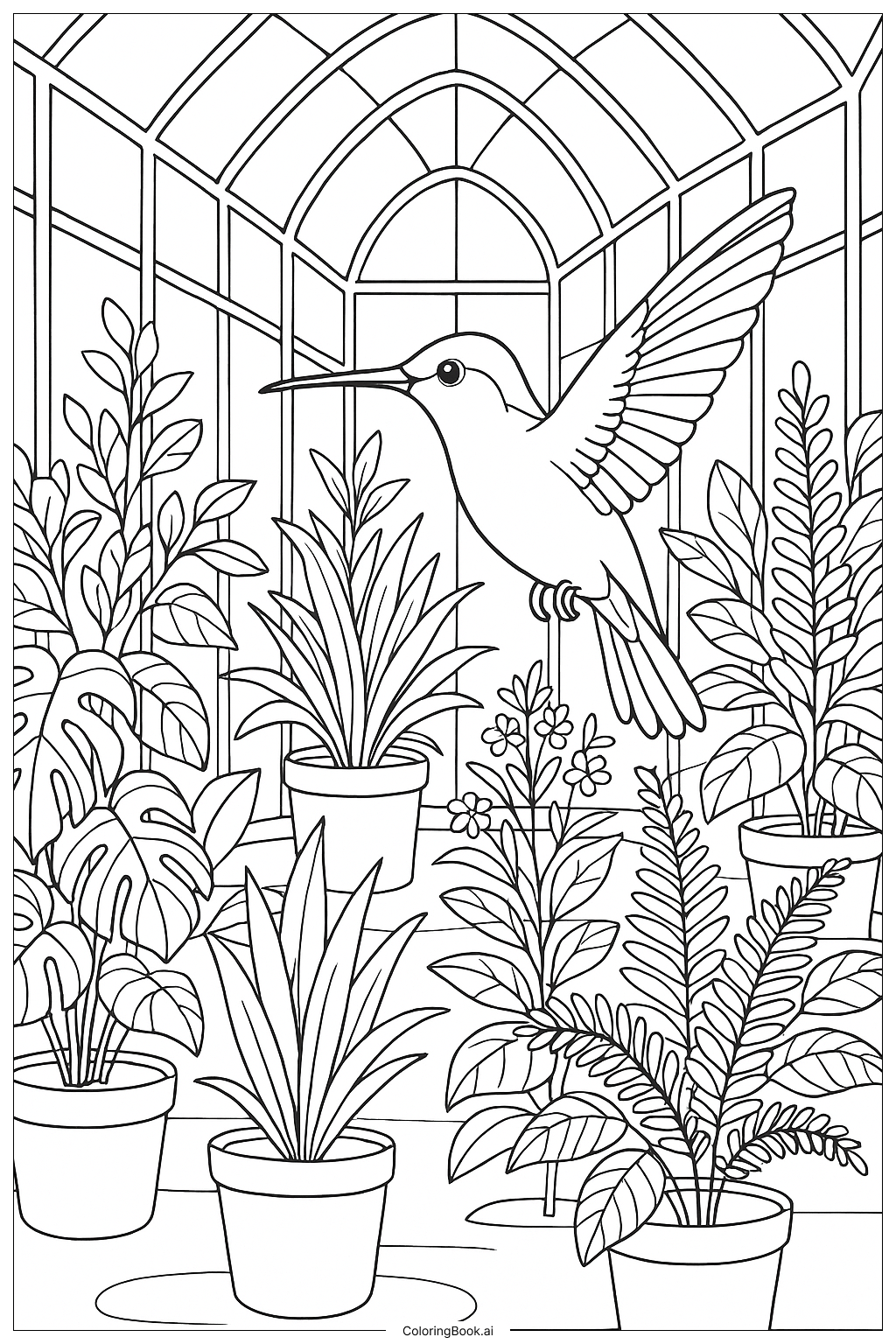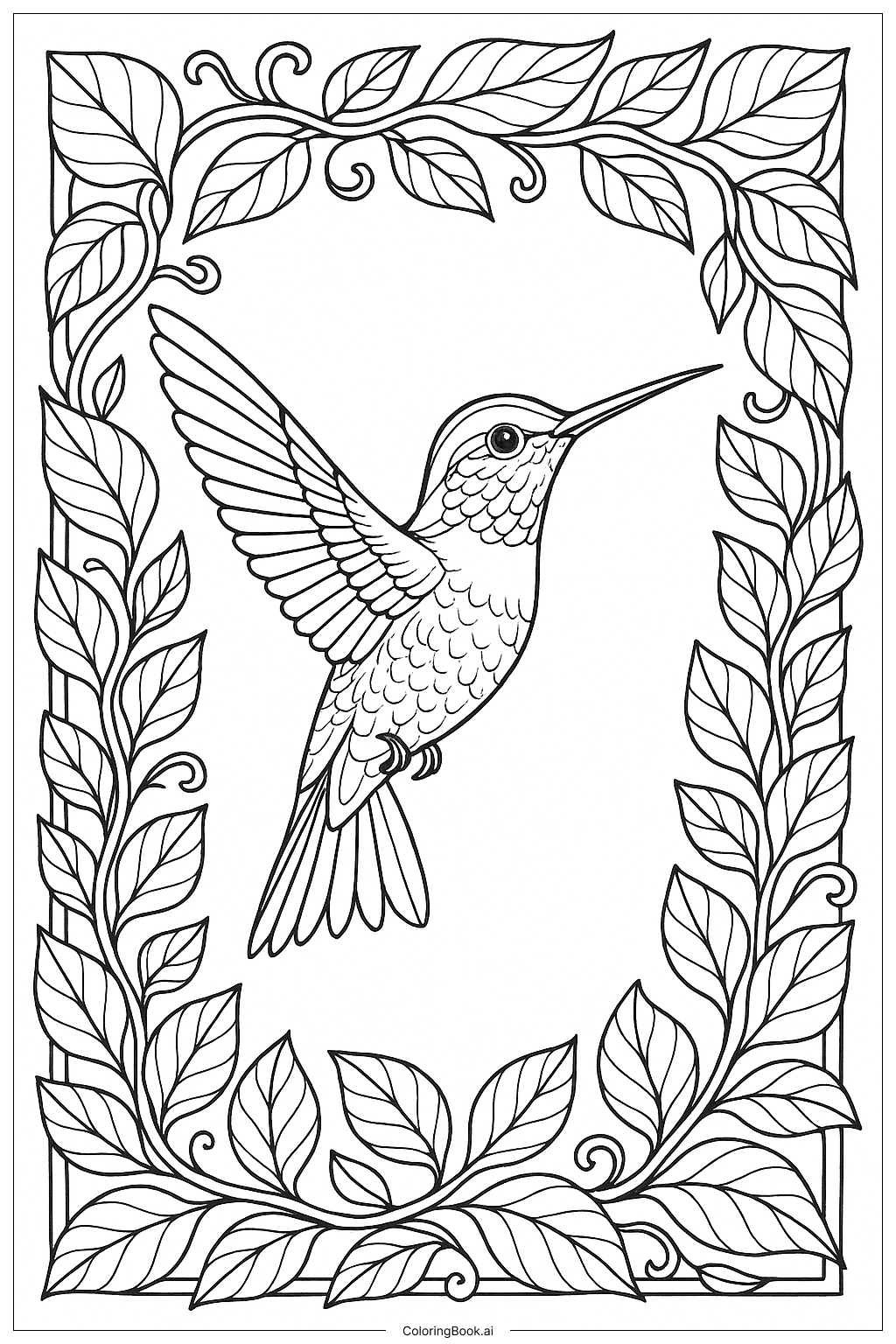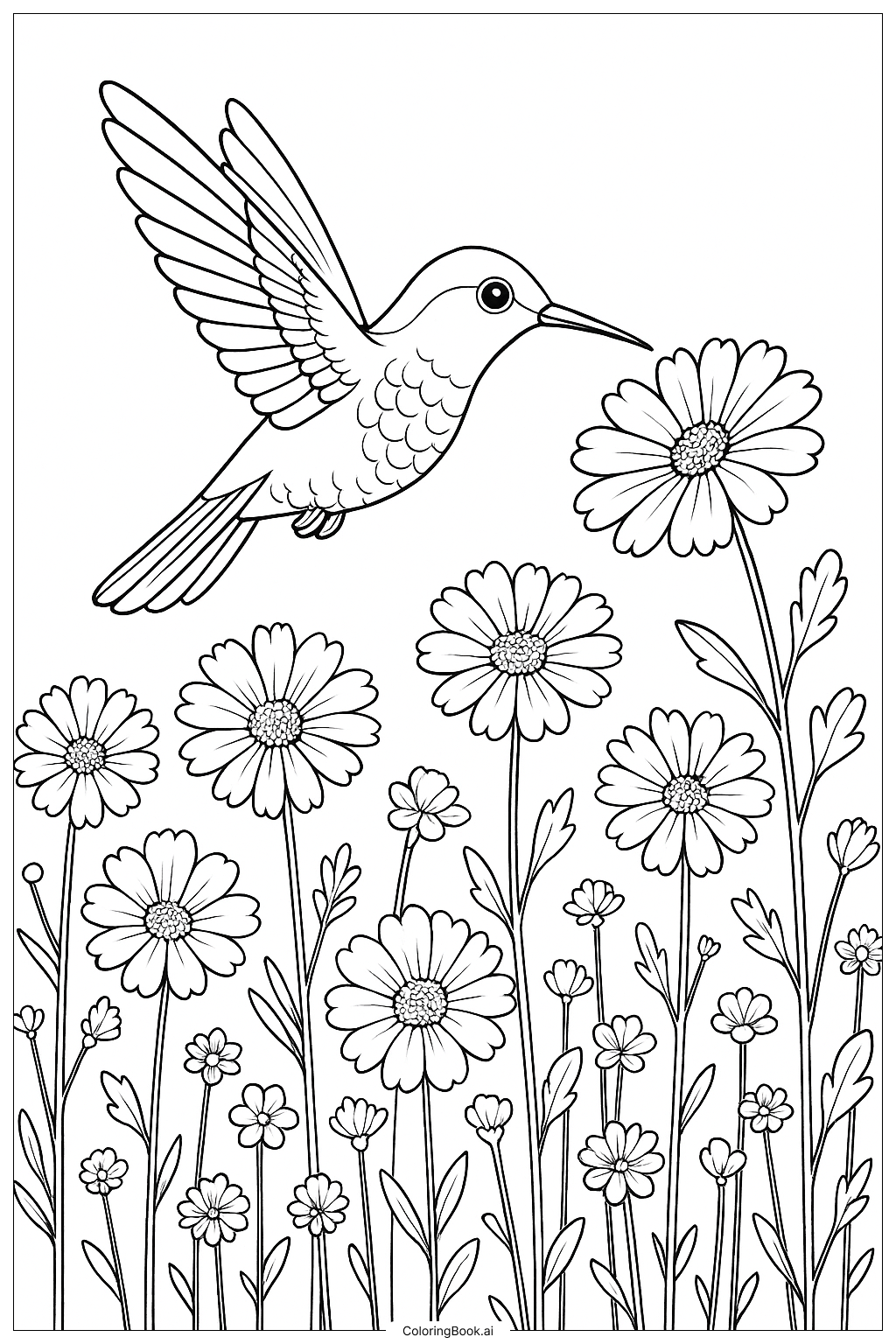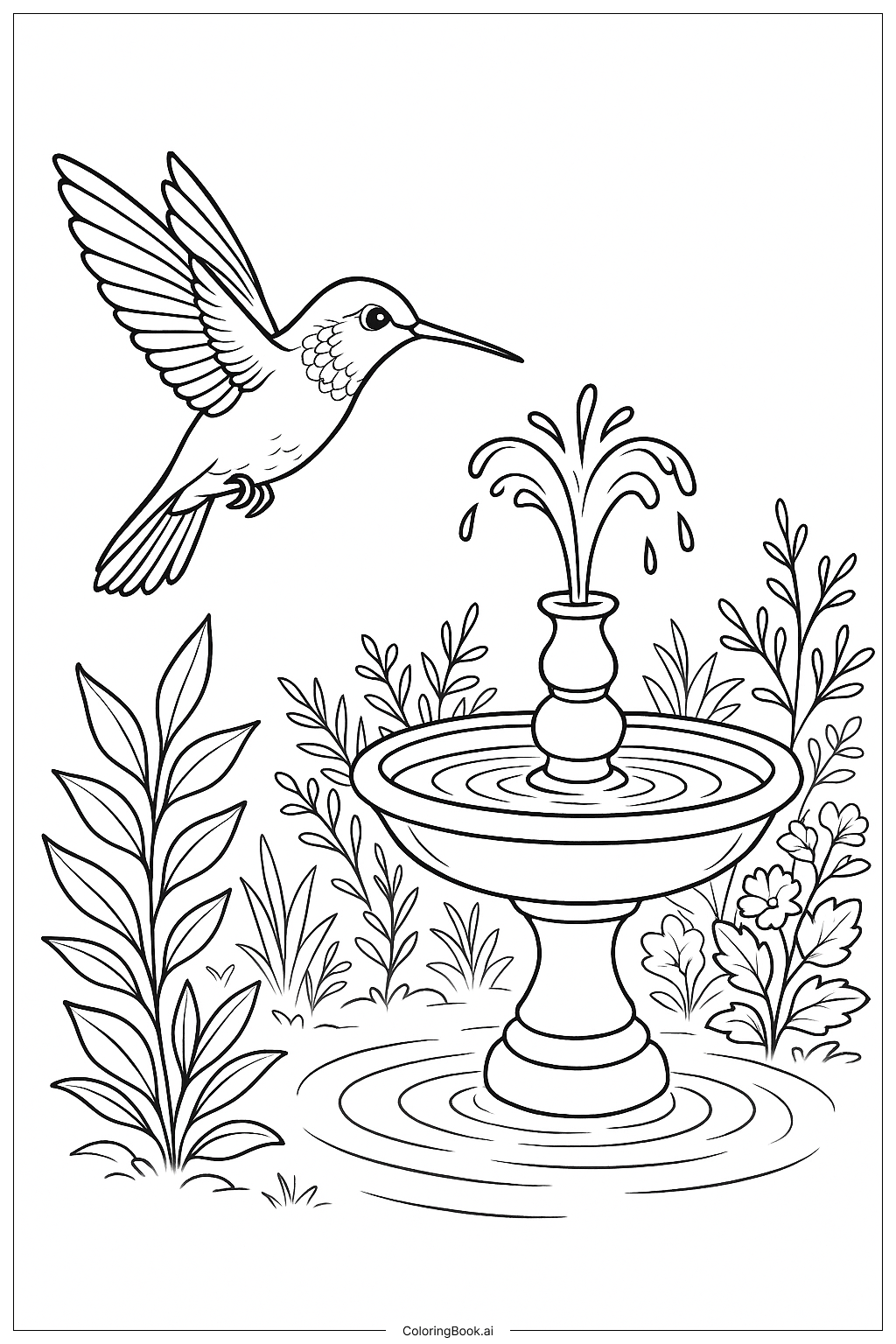
Coloring tips: How to color Hummingbird In Early Morning coloring page well?
Start with the hummingbird's body using bright, jewel-like colors. Try emerald green or deep teal for the back and head. Use ruby red or violet for the throat patch to make it pop. The belly can be a soft creamy white or pale gray. For the wings, use light gray or lavender with subtle blue tones along the edges. Color the flower in warm shades like coral, pink, or golden yellow. Use bright green for the leaves, mixing in some yellow-green to show sunlight. Add soft blue or light purple to the dewdrops. For the background, try a pale golden or soft sky blue to capture the warm glow of early morning light. Keep your strokes light and gentle to reflect the delicate feel of the scene.
Coloring challenges: Which parts are difficult to color and need attention for Hummingbird In Early Morning coloring page?
• Wing Detail and Motion: The hummingbird's wings are shown in mid-flight, with layered feather lines that are very close together. Staying inside these fine lines requires a sharp pencil or thin marker. Blending two or three light shades here can help show the sense of movement without making the wings look flat or muddy.
• Iridescent Feather Effect: Hummingbirds are known for their shimmering, color-shifting feathers. Recreating this with colored pencils or markers is tricky. Try layering green over blue, or pink over purple, using light pressure. Leaving small highlights uncolored can give a glowing, metallic look.
• Delicate Flower Petals: The flower petals have thin outlines and gentle curves. Using too much pressure can make them look heavy. Work from the outer edges toward the center with soft strokes, and use a slightly darker shade at the base of each petal to add depth.
• Tiny Dewdrops: The small dewdrops on the petals and leaves are easy to overlook but add a lot of life to the scene. Leave the center of each drop uncolored or use white. Add a pale blue or light gray around the edges to show their rounded shape and glassy texture.
• Balancing Light and Shadow: Since this is an early morning scene, the light should feel soft and warm, not harsh. Avoid very dark shadows. Instead, use gentle shading with warm yellows and soft oranges in the background to suggest the rising sun, keeping the overall mood peaceful and fresh.
Benefits of coloring books: Advantages of drawing Hummingbird In Early Morning coloring page
Coloring this hummingbird scene offers many wonderful benefits for kids and adults alike. Focusing on the bird's tiny feathers and flower petals helps sharpen fine motor skills and improves hand control. Choosing colors for the wings, body, and flowers encourages creative thinking and helps young colorists learn about color mixing and contrast. The calm, nature-based subject matter makes this a great image for reducing stress and anxiety. Sitting quietly and working through each section promotes focus and patience, skills that are helpful in school and everyday life. Learning about hummingbirds through coloring also sparks curiosity about nature and wildlife. Kids discover that hummingbirds feed on flower nectar and can hover in place, making science feel fun and hands-on. For older children and adults, the detailed feather and petal work provides a satisfying artistic challenge. Overall, this Coloring Pages activity connects creativity, mindfulness, and a love of the natural world in one simple, joyful exercise.