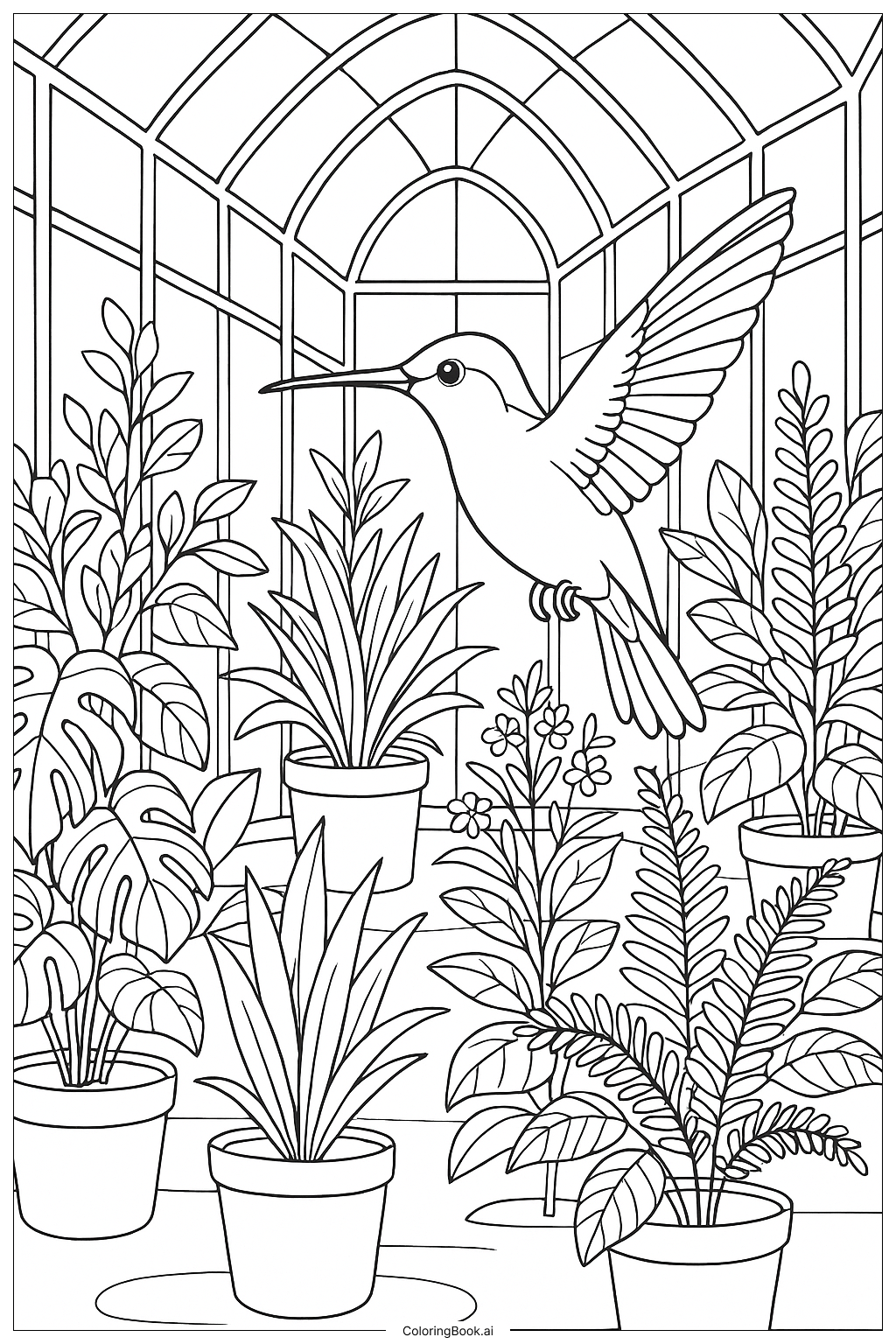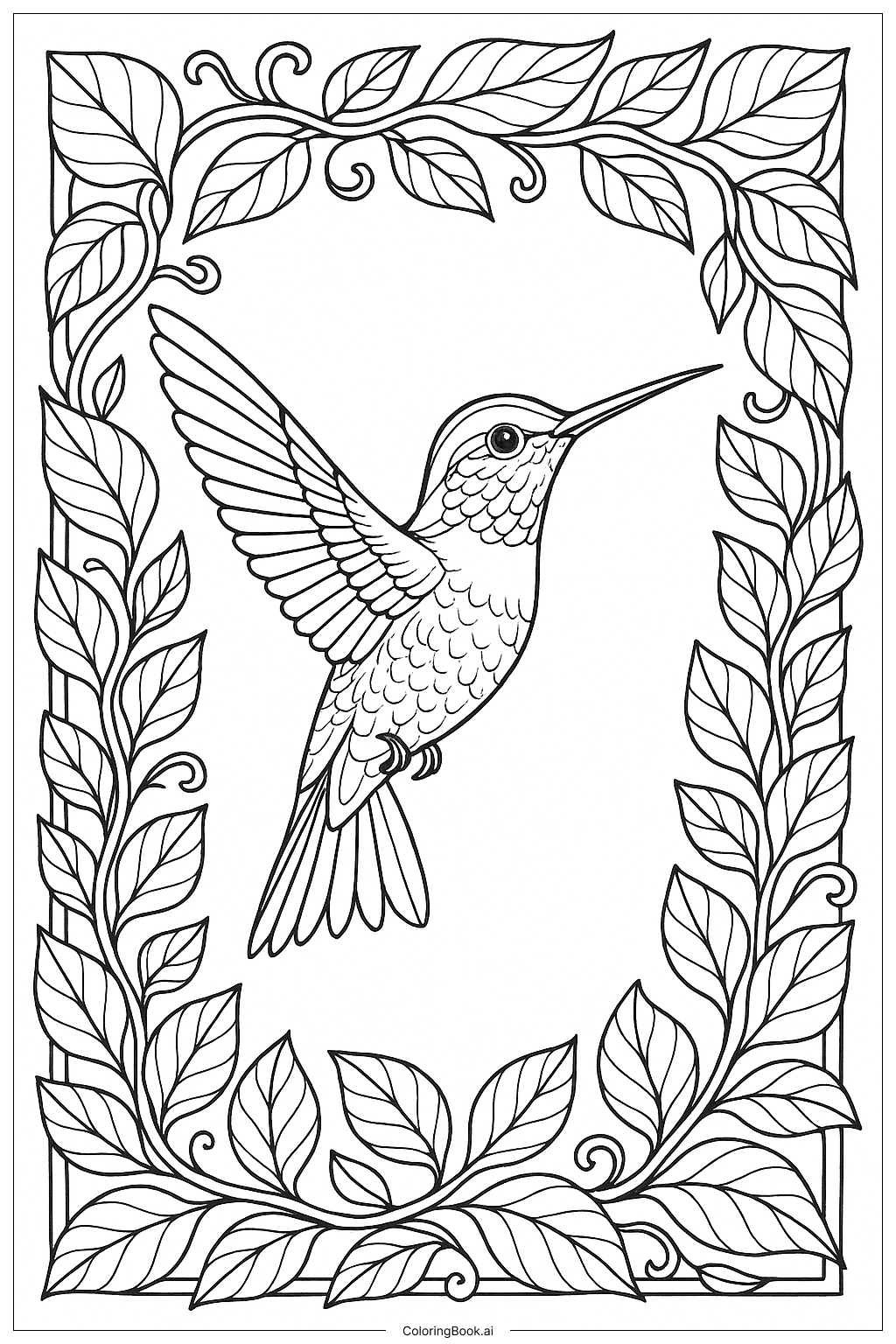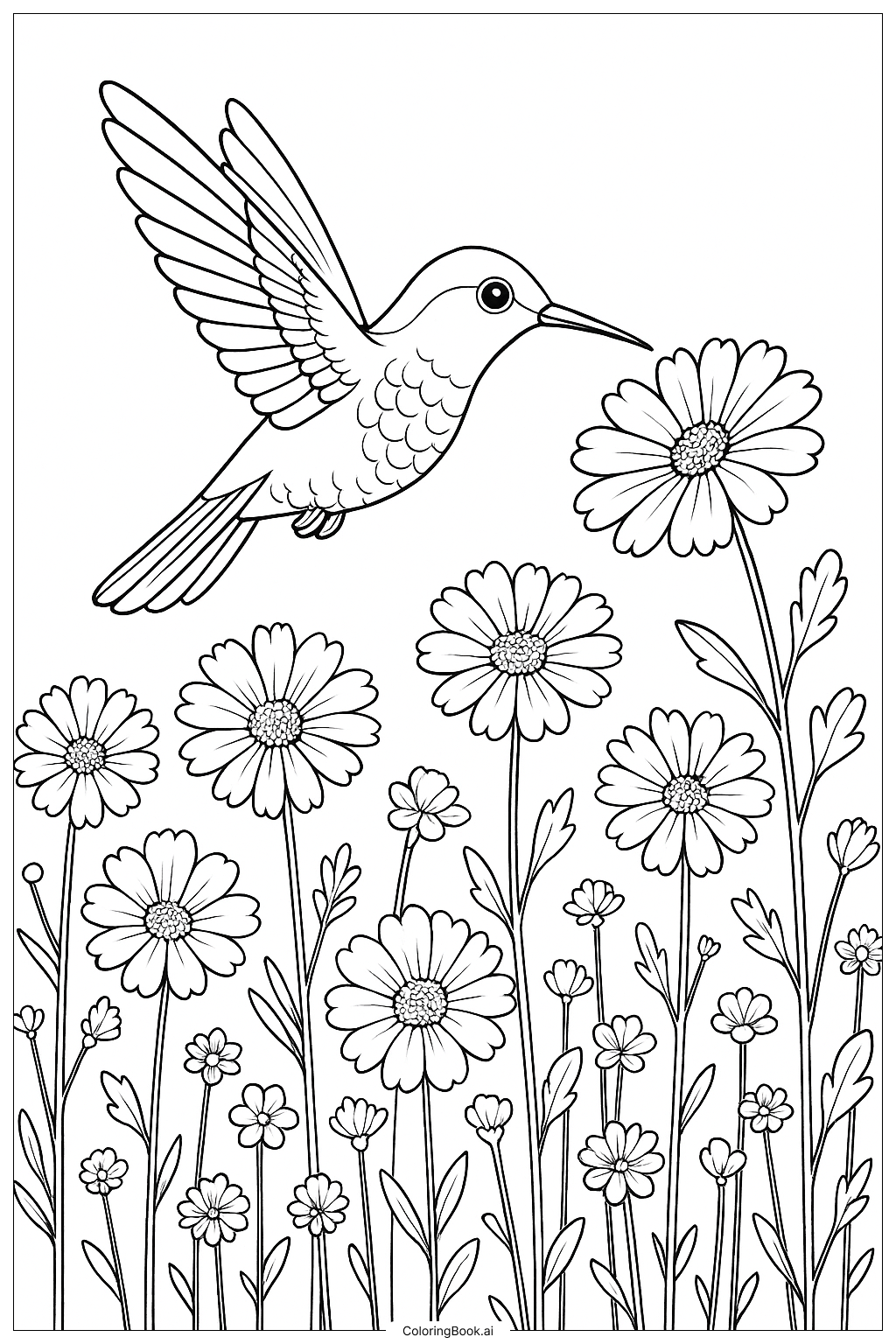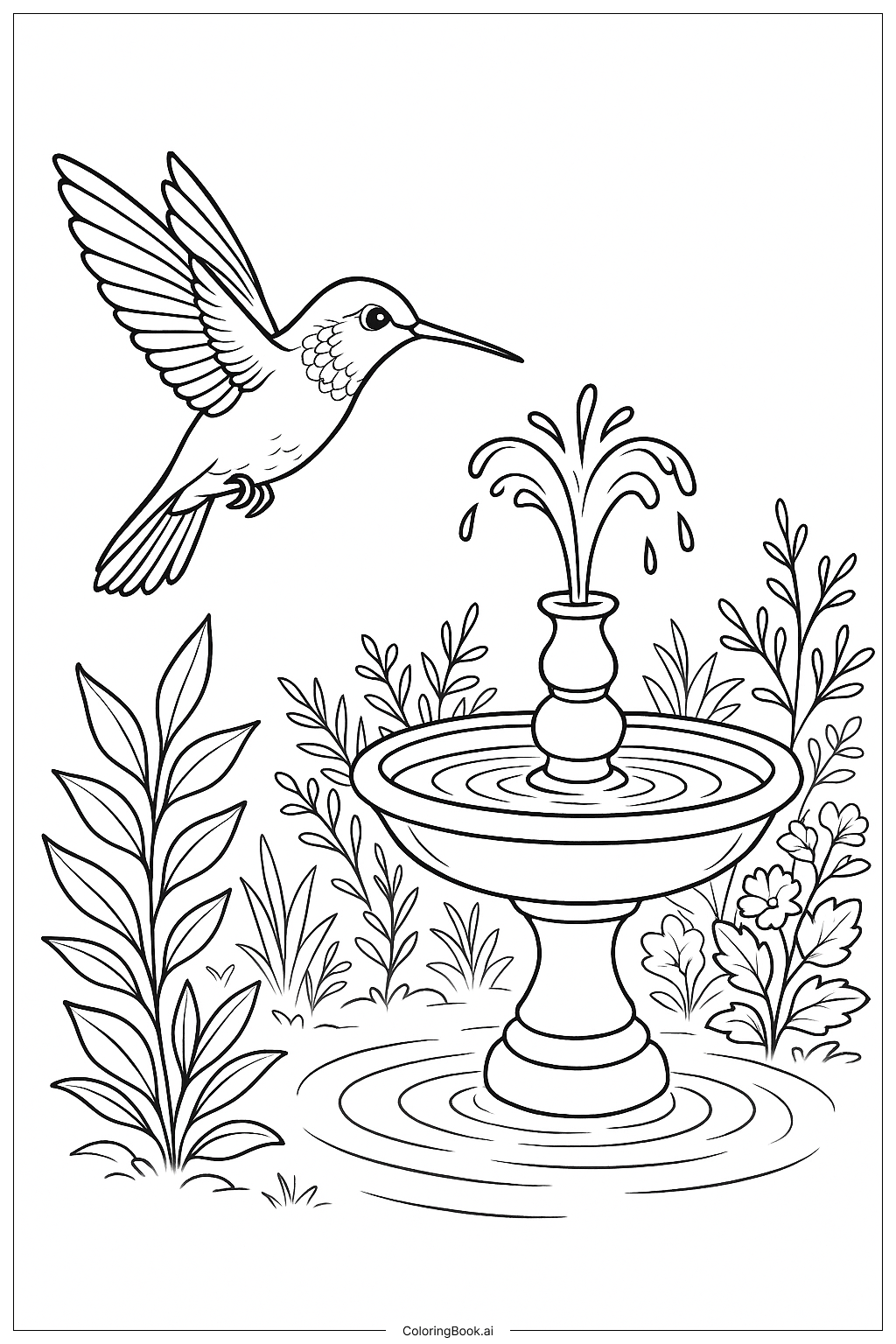
Coloring tips: How to color Hummingbird And Little Ladybug coloring page well?
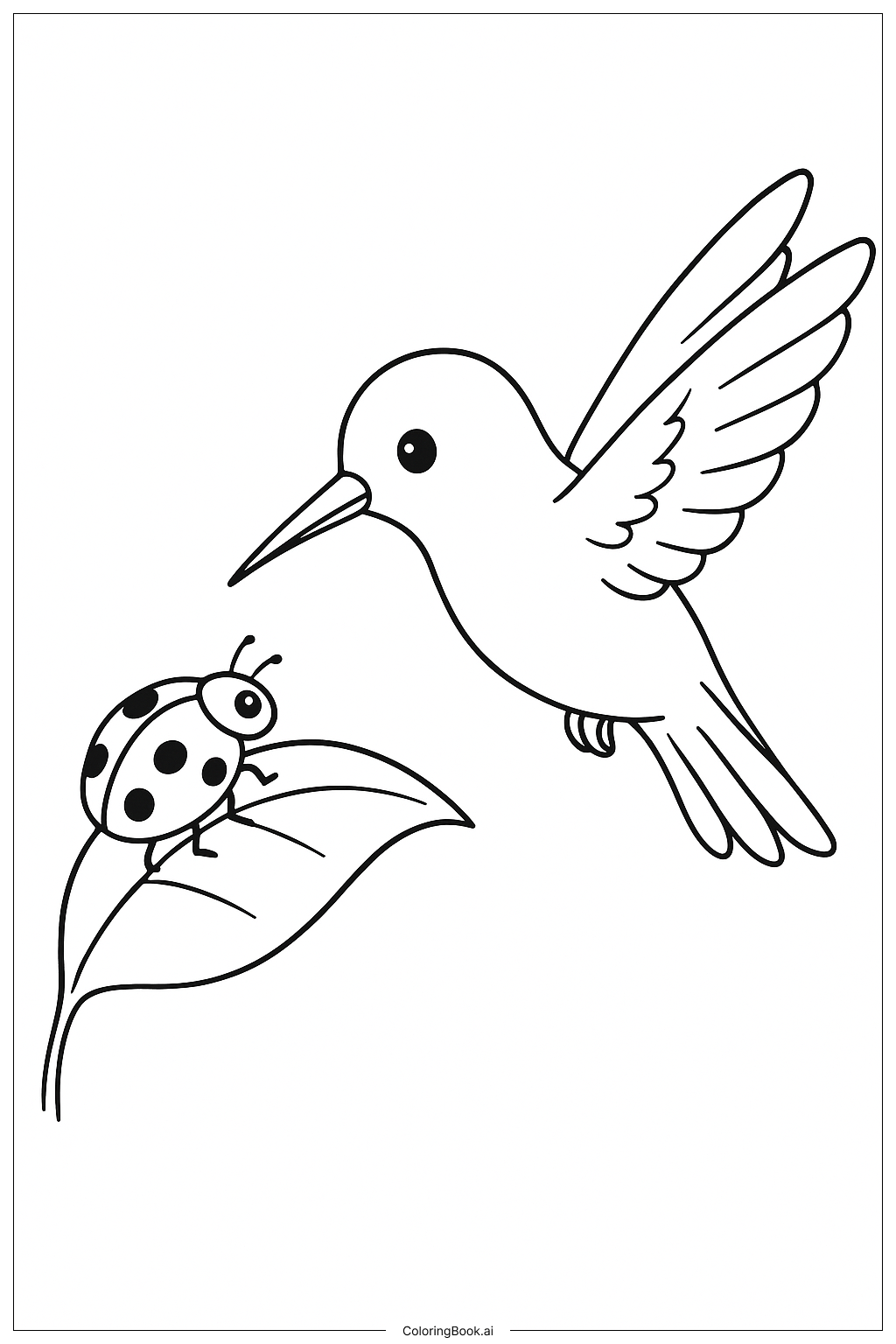
Start with the hummingbird's body using bright, jewel-toned colors. Try emerald green or sapphire blue for the feathers, with a ruby red or violet throat patch to make it pop. Use a warm golden yellow or orange for the beak and feet. For the little ladybug, go with a classic bright red body and bold black spots. Its head and legs can be colored solid black. The surrounding flowers look great in soft pinks, purples, and yellows. Color the leaves in different shades of green — light green for new leaves and darker green for older ones. Use light blue or lavender for the background to give the scene a calm, airy feel. Blending colors gently on the wings will make the hummingbird look like it is really flying. Kids can have fun experimenting with colors and making the scene their own.
Coloring challenges: Which parts are difficult to color and need attention for Hummingbird And Little Ladybug coloring page?
• Hummingbird Wing Details: The hummingbird's wings are drawn with many fine lines showing individual feathers. Staying inside such small, closely packed shapes requires a sharp pencil or a fine-tipped coloring tool. Rushing through this area can result in colors bleeding into neighboring sections, so working slowly and carefully here is very important.
• Gradient Feather Coloring: Hummingbirds are known for their iridescent feathers that shift between colors. Trying to recreate this shimmering effect means blending two or more colors smoothly, such as going from green to blue or from purple to gold. This kind of blending can be tricky, especially for younger colorists who are still learning how to layer colors without pressing too hard.
• Tiny Ladybug Body: The ladybug is small compared to the hummingbird, which makes it one of the trickiest parts of the page. Its round body has spots that need to stay black while the rest is colored red. Working in such a tight space without smudging or overlapping colors takes patience and a very fine coloring tool.
• Intricate Floral Background: The flowers and leaves surrounding the two animals are detailed with veins, petals, and layered shapes. Choosing colors that complement the hummingbird and ladybug without making the background look too busy can be a challenge. It helps to use softer, lighter shades for the background so the main subjects stand out clearly.
• Consistent Color Harmony: Balancing all the elements — the bird, the bug, and the botanical details — so they all look like part of the same scene takes thoughtful color planning. Picking a limited color palette before starting helps keep everything looking unified and visually pleasing.
Benefits of coloring books: Advantages of drawing Hummingbird And Little Ladybug coloring page
Coloring this Hummingbird And Little Ladybug page offers a wide range of benefits for children and adults alike. For young colorists, carefully filling in the hummingbird's tiny feathers and the ladybug's small spots helps build fine motor skills and improves hand-eye coordination. Choosing which colors to use for each element encourages creative thinking and color awareness from an early age.
The nature theme of this page also sparks curiosity about the natural world. Children may become interested in learning more about hummingbirds, ladybugs, and the flowers they visit. This makes coloring a fun gateway to science and discovery.
For older children and Adults, the detailed linework provides a satisfying challenge that promotes focus and concentration. Spending time on a quiet, screen-free activity like this helps reduce stress and brings a sense of calm. Completing the page also builds confidence and a feeling of accomplishment.
The whimsical, peaceful scene makes this page especially good for relaxation. Whether coloring alone or with family, this image creates a warm and enjoyable experience for all ages. It is a simple but meaningful way to slow down, be creative, and connect with the beauty of nature.