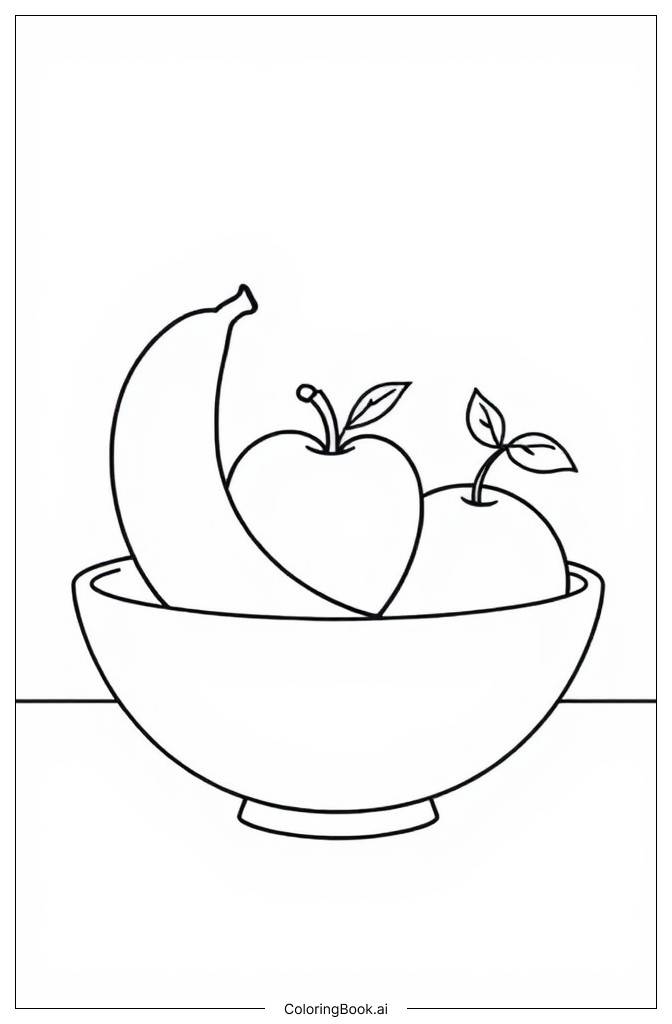
Coloring tips: How to color Fruit Bowl coloring page well?
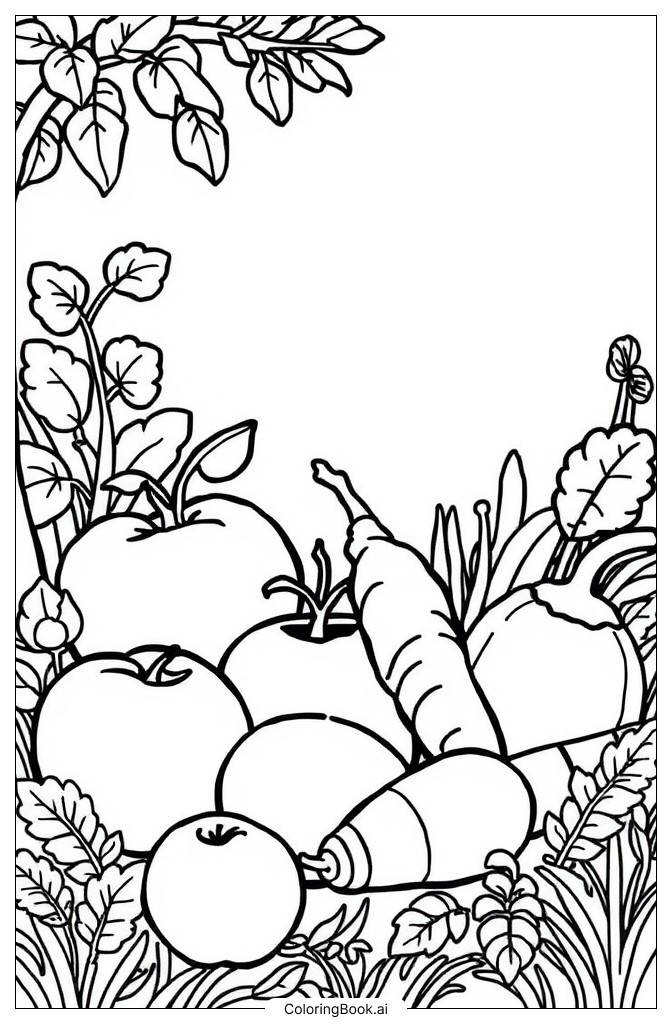
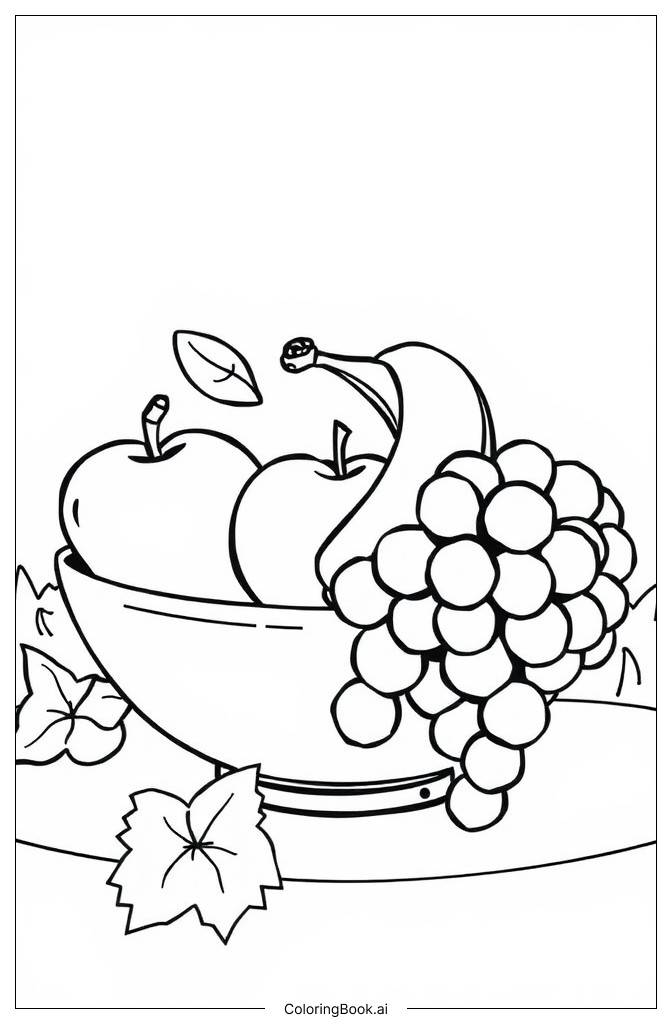
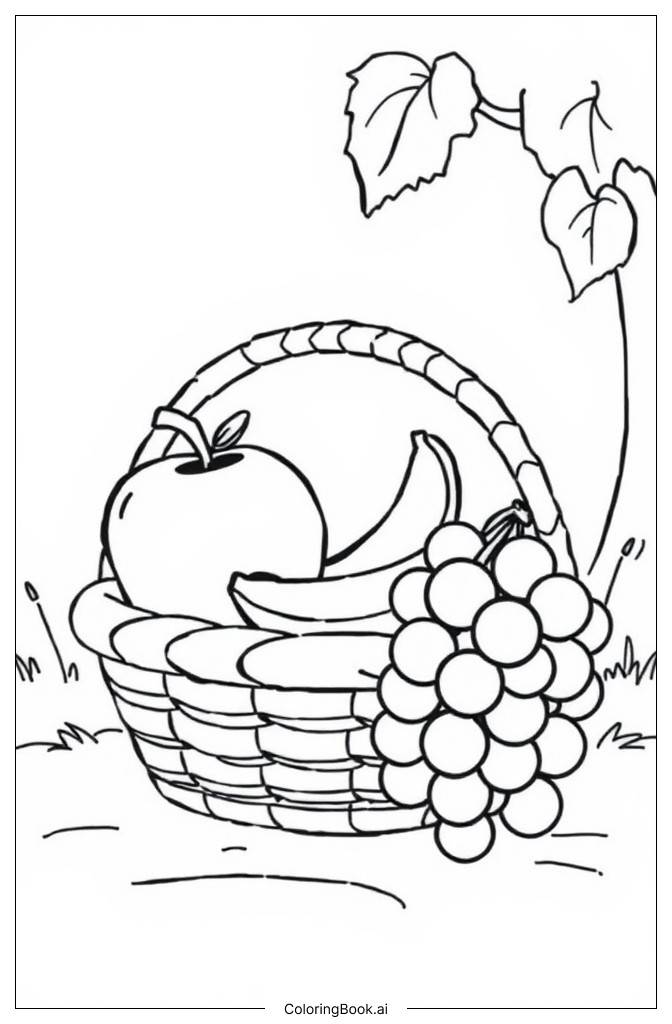
Start with the bowl itself. Use a warm brown, tan, or soft blue to give it a natural or ceramic look. Then move on to each fruit one at a time. Color apples red or green, bananas yellow, oranges a bright orange, and grapes purple or green. Use a light yellow for the lemon and red for the strawberries. Add a darker shade of each color along one side of each fruit to create a simple shadow effect. This makes the fruits look round and full. Color the leaves dark green, and use a lighter green for highlights. Try to keep colors inside the lines as best you can. Have fun mixing different shades to make the bowl look fresh and lively.
Coloring challenges: Which parts are difficult to color and need attention for Fruit Bowl coloring page?
• Overlapping Fruits: Many fruits in the bowl are stacked and overlapping each other. It can be tricky to tell where one fruit ends and another begins. Take your time to look carefully at the outlines before adding color. Using slightly different shades for fruits that touch each other helps keep them visually separate.
• Small Details on Stems and Leaves: The tiny stems, leaf veins, and texture lines on each fruit require a steady hand and a sharp-tipped coloring tool. Colored pencils work better than markers for these fine areas. Go slowly and use the very tip of your pencil for the thinnest lines.
• Consistent Round Shading: Fruits are round, and making them look three-dimensional with shading is a real challenge. You need to pick a light source direction and keep it consistent across all the fruits. Leave a small bright spot on each fruit where the light hits, and blend darker tones toward the opposite side.
• Color Variety Without Clashing: With so many different fruits packed together, choosing colors that look good side by side takes thought. Placing two very bright colors next to each other can feel overwhelming. Try to balance warm tones like red, orange, and yellow with cooler tones like green and purple throughout the bowl.
• The Bowl Texture: If the bowl has a decorative pattern or a textured surface, filling it in neatly while keeping it distinct from the fruits above it adds an extra layer of difficulty. Use a calm, neutral tone so the bowl does not compete visually with the colorful fruits it holds.
Benefits of coloring books: Advantages of drawing Fruit Bowl coloring page
Coloring a fruit bowl image offers a wonderful range of benefits for kids and beginners alike. First, it builds color recognition skills. Children learn to associate colors with real-world objects, like red for apples or yellow for bananas, which supports early learning in a fun and hands-on way. Second, it improves fine motor skills. Carefully coloring inside the outlines of each fruit strengthens the small muscles in the hand and fingers, which helps with handwriting and other detailed tasks. Third, it encourages creativity. There are no strict rules about which colors to choose, so young artists feel free to experiment and express themselves. Fourth, it teaches patience and focus. Completing a detailed image with many separate sections requires concentration, helping children practice staying on task. Fifth, it is a calming activity. The quiet, repetitive motion of coloring helps reduce stress and anxiety, making it a great way to unwind after a busy day. Finally, finishing the page gives a sense of accomplishment that builds confidence and pride in one's own work.