Coloring tips: How to color Football Playbook coloring page well?
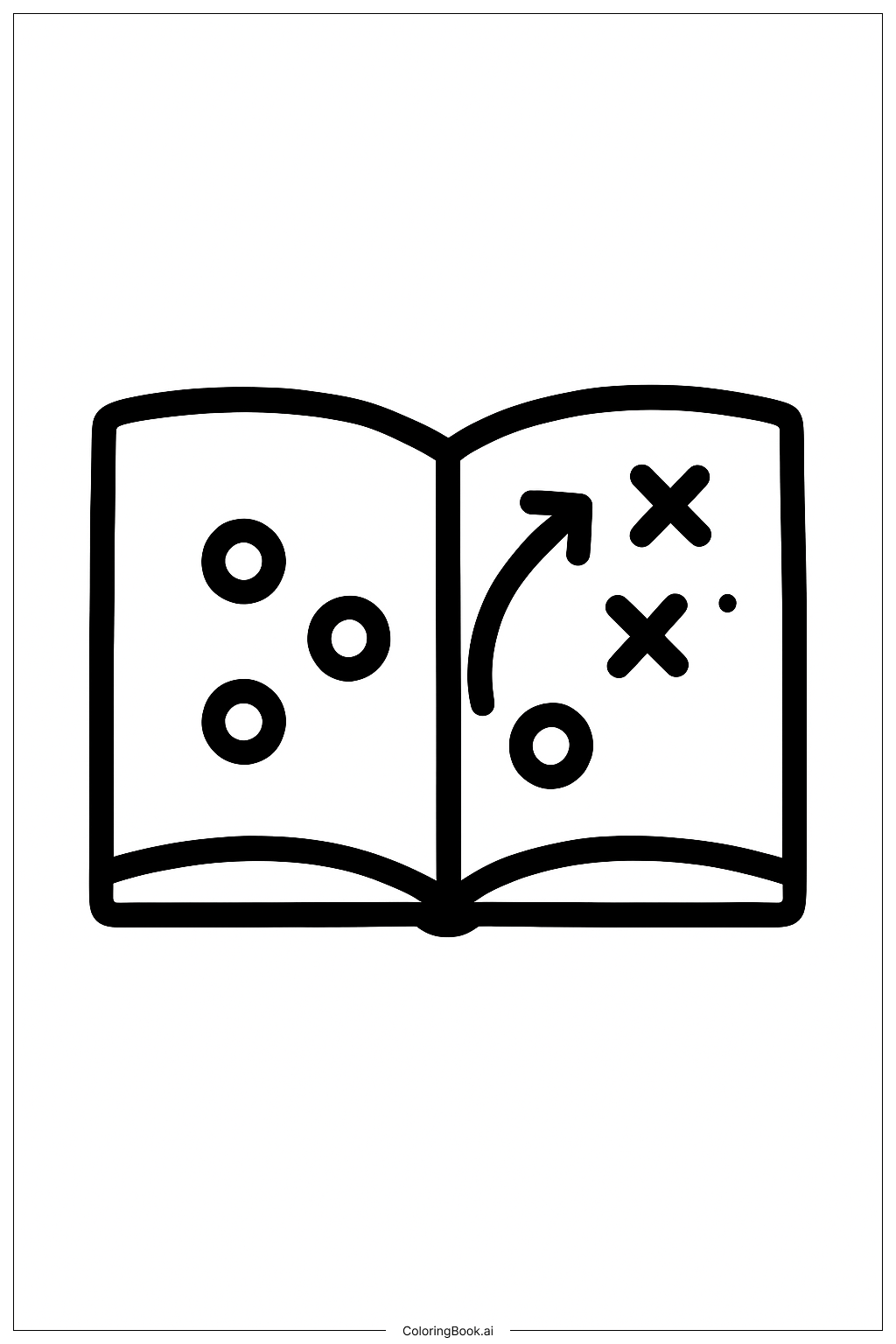
Start with the playbook cover. Use your team's colors — maybe navy blue, red, or green — to make it look official and bold. For the field diagram inside, color the grid lines in white or light yellow against a green background to mimic a real football field. Use black or dark blue for the X's and O's to keep them easy to read. Make the arrows stand out with a bright red or orange. For the helmet, choose a single main color and add a stripe down the middle for realism. The trophy can be gold or yellow to make it shine. Use a gray or silver for the whistle. Keep the background light so all the details pop. Have fun mixing your favorite team's colors throughout!
Coloring challenges: Which parts are difficult to color and need attention for Football Playbook coloring page?
• Play Diagram Details: The X's, O's, and arrows inside the playbook diagram are small and close together. Coloring each symbol neatly without going over the lines requires a fine-tip marker or a sharpened colored pencil. Take your time and work slowly in this area to keep each symbol clean and readable.
• Arrow Directionality: The arrows showing player routes curve and cross in different directions. It can be tricky to stay inside the narrow arrow shapes without smudging neighboring lines. Using a thin tool and letting each section dry before moving to the next will help avoid mistakes.
• Field Grid Lines: The football field grid inside the playbook has many thin parallel lines. Keeping a consistent color along each line without bleeding into adjacent sections is a real challenge, especially for younger colorists. A ruler can help guide your strokes along straight lines.
• Small Surrounding Objects: Items like the whistle, helmet details, and trophy decorations are compact and have intricate shapes. Coloring the fine edges of a helmet faceguard or the ridges of a trophy takes patience and a pointed coloring tool to stay precise.
• Color Consistency Across the Page: Keeping a unified color theme — like sticking to one team's color palette — throughout all the different elements (cover, diagram, helmet, trophy) can be challenging. Planning your colors before you start, and maybe doing a quick sketch of your color choices, will help the whole page feel balanced and cohesive.
Benefits of coloring books: Advantages of drawing Football Playbook coloring page
Coloring this Football Playbook page offers a wonderful mix of fun and learning. For kids who love football, it makes the game feel even more exciting by connecting art with their favorite sport. Carefully coloring the play diagram helps build focus and concentration, as the small symbols and arrows require steady, deliberate strokes.
Working through the detailed sections of this page strengthens fine motor skills and hand-eye coordination, which are important for everyday tasks like writing. Choosing colors for the field, helmet, and trophy also encourages creative thinking and decision-making.
For older kids and young teens, this page can spark curiosity about football strategy. Looking at the X's, O's, and arrows may lead to questions about how real plays work, turning a simple coloring activity into a sports learning moment.
The page also promotes patience. With so many small areas to fill in carefully, young colorists learn to slow down, plan ahead, and take pride in a neatly finished result. Completing the whole page gives a real sense of accomplishment.
Whether coloring alone or with friends, this Football Playbook page is a great way to unwind, express creativity, and celebrate a love of the game — all at the same time.