Coloring tips: How to color Strawberry Berry coloring page well?
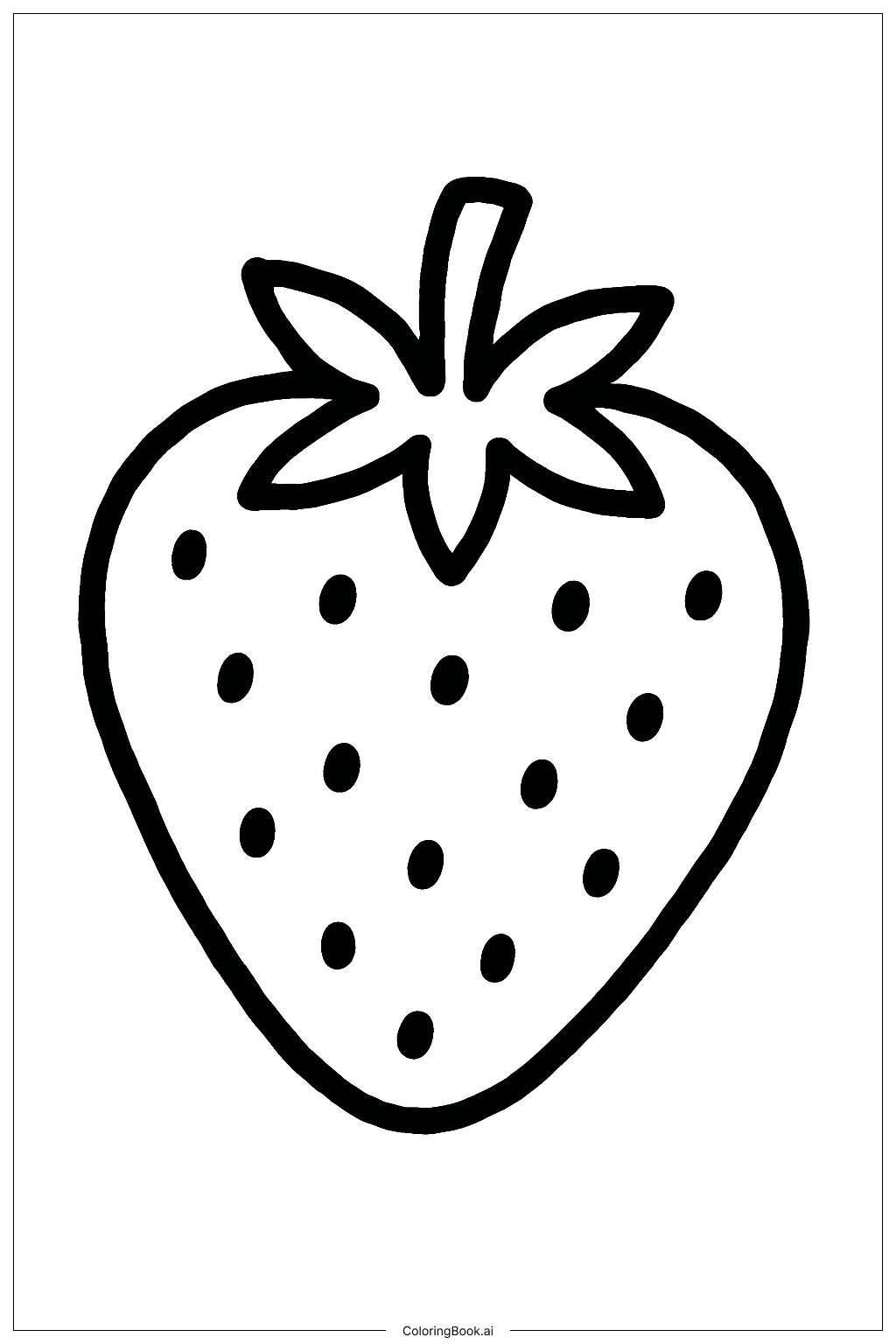
Start with the strawberry's body using bright red or crimson. You can add a lighter pink or orange-red on one side to show where the light hits the fruit. This gives it a shiny, juicy look. Use a slightly darker red or burgundy for the shaded areas and along the bottom curve. For the tiny seeds, leave them white or color them a pale yellow. The leafy crown at the top looks great in bright green, with darker green along the veins and edges. The smaller berries can be colored in stages of ripeness — some red, some pink, and some light green to show they are still growing. Flowers can be white or soft cream with yellow centers. The vines and leaves pair well with different shades of green to add depth. Use light, gentle strokes to keep the colors smooth and natural-looking.
Coloring challenges: Which parts are difficult to color and need attention for Strawberry Berry coloring page?
• Seed Placement: The strawberry's surface is dotted with many tiny seed dimples spread across the whole fruit. Carefully coloring around each small seed without accidentally filling them in can be tricky, especially for younger colorists. Using a fine-tipped colored pencil or a thin marker works best here to maintain control and keep the seeds looking distinct from the surrounding red surface.
• Creating Depth on a Curved Surface: A strawberry is not flat — it has a round, three-dimensional shape. Showing that roundness through color takes practice. You need to leave lighter areas near the top or center where light reflects, and gradually darken the color toward the edges and bottom. Blending two or three shades of red smoothly is the key challenge in making the fruit look realistic rather than flat.
• Detailed Leaf Crown: The cluster of sepals and pointed leaves at the top of the strawberry contains many overlapping shapes with thin, curving lines between them. Coloring each individual leaf segment with different tones of green, while staying within the fine outlines, requires patience and a steady hand.
• Small Surrounding Elements: The vines, tiny berries, and blossoms around the main strawberry are small and closely packed. Switching between colors in tight spaces without smudging or going outside the lines is one of the trickier parts of finishing this page neatly.
• Color Consistency Across Multiple Berries: The page includes several strawberries at different ripeness levels. Keeping the colors consistent and intentional — so that each berry reads as either ripe, ripening, or unripe — requires planning your color choices before you begin.
Benefits of coloring books: Advantages of drawing Strawberry Berry coloring page
Coloring this strawberry page offers a wide range of benefits for kids and beginners alike. The familiar, friendly shape of a strawberry makes it an approachable and enjoyable subject, helping colorists feel confident from the start. Working through the different parts of the image — the fruit body, the tiny seeds, the leafy crown, and the surrounding vines — builds fine motor skills and trains the hand to make careful, controlled movements. Choosing colors for a ripe strawberry encourages children to observe the natural world and think about how real fruits look. This builds visual memory and a sense of color awareness. The repetitive motion of filling in areas with color is also naturally calming and helps reduce stress, making it a great quiet-time activity. Completing the full image gives a strong sense of accomplishment. For older kids and teens, experimenting with shading and blending on the fruit's curved surface introduces early concepts of light and shadow. Overall, this page makes learning through art feel fun, rewarding, and connected to everyday life.