Coloring tips: How to color Koi Fish coloring page well?
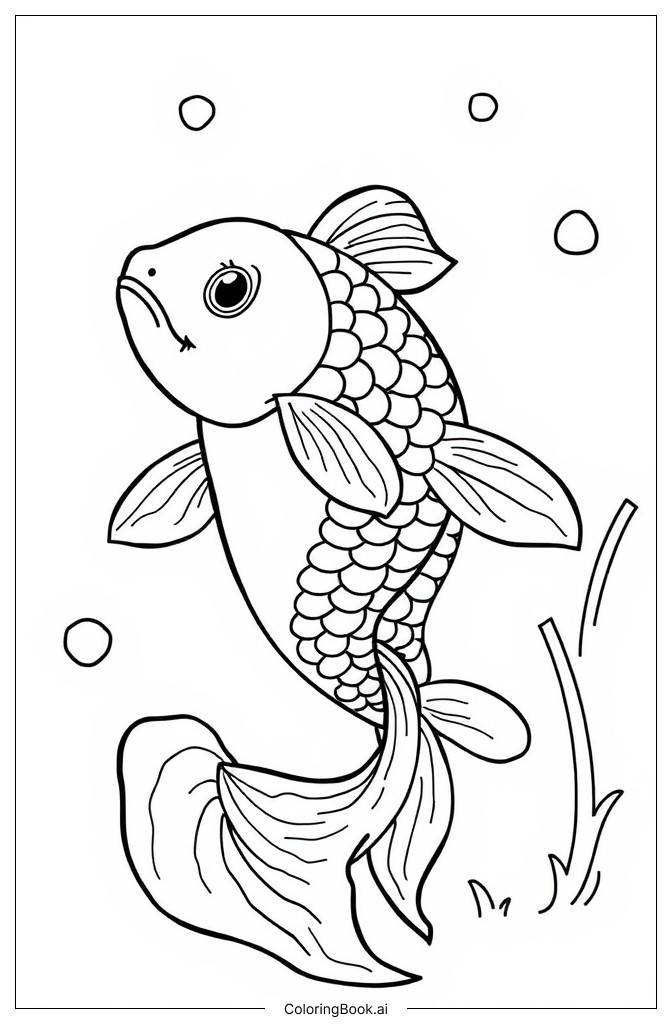
Start with the koi fish's body using bright, warm colors like orange, red, white, or yellow — these are the most classic koi colors. Use a slightly darker shade along the edges of each scale to give the fish a rounded, three-dimensional look. For the fins and tail, try light peach or soft gold with thin streaks of a darker tone to show the delicate texture. Color the water in soft blues and greens. Use lighter blue near the surface where light hits, and deeper teal or navy toward the bottom. The lotus flowers look great in pink or white with yellow centers. The lily pads can be colored in medium and dark green. Add some light purple or lavender to the water swirls for a dreamy, magical feel. Don't be afraid to blend colors — koi fish are naturally multi-colored and vibrant, so the more color variety you use, the more lively your page will look!
Coloring challenges: Which parts are difficult to color and need attention for Koi Fish coloring page?
• Scale Patterns: The koi's body is covered in many small, overlapping scales arranged in neat rows. Coloring each scale individually takes patience and a steady hand. Using a fine-tipped marker or colored pencil will help you stay within the lines and add shading to each scale without muddying the colors together.
• Fin and Tail Details: The fins and tail have thin, delicate lines running through them to show texture. These narrow sections are tricky to color neatly. Try using light pressure with your coloring tool and follow the direction of each line carefully to avoid coloring outside the area.
• Water Effects: The swirling water lines and ripples overlap in complex patterns. It can be hard to decide which areas should be lighter or darker. A good tip is to pick two or three shades of blue or teal and alternate them across the water sections to create a natural flowing effect.
• Lotus Flowers and Lily Pads: The flowers have multiple small petals layered on top of each other, and the lily pads have rounded edges with subtle vein lines. Keeping the petals in consistent shades while adding gentle gradient shading from base to tip is a challenge, especially in the smaller petal areas.
• Balancing the Overall Color Palette: With so many elements in the image — the fish, water, plants, and background — it can be tricky to choose colors that work well together without making the page look too busy or unbalanced. Plan your color choices before you start to keep the whole image looking harmonious and visually pleasing.
Benefits of coloring books: Advantages of drawing Koi Fish coloring page
Coloring this koi fish page offers a wonderful range of benefits for kids and beginners alike. Koi fish are known as symbols of peace, patience, and good luck, so working on this page can bring a calm, relaxing feeling — almost like sitting beside a quiet pond.
The detailed scale patterns and flowing water lines are great for building fine motor skills. Carefully staying within small areas helps strengthen hand control and pencil grip, which supports better handwriting and drawing over time.
Choosing colors for the koi, water, and lotus flowers encourages creative thinking. Kids get to experiment with color combinations and discover how shades can work together to create a lively, beautiful scene. This builds color awareness and artistic confidence.
The repetitive action of coloring the scales row by row also helps develop focus and concentration. It teaches kids to slow down, pay attention to detail, and stick with a task until it's done — all valuable life skills.
For older kids and Adults, the complexity of the design offers a meditative quality. The rhythmic, detailed work can reduce stress and bring a sense of satisfaction when the finished piece comes together. It's a creative activity that rewards patience and effort with a truly stunning result.