Coloring tips: How to color Dora The Explorer Exploring Pond coloring page well?
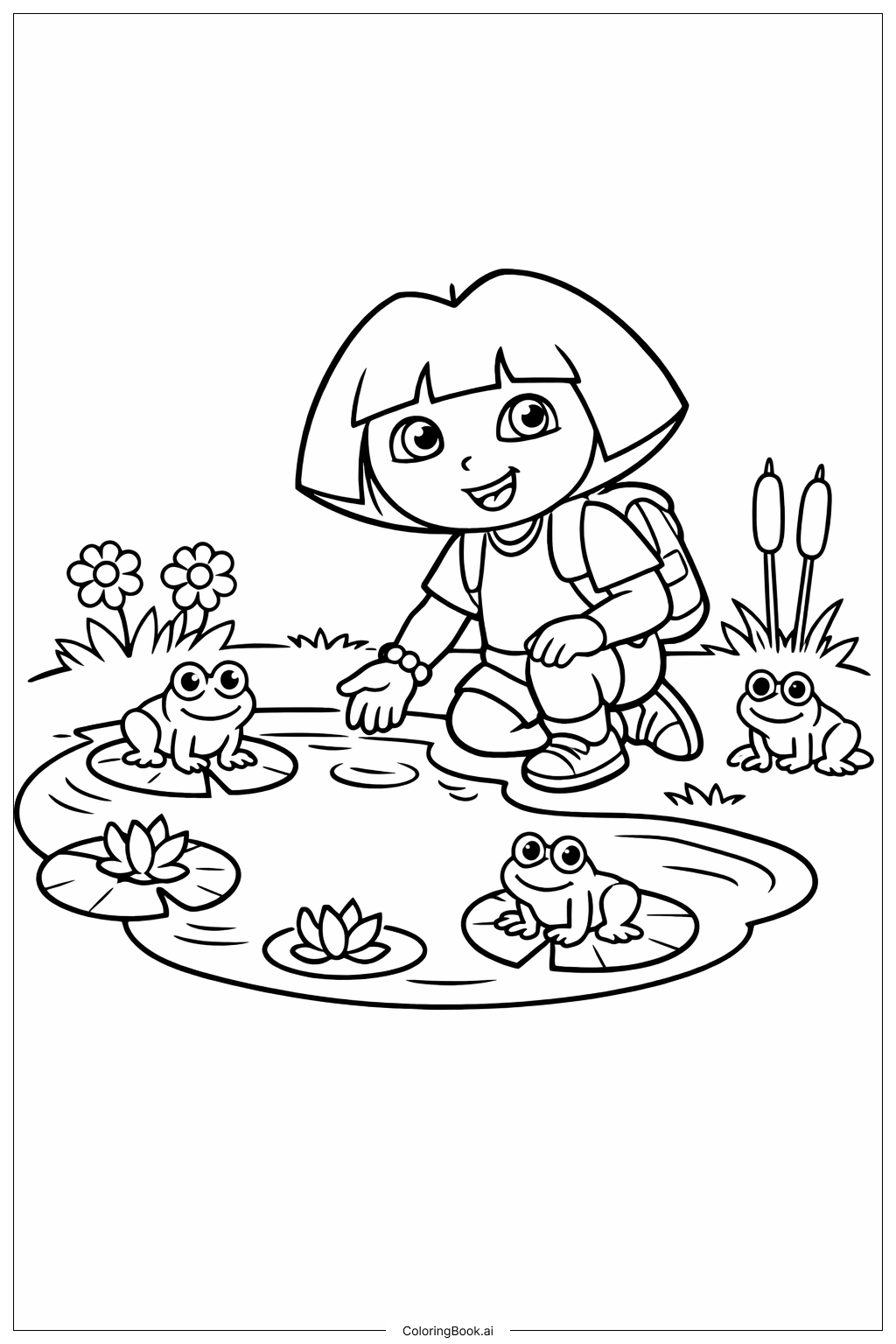
Start with Dora's outfit using bright, cheerful colors. Her shirt looks great in pink, her shorts in orange, and her shoes in white with pink accents. Use brown for her hair and skin tones that feel natural and warm. For the pond, try a light sky blue or turquoise. The lily pads work well in medium and dark greens, while the flowers on top can be white or soft pink. Paint the frogs in bright green with yellow or white bellies. Use warm brown and tan shades for the reeds and tree trunks. The dragonflies can be colored with shimmery blues or purples to make them stand out. Fill the background sky with a soft blue, and use different shades of green for the trees and bushes to give a sense of depth. Adding a little yellow or orange near the horizon can suggest warm sunlight. Feel free to mix shades and experiment with colors to make the pond scene feel alive and magical.
Coloring challenges: Which parts are difficult to color and need attention for Dora The Explorer Exploring Pond coloring page?
• Dora's Small Facial Features: Dora's eyes, eyebrows, and smile are drawn with fine lines and sit close together. Coloring inside these tiny shapes without going over the edges is tricky, especially for younger children. Using a very sharp colored pencil or a fine-tipped marker will help keep things neat and expressive.
• Water Texture on the Pond: Making the pond look like real water takes practice. Simply filling it with one flat blue color can make it look dull. The challenge is blending lighter and darker shades of blue or adding gentle horizontal strokes to suggest ripples and movement across the surface.
• Overlapping Lily Pads and Reeds: The lily pads and reeds overlap in several places, making it easy to accidentally color the wrong section. It helps to color one element at a time and let each area dry before moving on to the next. Using slightly different shades of green for each overlapping layer adds depth and keeps them visually separated.
• Tiny Details on Dragonflies and Frogs: The dragonfly wings have delicate patterns, and the frogs have small spots or texture marks. These fine details are easy to smudge or fill incorrectly. A thin-tipped tool and a steady hand are essential here. Younger colorists may choose to simplify these areas with a single solid color.
• Background Depth and Shading: The trees and bushes in the background need varied greens to look natural and three-dimensional. Using only one green shade makes the scene look flat. Layering light greens over dark ones, or leaving some areas lighter to suggest sunlight, brings the whole outdoor setting to life.
Benefits of coloring books: Advantages of drawing Dora The Explorer Exploring Pond coloring page
Coloring this Dora the Explorer pond scene offers a wide range of benefits for children of all ages. First, it helps develop fine motor skills as kids practice staying within the lines and handling coloring tools with care and precision. Working on small details like Dora's face or the dragonfly wings strengthens hand-eye coordination over time. The nature setting also sparks curiosity about the outdoors. Children may become more interested in real ponds, frogs, dragonflies, and water plants after coloring them in this fun and familiar context. This builds early interest in science and the natural world. Choosing colors for the water, plants, and animals encourages creative thinking and personal expression. There are no wrong choices, so kids feel free to experiment and build confidence in their decisions. The calming, repetitive motion of coloring also helps children relax and focus, which can be especially helpful after a busy day. Completing the full scene gives a sense of accomplishment and pride. Sharing the finished page with family or friends adds a social and emotional reward. Overall, this coloring page turns screen-free time into a joyful, educational, and creative experience that nurtures both the mind and imagination.