Coloring tips: How to color Lost Dog Finding Home coloring page well?
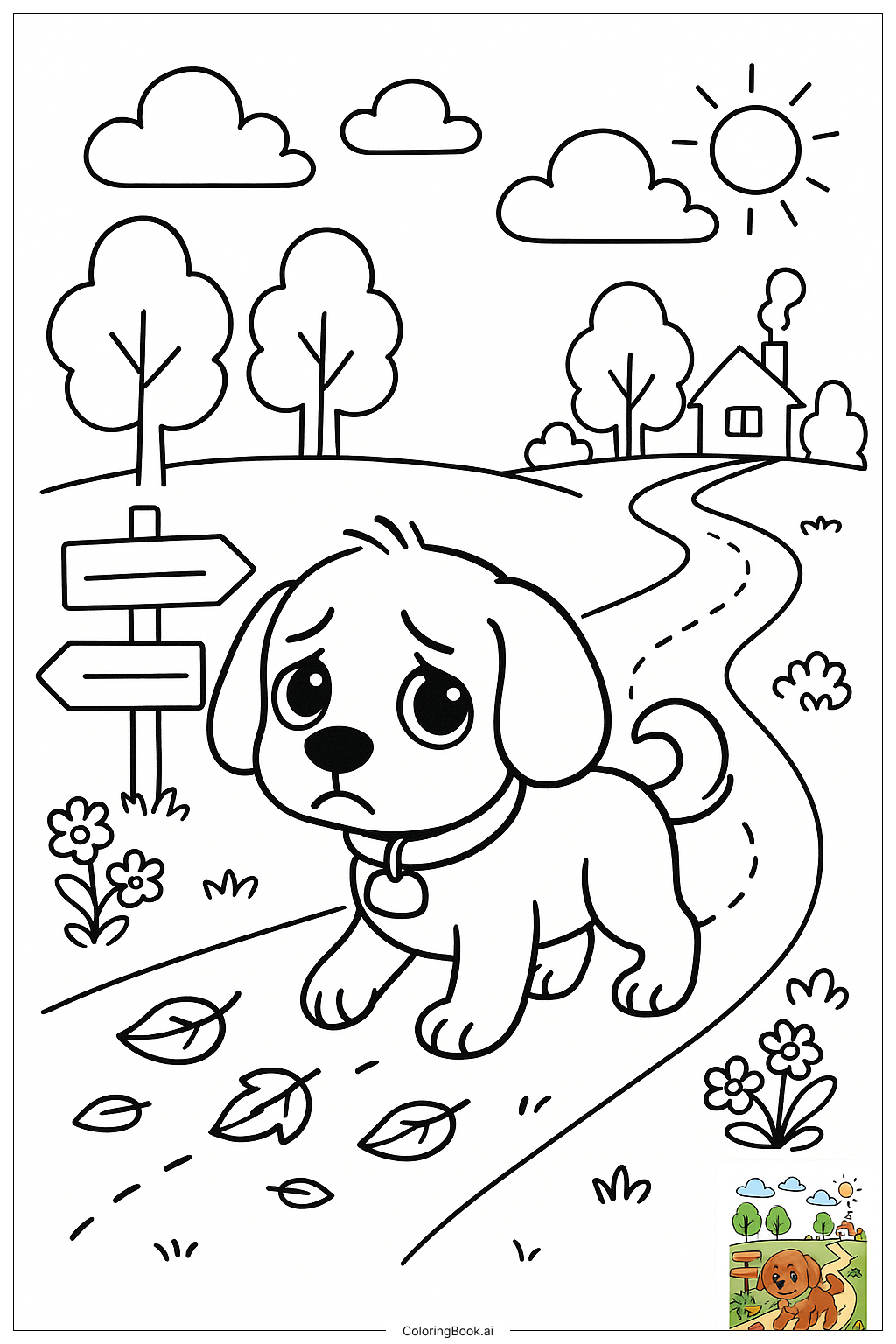
Start with the dog's fur. A golden yellow or warm brown works great for a friendly, lovable look. Use a lighter shade on the belly and around the muzzle. Color the eyes dark brown with a tiny white dot to make them shine. For the collar, try a bright red or blue to make it pop. The sidewalk and road can be light gray. Use soft greens for the grass and bushes. Color the houses with warm tones like beige, cream, or light orange. Add red or brown for rooftops. The open gate can be painted white or wooden brown. Use yellow for the sun and light blue for the sky. Flowers along the path can be any cheerful colors you like — pink, purple, or orange all look wonderful. Keep the overall color palette warm and bright to match the hopeful mood of a dog finding its way back home. Have fun mixing shades to bring this sweet scene to life!
Coloring challenges: Which parts are difficult to color and need attention for Lost Dog Finding Home coloring page?
• Dog Fur Texture: The dog's fur may have many small curved lines showing texture and fluffiness. Staying inside these fine lines can be tricky, especially around the face, ears, and tail. Use a sharp colored pencil or a fine-tip marker to carefully fill these areas without going over the outlines. Layering light and dark shades of the same color can help create a realistic fur effect.
• Expressive Facial Features: The dog's face has small details like eyes, a nose, and a mouth packed close together. These tiny features need careful coloring to keep them looking natural and cute. A very fine-tipped tool works best here. Leave a small white highlight in each eye to give the dog that bright, hopeful expression.
• Background Depth and Layers: The scene includes multiple layers — a foreground sidewalk, a mid-ground fence and gate, and background houses and trees. Giving each layer a slightly different shade of the same color helps create a sense of depth. This technique takes patience but makes the finished image look much more polished.
• Small Decorative Details: Flowers, fence posts, window frames, and door details are small and closely spaced. Rushing through these areas can lead to color bleeding between sections. Take your time with these spots and use a lighter touch when working near borders between two different colors.
• Consistent Lighting: Because the sun is shown overhead, highlights should appear on the tops of objects and shadows should fall underneath them. Keeping this consistent across the dog, houses, and plants makes the scene look unified and believable, but it does require planning before you start coloring.
Benefits of coloring books: Advantages of drawing Lost Dog Finding Home coloring page
Coloring this sweet scene of a lost dog finding its way home offers many wonderful benefits for children and young artists. First, it builds fine motor skills. Carefully coloring the dog's fur, tiny facial features, and small background details helps strengthen hand control and pencil grip, which are important skills for writing and drawing. Second, it encourages focus and patience. A detailed scene like this one asks colorists to slow down, pay attention, and work through the image section by section — a great exercise in concentration. Third, it sparks storytelling and imagination. Children naturally start wondering about the dog's journey — where it came from, who its family is, and how it feels to finally be heading home. This kind of emotional connection boosts creative thinking and empathy. Fourth, it teaches color mixing and planning. Deciding which colors work well together for the houses, sky, and dog builds early color theory skills in a fun and pressure-free way. Finally, completing the page gives a real sense of pride and accomplishment. Finishing a detailed coloring page shows children that effort and care lead to something beautiful — a lesson that goes well beyond the coloring book.