Coloring tips: How to color Easter Dog With Eggs coloring page well?
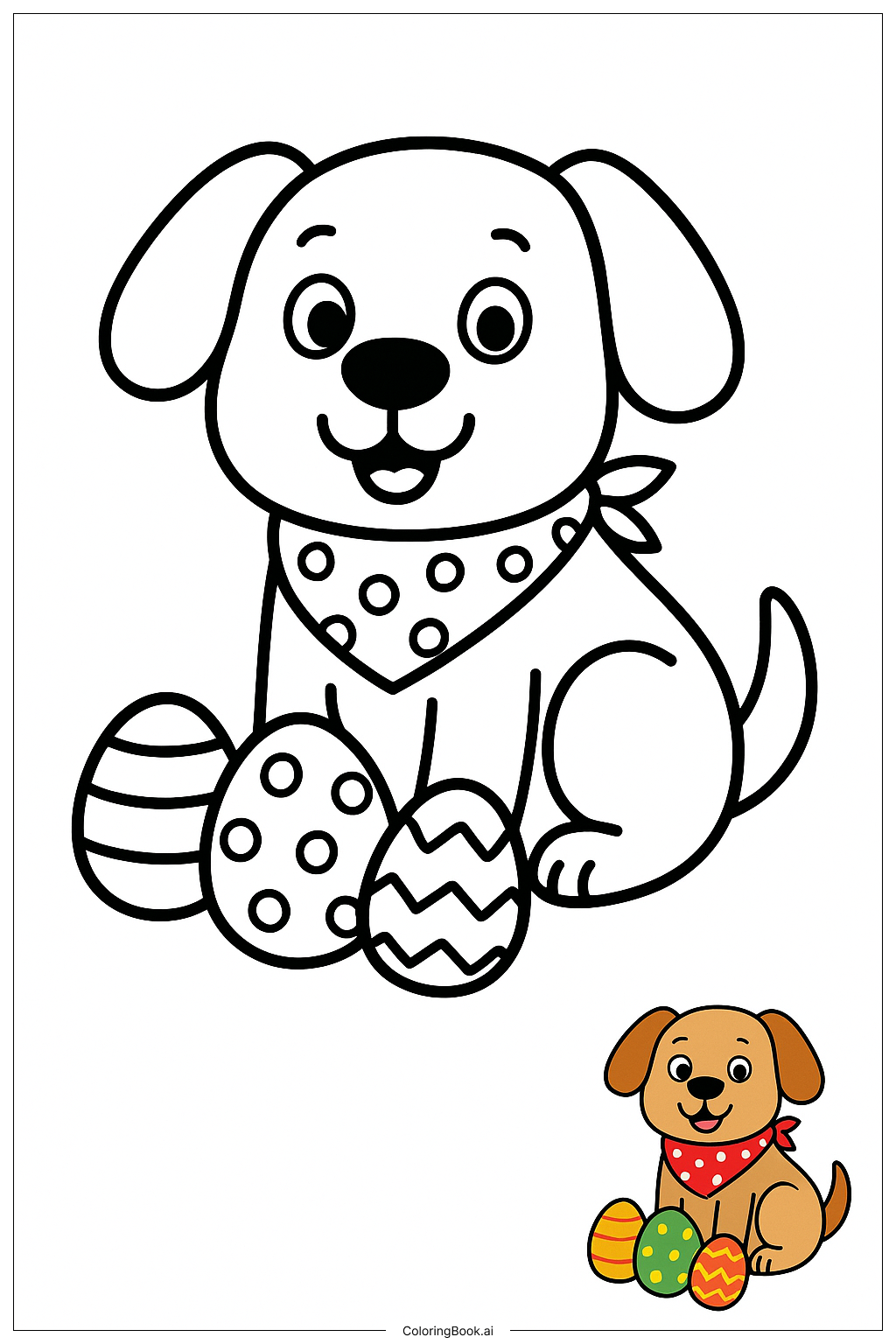
Start with the dog's body using warm, natural tones like golden yellow, tan, or light brown. For the ears and nose, use a slightly darker shade to add depth. Color the Easter bow or hat in a bright festive color like pink, purple, or sky blue to make it pop. Each Easter egg is its own little canvas — try using two or three colors per egg and alternate patterns to make them stand out from each other. Use pastel shades like lavender, mint green, soft yellow, and baby pink to keep the Easter mood light and cheerful. The flowers around the scene look great in bright reds, oranges, or yellows with green stems and leaves. Leave some areas lightly shaded to give the image a soft, springtime glow. Mix bold and pastel colors together for a fun, eye-catching result.
Coloring challenges: Which parts are difficult to color and need attention for Easter Dog With Eggs coloring page?
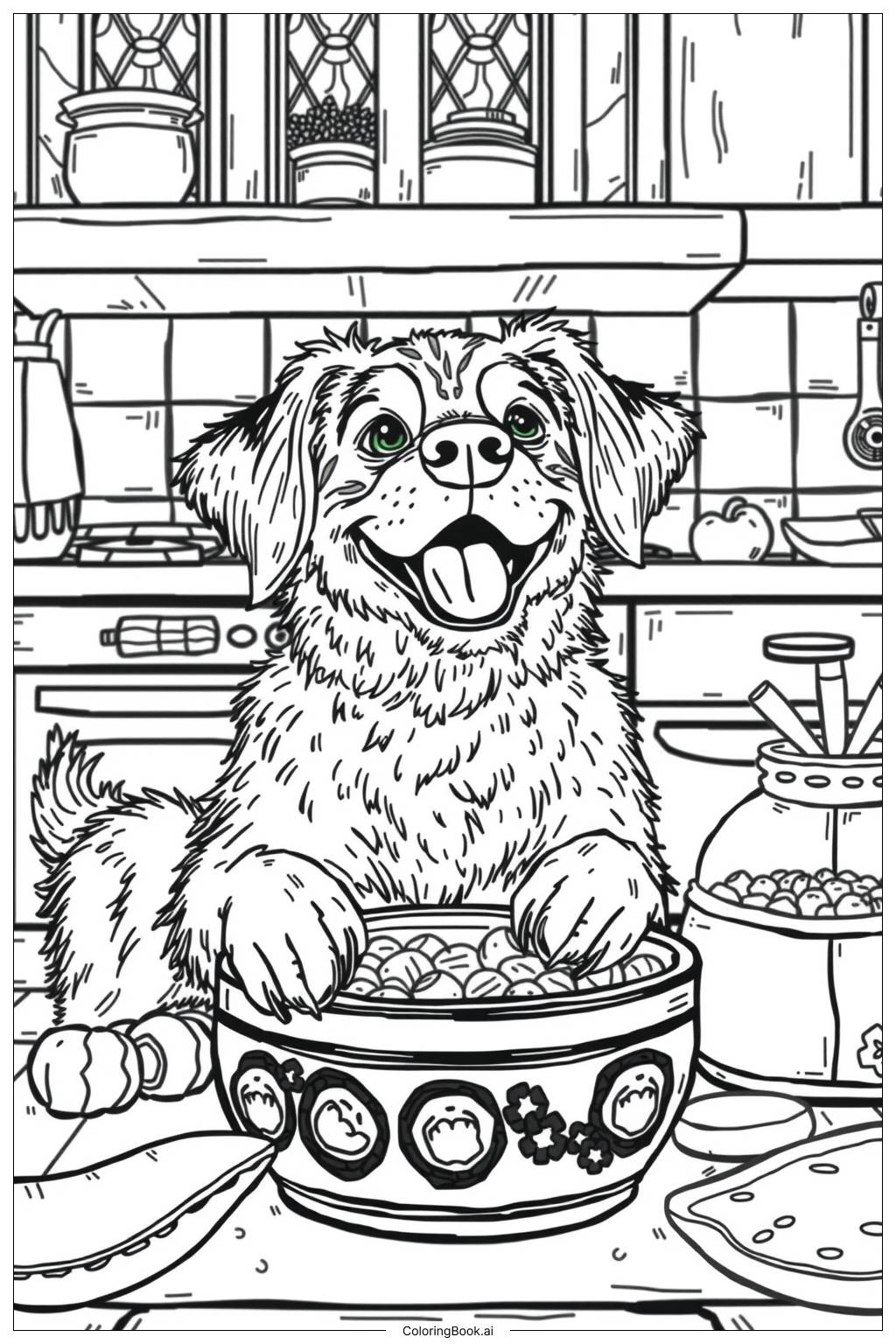
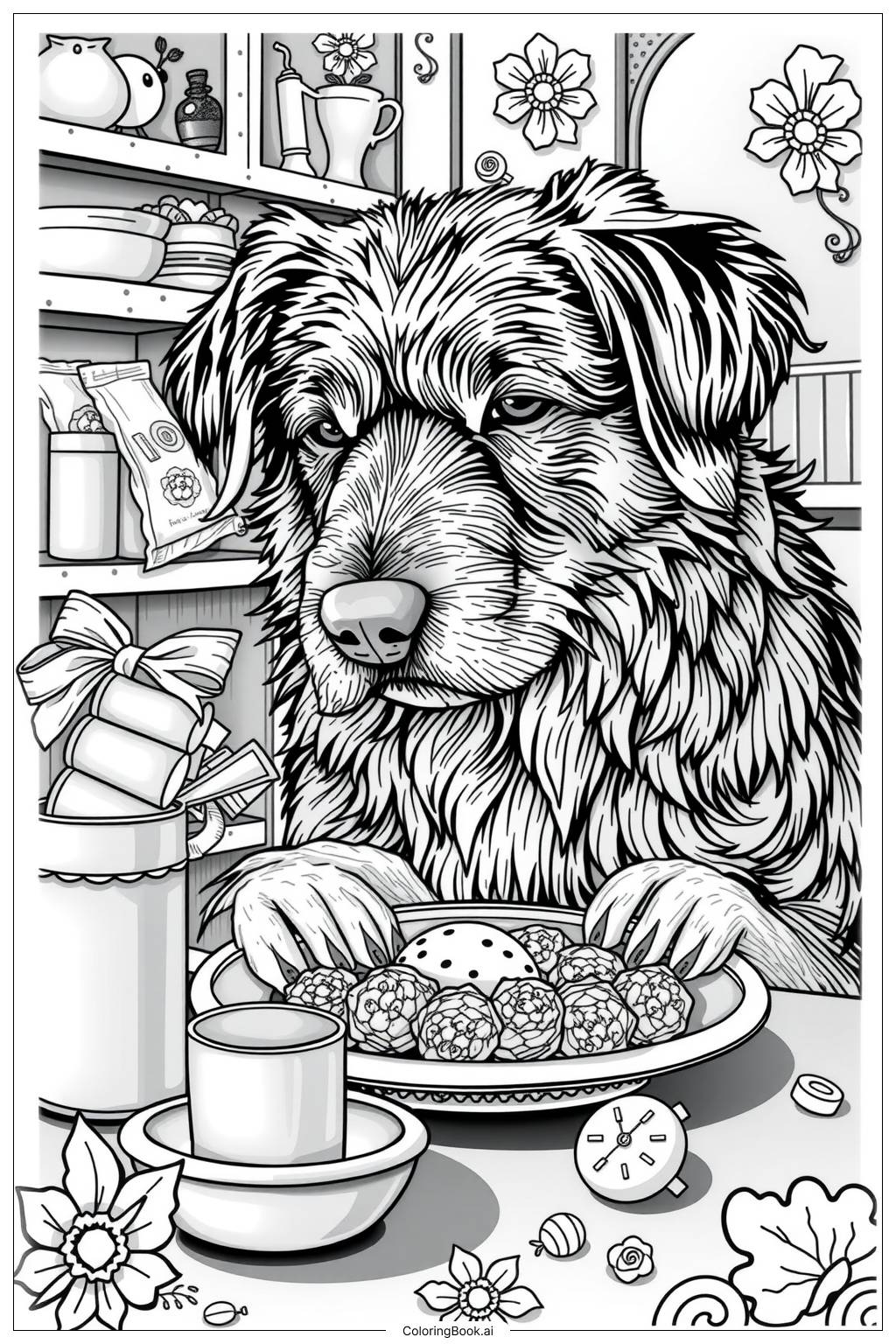
• Dog Fur Texture: The dog's fur has curved lines and layered details that can be tricky to color neatly. You need to follow the direction of the fur strokes carefully and use shading techniques to show depth. Using two close shades of the same color helps make the fur look more realistic and fluffy.
• Easter Egg Patterns: Each egg contains small, repeating patterns like dots, stripes, and swirls packed closely together. Staying inside these tiny shapes takes patience and a fine-tipped coloring tool. Choosing colors that contrast well with each other will help each pattern stand out clearly.
• Small Decorative Details: The bow, hat, or accessories on the dog have fine lines and small sections that are easy to smudge or color outside of. Using colored pencils or thin markers gives you better control in these tight areas.
• Background and Floral Elements: The flowers and spring elements in the background are small and close together. It can be hard to color each one individually without the colors bleeding into each other. Taking your time and using lighter pressure helps keep each element separate and clean.
• Color Balance Across the Whole Image: With so many different elements — the dog, the eggs, the flowers, and the decorations — it can be challenging to keep the overall color scheme balanced and harmonious. Planning your color choices before you start helps the finished image look unified and visually pleasing.
Benefits of coloring books: Advantages of drawing Easter Dog With Eggs coloring page
Coloring this Easter Dog With Eggs page offers a wide range of benefits for children and beginners alike. Working through the dog's fur, patterned eggs, and spring flowers helps build fine motor skills and hand-eye coordination as kids learn to color carefully within the lines. Choosing colors for each egg and decorative element encourages creative thinking and artistic expression — there are no wrong answers, and every choice makes the page uniquely theirs. The variety of shapes and patterns in this image also supports early learning of visual concepts like symmetry, repetition, and contrast. Because the theme is festive and fun, children stay engaged longer, which naturally extends their attention span and develops patience. The Easter theme adds a layer of seasonal joy, making the activity feel special and meaningful. For older children, the more detailed sections like the tiny egg patterns and floral backgrounds provide a gentle challenge that builds confidence when completed. Overall, this coloring page turns a simple creative activity into a rewarding experience that nurtures both artistic skills and a love for seasonal celebration.