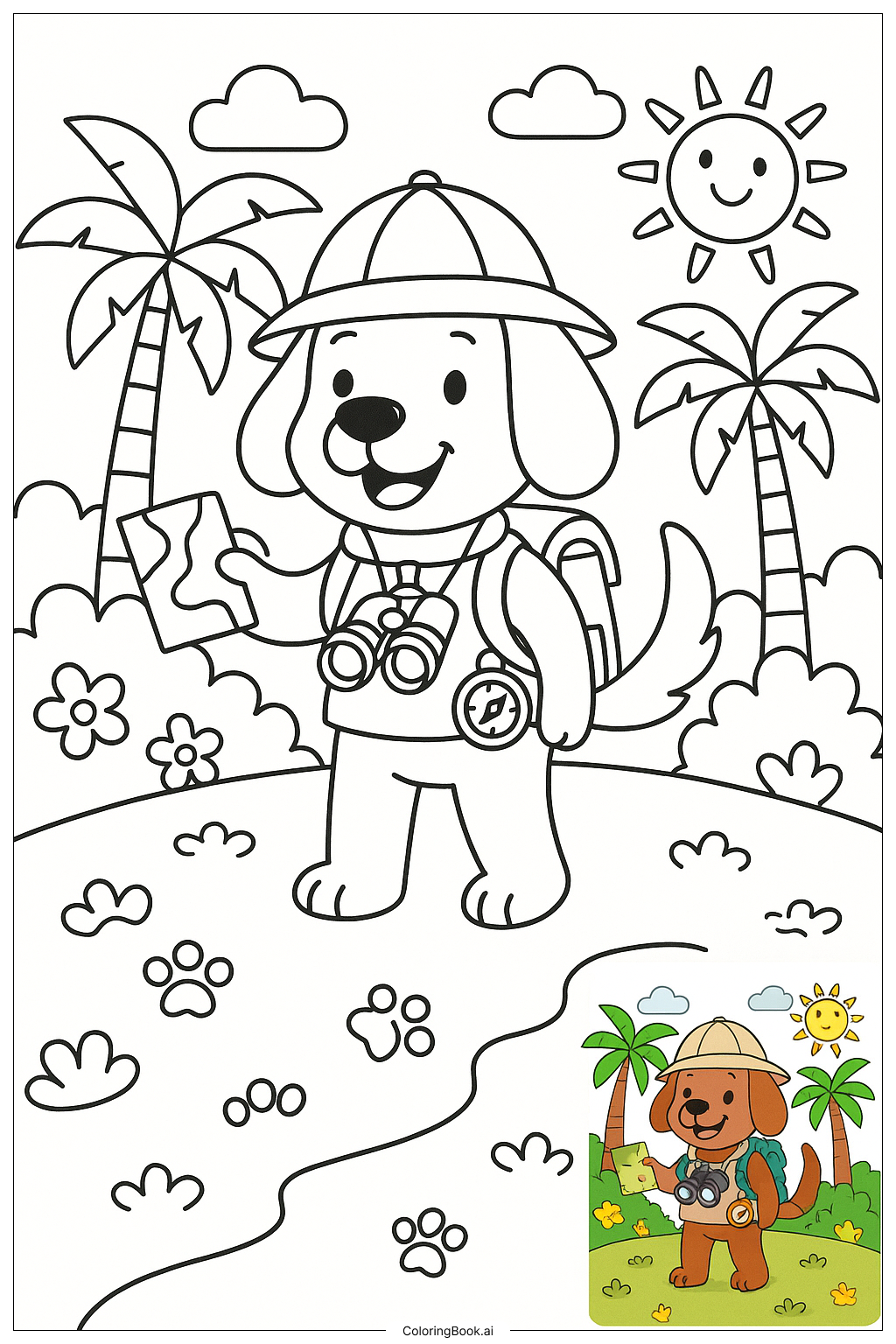
Coloring tips: How to color Dog Jungle Explorer coloring page well?
Start by coloring the dog's fur first. Golden yellow or warm brown shades work great for a classic dog look. You can also try spots or patches of white and tan for a mixed-breed feel. Use dark green and bright green for the jungle leaves and plants around the dog. Add lighter green highlights to make the leaves look shiny and alive. Color the explorer hat in khaki or sandy brown. The vest or jacket can be olive green or dark brown to match the jungle theme. Use bright colors like orange or red for small details like buttons or a bandana. The backpack can be dark green or brown. Color any vines in earthy brown tones. If there is a compass or map, use gold and cream colors to make them stand out. Try using darker shades in the background to help the dog pop forward. Have fun mixing shades to bring the jungle adventure to life!
Coloring challenges: Which parts are difficult to color and need attention for Dog Jungle Explorer coloring page?
• Dog Fur Texture: The dog's fur can be tricky to color well. You need to use multiple shades of the same color to show depth and softness. Try layering a lighter base color first, then add darker strokes following the direction the fur grows. This takes patience but makes the dog look realistic and fluffy.
• Explorer Outfit Details: The hat, vest, backpack, and small accessories have many small parts close together. It can be hard to color each piece separately without going outside the lines. Use a fine-tipped marker or a sharp colored pencil to carefully fill in small areas like buttons, straps, and buckles.
• Tropical Leaves and Plants: The jungle background is full of overlapping leaves and plants. Each leaf may look similar, so deciding which shade of green to use for each one can be confusing. Try using at least three different greens — light, medium, and dark — and alternate them so each leaf stands out clearly from the ones beside it.
• Depth and Shadows: Creating a sense of depth in a jungle scene is challenging. The background should feel darker and cooler than the foreground. Use blue-green tones for far-away plants and brighter, warmer greens for plants close to the dog. Adding light shadows under leaves and around the dog helps make the scene feel three-dimensional.
• Small Accessory Details: Items like a compass, map, or paw prints are tiny and packed with detail. Coloring these neatly requires a very sharp tool and a steady hand. Take your time with these small elements — they add a lot of personality to the image when done carefully.
Benefits of coloring books: Advantages of drawing Dog Jungle Explorer coloring page
Coloring this Dog Jungle Explorer image offers many wonderful benefits for kids and creative minds alike. First, it helps build fine motor skills. Carefully coloring inside the lines of the dog's fur, outfit, and jungle plants strengthens hand control and coordination, which is great for writing and other detailed tasks. Second, it encourages creativity and imagination. Choosing colors for the dog's fur, the explorer gear, and the tropical background lets you make the scene your own. There is no wrong answer — every child can create a unique jungle adventure. Third, it teaches color mixing and shading. Working with multiple greens for the jungle or layered browns for the dog's coat introduces kids to basic art techniques in a fun, low-pressure way. Fourth, coloring helps with focus and patience. A detailed scene like this takes time to complete, which builds concentration and the ability to work through a task step by step. Fifth, it is relaxing and calming. The steady, rhythmic motion of coloring reduces stress and gives kids a peaceful activity away from screens. Finally, finishing the page gives a real sense of accomplishment and boosts confidence. It is a simple but powerful way to feel proud of something you created with your own hands.