Coloring tips: How to color Dog Detective Solving Mystery coloring page well?
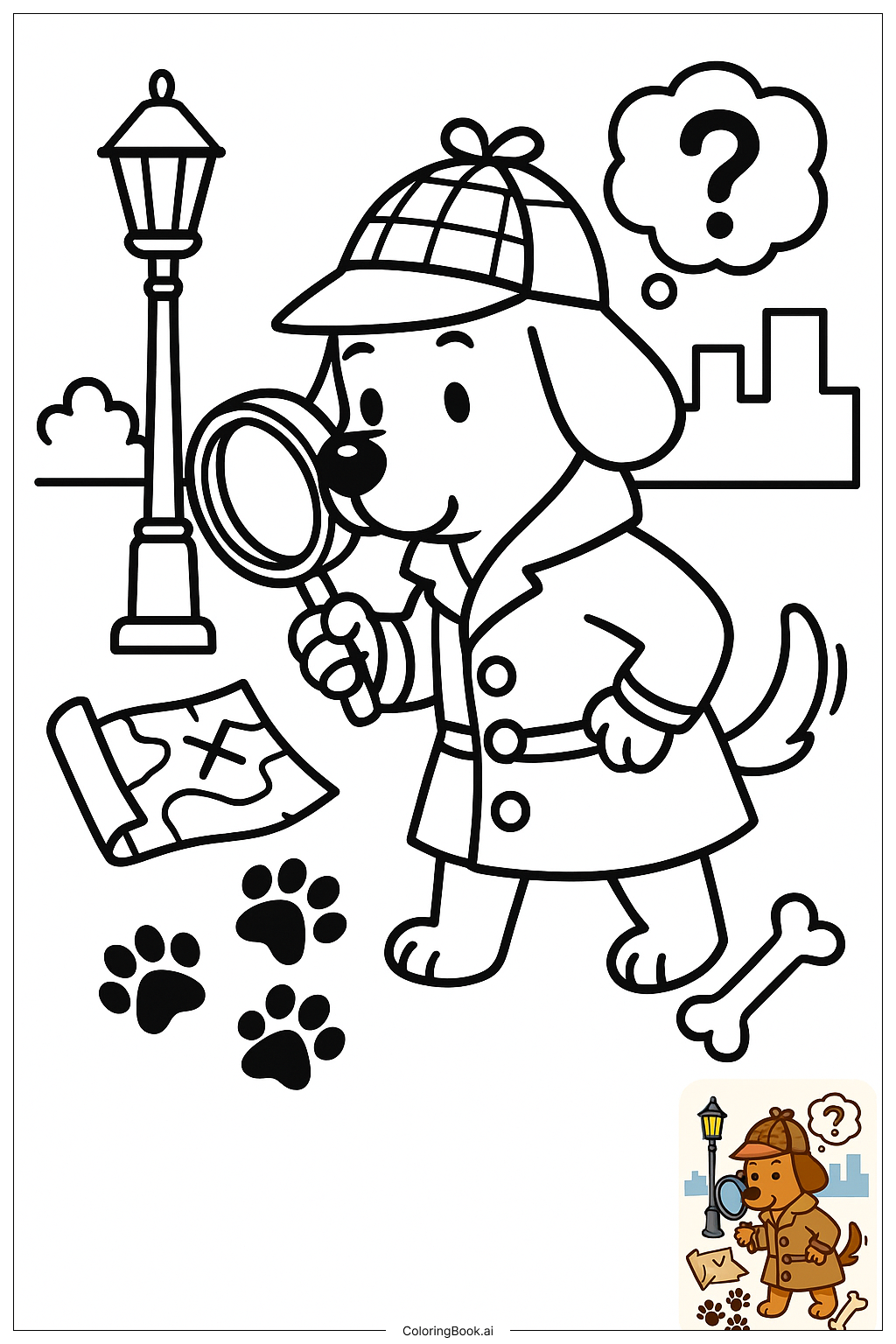
Start with the dog's fur. A warm golden brown or classic tan works great. Use a darker shade for the trench coat — think deep khaki, olive green, or dark brown to give it a detective feel. Color the deerstalker hat in a matching plaid pattern using two or three colors like gray, brown, and cream. Make the magnifying glass handle golden or wooden brown, with a light blue or pale gray lens. For the clues on the floor, use contrasting colors — a cream envelope, dark ink footprints, and a yellowed map with red or black markings. The bookshelves in the background can be colored with muted tones — dark wood and books in various warm colors. Keep the overall palette moody and rich to match the mystery theme. Use lighter colors in the foreground and darker tones in the background to create depth. Kids can also add their own creative touches to the map or the clues to make the scene feel personal and fun.
Coloring challenges: Which parts are difficult to color and need attention for Dog Detective Solving Mystery coloring page?
• Trench Coat Folds and Texture: The detective's coat has many overlapping folds and layered fabric details. Coloring these realistically requires using at least two or three shades of the same color — a base tone, a shadow tone, and a highlight. Young colorists may find it tricky to stay within each fold's boundary and blend smoothly without overworking the paper.
• Plaid Pattern on the Deerstalker Hat: The classic plaid or checkered pattern on the detective hat involves intersecting lines and small color blocks. Filling each section accurately with alternating colors takes patience and a steady hand. Using fine-tipped colored pencils or thin markers is recommended for this area to avoid bleeding into neighboring sections.
• Magnifying Glass Lens Effect: The lens of the magnifying glass should look transparent or glassy. Achieving this effect means leaving some areas white or very lightly shaded while adding subtle gradients around the edges. This kind of subtle shading can be challenging for beginners who are not yet comfortable with blending or layering light colors.
• Small Clue Details on the Floor: The footprints, envelope, and map contain tiny markings, lines, and symbols. These small elements are easy to accidentally fill with the wrong color or smudge. A fine-tipped tool is essential here, and taking time with each piece of the clue set will make the finished image much more satisfying.
• Background Depth and Atmosphere: The study background with bookshelves and a wooden desk requires careful use of darker, muted tones to suggest shadow and distance. Balancing the background so it does not overpower the main character is a common challenge that asks colorists to think about contrast and visual focus.
Benefits of coloring books: Advantages of drawing Dog Detective Solving Mystery coloring page
Coloring this dog detective scene offers a wide range of benefits for children and young artists. First, it builds fine motor skills. Carefully filling in small details like the hat pattern, clue markings, and coat buttons strengthens hand control and pencil grip. These are skills that carry over directly into handwriting and other precise tasks.
Second, it encourages creative thinking. Choosing colors for a mystery scene — deciding what mood to create, how dark the background should feel, or what color the secret envelope is — pushes kids to make artistic decisions and trust their own imagination.
Third, it supports focus and patience. A detailed image like this one cannot be rushed. Children learn to slow down, pay attention to one section at a time, and feel proud of gradual progress.
Fourth, it sparks storytelling. The detective theme naturally invites kids to imagine who the dog is, what mystery is being solved, and what those clues on the floor mean. This kind of visual storytelling builds language skills and narrative thinking.
Finally, completing a complex coloring page builds confidence. Finishing a challenging image gives children a real sense of achievement. It shows them that careful, patient effort leads to a result they can be proud of and want to share.