Coloring tips: How to color Divine Mercy With Children coloring page well?
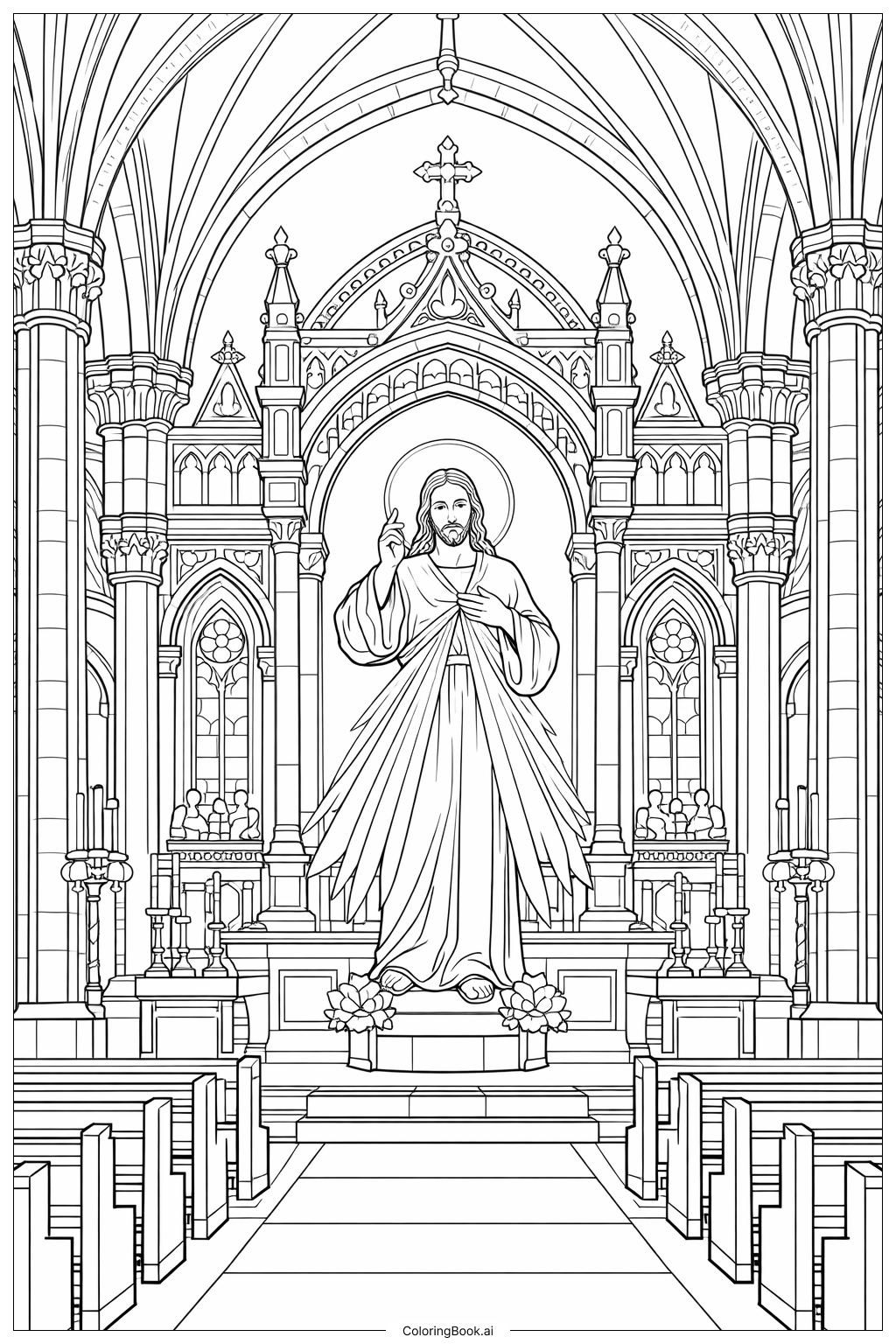
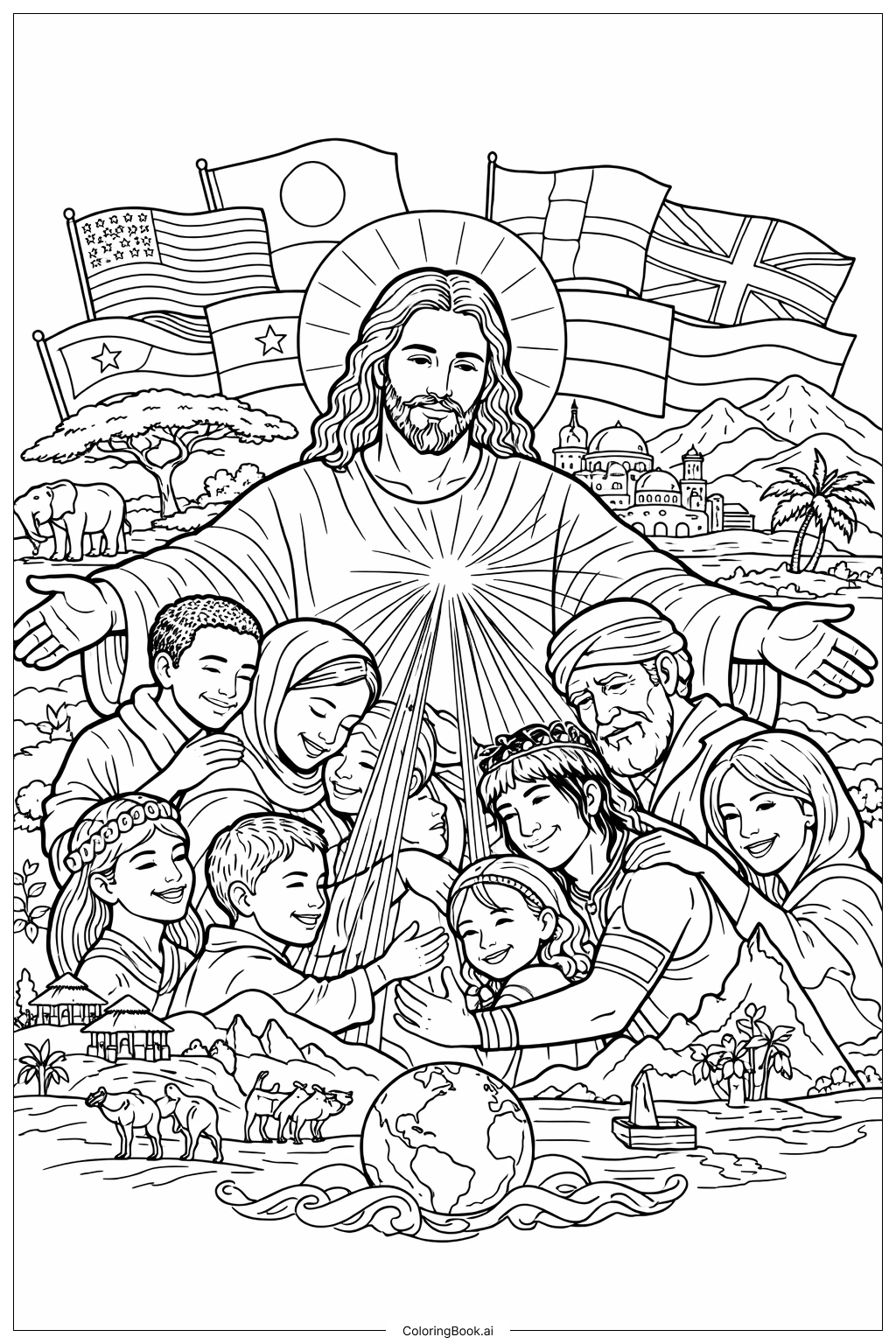
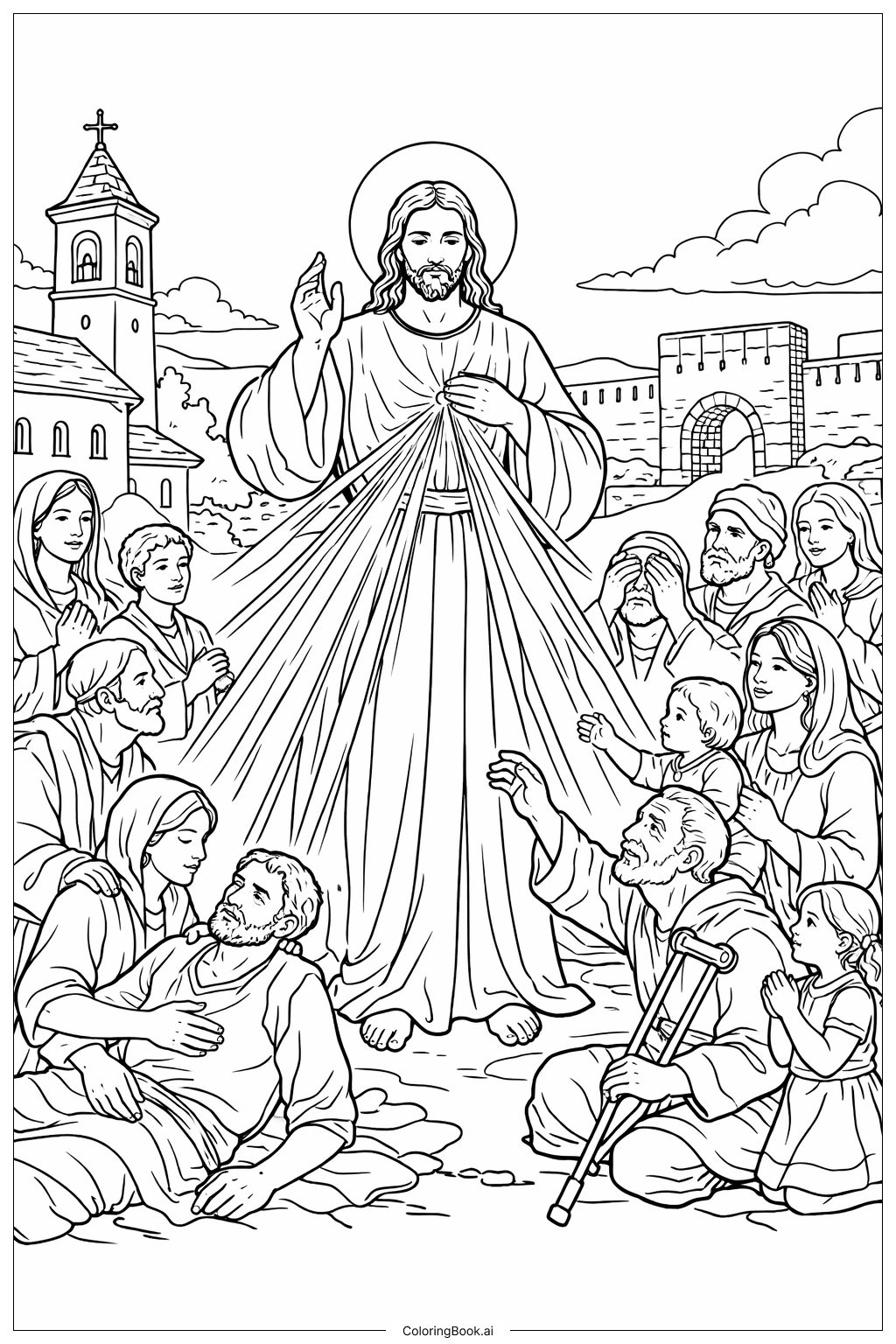
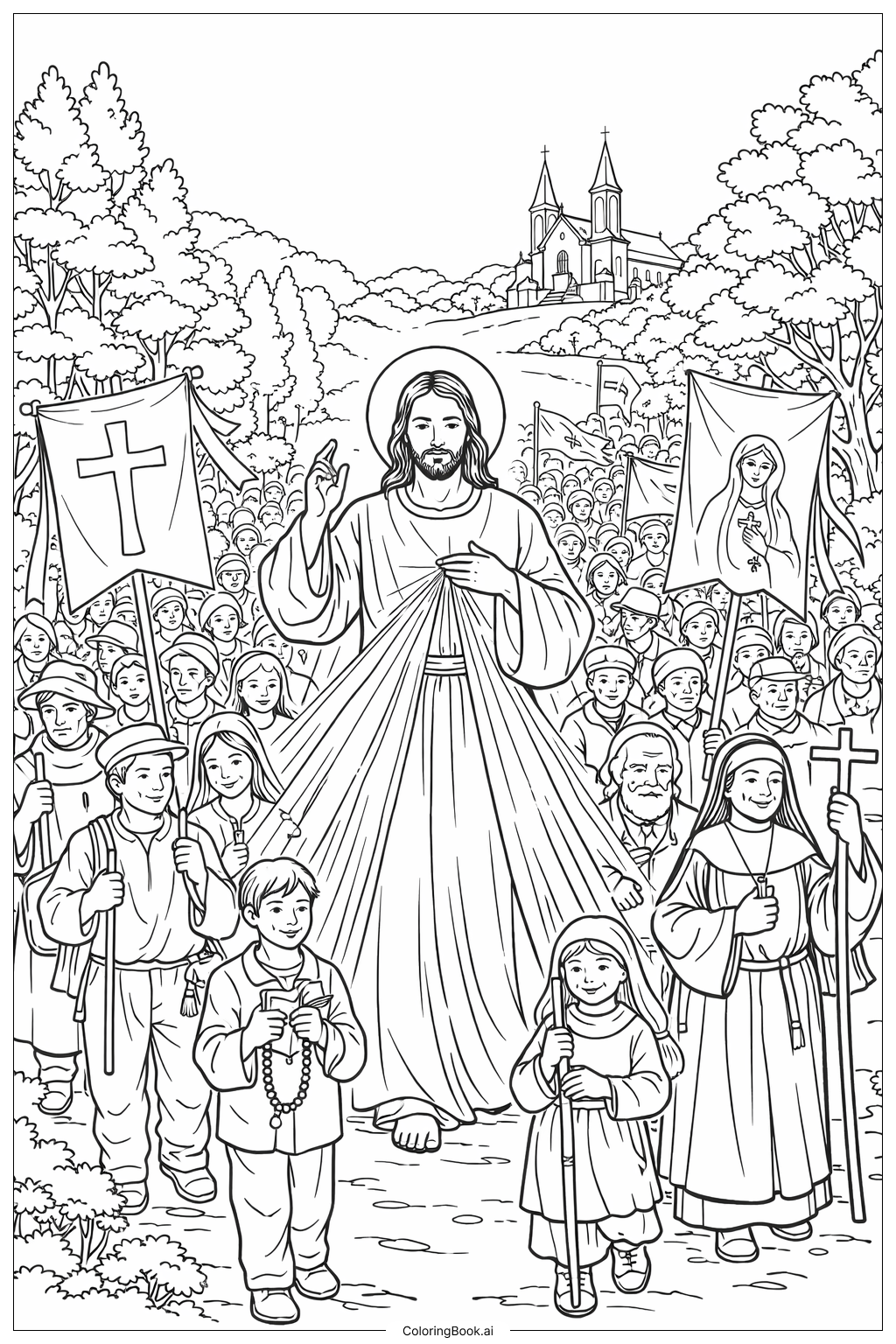
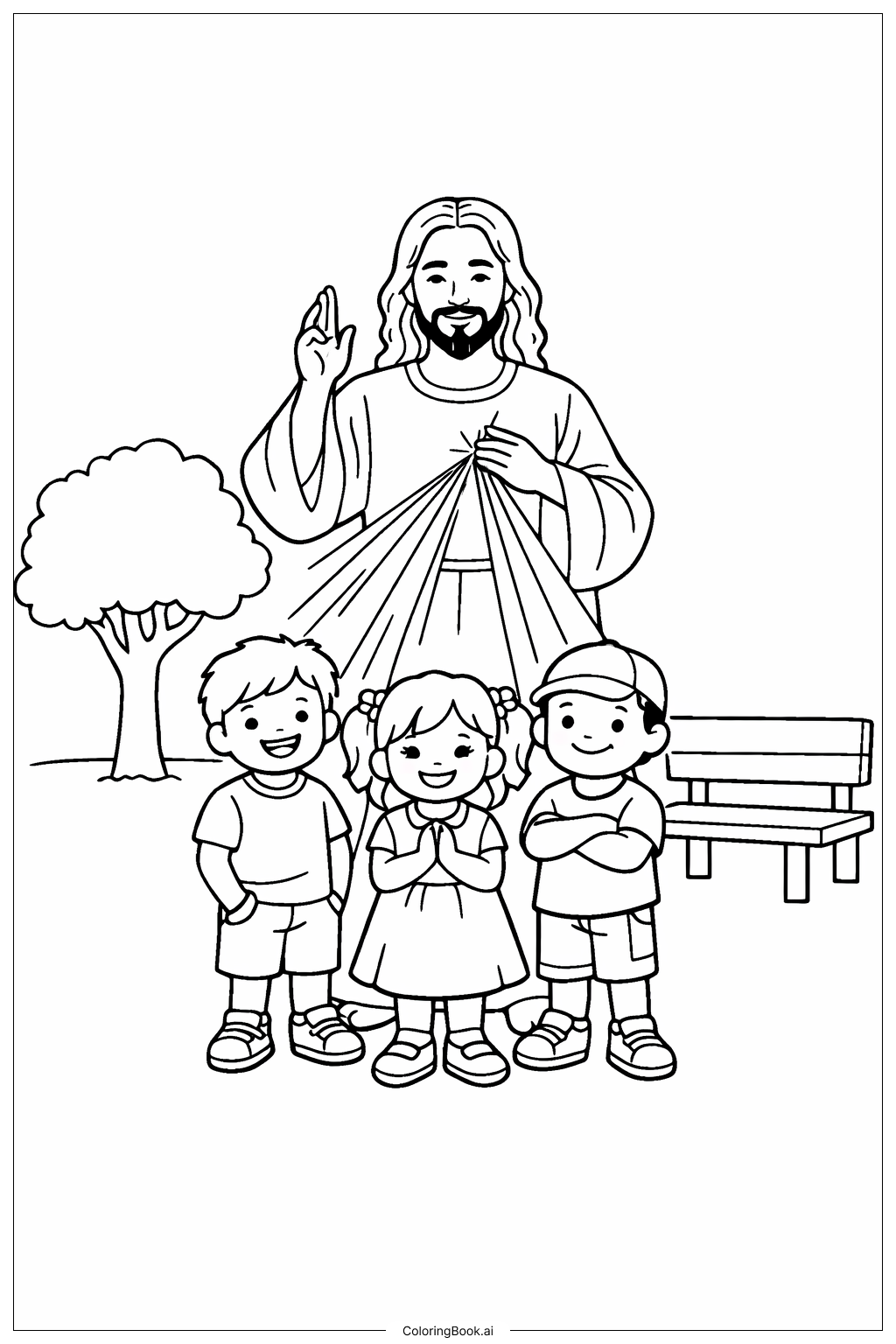
Use soft pastel colors to bring a gentle touch to the image. For Divine Mercy, consider using white or light blue robes, with radiant red and pale blue rays flowing from his heart to show divine love and mercy. Children’s clothing can be bright and cheerful—try colors like yellow, green, pink, and light purple to create joyful energy. Skin tones should be varied to celebrate diversity. The sky can be a light blue with soft white clouds. Adding subtle shading on robes and faces can make the figures look more three-dimensional and lively.
Coloring challenges: Which parts are difficult to color and need attention for Divine Mercy With Children coloring page?
• Fine Details of Rays: The red and pale blue rays from Divine Mercy’s heart are thin and flowing, requiring careful coloring to avoid bleeding outside lines.
• Facial Expressions: Capturing gentle and peaceful expressions on Divine Mercy and children might be challenging for young colorers due to small details around eyes and mouths.
• Overlapping Figures: The children and Divine Mercy overlap in places, demanding careful attention to color one area fully before moving to the next to avoid mixing colors.
• Clothing Patterns: The children’s clothes have folds and wrinkles that need shading to show depth, which can be tricky for beginners.
• Background Simplicity: While simple, the background clouds and sky need gentle gradient coloring to keep them soft and peaceful without strong contrasts.
Benefits of coloring books: Advantages of drawing Divine Mercy With Children coloring page
Coloring this image helps children practice focus and fine motor skills as they carefully color small details. It encourages creativity through choices of bright and pastel colors that express joy and mercy. The image also fosters spiritual reflection and emotional calm by portraying a scene of love and protection. Coloring the diverse children inspires kindness and appreciation for others. Overall, this project supports artistic development, patience, and a sense of peace, making it a meaningful activity for children aged 4 to 16.