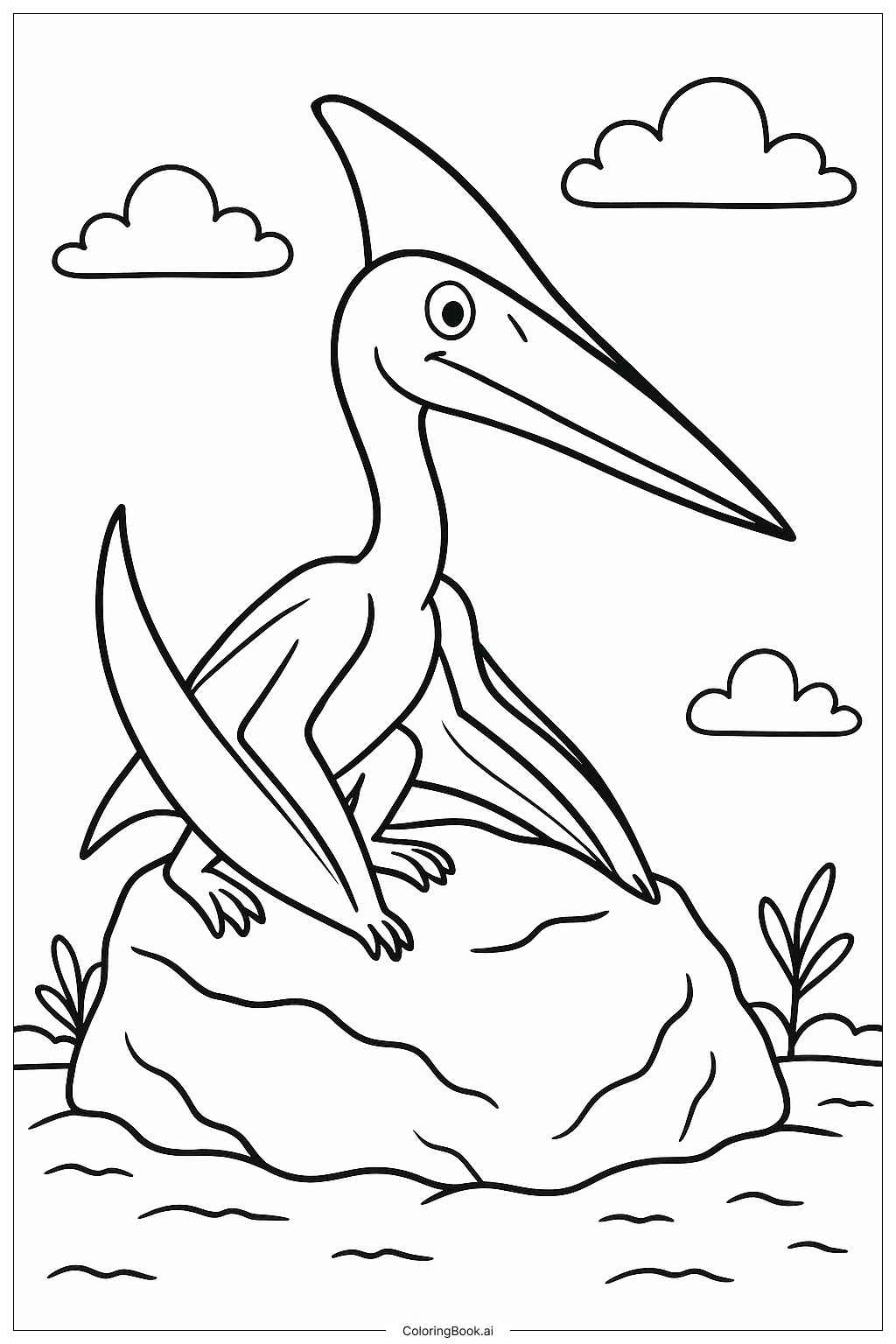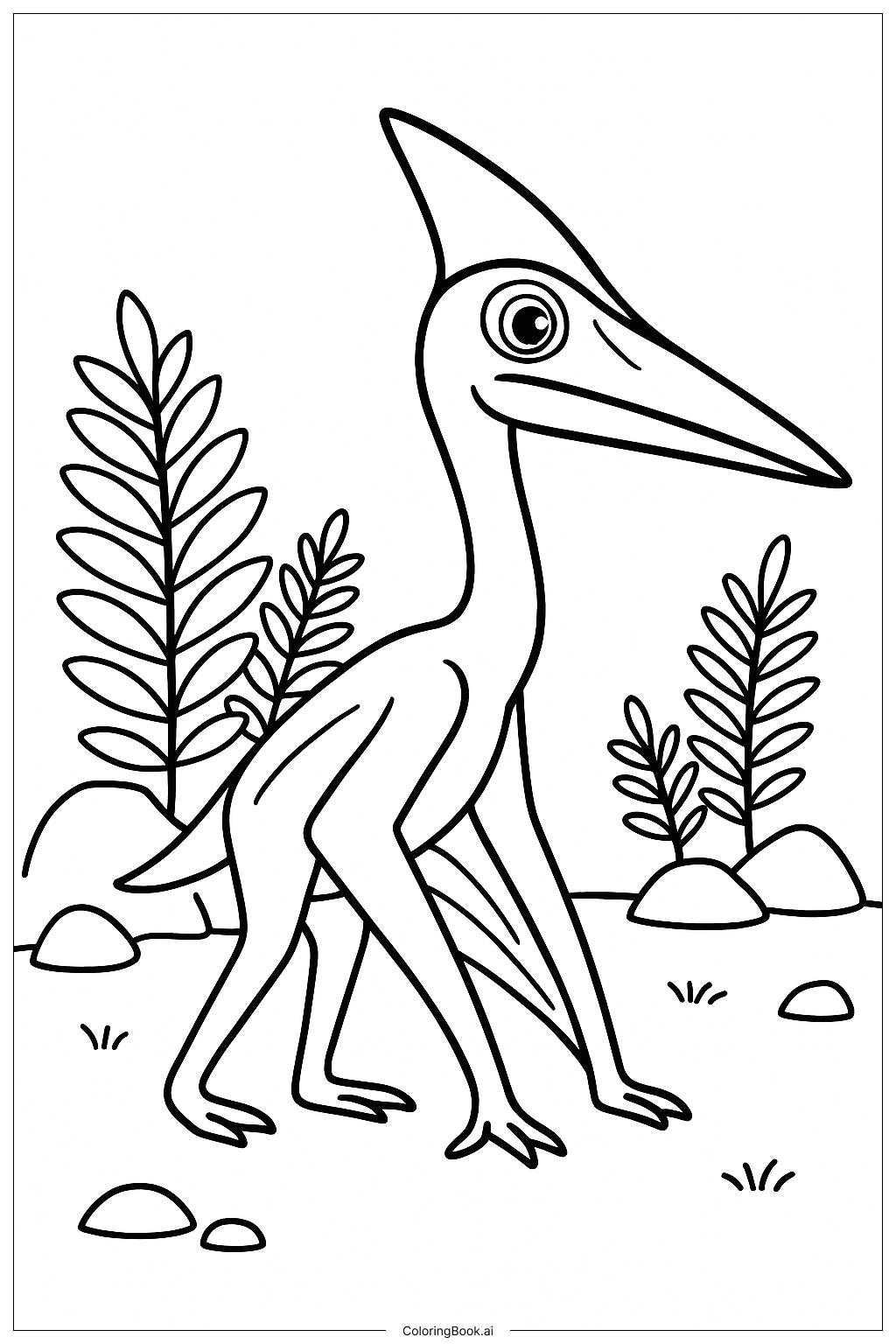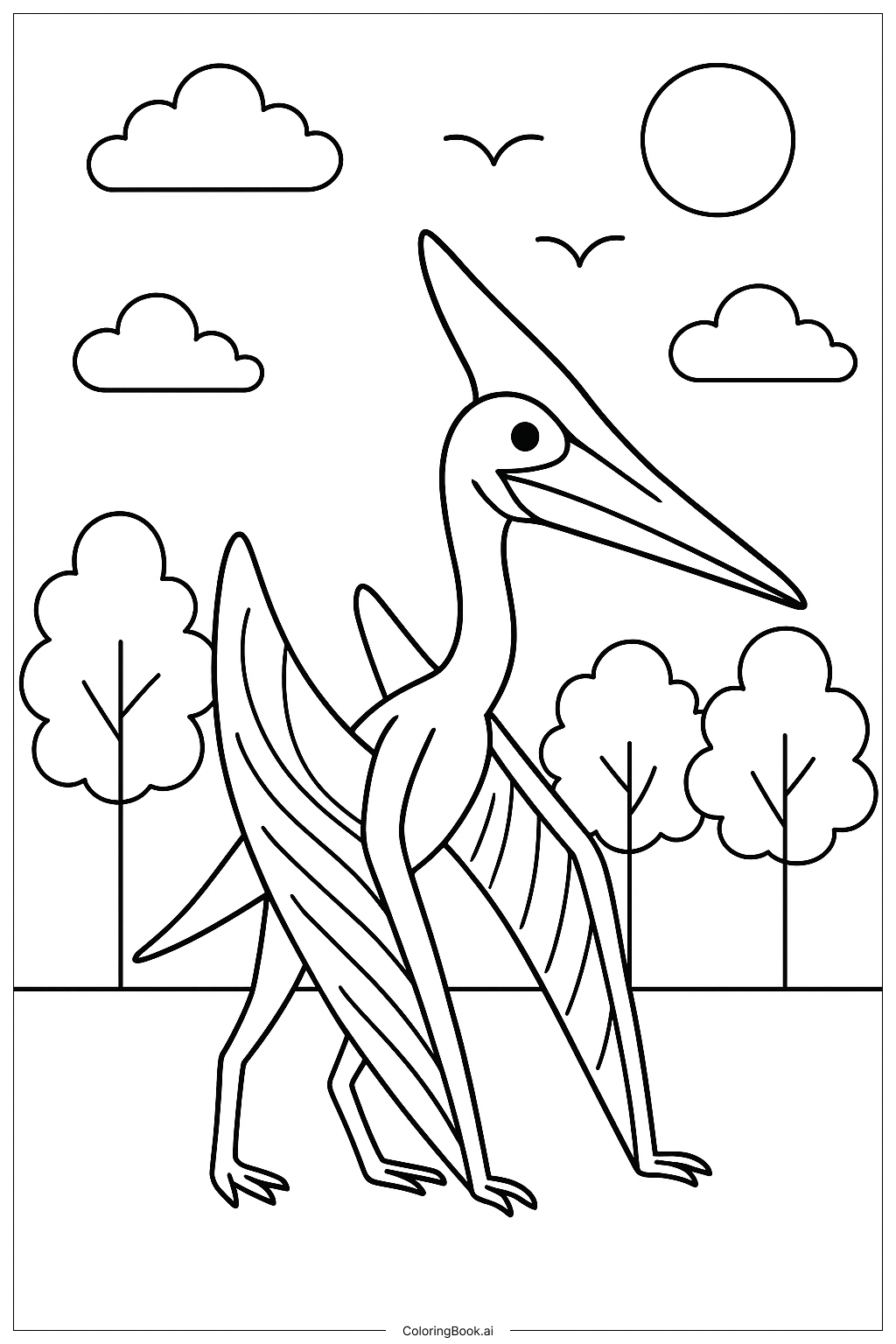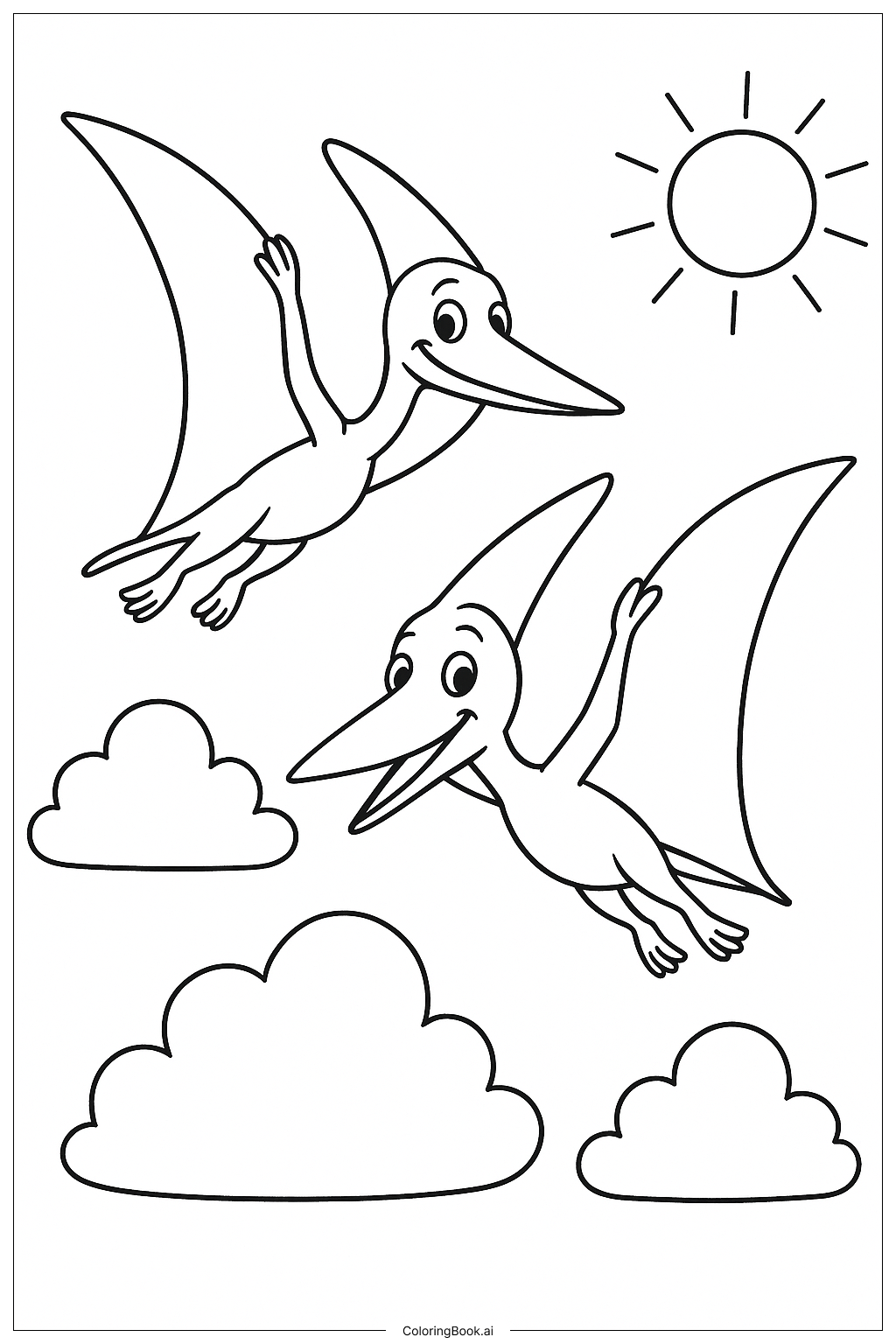
Coloring tips: How to color Quetzalcoatlus On A Cretaceous Beach coloring page well?
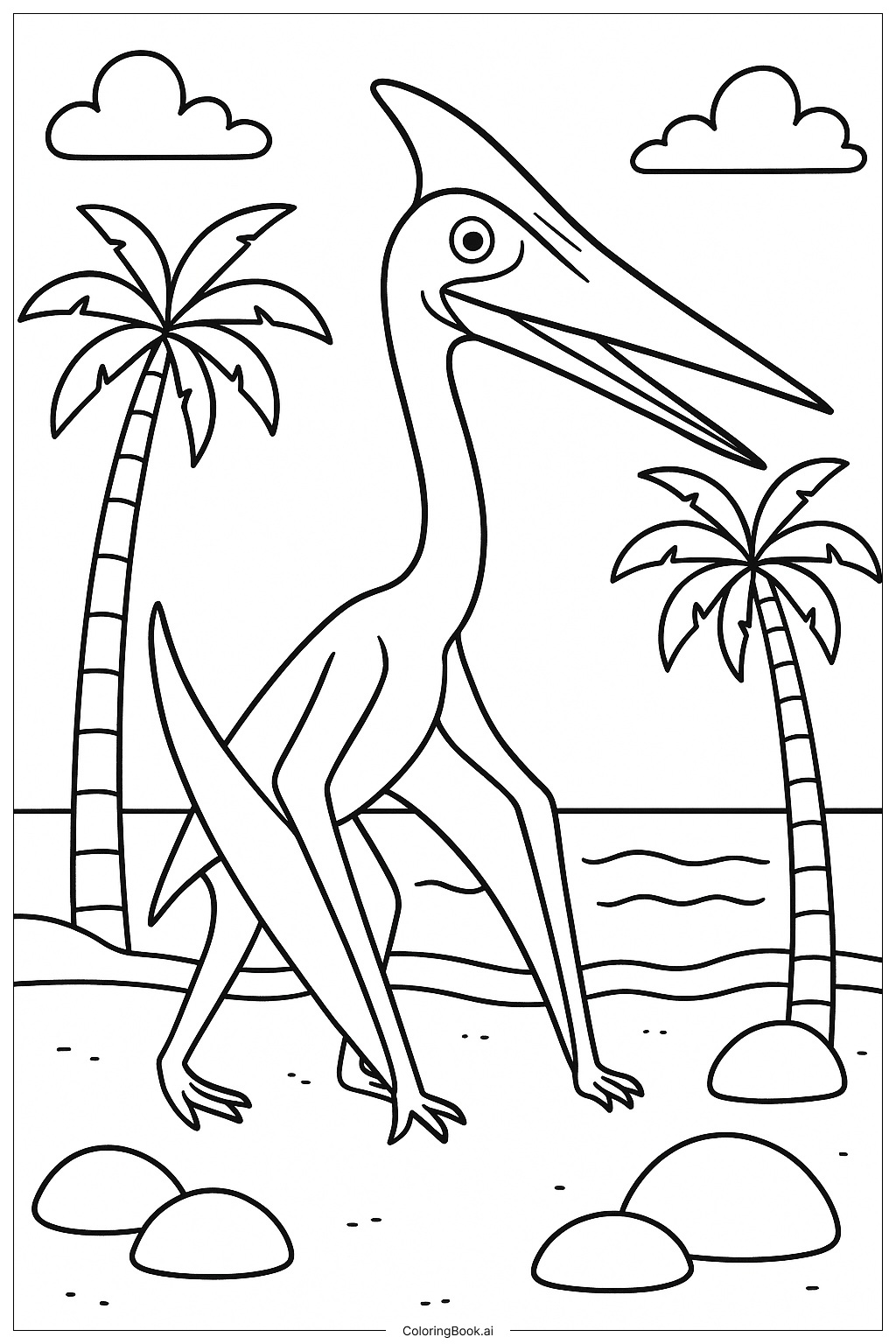
Start with the Quetzalcoatlus itself. Its body and wings can be colored in warm earthy tones like sandy brown, rust orange, or dusty tan. The head crest looks great in a bold contrasting color like deep red or bright orange. Use a pale yellow or cream for the belly area to show lighter underside coloring. The long beak can be a darker brown or gray.
For the beach, use light sandy yellows and soft beiges. Add a touch of darker brown near the waterline to show wet sand. The ocean in the background can be a gentle blue-green, with light foam at the wave edges.
The plants and ferns work well in various shades of green, from deep forest green to bright lime. Use darker greens for shadows under the leaves.
The sky can be a warm peachy orange or a soft blue to give the scene a calm prehistoric feel. Kids can experiment with sunset colors like pink and gold to make the scene really come alive.
Coloring challenges: Which parts are difficult to color and need attention for Quetzalcoatlus On A Cretaceous Beach coloring page?
• Wing Membrane Texture: The Quetzalcoatlus has large, flat wing membranes that stretch across a wide area. Coloring them evenly without streaks can be tricky. Try using light, overlapping strokes in the same direction to build up smooth, consistent color. Leaving a slightly lighter edge near the wing tips can add a natural, dimensional look.
• Head Crest Details: The head crest is a narrow, elongated feature sitting on top of the skull. It requires careful, precise coloring to stay within its outline and not bleed into the neck or beak. Use a fine-tipped coloring tool and work slowly from the base of the crest upward.
• Sandy Beach Gradients: A beach is not one flat color. It shifts from dry, pale sand at the top to darker, wetter sand near the water. Creating this natural gradient means gradually layering colors and blending them softly. This can be challenging for younger colorists but is a great skill to practice.
• Background Ocean and Sky: The distant ocean and sky sit close together at the horizon line. Keeping the blue of the water distinct from the color of the sky while still making them look like they belong together takes care. Using a slightly greener blue for the water and a softer, lighter blue for the sky helps them stay separate.
• Plant and Foliage Details: The ancient ferns and cycads have many small, overlapping leaves. Coloring each leaf individually takes patience. Using two or three shades of green and alternating them across the leaves creates a lush, realistic look without feeling overwhelming.
Benefits of coloring books: Advantages of drawing Quetzalcoatlus On A Cretaceous Beach coloring page
Coloring this Quetzalcoatlus beach scene is a wonderful activity for kids of all ages. It sparks curiosity about prehistoric life and ancient creatures that roamed the Earth millions of years ago. As children color, they naturally start to wonder about dinosaurs and pterosaurs, encouraging them to ask questions and learn more about science and natural history.
The wide variety of elements in this scene, from the giant flying reptile to the sandy beach, ocean waves, and ancient plants, gives young colorists a chance to practice using many different colors and techniques. This builds fine motor skills and hand-eye coordination as they work carefully within detailed outlines.
Choosing colors for the Quetzalcoatlus also encourages creative thinking. Since no one knows exactly what color these ancient animals were, kids are free to use their imagination fully. This freedom boosts confidence and self-expression.
The calming rhythm of coloring helps children focus and relax. Spending time on a detailed scene like this teaches patience and persistence, two skills that carry over into school and everyday life.
Sharing the finished artwork with family or friends also builds pride and a sense of accomplishment. Overall, this coloring page is both educational and enjoyable, making it a great activity for curious, creative kids.