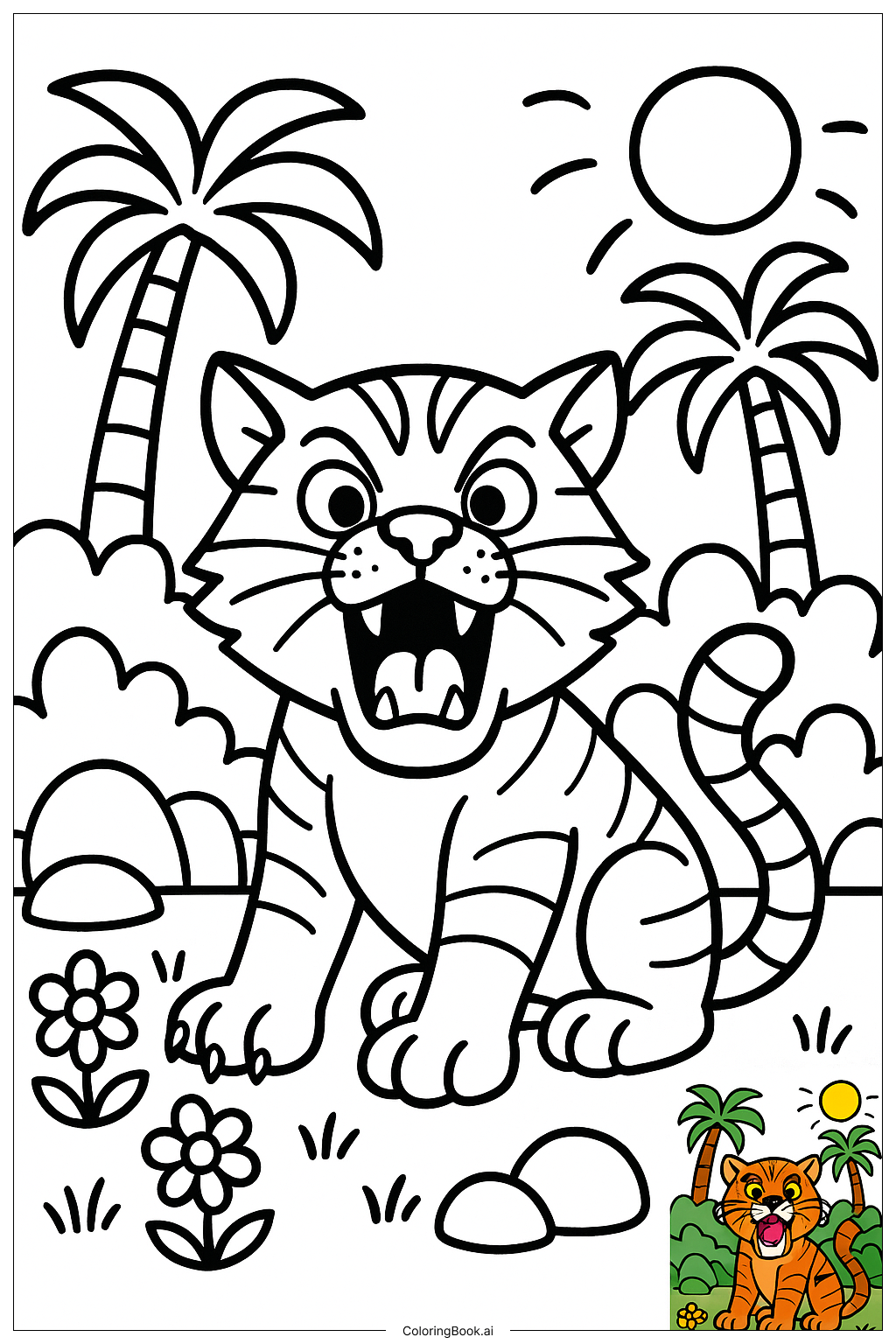
Coloring tips: How to color Wild Cat Roaring In Jungle coloring page well?
Start with the wild cat's body using warm tones like golden yellow, tawny orange, or sandy brown. Add darker brown or black stripes and spots to bring out the fur pattern. Use a deep reddish-pink for the inside of the mouth and a pale cream for the teeth. Color the eyes with bright amber or green to make them stand out. For the jungle background, use many shades of green — lime, forest green, and dark olive — to create depth among the leaves and vines. Add brown and tan tones to the roots and ground. Try layering light and dark shades to give the leaves a three-dimensional look. Use dark shadows around the cat to make it pop from the background. Feel free to use bold, vivid colors to make the whole scene feel alive and exciting.
Coloring challenges: Which parts are difficult to color and need attention for Wild Cat Roaring In Jungle coloring page?
• Fur Texture and Patterns: The wild cat's coat has complex patterns of stripes, spots, and varying fur tones. Recreating a realistic fur look requires blending multiple shades smoothly. Children may find it tricky to follow the natural curves of the body while keeping the pattern consistent. Using short pencil strokes in the direction of fur growth can help achieve a more natural result.
• Facial Details: The face of the roaring cat is filled with intricate details — open jaws, layered teeth, a textured tongue, flared nostrils, and intense eyes. Each element is small and closely packed together. Staying within the lines while adding realistic color to each part takes patience and a fine-tipped tool.
• Jungle Foliage Depth: The background is dense with overlapping leaves, vines, and shadows. Creating a sense of depth means using multiple tones of green and knowing which leaves sit in front of others. Without variation in shading, the background can look flat and confusing.
• Eye Expression: The cat's eyes need to convey fierceness and life. Getting the right balance of highlight, iris color, and dark pupil in a small space is a challenge. A misplaced highlight or the wrong shade can make the eyes look dull instead of vivid.
• Shadow and Light Contrast: The jungle setting calls for strong contrasts between light and shadow to show the cat's three-dimensional form. Understanding where light hits the fur, face, and muscles — and where shadows fall — requires careful observation and confident shading technique.
Benefits of coloring books: Advantages of drawing Wild Cat Roaring In Jungle coloring page
Coloring this wild cat roaring in the jungle offers a wide range of benefits for children and young learners. The detailed design helps build fine motor skills as kids carefully fill in small areas like teeth, eyes, and fur patterns. Working with complex lines trains hand-eye coordination and steady pencil control.
The jungle scene encourages creativity. Choosing colors for exotic leaves, rich earth tones, and a fierce big cat sparks imagination and personal expression. There are no wrong answers — every child can create their own unique version.
Learning about color relationships is another great benefit. Mixing warm and cool tones, practicing shading, and understanding contrast all come naturally through the coloring process. These are early art skills that build a strong visual foundation.
The image also connects to the natural world. Kids become curious about wild cats, jungle ecosystems, and animal behavior while they color. This can open conversations about wildlife and conservation in a fun, engaging way.
Finally, the focused, quiet activity of coloring promotes calm and concentration. Completing a detailed page like this gives children a real sense of achievement and confidence. It is a rewarding, screen-free activity that blends creativity, learning, and relaxation all in one.