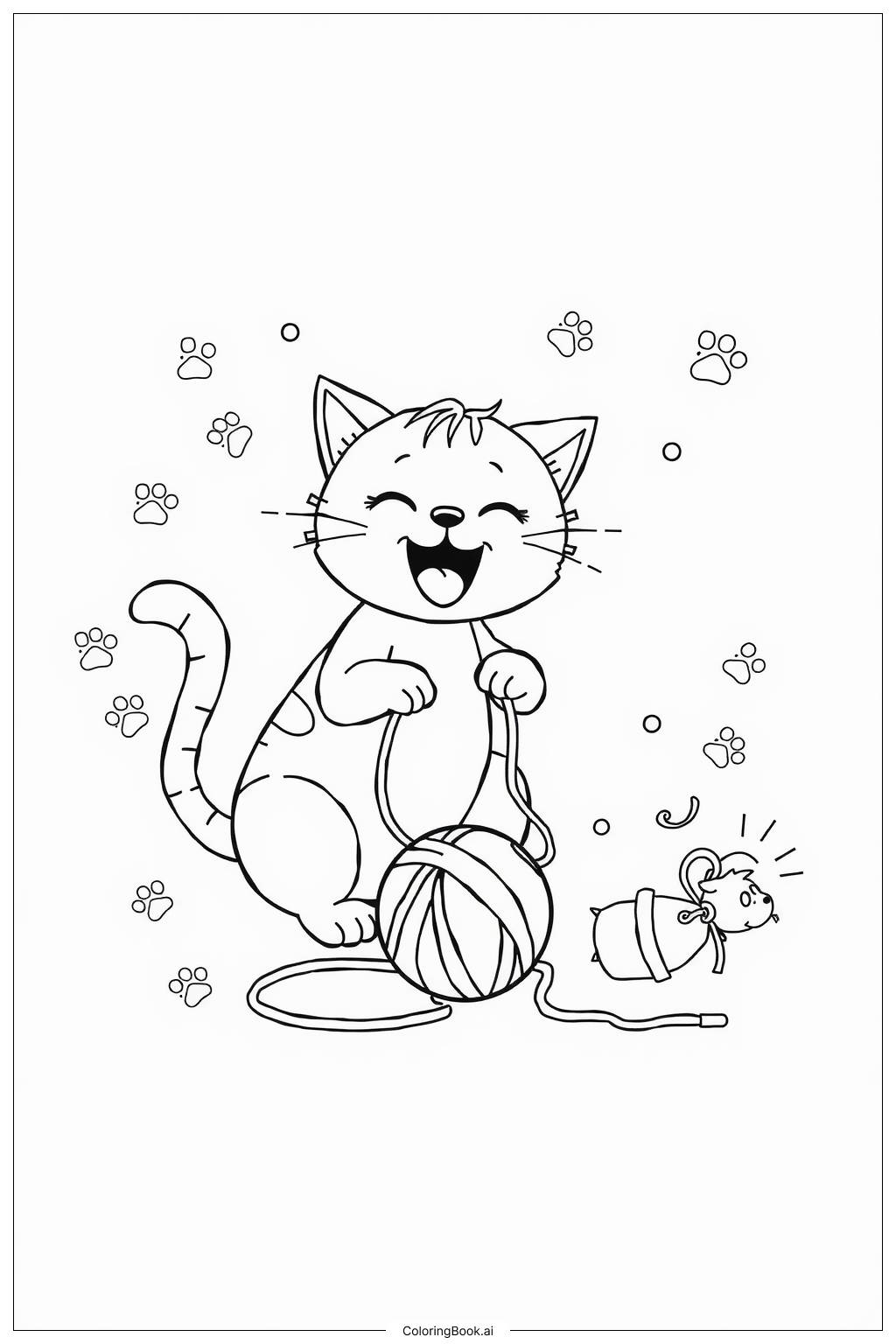
Coloring tips: How to color Cat Playing With Yarn coloring page well?
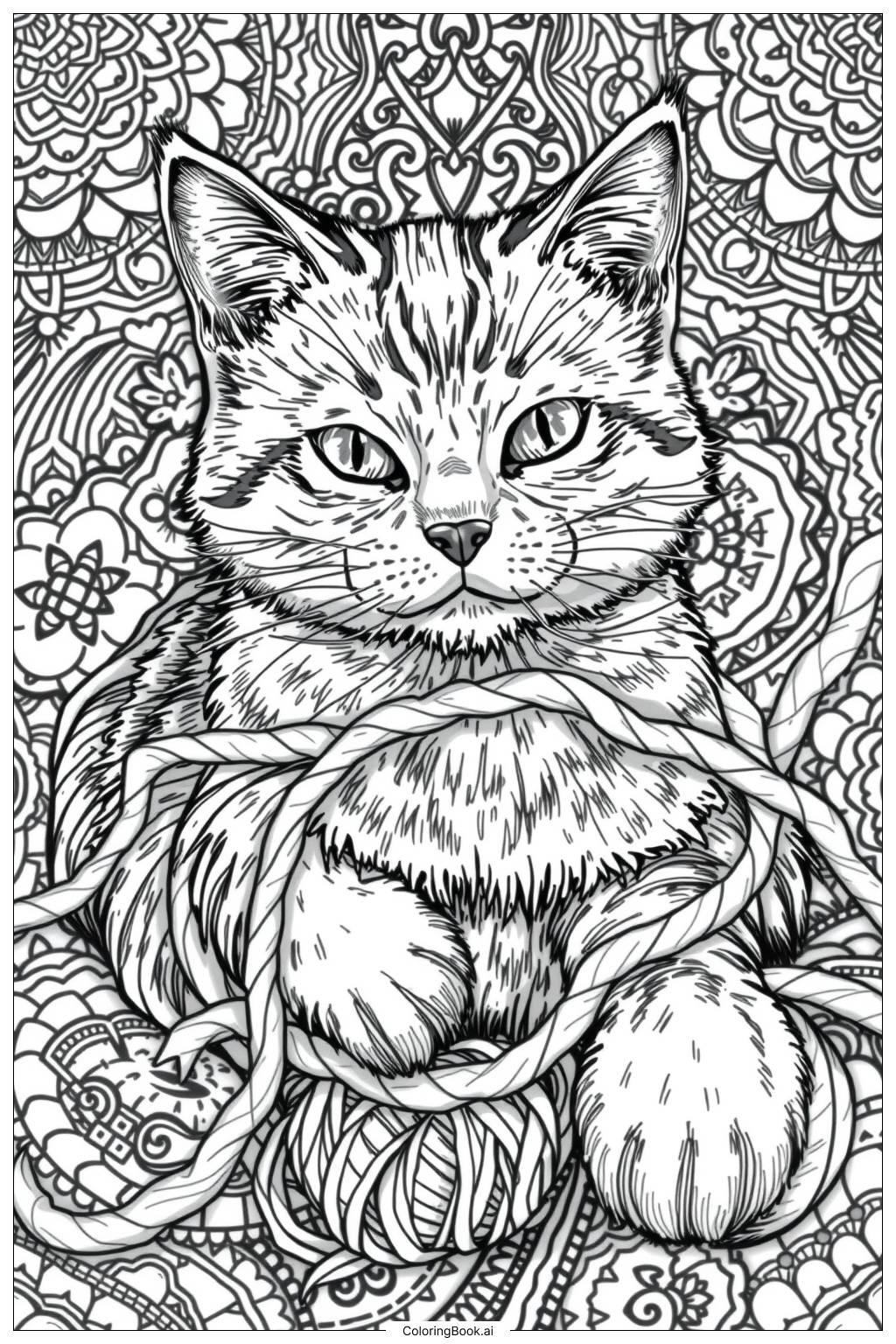
Start with the cat's body using warm colors like orange, cream, tan, or gray. Tabby stripes look great in brown or dark gray. Use a light base color first, then add darker shades along the edges and under the chin for a soft, fluffy look. For the yarn ball, pick a bright, fun color like red, yellow, blue, or purple. Make the loose strands the same color or mix a few shades to show movement. Color the eyes in vivid green, gold, or blue to make them pop. The nose can be a soft pink. Use a light background color like pale yellow or sky blue to make the cat stand out. Keep the colors bold and cheerful for a lively, playful feel that matches the cat's energetic mood.
Coloring challenges: Which parts are difficult to color and need attention for Cat Playing With Yarn coloring page?
• Fur Texture Details: The cat's body is covered in fine lines that suggest fluffy fur. Coloring these evenly without going outside the lines can be tricky. Try using short, light strokes that follow the direction of the fur lines to create a natural, soft look. Younger colorists may find it easier to use a single base color first before adding darker tones on top.
• Yarn Strands and Loops: The yarn creates many overlapping curves and spirals around the cat. Keeping track of which strand goes over or under another is a real challenge. Use one color per strand, or alternate between two shades to help separate each loop visually. Take your time and work one section at a time.
• Small Facial Features: The cat's face includes small details like whiskers, a tiny nose, and expressive eyes. These areas are narrow and easy to smudge or overfill. Use a sharp pencil or fine-tipped marker for these spots. Light, careful strokes work best here to keep the features clean and clear.
• Blending and Shading: To make the cat look three-dimensional and lifelike, you need to shade areas like the belly, under the chin, and the inner ears. Blending from light to dark takes practice. Colored pencils work well for this. Gently layer colors rather than pressing hard all at once.
• Negative Space Management: The background and the open spaces between the yarn loops can be easy to accidentally color over. Plan your background color early so you know which areas to leave light or fill in last.
Benefits of coloring books: Advantages of drawing Cat Playing With Yarn coloring page
Coloring this fun cat and yarn image offers many great benefits for kids and beginners alike. First, it helps build fine motor skills. Staying inside the small details like fur lines and yarn loops trains steady hand control and pencil grip. Second, it encourages creative thinking. Choosing colors for the cat, the yarn, and the background lets you express your own style and imagination freely. There are no wrong color choices here. Third, it teaches focus and patience. The overlapping yarn strands and detailed fur require slow, careful work, which helps kids practice sitting still and concentrating on a task. Fourth, coloring is a calming activity. It reduces stress and anxiety by giving your mind something gentle and enjoyable to focus on. Fifth, finishing the page gives a real sense of pride and achievement. Seeing a complete, colorful artwork that you created yourself builds confidence. This image is especially great because the subject, a playful cat, is familiar and lovable, making the whole experience feel fun rather than like work. It is a perfect activity for a quiet afternoon at home.