Coloring tips: How to color Cat Catching Fish coloring page well?
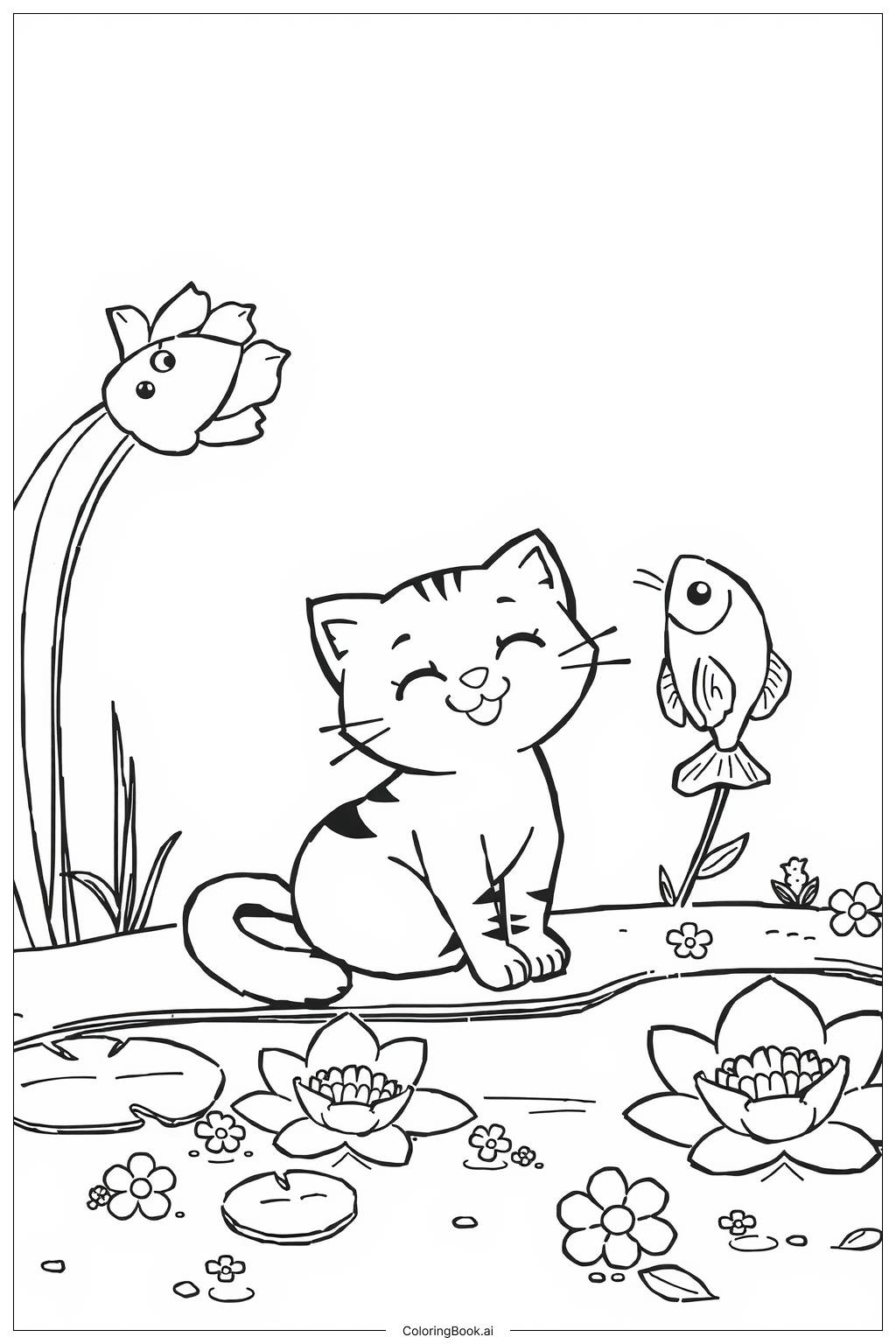
Start with the cat's body. Choose warm tones like orange, golden yellow, or creamy white for the fur. Add tabby stripes in a darker shade of the base color. For the eyes, bright green or amber works great and really brings the cat to life. Color the water in soft blues and teals. Use lighter shades near the ripples and slightly darker blue in the deeper areas. The fish can be shiny and colorful — try silver, orange, or even rainbow scales. Use greens for the lily pads and reeds. Brown and gray work well for the rocks and muddy bank. For the sky or background, a soft light blue or warm sunset yellow gives the scene a cheerful outdoor feel. Don't be afraid to mix colors and experiment. There is no wrong way to color this fun scene!
Coloring challenges: Which parts are difficult to color and need attention for Cat Catching Fish coloring page?
• Cat Fur Texture: The cat's fur is made up of many short, flowing lines that suggest softness and direction. Coloring these lines neatly without smudging takes patience. You need to follow the direction of the fur strokes to make it look natural and fluffy. Using two or three shades of the same color for highlights and shadows will help the fur look three-dimensional.
• Water and Ripples: Water is one of the trickiest things to color. The ripple rings around the cat's paw need gradual changes in color from light to slightly darker blue. Blending is important here. Flat, single-color water will look dull, so try layering light blue, sky blue, and a hint of white for sparkle effects.
• Fish Details: The fish has small overlapping scales that are fun but challenging to fill in. Each scale is tiny, and staying within the lines requires a fine-tipped tool. Coloring alternate scales in slightly different shades of the same color can create a realistic shimmery look.
• Background Elements: Lily pads, reeds, and stones each have their own textures. Lily pads need a mix of greens with darker veins drawn or shaded in. Stones look best with gray tones and soft shadow edges. Rushing to fill these in too quickly can make the overall scene look flat.
• Balancing the Overall Colors: Making sure no single element overwhelms the others is a real challenge. The cat, water, and fish all need to feel balanced. Choosing a color palette before you start and sticking to it helps keep the scene looking harmonious and visually pleasing.
Benefits of coloring books: Advantages of drawing Cat Catching Fish coloring page
Coloring this Cat Catching Fish scene offers many wonderful benefits for kids and adults alike. For younger children, carefully filling in the cat's fur, the rippling water, and tiny fish scales builds fine motor skills and helps develop hand-eye coordination. Following the lines trains focus and patience in a fun and engaging way. Choosing which colors to use for the fur, water, and background encourages creative thinking and decision-making. Kids learn to think about how colors work together, which is an early lesson in visual art and design. For older children and adults, the more detailed elements like fish scales and water reflections provide a gentle but satisfying challenge. The repetitive motion of coloring can feel calming and meditative, helping to reduce stress and anxiety. It gives the mind a chance to slow down and focus on something peaceful and creative. Completing the full scene also gives a real sense of achievement and pride. Sharing or displaying the finished artwork builds confidence. Overall, this coloring page turns a simple activity into a joyful, skill-building, and relaxing experience for anyone who picks up a crayon or colored pencil.