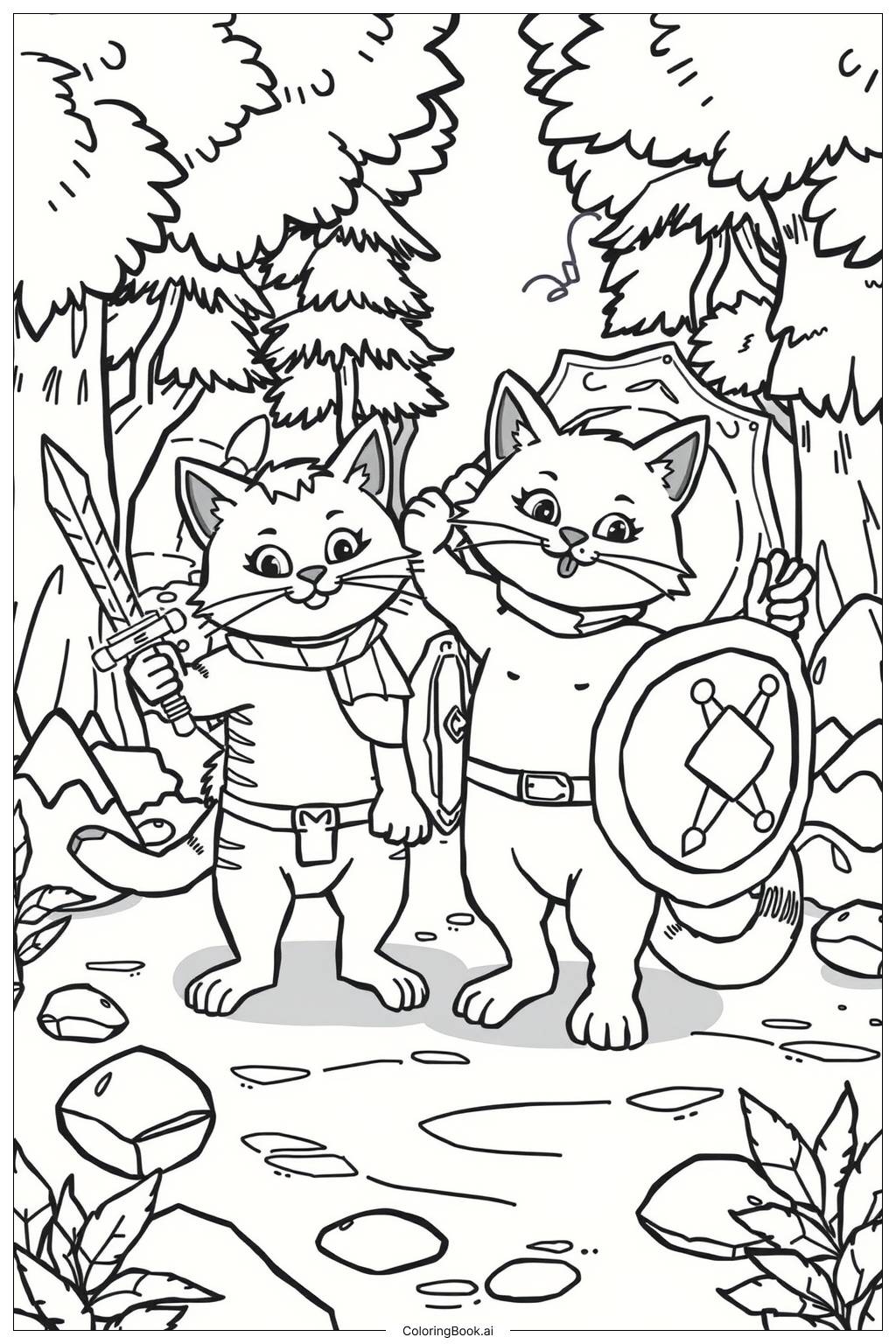
Coloring tips: How to color Warrior Cat Battle Scene coloring page well?
Start with the cats' base fur colors. You can make one cat dark gray or black and the other golden brown or orange to help them stand out from each other. Use short, quick strokes to follow the direction of the fur. For the eyes, try bright yellow, green, or amber to give each cat a fierce, intense look. Color the claws light gray or cream. Add darker shades around the face, paws, and tail tips to create depth and drama. For the background, use soft greens and browns for the forest. Keep the ground shaded with earthy tones like tan and dark brown. Adding a bit of red or orange in the sky can give the scene an exciting, battle-ready mood. Do not be afraid to use bold, contrasting colors to make the action feel alive and intense.
Coloring challenges: Which parts are difficult to color and need attention for Warrior Cat Battle Scene coloring page?
• Fur Texture and Direction: Each warrior cat has layers of detailed fur running in different directions depending on body movement. Coloring fur correctly means following the natural flow of each strand. Using the wrong stroke direction can make the fur look flat. Try using short, light strokes that follow the curve of each body part to keep things looking natural and lively.
• Overlapping Body Parts: During a battle scene, limbs, tails, and bodies overlap in complex ways. It can be hard to tell where one cat ends and another begins. Study the outlines carefully before applying color. Using different base colors for each cat helps a lot. This keeps the two figures visually separated and easy to read at a glance.
• Facial Expressions: The cats have expressive faces with bared teeth, wrinkled noses, and narrowed eyes. These small details require a steady hand and careful shading. The inside of the mouth, teeth, and tongue all need different colors. Using a fine-tipped marker or a sharpened pencil works best for these tiny areas.
• Background Depth: The forest background has multiple layers, including trees, ground cover, and falling leaves. Creating a sense of depth means coloring farther objects lighter and closer objects darker. This technique, called atmospheric perspective, makes the scene feel more three-dimensional and immersive.
• Claw and Teeth Details: The extended claws and bared teeth are very small and closely spaced. Staying inside the lines in these areas is one of the trickiest parts. Using a very fine coloring tool and working slowly helps ensure these sharp details look crisp and dramatic rather than muddy.
Benefits of coloring books: Advantages of drawing Warrior Cat Battle Scene coloring page
Coloring this warrior cat battle scene offers a wide range of benefits for kids and young artists. The action-packed image keeps attention engaged and makes the coloring experience feel like an adventure. Working through all the fine details of fur, claws, and facial expressions helps build focus and patience, skills that carry over into school and everyday life. Choosing colors for each cat encourages creative thinking and decision-making. Kids learn to think about contrast, mood, and storytelling through color. The scene also sparks imagination, inspiring stories about the cats and why they are fighting. Shading the fur and background develops fine motor control and hand-eye coordination. Careful work inside small areas like teeth and claws strengthens the precision needed for writing and drawing. Completing a complex coloring page like this one gives a real sense of accomplishment and builds confidence. Overall, this image makes coloring both fun and enriching for young artists of all skill levels.