Coloring tips: How to color Warrior Cat Battle Scene coloring page well?
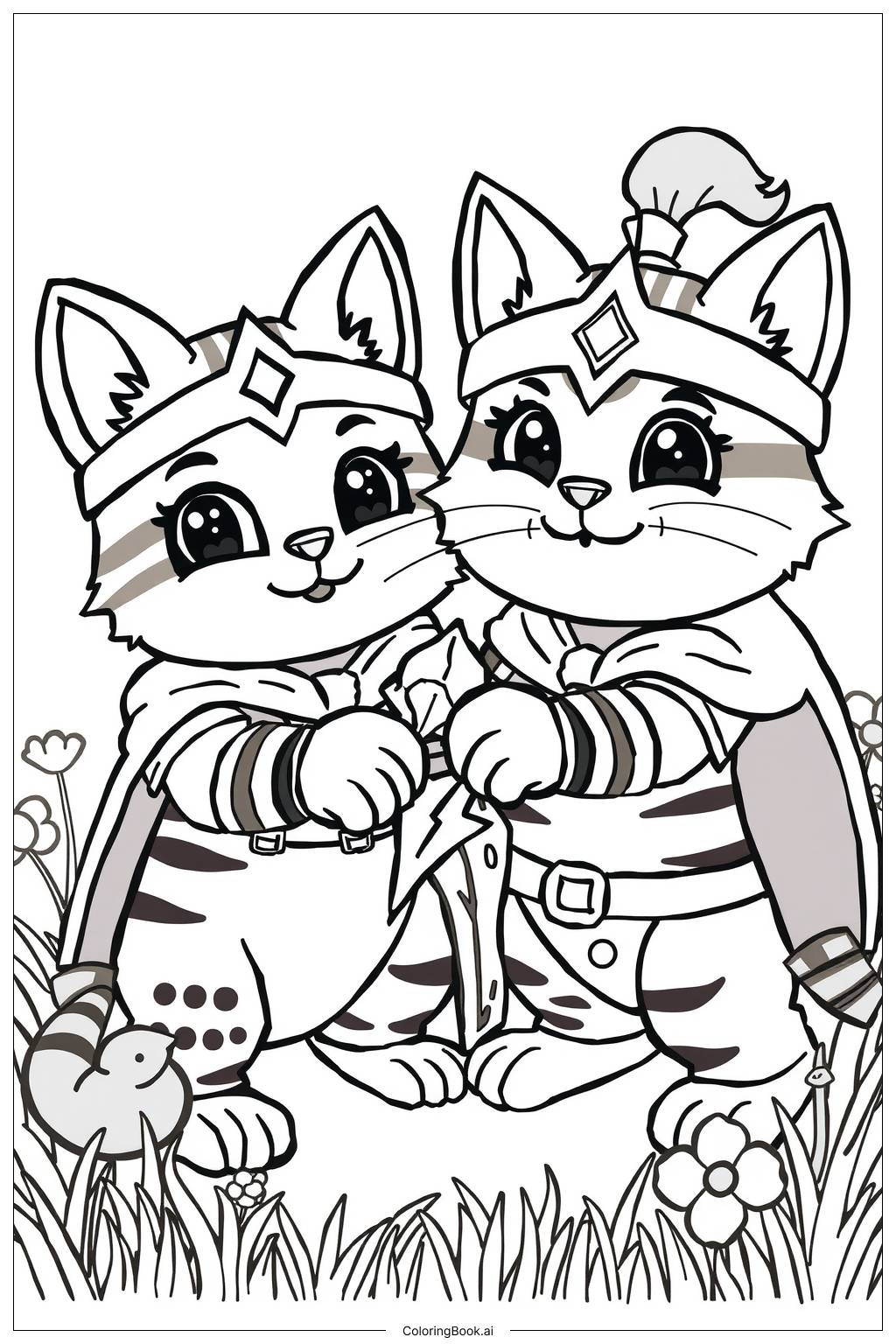
Start with the cats' base fur colors. You can make one cat a warm orange or golden tabby, and the other a cool gray or dark brown. Use lighter shades on the belly and chest, and darker tones along the back and tail to add depth. For the eyes, try bright amber, green, or icy blue to show intensity. Use red or pink lightly around scratch marks or battle wounds. Color the forest background with earthy greens and browns — dark green for leaves, tan and brown for tree bark. Add some golden or orange tones to fallen leaves on the ground to suggest an autumn setting. Keep shadows under the cats and around the trees to give the scene a dramatic, three-dimensional feel. Don't be afraid to use bold colors to make the action feel exciting and powerful.
Coloring challenges: Which parts are difficult to color and need attention for Warrior Cat Battle Scene coloring page?
• Fur Texture and Layering: The cats have detailed fur lines running in multiple directions across their bodies. Coloring along the fur strokes rather than against them is tricky, especially where the fur changes direction around the legs, tail, and face. Using short, directional strokes will give the most realistic result, but this takes patience and a steady hand.\n\n• Dynamic Poses and Overlapping Body Parts: Because the cats are mid-battle, their limbs, tails, and bodies overlap in complex ways. Keeping each section of the body clearly colored without muddling where one part ends and another begins requires careful attention. It helps to color one body section at a time and let each area dry before moving on.\n\n• Small Detail Areas: The cats' faces include tiny features like whiskers, teeth, inner ears, and narrowed eyes. These small areas are difficult to color neatly without smudging into nearby sections. Fine-tipped colored pencils or thin markers work best here.\n\n• Background Depth and Complexity: The forest setting includes trees, leaves, and undergrowth layered at different distances. Creating a sense of depth by using lighter shades for distant background elements and darker, richer tones for foreground details can be challenging for younger colorists.\n\n• Battle Atmosphere and Shading: Giving the scene a tense, dramatic mood means adding shadows and highlights in the right places — under the belly, behind raised paws, and around the edges of the figures. Blending these tonal shifts smoothly without overworking the paper is one of the harder techniques in this image.
Benefits of coloring books: Advantages of drawing Warrior Cat Battle Scene coloring page
Coloring this Warrior Cat Battle Scene offers a wide range of creative and developmental benefits for kids and fans of all ages. The action-packed image keeps colorists engaged and motivated from start to finish, making it a great activity for building focus and patience.\n\nWorking through the detailed fur lines and small facial features helps develop fine motor skills and hand-eye coordination. Young colorists practice controlling their tools precisely, which supports skills useful in school and everyday life.\n\nChoosing colors for each cat, the forest background, and the dramatic lighting encourages creative thinking and decision-making. Kids can invent their own warrior cat clans, giving each cat a unique look and personality through color choices.\n\nThe storytelling nature of the scene also sparks imagination. Colorists may find themselves thinking about what led to the battle, who the cats are, and what happens next — making coloring feel like part of a larger adventure.\n\nFinally, the focused, repetitive nature of coloring is calming and satisfying. Completing a complex scene like this builds confidence and gives a strong sense of accomplishment, encouraging kids to take on bigger creative challenges.