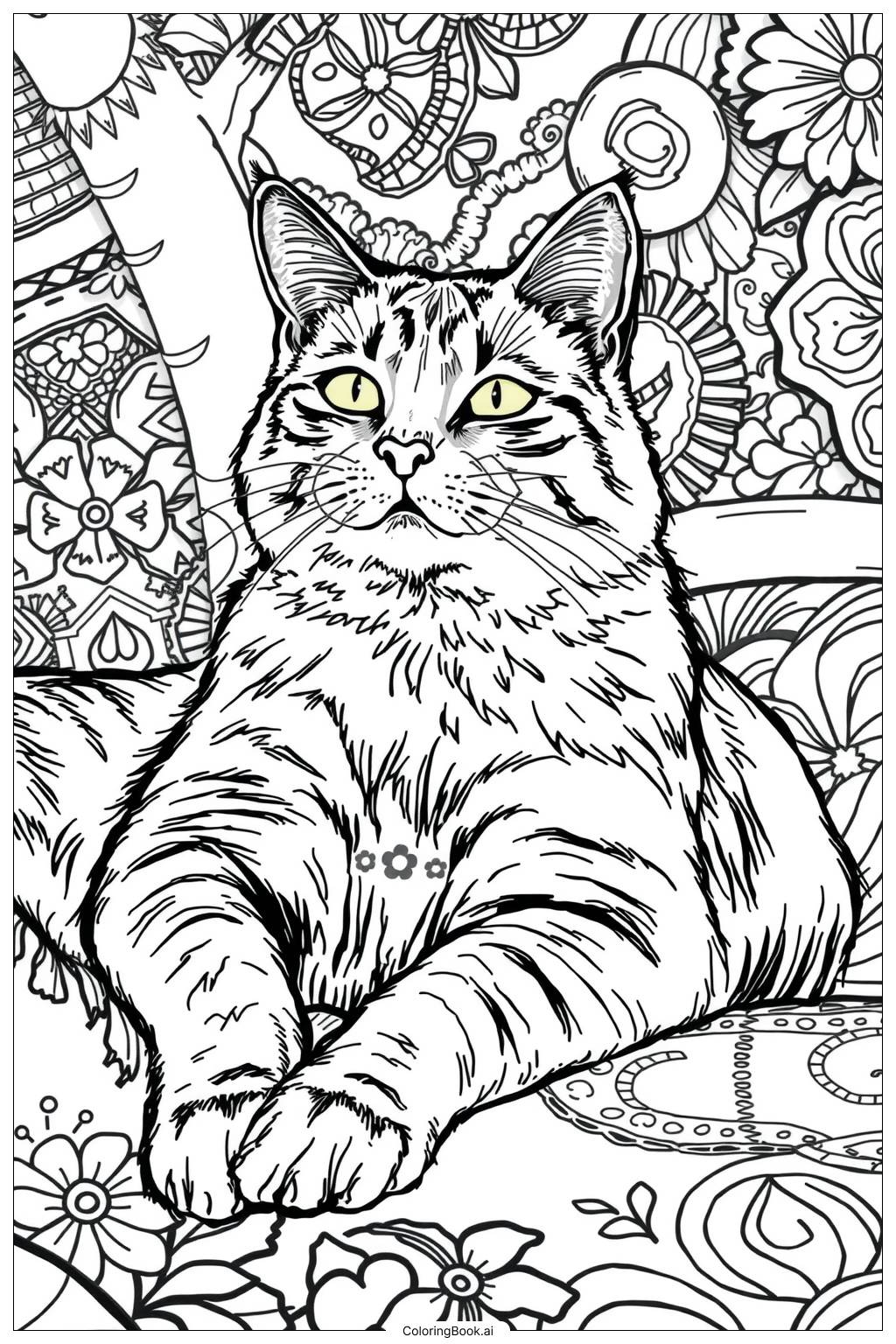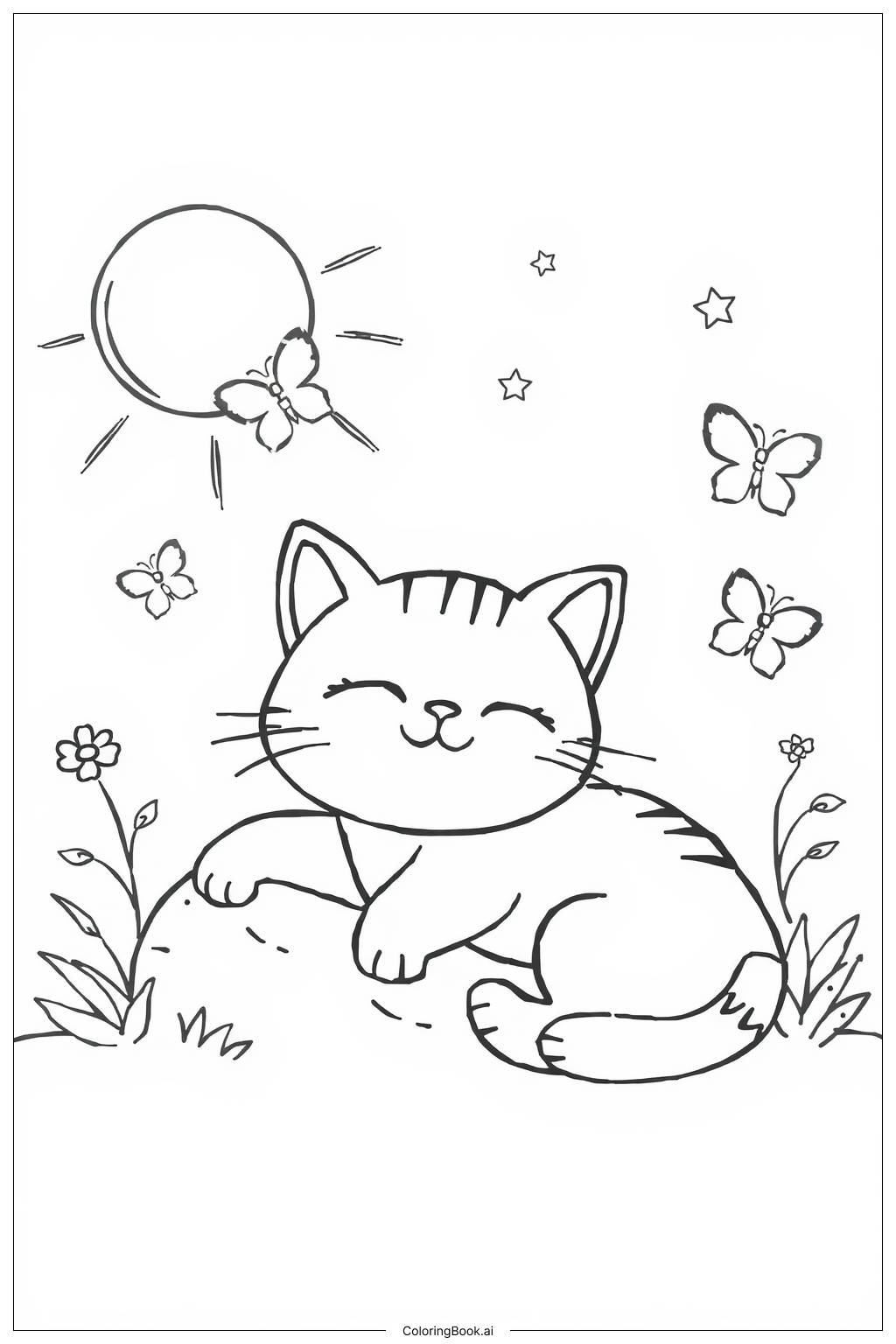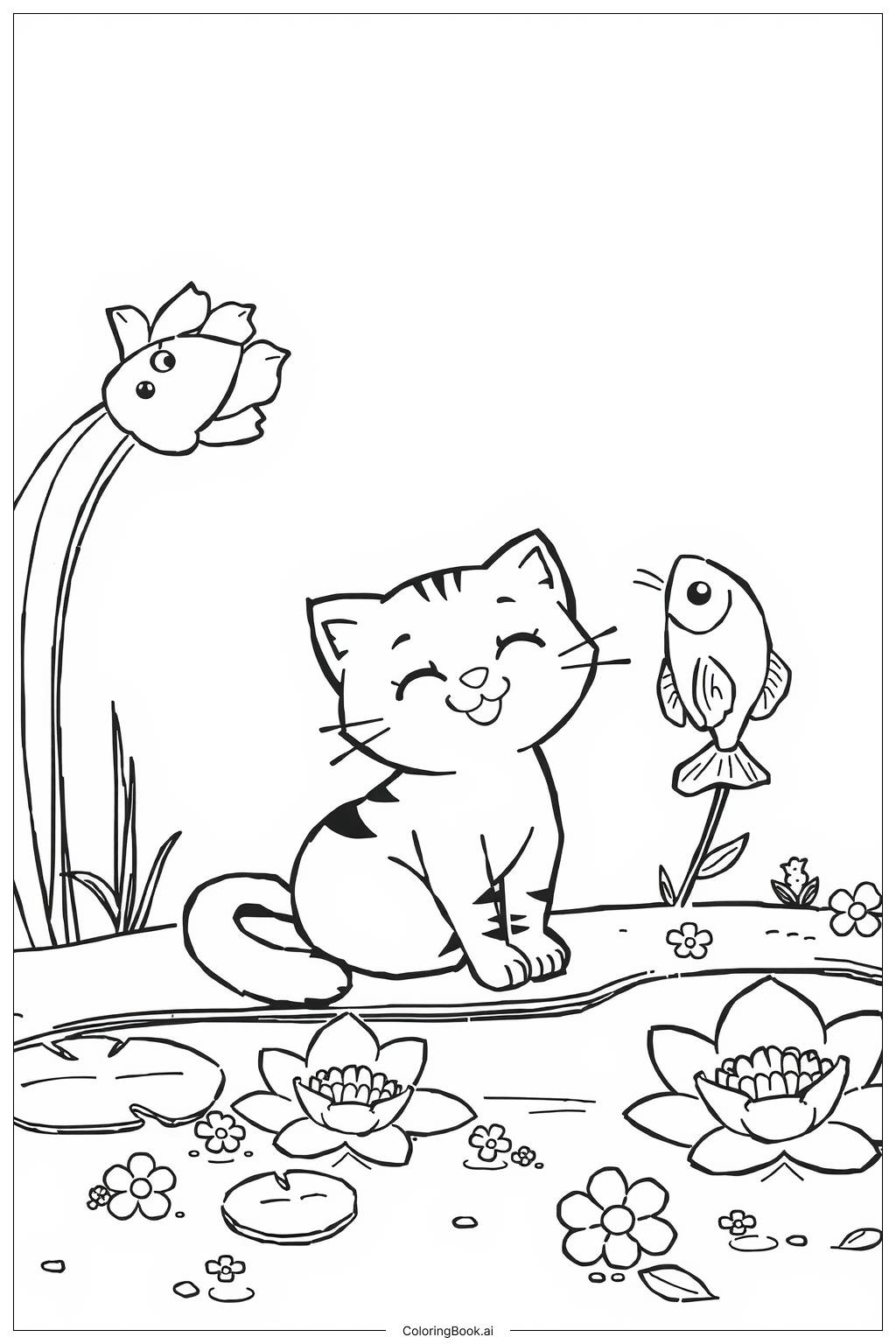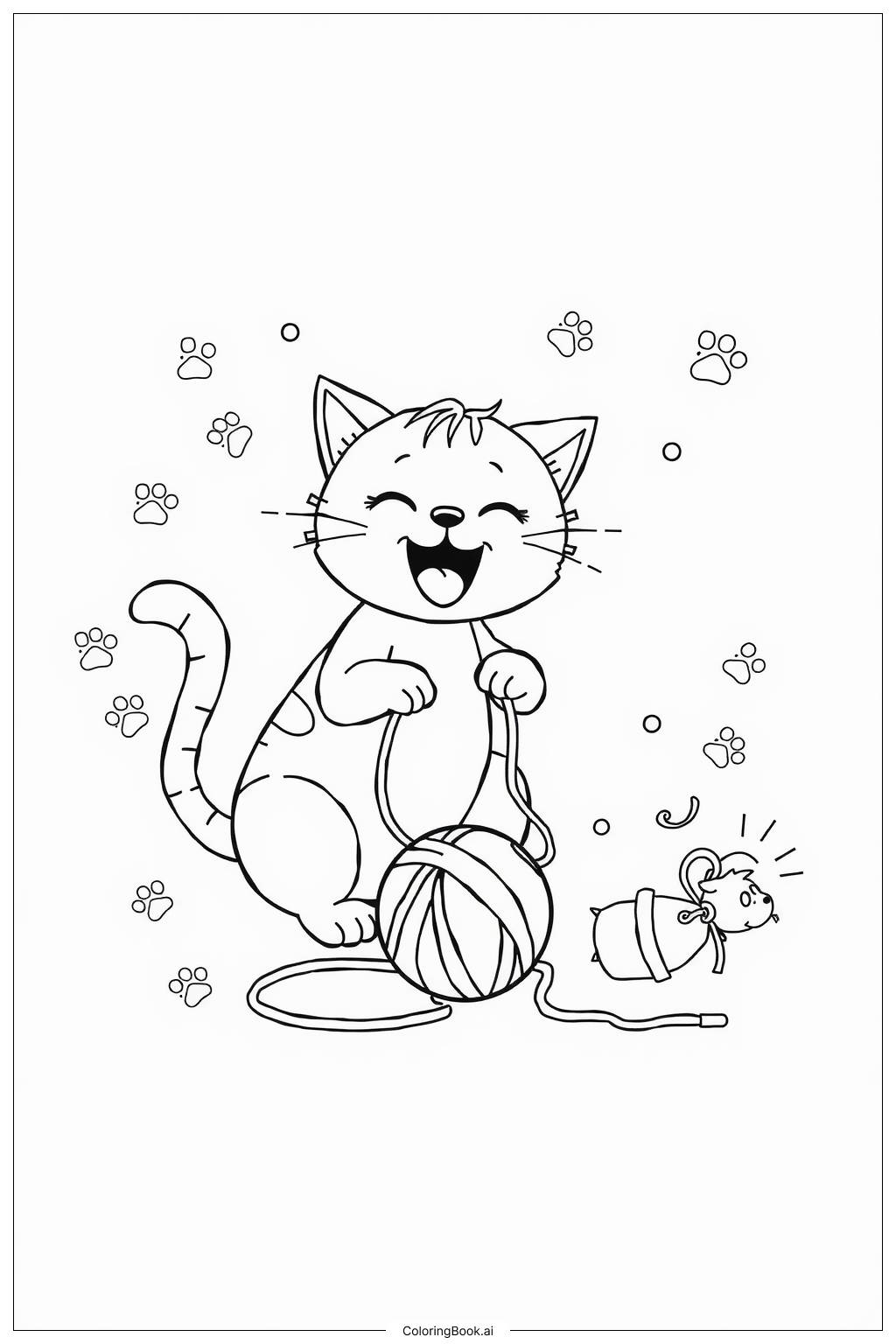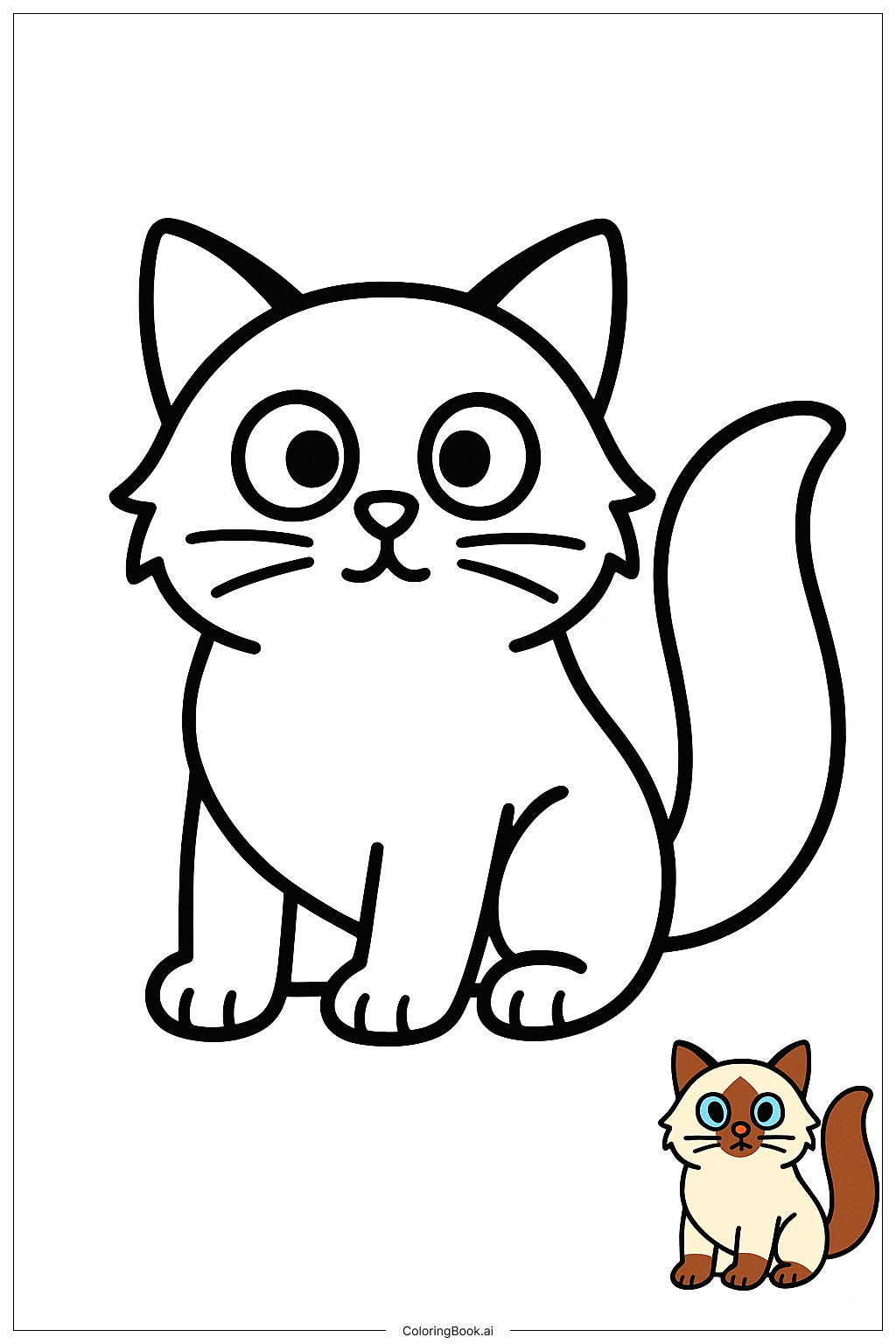
Coloring tips: How to color Ragdoll Cat With Fluffy Tail coloring page well?
Start with the lightest colors first. Ragdoll cats usually have soft, creamy white or light tan fur, so try using pale ivory, light beige, or soft lavender for the body. Add gentle shading with light gray or pale blue around the edges of the fur to show depth and fluffiness. The face can have a slightly warmer tone, like a soft peach or warm cream. Use a medium gray or seal brown for any darker markings around the ears, tail tip, or back. Color the eyes in bright blue or aqua, which is a classic Ragdoll trait. Use pink for the nose and inner ears. Keep your strokes light and follow the direction of the fur lines to make the coat look natural and soft. The fluffy tail can be colored with short, feathery strokes to show movement.
Coloring challenges: Which parts are difficult to color and need attention for Ragdoll Cat With Fluffy Tail coloring page?
• Fur Texture and Direction: The Ragdoll cat's coat is made up of many fine, layered lines. Coloring each section while following the natural flow of the fur requires patience and a steady hand. Using short, light strokes in the right direction is key, but it can be tricky, especially in areas where the fur changes direction, like the chest and tail.
• Fluffy Tail Details: The tail is the most detailed part of the image. It is full of overlapping, wispy strands that fan out in multiple directions. Capturing the light and shadow within the tail while keeping colors smooth and natural is one of the biggest challenges. Blending two or three shades carefully is needed to avoid a flat or muddy look.
• Facial Features: The face has small, delicate details including the eyes, nose, whiskers, and inner ear fur. These areas are tiny and close together, making it easy to color outside the lines. Using a fine-tipped tool and taking extra care around the eyes and nose will help keep the face looking clean and expressive.
• Shading and Depth: Ragdoll cats have a soft, three-dimensional look. Creating that same sense of volume on a flat page means adding light shading along the belly, legs, and sides of the face. This is a subtle skill that takes practice, especially for younger colorists who may not yet be familiar with blending techniques.
• Color Consistency: Keeping the same tone across a large area of fur without streaks or uneven patches can be difficult. It requires consistent pressure and smooth, overlapping strokes throughout the entire coloring session.
Benefits of coloring books: Advantages of drawing Ragdoll Cat With Fluffy Tail coloring page
Coloring this Ragdoll cat page offers many wonderful benefits for kids and adults alike. For younger children, it helps build fine motor skills as they carefully color within the fine fur lines and small facial details. This kind of focused activity also improves hand-eye coordination and pencil control over time.
For older kids and teens, the detailed fur patterns and shading opportunities make it a great exercise in patience and artistic technique. Learning how to blend colors to create a soft, fluffy look helps develop a real understanding of light, shadow, and texture.
For adults, coloring this peaceful cat image is a calming and meditative activity. It helps reduce stress and quiet a busy mind. Focusing on a gentle, beautiful subject like a Ragdoll cat brings a sense of comfort and relaxation.
Beyond the physical and mental benefits, coloring this page sparks creativity and imagination. Colorists of any age get to make their own choices about color combinations and shading styles, giving them a sense of pride and accomplishment when the page is complete. It also builds a love for art and nature, especially for children who adore animals.