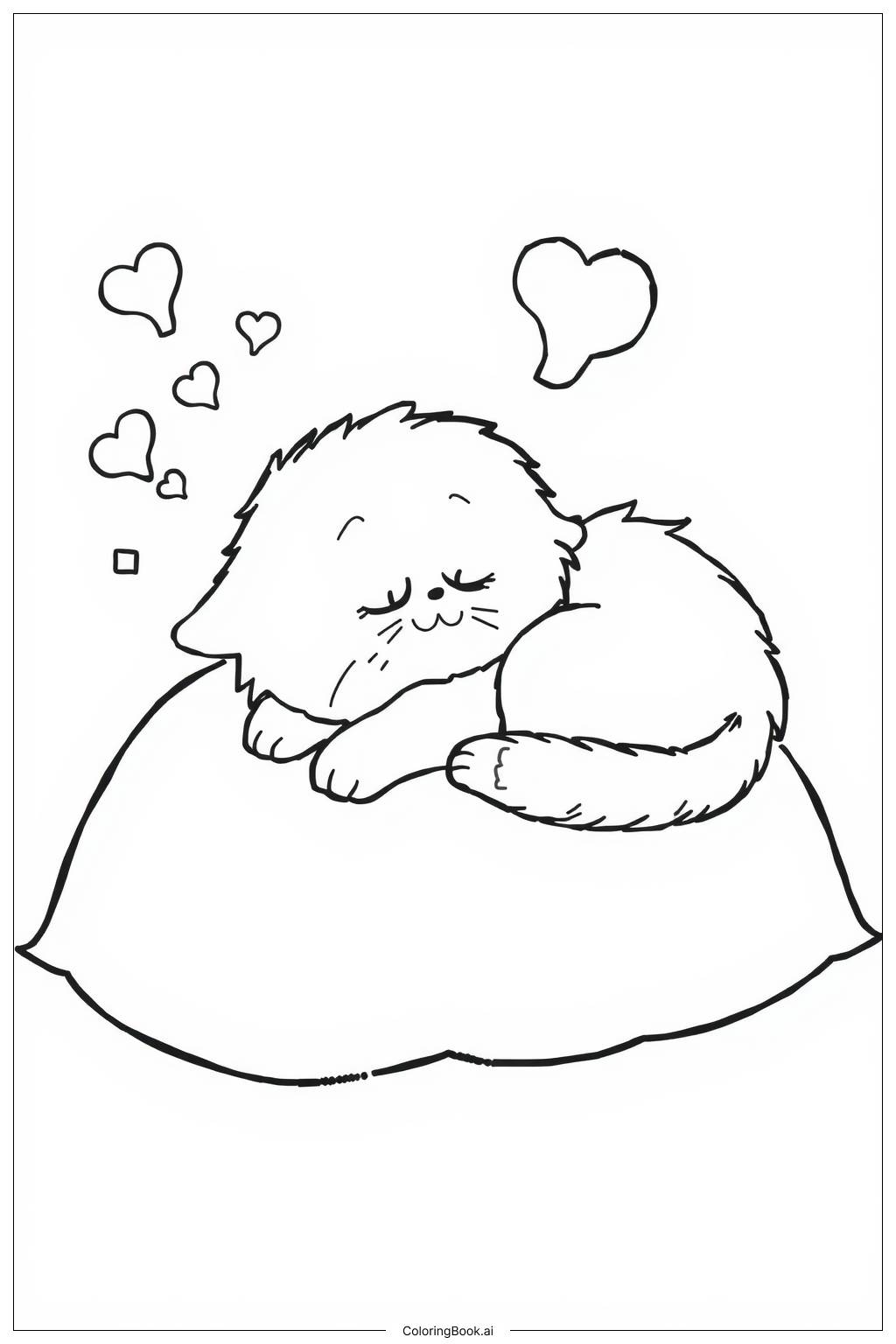
Coloring tips: How to color Happy Cat Sleeping coloring page well?
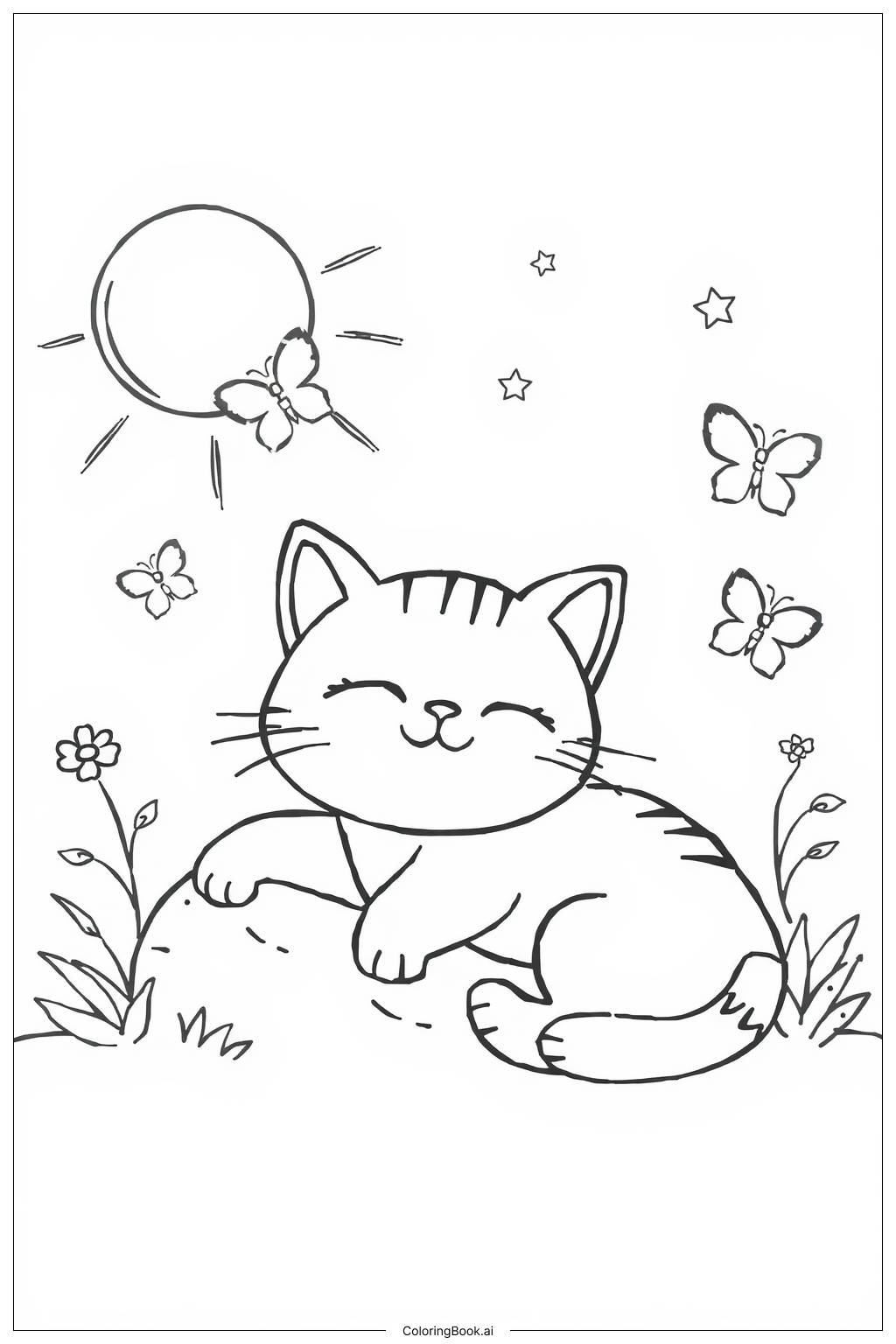
Start by choosing a base fur color for the cat. Orange, gray, cream, or black all work beautifully. Use a lighter shade of the same color for the belly and inner ears to add depth. For the face, use a soft pink for the nose and the inside of the ears. Leave the whiskers white or color them a very light gray. The eyes, though closed, can be outlined with a warm brown or dark gray. Use a gentle yellow or warm beige for the background to give the scene a cozy, sleepy feeling. Try blending two shades of the same color on the fur to make it look soft and fluffy. Colored pencils work great here for smooth, gentle blending. Crayons are also a fun choice for younger colorists. Keep the overall palette warm and calm to match the peaceful mood of the sleeping cat.
Coloring challenges: Which parts are difficult to color and need attention for Happy Cat Sleeping coloring page?
• Fur Texture and Shading: One of the trickiest parts of this image is making the cat's fur look soft and realistic. You need to use light, feathery strokes that follow the direction of the fur lines. Pressing too hard will make the fur look flat instead of fluffy. Try layering two or three shades of the same color to build up depth gradually.
• Small Facial Features: The cat's face has delicate details like tiny closed eyes, a small nose, and thin whiskers. These areas are very small and require a sharp pencil or a fine-tip coloring tool. It is easy to accidentally color outside the lines in these spots. Take your time and use slow, careful strokes near the face.
• Curved Body Lines: The cat is curled into a round sleeping shape, which means many of the body lines curve and overlap. Keeping track of where one body part ends and another begins can be confusing. Look closely at the lines before you start and lightly plan your color sections.
• Consistent Color Blending: Maintaining a smooth, even color across the large curved body of the cat without streaks or patches is challenging. This is especially true if you are using crayons or markers. Work in small circular motions and layer colors gently for a more even finish.
• Tail and Paw Details: The tail wraps around the body and the paws tuck underneath, creating areas where lines are close together. Coloring these overlapping sections neatly without mixing up the colors of different body parts takes patience and focus.
Benefits of coloring books: Advantages of drawing Happy Cat Sleeping coloring page
Coloring this Happy Cat Sleeping page offers a wide range of wonderful benefits for kids and beginners alike. The peaceful subject of a sleeping cat makes this a calm and enjoyable activity that helps reduce stress and anxiety. Sitting down to color encourages focus and patience, which are important skills for children to develop.
Working on the cat's rounded shapes and curved lines helps build fine motor skills and hand-eye coordination. Choosing colors and deciding how to blend them together also sparks creativity and builds confidence in young colorists.
Because the image has both large, open areas and small detailed sections, it is a great way to practice using different coloring tools like crayons, colored pencils, and markers. Children learn to control their pressure and strokes depending on the size of the area they are filling in.
The cozy, happy theme of the sleeping cat can also be a wonderful conversation starter. Kids can talk about their own pets or their favorite animals, making the activity social and emotionally engaging. Completing the page gives a sense of accomplishment and pride, which boosts self-esteem. Overall, this coloring page is a joyful, calming, and enriching activity for anyone who picks it up.