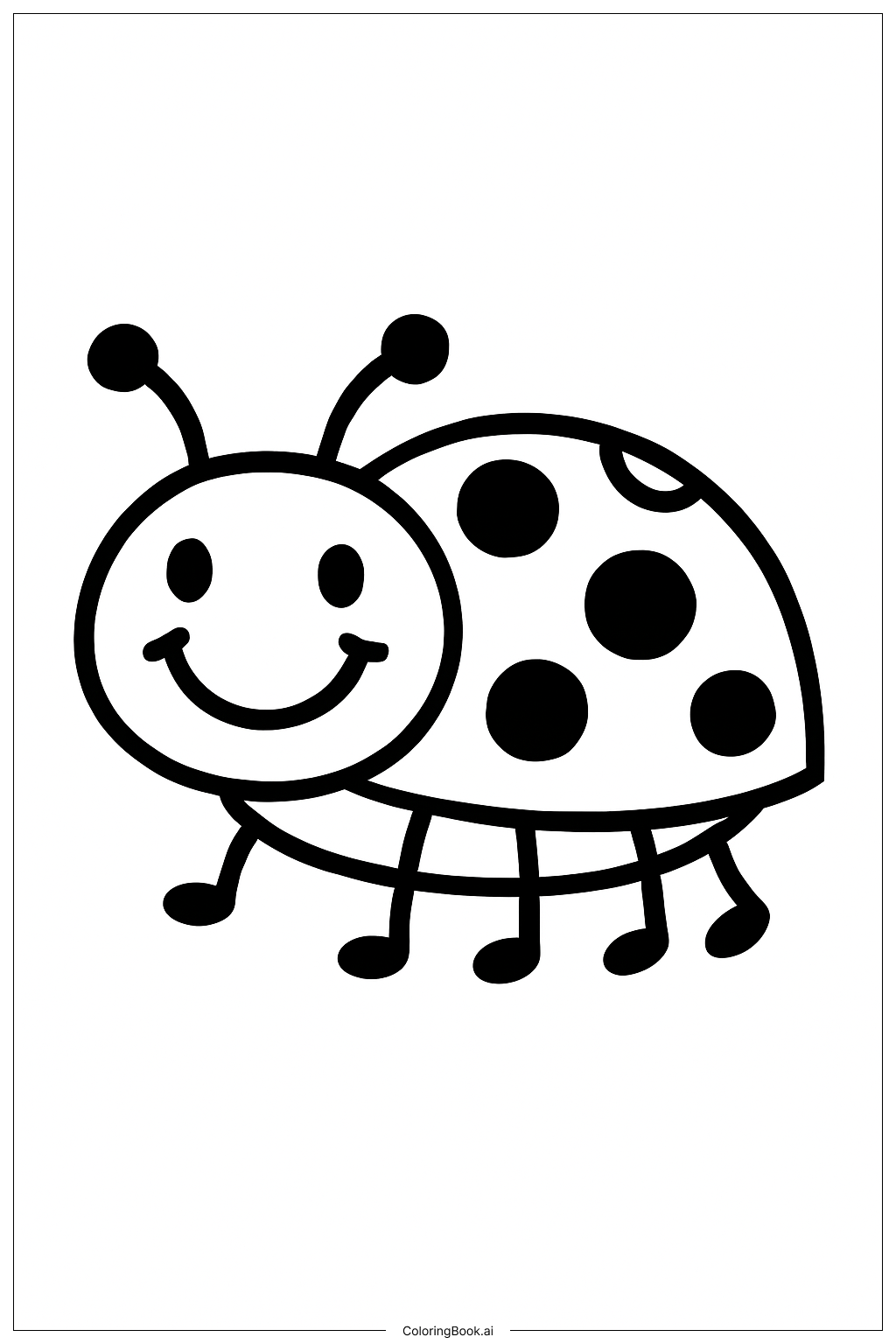
Coloring tips: How to color Smiling Lady Bug coloring page well?
For the ladybug's body, use vibrant red or orange colors. The spots can contrast nicely with black or dark purple. Experiment with shades to add depth. A light blue or green background can reflect nature, enhancing the overall picture. For the smile and eyes, stick with simple black or dark colors to stand out. Encourage children to mix colors, perhaps blending red with pink for a unique ladybug effect. Let their creativity lead the way!
Coloring challenges: Which parts are difficult to color and need attention for Smiling Lady Bug coloring page?
1. **Coloring within the lines**: Kids might struggle with keeping colors inside the bold outlines. Using thicker crayons can help them stay within boundaries.
2. **Choosing colors**: Some children may find it difficult to decide which colors to use. Providing examples of ladybugs in nature can guide their choices.
3. **Shading**: Adding depth with different shades can be challenging. Parents or teachers can show them how to use lighter or darker tones for a 3D effect.
4. **Background design**: Kids might be unsure how to design the background around the ladybug. Suggesting a simple grass or flower pattern can inspire creativity.
5. **Layering colors**: Using multiple colors can be tricky. Encouraging children to layer colors gradually can promote better techniques and exploration.
Benefits of coloring books: Advantages of drawing Smiling Lady Bug coloring page
Coloring this smiling ladybug can offer multiple benefits. It encourages creativity, allowing children to express themselves through color choices. It also improves fine motor skills as they practice holding crayons or markers. Color mixing gives them a practical understanding of color theory. As they focus on the task, it encourages concentration and patience. Lastly, coloring can be a soothing activity, helping them relax and unwind. Overall, this joyful ladybug provides an excellent opportunity for fun and learning!