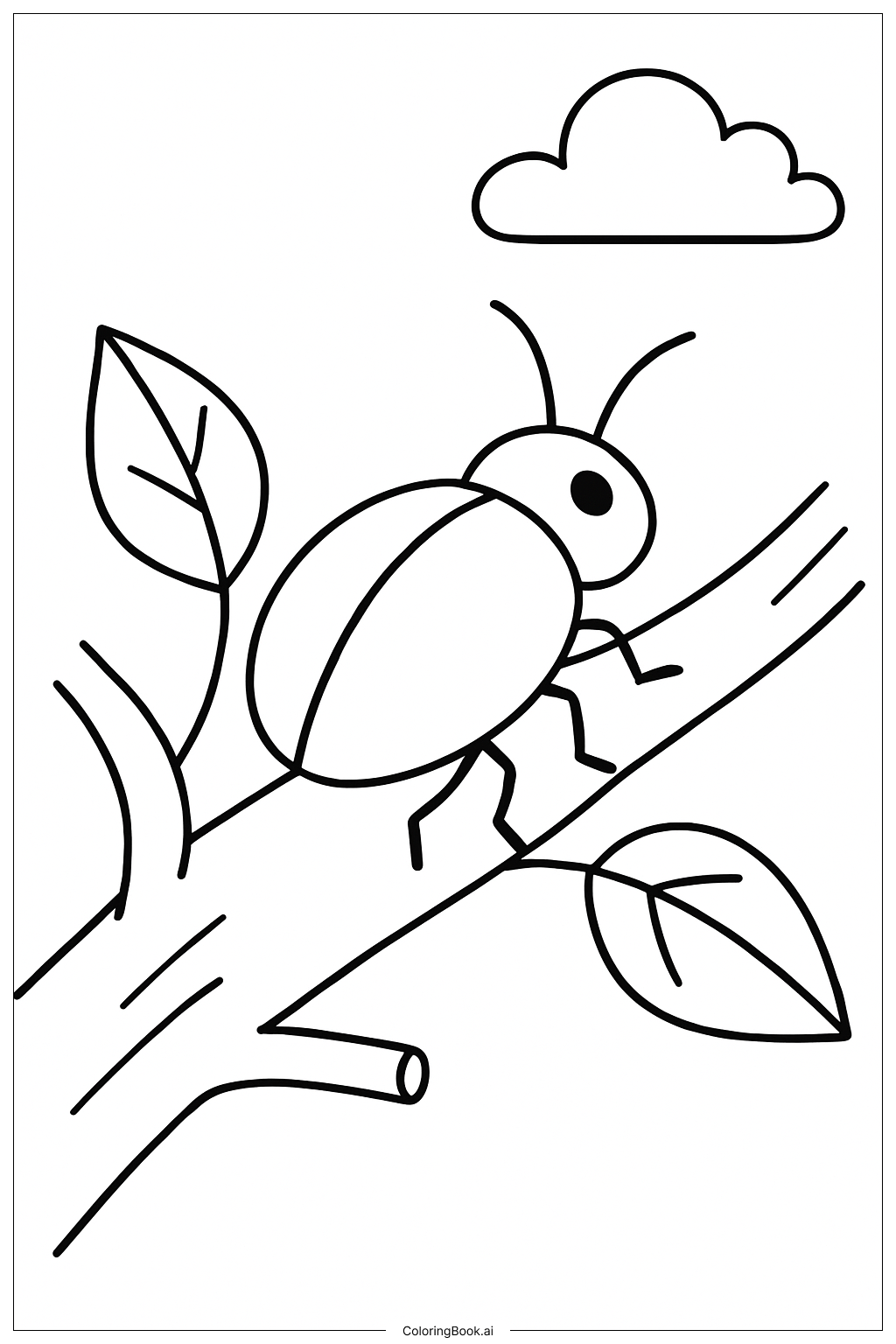
Coloring tips: How to color Sleeping Lady Bug On Leaf coloring page well?
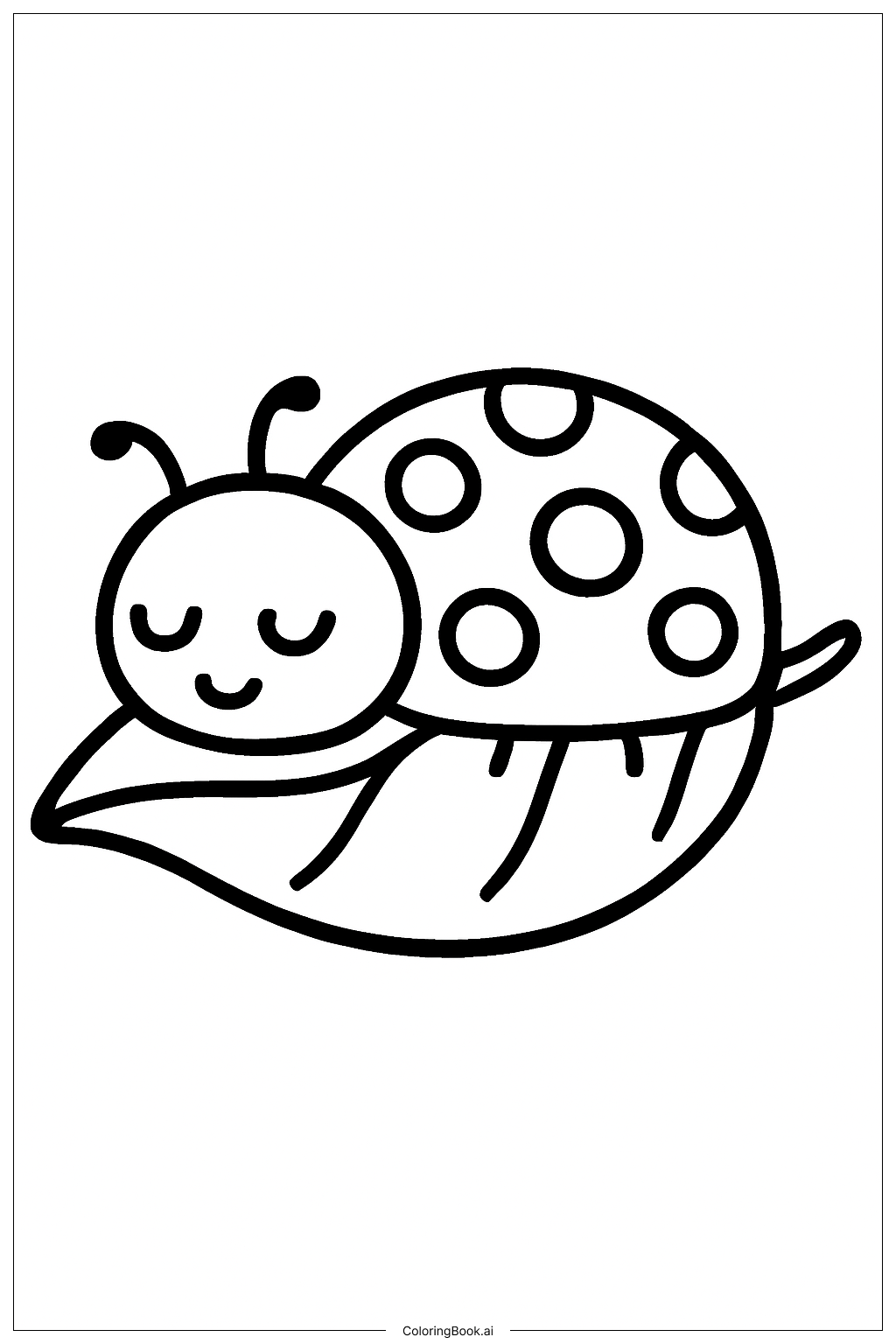
To bring this picture to life, you can color the lady bug's shell with bright red and add black spots to make it look classic. For the leaf, try using different shades of green to show the veins and texture, like light green for the main surface and darker green for the veins. You can also blend some yellow or brown shades at the edges to give a natural look. The lady bug’s legs and antennae can stay black or dark brown. Try to keep the colors soft and smooth to match the calm, sleeping mood of the scene. Use your favorite crayons, markers, or pencils and have fun adding your unique touch!
Coloring challenges: Which parts are difficult to color and need attention for Sleeping Lady Bug On Leaf coloring page?
• Small Details: The tiny legs and antennae of the lady bug are thin and delicate, which can be tricky to color without going outside the lines.
• Spots on the Shell: The black spots must be evenly sized and spaced on the lady bug’s red shell, requiring careful attention to avoid smudging colors.
• Leaf Veins: Coloring the veins of the leaf to stand out clearly means using contrasting shades of green or gentle strokes that keep the veins visible and natural-looking.
• Blending Colors: Adding realistic shadows and highlights on both the lady bug and leaf requires blending colors smoothly, which can be challenging especially with pencils or crayons.
• Keeping the Sleepy Mood: The overall soft and peaceful feeling of the image means you need gentle coloring strokes rather than harsh lines or very bright, clashing colors. This subtlety can be difficult but rewarding when done well.
Benefits of coloring books: Advantages of drawing Sleeping Lady Bug On Leaf coloring page
Coloring this image helps improve fine motor skills because of the small and detailed parts like the lady bug’s legs and spots. It also encourages focus and patience, as balancing colors on the leaf and shell requires careful attention. Creativity grows as you choose how to blend different greens for the leaf and how bright or soft to make the lady bug. Additionally, coloring this peaceful scene can be calming and relaxing, perfect for reducing stress and enhancing mindfulness. Overall, it can be a fun way for children and adults alike to connect with nature through art.