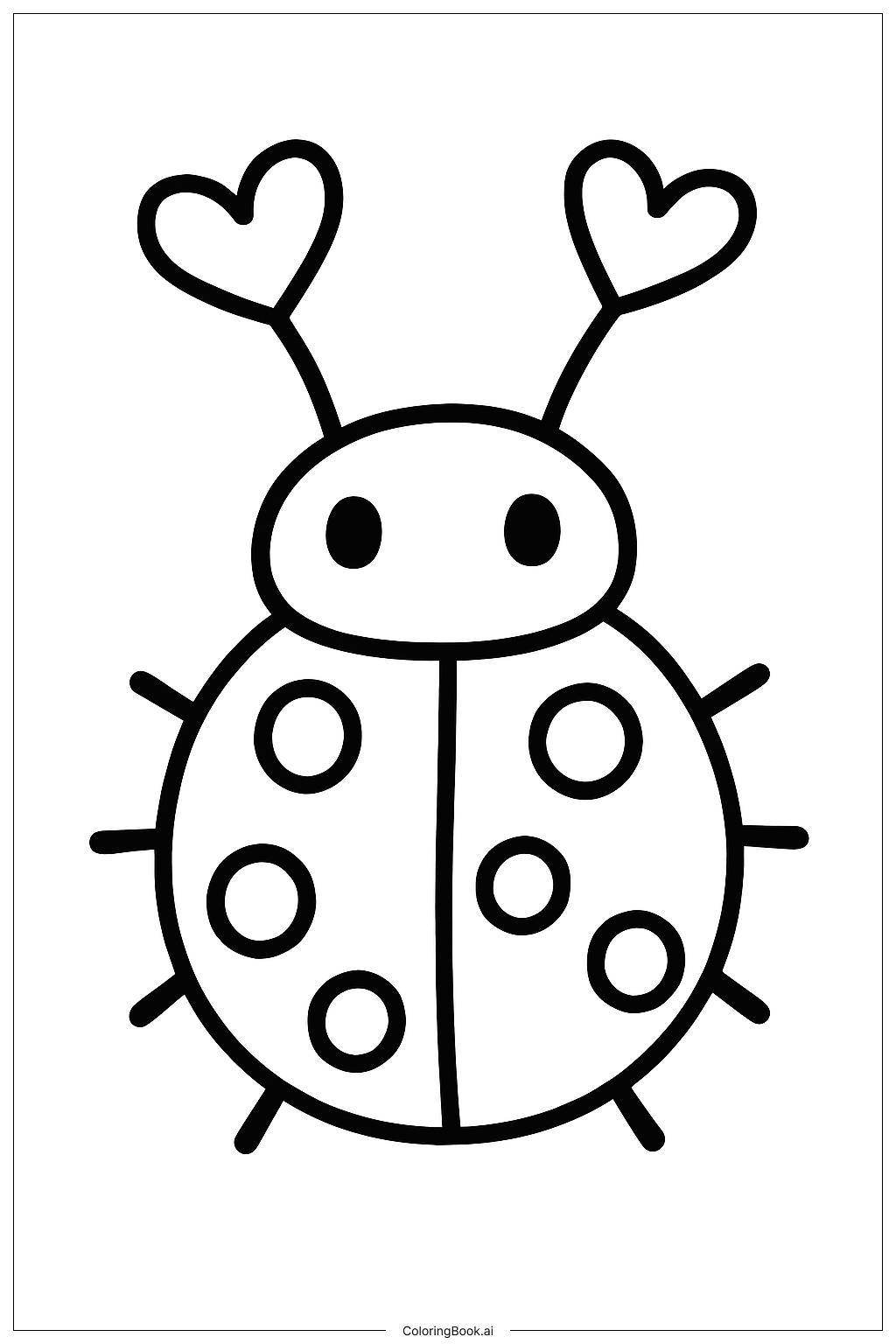
Coloring tips: How to color Bug With Heart Antennae coloring page well?
Start with the bug's body. Try a bright, cheerful color like red, orange, or yellow to make it pop. You can add spots or stripes to the body segments for extra fun. Color the heart-shaped antennae tips in pink or red to highlight their cute shape. Use a contrasting color for the antennae stems, like black or dark brown. For the wings, try light blue, lavender, or a soft green. You can even make them look transparent by using very light colors. Give the eyes white with black pupils, and add a tiny dot of white to make them look shiny. For the background details, use a mix of greens for the leaves and bright colors for the small flowers. Using colored pencils lets you blend colors smoothly, while markers give bold, vivid results. Do not be afraid to get creative and use colors you love!
Coloring challenges: Which parts are difficult to color and need attention for Bug With Heart Antennae coloring page?
• Heart-Shaped Antennae Tips: The small heart shapes at the top of the antennae are one of the trickiest parts. Their curved edges and compact size make it easy to color outside the lines. Use a fine-tipped tool like a colored pencil or a thin marker to carefully trace the inside of each heart before filling it in. Take your time and work slowly from the center outward.
• Wing Details and Shading: The bug's wings have delicate outlines and may include vein-like patterns inside. Keeping the color even across the wing surface without going over the fine inner lines takes a steady hand. Trying to create a light, airy feel on the wings by using gentle pressure or layering very light shades adds to the difficulty.
• Body Segments: The bug's body is divided into sections. Coloring each segment neatly without bleeding into the next requires careful attention. You may want to color one segment at a time and let each section dry before moving to the next, especially if you are using markers.
• Small Background Elements: The tiny flowers, dots, and leaves scattered around the bug are small and closely spaced. Staying inside these little shapes without smudging nearby areas can be challenging. Using a sharp pencil tip or a fine-point pen to outline each element first can help keep them clean and defined.
• Consistent Color Balance: With so many different parts, keeping the overall color scheme balanced and harmonious can be tricky. Planning your color choices before you start helps make sure no single area looks too heavy or out of place compared to the rest of the image.
Benefits of coloring books: Advantages of drawing Bug With Heart Antennae coloring page
Coloring this Bug With Heart Antennae page offers a wonderful range of benefits for kids and beginners alike. The bold, clear outlines make it approachable, helping build confidence in young colorists who are just starting out. Working carefully within the lines strengthens fine motor skills and improves hand-eye coordination, which supports everyday tasks like writing and drawing.
The cute and playful design sparks imagination and creativity. Kids are encouraged to choose their own color combinations, experiment with patterns on the bug's body, and make the image uniquely their own. This kind of open-ended creative choice builds confidence and self-expression.
Focusing on a fun coloring task also has a calming effect. It helps kids slow down, concentrate, and find a peaceful rhythm, which can reduce stress and improve attention span over time.
Learning about the parts of a bug, like its antennae, wings, legs, and body segments, gives the activity an educational layer too. It gently introduces basic science vocabulary in a playful, pressure-free way.
Finally, finishing a colorful, beautiful page gives a real sense of achievement. That small victory encourages kids to keep creating and take pride in their work. This page is a perfect mix of fun, learning, and calm for any young artist.