Coloring tips: How to color Student Writing In Notebook Black History Month coloring page well?
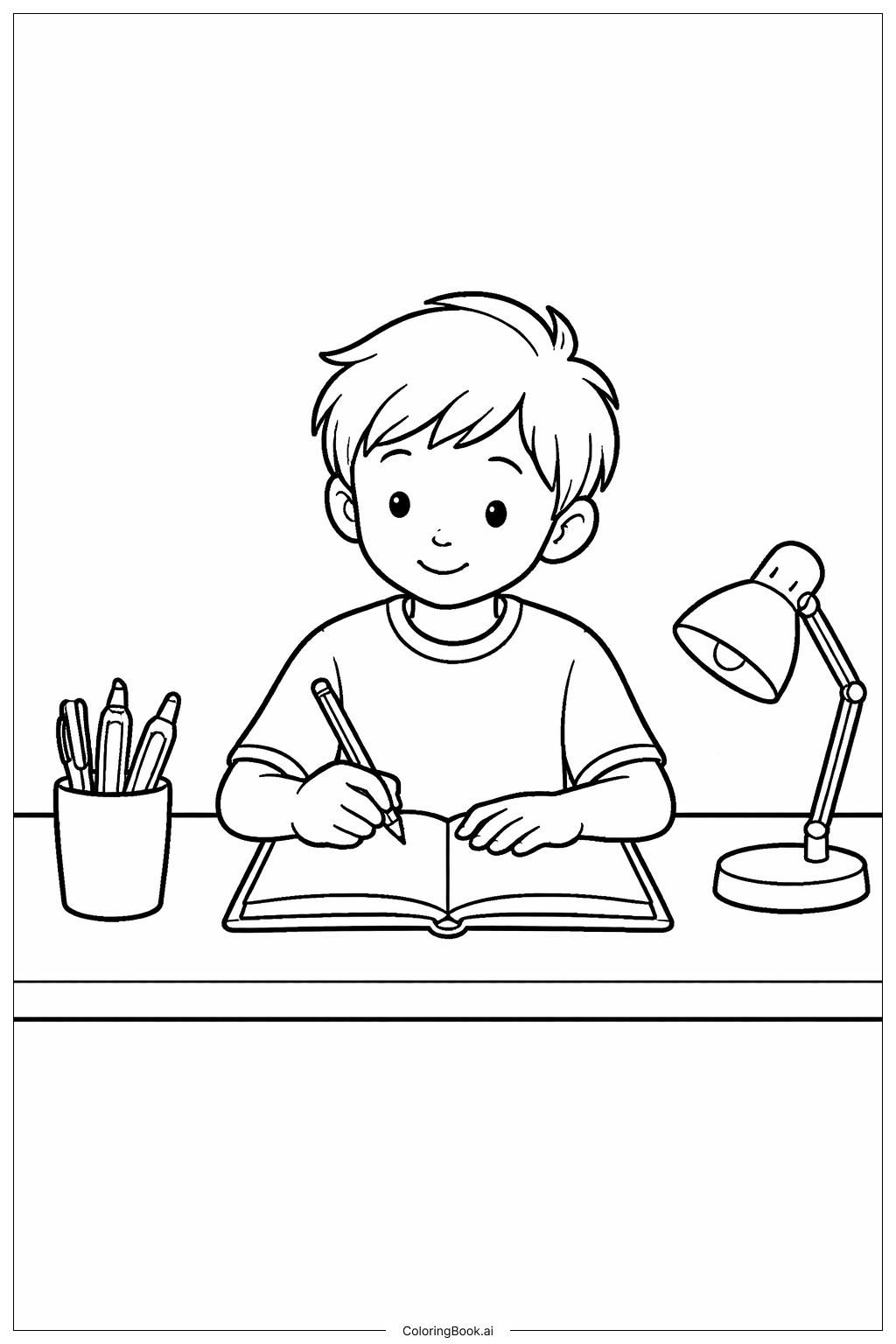
Start by coloring the student's skin with warm brown tones. You can use shades like tan, caramel, or deep brown to bring the character to life. For the clothing, try bold and meaningful colors like red, black, and green, which are often associated with Black History Month and represent pride and heritage. Color the notebook pages a soft cream or white, and use a dark pencil-gray or gold for the pen or pencil. The desk can be colored in light wood tones like tan or honey brown. Add warm background colors like yellow or orange to make the scene feel bright and welcoming. Feel free to add small details, like stars or hearts, around the page to celebrate the spirit of learning and history.
Coloring challenges: Which parts are difficult to color and need attention for Student Writing In Notebook Black History Month coloring page?
• Student's Facial Features: The face includes small details like eyes, a nose, and a mouth. These areas are tiny and close together, making it easy to accidentally color outside the lines. Use a fine-tipped colored pencil or marker and work slowly to stay within each small section.\n\n• Hands and Fingers Holding the Pen: Hands are one of the hardest parts to color in any drawing. The fingers are small, and there are gaps between them. Use a light skin tone first, then carefully add darker shading in the spaces between the fingers to give them a natural look.\n\n• Notebook Lines and Text Details: The open notebook may have small ruled lines or written text drawn inside. These lines are very close together and require a steady hand. A thin marker or a sharp colored pencil works best here. Try using a soft gray or blue for the lines to keep it looking realistic.\n\n• Clothing Folds and Wrinkles: The student's clothes likely have small folds and wrinkles that show natural movement. Coloring these areas with two shades of the same color, one lighter and one darker, will make the fabric look more real and give the figure depth and dimension.\n\n• Background Space: The area around the student and desk may feel like empty space. This can be tricky to fill without overwhelming the main figure. Choose a soft, solid background color or add simple decorations like stars or small symbols to fill the space without making it too busy.
Benefits of coloring books: Advantages of drawing Student Writing In Notebook Black History Month coloring page
Coloring this page is a wonderful way for kids to connect with the meaning of Black History Month. As they carefully fill in each part of the image, they think about the value of education and the courage it takes to learn and grow. This kind of focused activity helps build fine motor skills, hand-eye coordination, and patience. Choosing colors for the student's clothing, skin, and surroundings also sparks creativity and self-expression. Kids are encouraged to make thoughtful color choices that reflect pride and heritage. The act of coloring a student at work can inspire a love of learning and remind young colorists that writing and studying are powerful tools. It also opens up great conversations between children and adults about important figures in Black history and why their stories matter. Overall, this page is both calming and meaningful, offering a creative way to honor history while building important artistic and emotional skills.