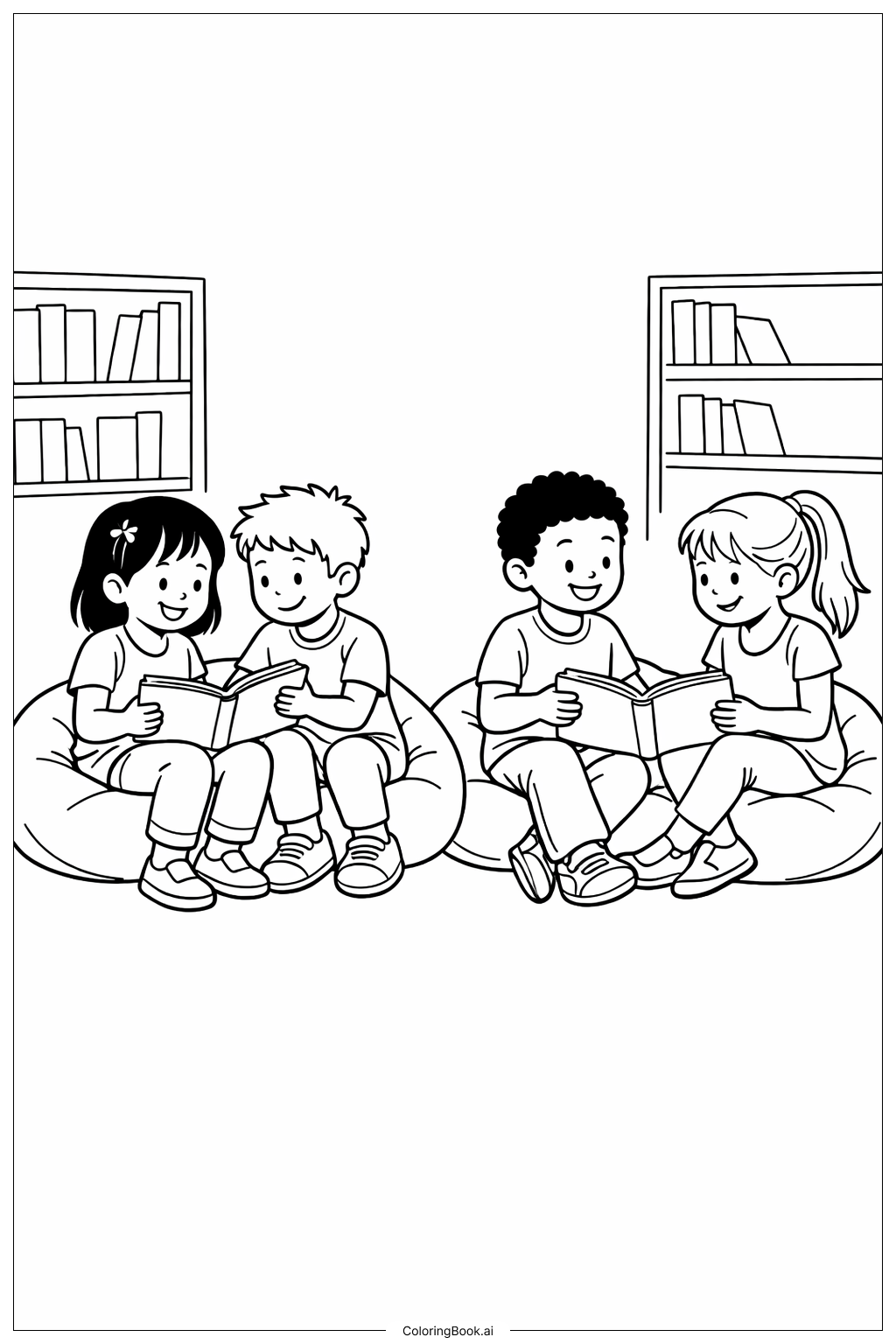
Coloring tips: How to color Children Sharing Books At Library Black History Month coloring page well?
Start with the children's skin tones using warm shades like tan, brown, caramel, and deep mahogany to celebrate the diversity of the kids in the scene. Use bright, cheerful colors for their clothing — think reds, yellows, blues, and greens to give the image energy and life. Color the book covers with bold, contrasting colors so each one stands out. Use warm wood tones like golden brown or chestnut for the library table and shelves. Fill the bookshelves in the background with a rainbow of book spines to make the library feel full and welcoming. For the Black History Month banner or display, try deep red, black, and green — classic colors tied to cultural pride. Keep the overall palette warm and bright to reflect the joy and excitement of children learning together.
Coloring challenges: Which parts are difficult to color and need attention for Children Sharing Books At Library Black History Month coloring page?
• Skin Tone Variety: The children in this scene come from diverse backgrounds, so coloring their skin tones accurately and respectfully is a key challenge. You will need several shades of brown, tan, and warm beige to represent each child in a natural and beautiful way. Blending colors smoothly will help avoid harsh lines between tones.
• Book Cover Details: Each book on the table and shelves has its own cover design. Keeping these small spaces neat while still adding color and personality to each cover can be tricky, especially for younger colorists. Using fine-tipped colored pencils or markers works best here.
• Background Bookshelves: The shelves filled with books in the background contain many small, tightly spaced rectangles. Coloring each book spine a different color without going outside the lines requires a steady hand and patience. This area can be time-consuming but is very rewarding when finished.
• Facial Expressions: The children's faces show happiness and excitement. Carefully coloring around small facial features like eyes, noses, and mouths without smudging or overlapping requires precision. Light, gentle strokes work best in these areas, especially around the eyes.
• Black History Month Display: If there is a banner or decorative element referencing Black History Month, coloring it with meaningful and accurate colors — such as red, black, and green — while keeping the lettering or design clean adds an extra layer of care and attention to the overall piece.
Benefits of coloring books: Advantages of drawing Children Sharing Books At Library Black History Month coloring page
Coloring this image offers a wonderful mix of creative and educational benefits for children. As kids bring this library scene to life, they practice fine motor skills by carefully staying within lines and handling coloring tools with control. Choosing colors for the children's clothing, skin tones, and books encourages creative thinking and decision-making in a fun, low-pressure way.
This image also sparks meaningful conversations about Black History Month. As children color, parents and teachers can talk about why we celebrate this important time of year and the stories found in books about history, culture, and inspiring people. It connects art with learning in a natural, engaging way.
Coloring diverse characters helps children develop empathy and appreciation for different people and backgrounds. Seeing kids of various appearances sharing books side by side sends a positive message about friendship, inclusion, and the love of reading.
The library setting also encourages a positive attitude toward books and learning. Children are reminded that libraries are welcoming, exciting places full of stories waiting to be discovered. Overall, this page is a joyful, enriching activity that nurtures creativity, cultural awareness, and a lifelong love of reading.