Coloring tips: How to color Elder Telling A Story To Children Black History Month coloring page well?
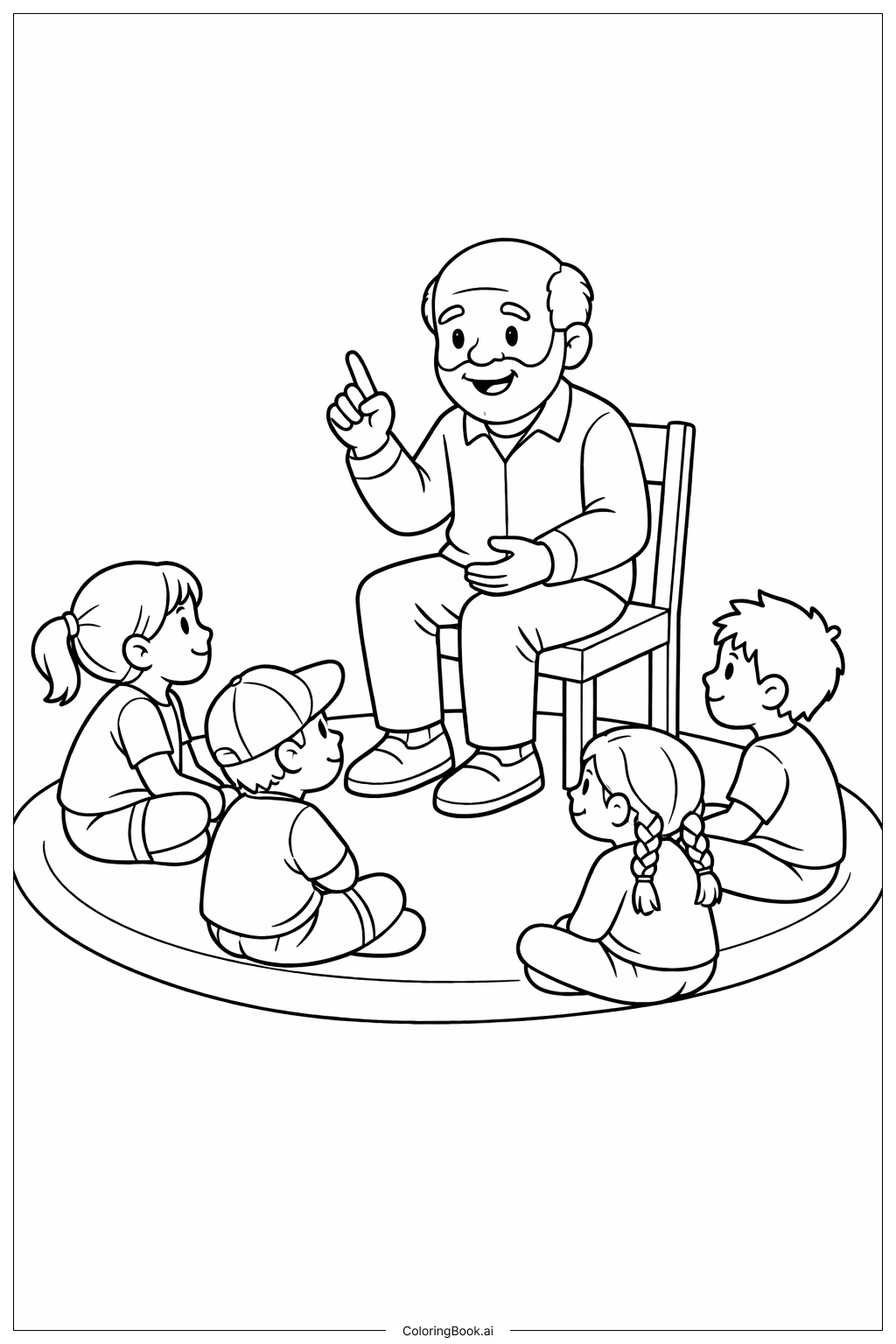
To color this picture, you can use warm colors for the elder’s clothes like brown, beige, or orange to show kindness and wisdom. The children’s clothes can be bright and colorful, such as blue, green, red, and yellow to make them lively and cheerful. Use soft colors for the carpet like light blue or purple. For skin tones, you can use a variety of browns and tans to represent diversity. The elder’s hair can be gray or white, while the children’s hair can be any color you like, including blonde, brown, black, or red. Don’t forget to color the chair and floor in natural colors, like wood tones or light gray.
Coloring challenges: Which parts are difficult to color and need attention for Elder Telling A Story To Children Black History Month coloring page?
1. Small details: The elder’s fingers and facial features need careful coloring to keep lines clean and clear.
2. Hair textures: The curly or wavy hair of each child might be tricky to color neatly.
3. Skin tones: Using different shades for skin tones to show diversity can be challenging but rewarding.
4. Clothing folds: The wrinkles in the elder’s shirt and children's clothes require attention to detail to show depth.
5. Space between characters: The small spaces between children’s arms and legs can be hard to color without going outside the lines.
Benefits of coloring books: Advantages of drawing Elder Telling A Story To Children Black History Month coloring page
Coloring this picture helps children improve their hand-eye coordination and fine motor skills. It encourages them to think about different skin colors and appreciate diversity. The storytime scene promotes curiosity and imagination as kids connect with the idea of learning from elders. Coloring the varied clothing and hair styles allows creative expression and teaches color recognition. Overall, this picture inspires respect for stories and traditions, making it fun and educational to color.