Coloring tips: How to color Community Garden Scene Black History Month coloring page well?
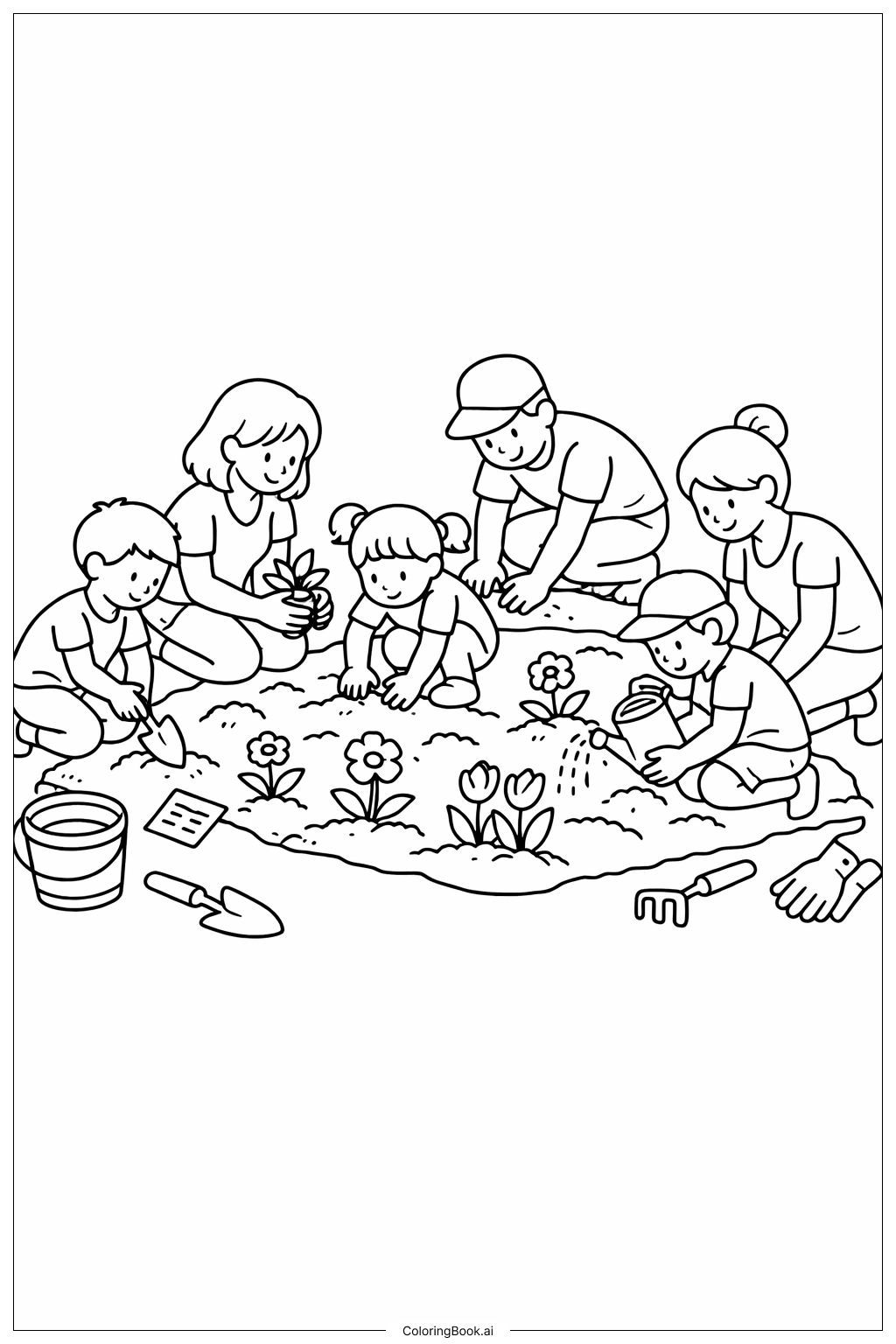
Start with the sky and background using soft blues and warm yellows to set a sunny, cheerful mood. Color the raised garden beds with rich browns and dark earthy tones for the soil. Use many shades of green for the leaves and stems of the vegetables and herbs. Make the sunflowers bright yellow with dark brown centers. Add pops of red, orange, and purple for the flowers and produce in the baskets. Color the people's clothing in bold, warm colors like red, gold, and green to reflect cultural pride. Use wood tones like tan and light brown for the fence and table. Add bright colors to the cultural symbols on the fence. Let the butterflies and bees shine with yellow, orange, and black details. Do not be afraid to mix colors and make this scene as lively and joyful as possible.
Coloring challenges: Which parts are difficult to color and need attention for Community Garden Scene Black History Month coloring page?
• Intricate Plant Details: The garden contains many different plants with overlapping leaves, stems, and petals. Keeping each plant looking distinct requires careful color choices and a steady hand, especially in tight spaces where plants grow close together.
• Cultural Symbols on the Fence: The fence features heritage patterns and decorative symbols with small, repeating shapes. These details demand patience and a fine-tipped tool to fill in accurately without going outside the lines or blending colors together unintentionally.
• Multiple Human Figures: The scene includes people of different ages interacting with one another. Each figure has clothing, facial features, and accessories that need individual attention. Choosing skin tones thoughtfully and coloring small facial details carefully can be challenging, especially for younger colorists.
• Layered Background and Foreground: The image has a deep sense of space, with objects in the front, middle, and back of the scene. Keeping the foreground elements bold and the background softer requires understanding of light and shadow, which can be tricky for beginners to manage across a large composition.
• Baskets and Produce Variety: The baskets of fresh fruits and vegetables include many small, round, and irregular shapes packed closely together. Each item may need a different color, and blending without smearing or muddying the colors nearby takes practice and careful layering.
Benefits of coloring books: Advantages of drawing Community Garden Scene Black History Month coloring page
Coloring this community garden scene offers a wonderful range of benefits for children and young learners. It builds fine motor skills as kids carefully fill in leaves, flower petals, and small cultural details. Focusing on a rich, detailed image also helps improve concentration and patience over time.
This scene encourages creativity. Choosing colors for plants, people, and cultural symbols gives colorists a chance to express themselves freely and think about color combinations in a fun, low-pressure setting.
Beyond the artistic benefits, this image connects children to the history and values of Black History Month. As they color the garden, they can learn about the importance of community, shared work, and the African American agricultural tradition. It opens the door to conversations about heritage, pride, and coming together to care for one another.
Coloring can also be calming and relaxing. Spending quiet time on a detailed page like this helps reduce stress and supports emotional well-being for both children and adults who join in.
Completing this page gives a real sense of accomplishment. Seeing the finished, colorful scene is rewarding and builds confidence. It is a joyful, educational activity that celebrates culture while nurturing important life skills.