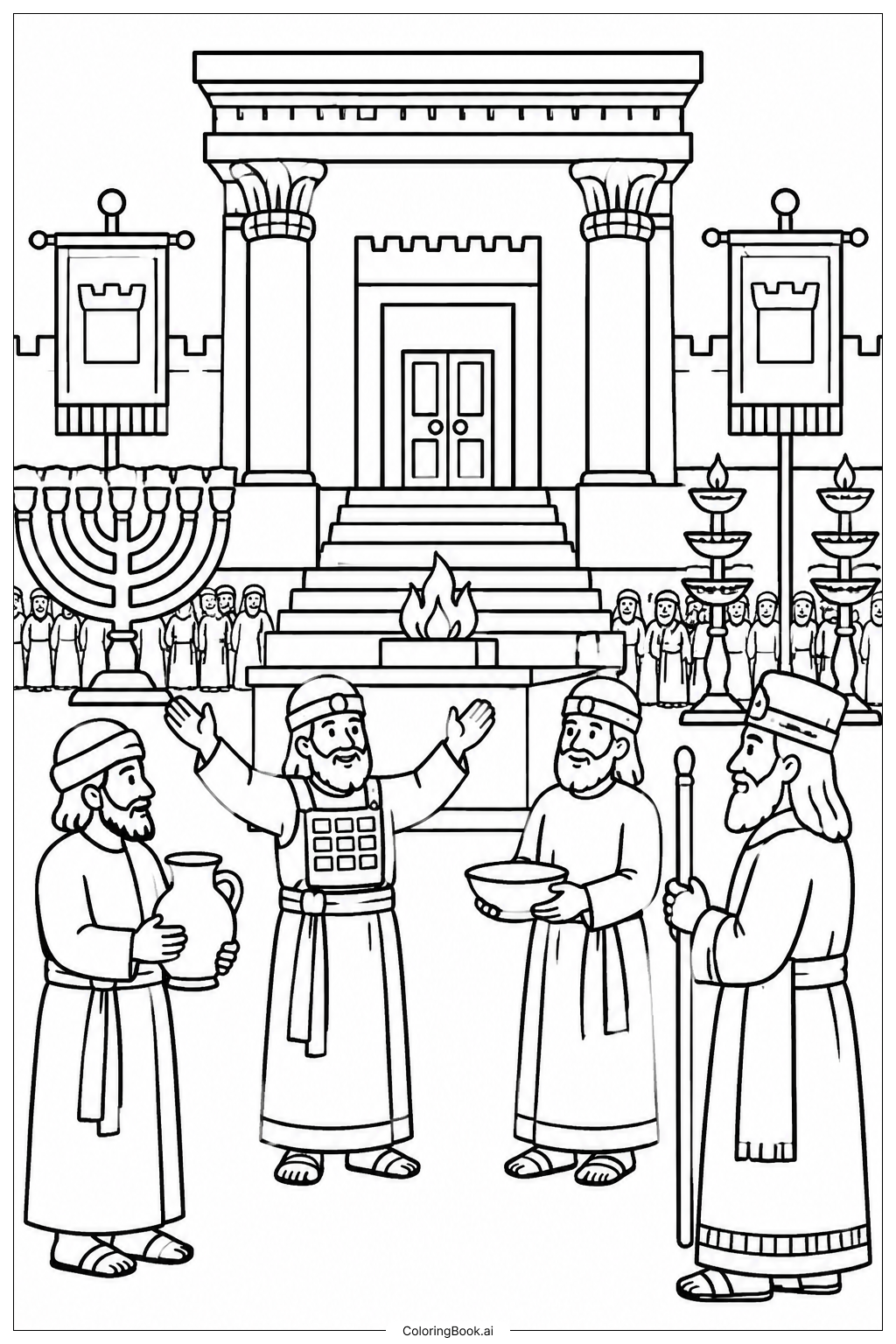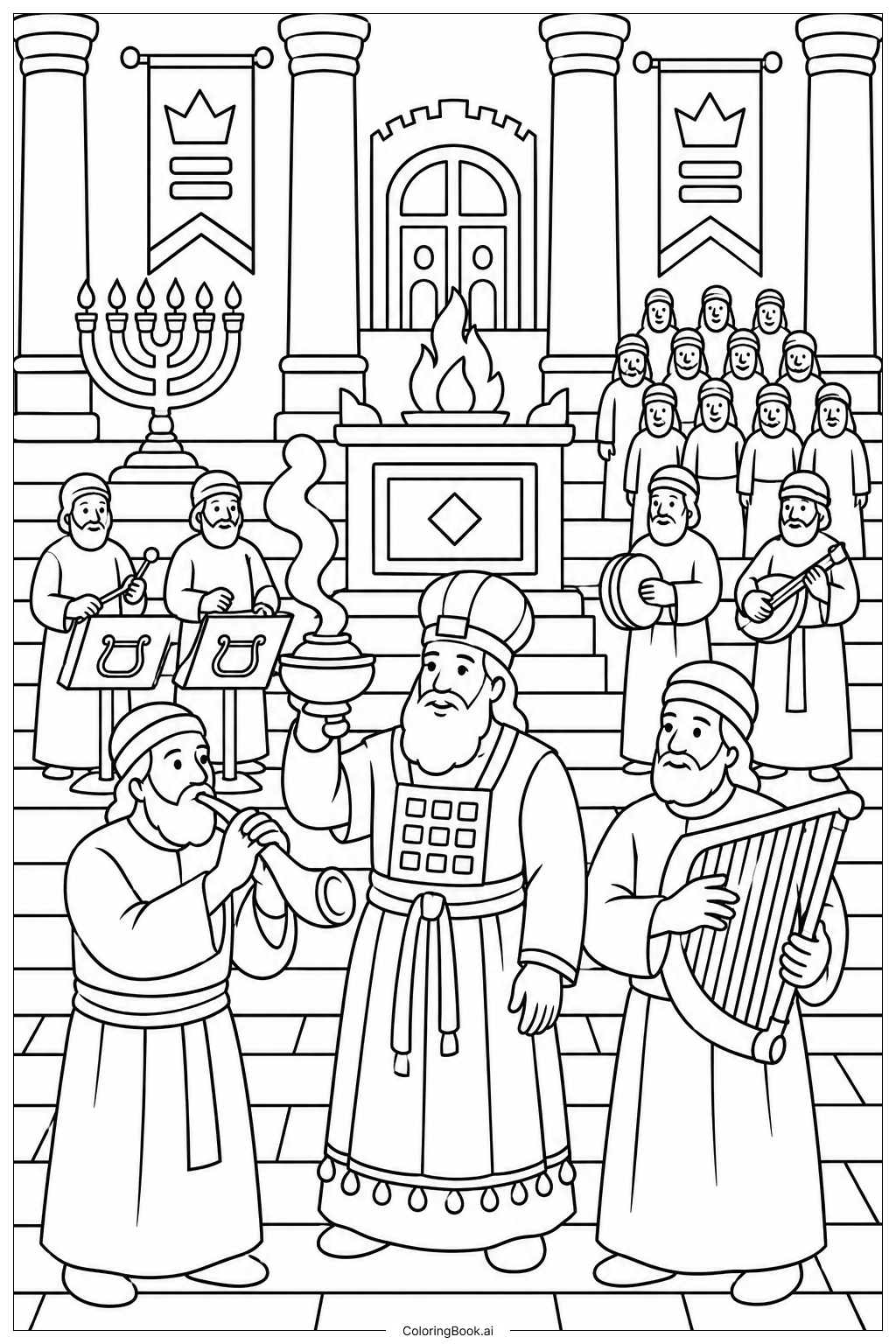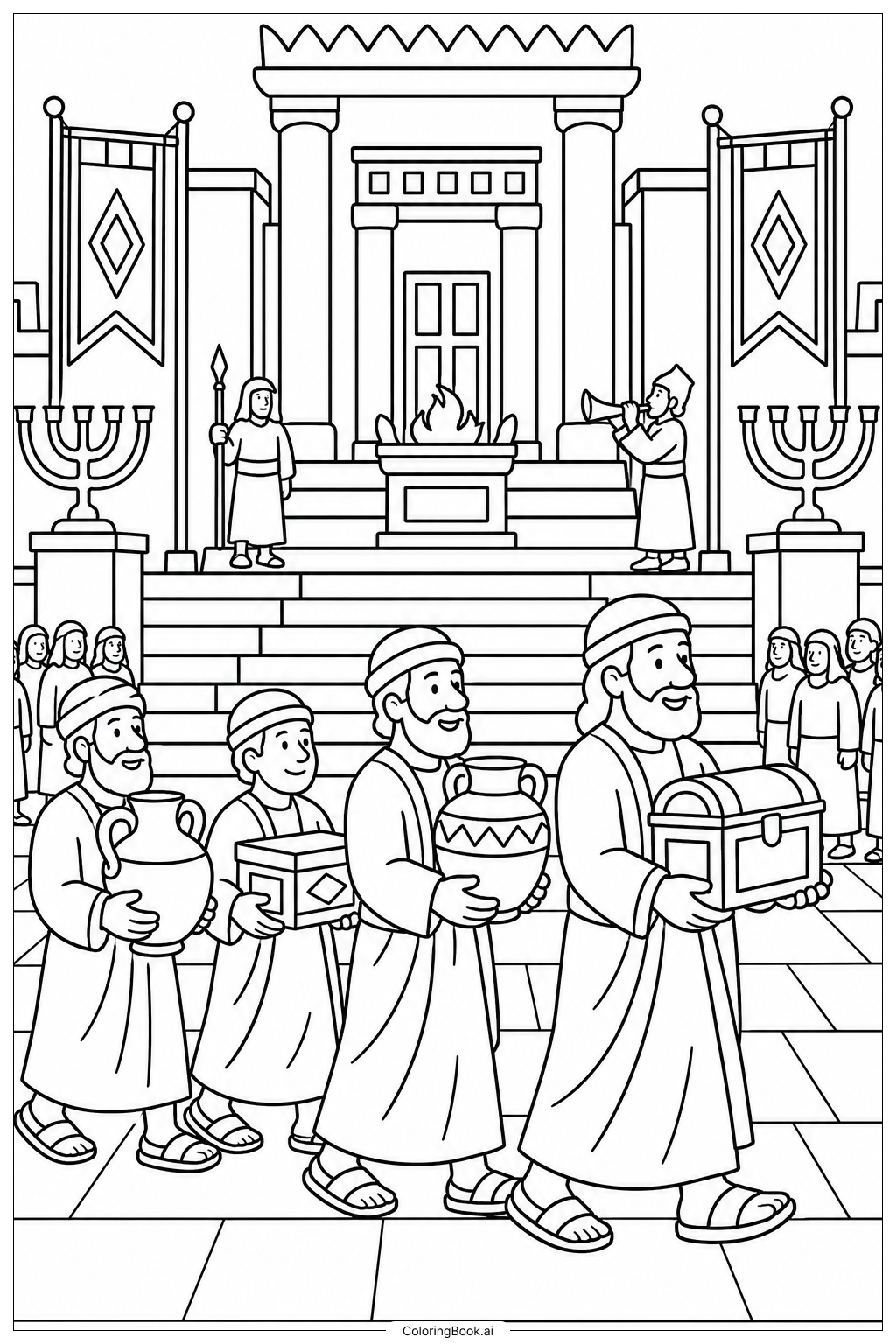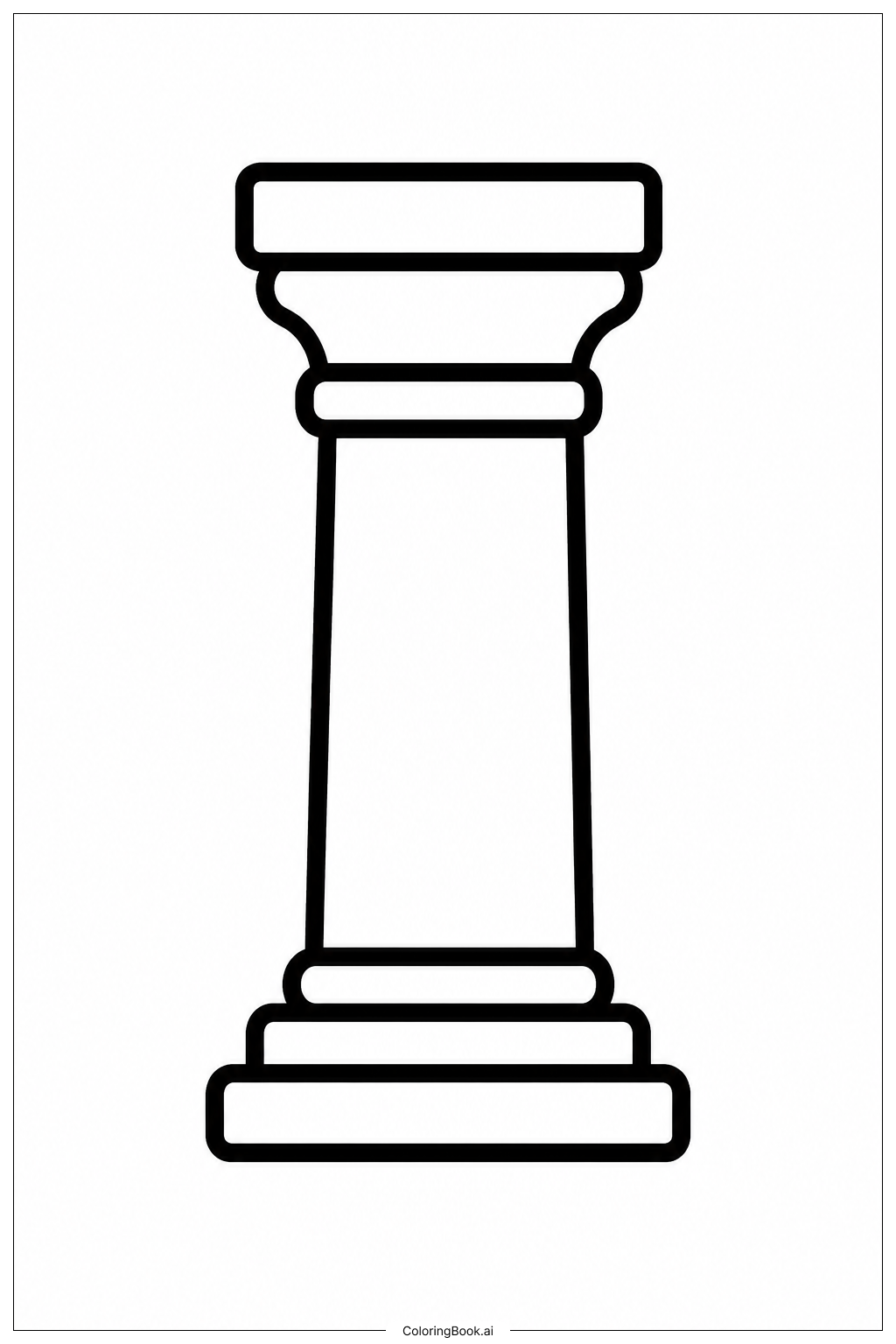
Coloring tips: How to color Temple Pillar Beis Hamikdash coloring page well?
Start with the large pillar shaft using warm stone tones like cream, tan, or soft gold to give it an ancient, sacred feel. For the carved capital at the top, try richer colors like deep gold or bronze to make the decorative details stand out. Use lighter shades on raised surfaces and slightly darker shades in the grooves to create a sense of depth. Floral and geometric carvings can be highlighted with ivory or pale yellow. The base of the pillar can be colored in a slightly deeper shade of stone gray or brown to show its solid weight. Kids can keep colors simple and bold, while older colorists can experiment with shading and gradients to bring out the pillar's three-dimensional look. Adding a soft background color like sky blue or pale sand can help the pillar pop on the page.
Coloring challenges: Which parts are difficult to color and need attention for Temple Pillar Beis Hamikdash coloring page?
• Intricate Capital Details: The top of the pillar features densely packed carvings, scrollwork, and layered decorative elements. Coloring within these tiny areas requires a fine-tipped pencil or marker and a steady hand. Younger children may find it hard to stay within the small shapes, so they can simplify by using one or two colors across the entire capital section.
• Creating Depth on the Shaft: The pillar shaft looks flat without shading. To make it look rounded and three-dimensional, colorists need to apply lighter tones in the center and gradually darken toward the edges. This blending technique can be tricky for beginners who are not yet familiar with gradients or layering.
• Geometric and Floral Border Patterns: The decorative borders along the pillar contain repeating geometric and floral motifs. Keeping these patterns consistent in color while alternating tones for variety takes patience and planning. Rushing through these sections can make the design look uneven or muddled.
• Distinguishing Separate Architectural Layers: The pillar is made up of distinct sections — base, shaft, and capital — each with its own texture and detail level. Choosing colors that clearly separate these sections while still looking harmonious is a design challenge that requires some planning before picking up any coloring tool.
• Maintaining a Sacred and Cohesive Palette: Since this image represents a holy structure, keeping the color palette respectful and unified — avoiding overly bright or clashing colors — requires thoughtful color selection, especially for younger colorists who tend to favor vivid, contrasting hues.
Benefits of coloring books: Advantages of drawing Temple Pillar Beis Hamikdash coloring page
Coloring this image of a Temple Pillar from the Beis Hamikdash offers a wonderful blend of artistic, educational, and spiritual benefits. As children and adults work through the detailed sections of the pillar, they naturally strengthen their fine motor skills and hand-eye coordination. Carefully coloring within intricate carvings and small decorative patterns builds focus and patience over time.
This image also sparks curiosity about history and architecture. Colorists young and old can learn about the beauty and craftsmanship of the ancient Beis Hamikdash while they work, turning a creative activity into a meaningful educational experience.
For older colorists, the challenge of shading and blending to create a three-dimensional stone effect develops real artistic techniques. Planning a cohesive color palette encourages creative thinking and decision-making skills.
On an emotional level, spending quiet time coloring a sacred image like this can feel calming and even meditative. It offers a peaceful break from screens and busy routines. For Jewish families and communities, this activity also deepens a connection to heritage and faith in a hands-on, joyful way. It is a wonderful activity to do together as a family, combining creativity, learning, and meaningful conversation about the Temple and its significance.