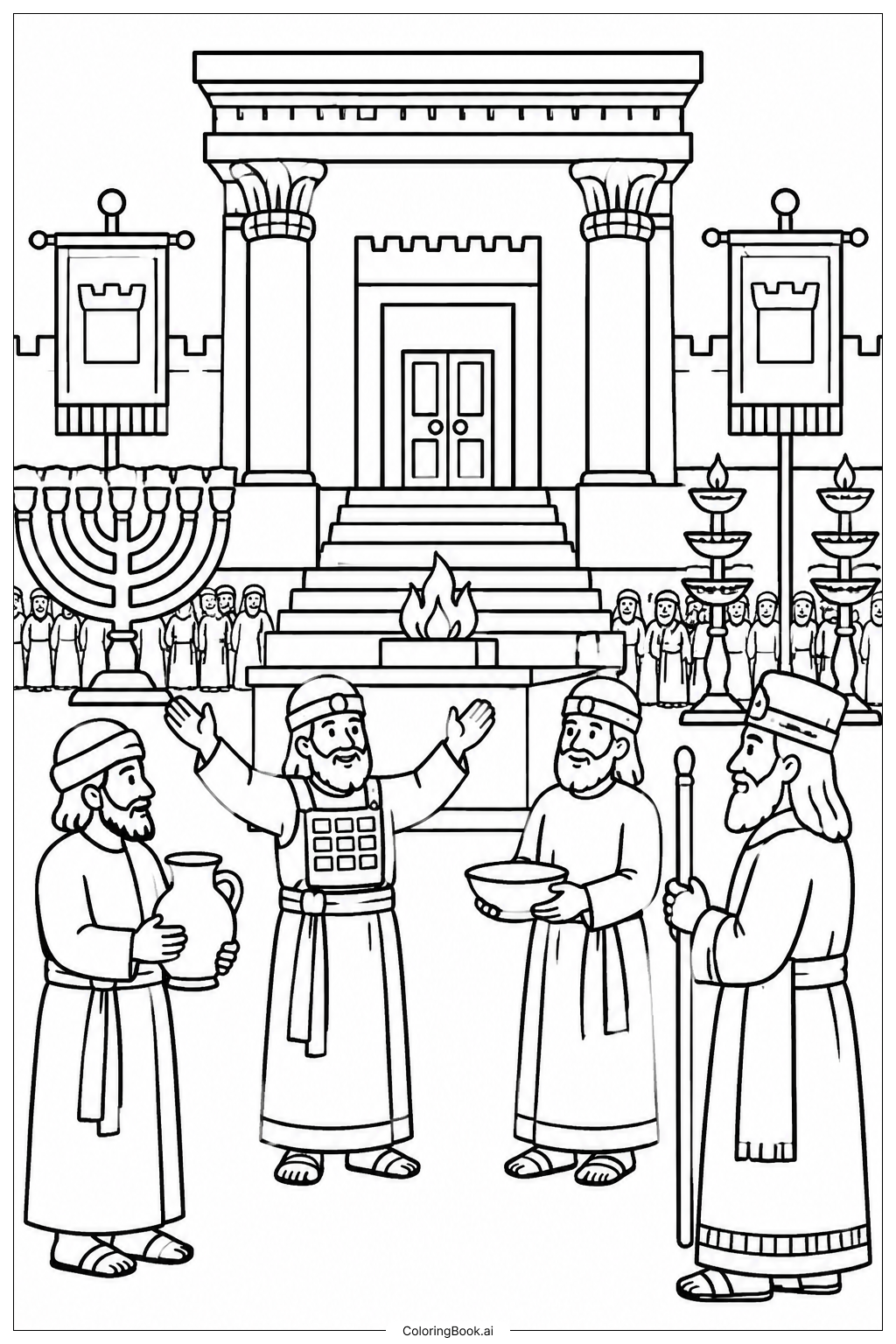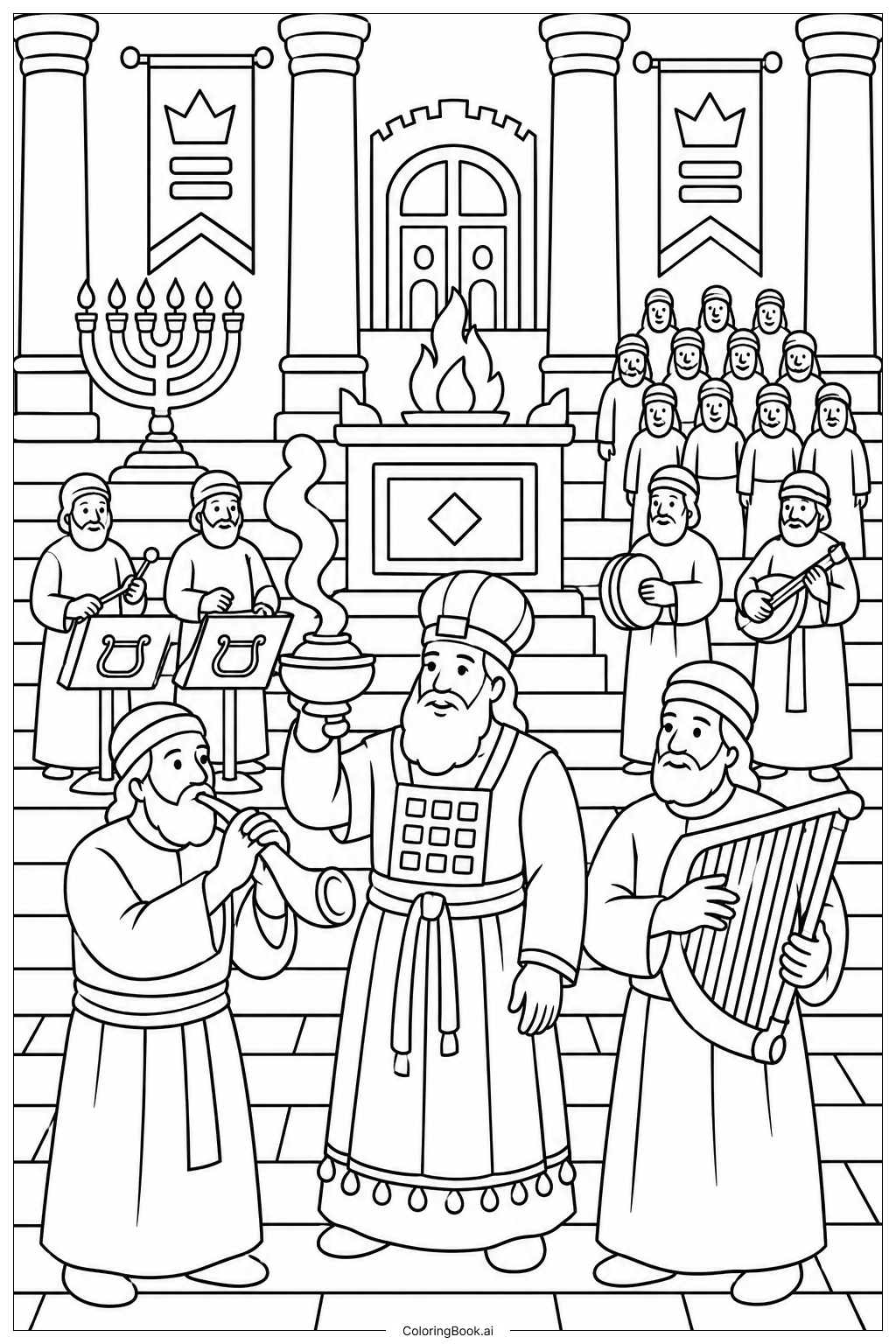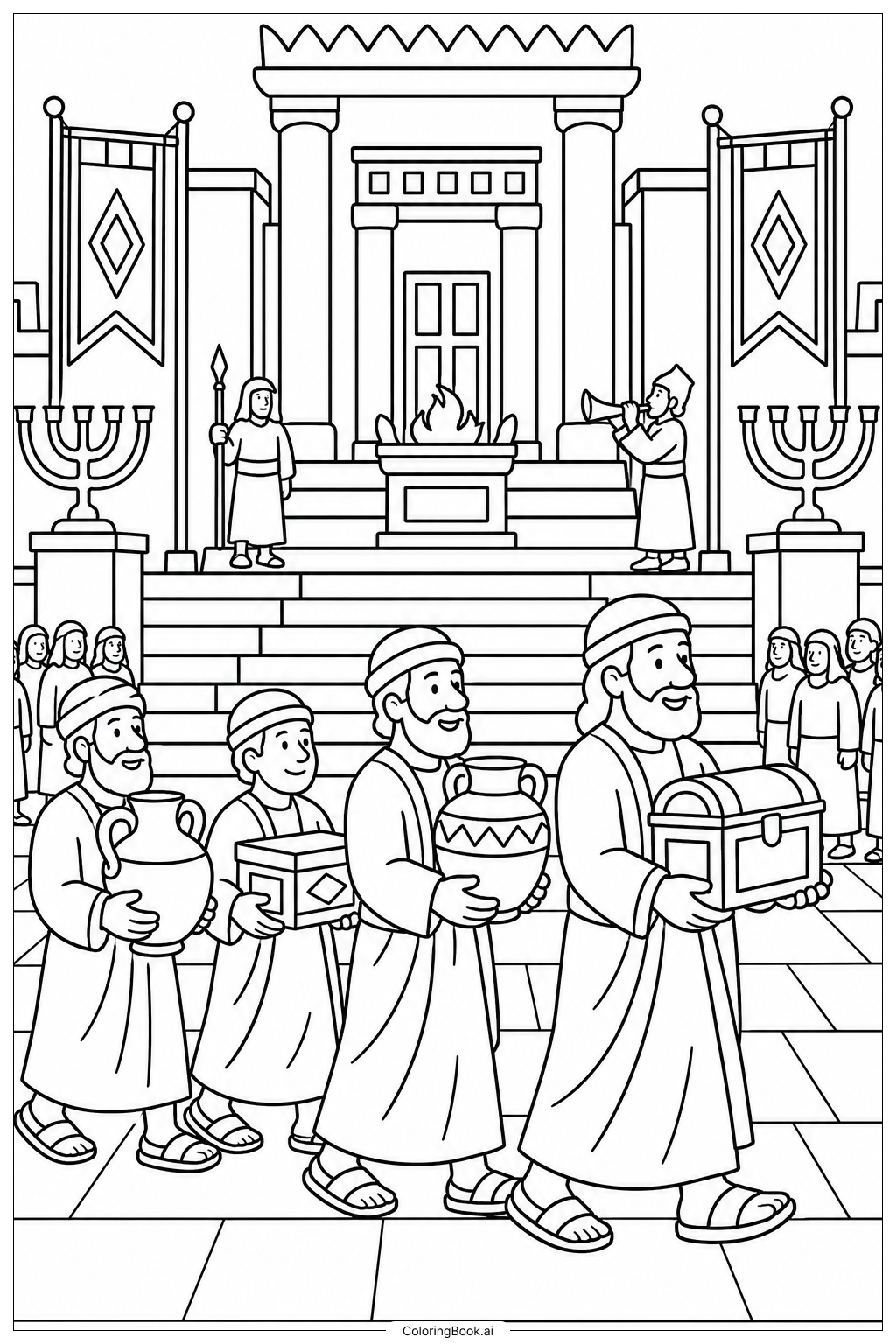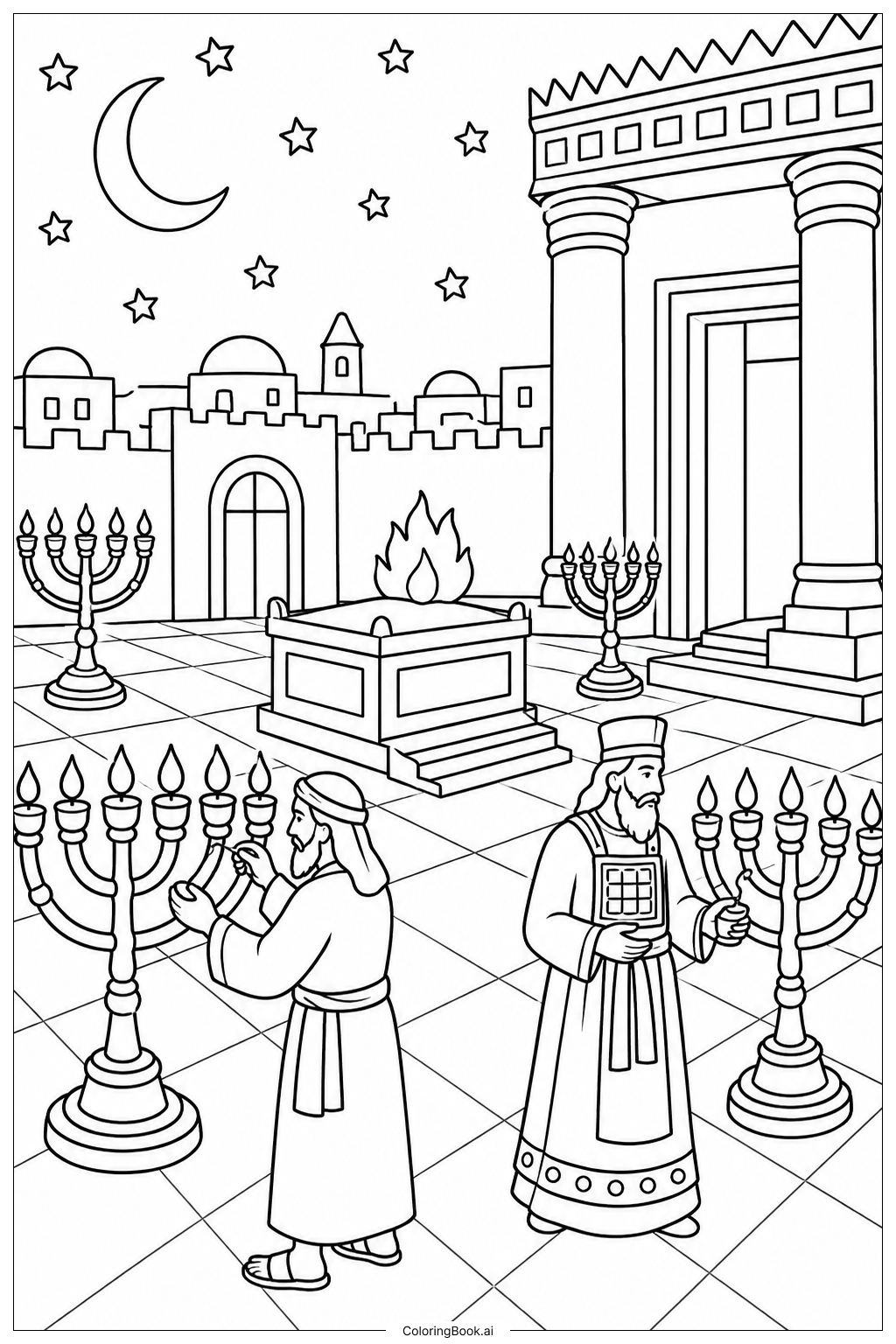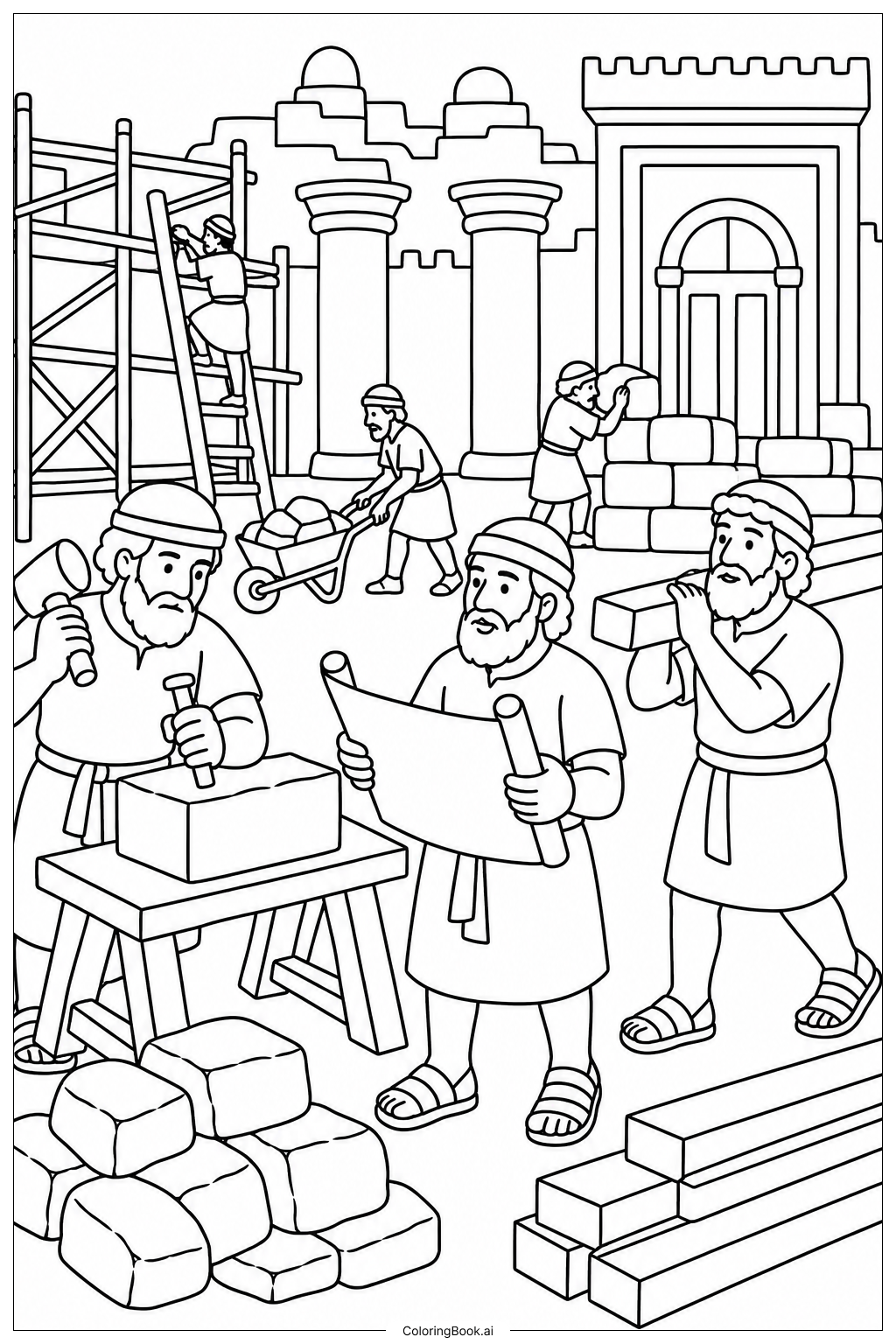
Coloring tips: How to color Construction Workers At Beis Hamikdash coloring page well?
Start with the stone walls and foundation. Use warm sandy tones like tan, beige, and light brown to give the stones a natural look. For the wooden beams and scaffolding, try darker shades of brown and amber. The workers' clothing can be colored in earthy tones such as rust, olive green, and cream to reflect ancient garments. Add pops of color to tools like baskets, ropes, and chisels using golden yellow or deep ochre. For the sky peeking through the structure, a soft blue or golden sunrise hue adds a spiritual feeling to the scene. Use shading to give the stone blocks depth and dimension. Younger colorists can keep colors simple and bold, while older kids and Adults may enjoy adding fine details and gradients to the architecture. Take your time with each section — there is a lot to explore in this rich and meaningful scene.
Coloring challenges: Which parts are difficult to color and need attention for Construction Workers At Beis Hamikdash coloring page?
• Stone Texture Details: The stone blocks that make up the walls and foundation of the Beis Hamikdash have intricate lines and joints between them. Carefully coloring each block individually while keeping consistent tones requires patience and a steady hand. Using two slightly different shades of the same color for alternating blocks helps create a realistic look.
• Scaffolding and Structural Lines: The scaffolding surrounding the Temple walls is made up of many thin, overlapping beams and poles. These narrow spaces are difficult to color without going outside the lines. A fine-tipped colored pencil or a thin marker works best for these areas.
• Worker Figures and Clothing Folds: Each construction worker has detailed clothing with folds and draping fabric that suggest movement. Coloring these folds with light and shadow can be tricky for younger colorists. Try using a base color first, then a slightly darker shade in the creases to add depth.
• Tools and Small Objects: Hammers, chisels, ropes, and baskets are scattered throughout the scene. These small objects have fine outlines and limited space for color. Staying inside the lines here takes concentration and a sharpened pencil tip.
• Architectural Carvings and Pillars: The grand pillars and arched doorways feature decorative carvings and layered designs. Each carving has its own small details that benefit from careful color choices. Using gold, ivory, and warm stone tones together can bring these architectural elements to life without making the overall image look too busy.
Benefits of coloring books: Advantages of drawing Construction Workers At Beis Hamikdash coloring page
Coloring this scene of the Beis Hamikdash offers a wonderful mix of creative and educational benefits for children and Adults alike. As colorists work through the busy construction scene, they develop fine motor skills and hand-eye coordination by navigating the many detailed lines of stonework, tools, and worker figures.
The image introduces kids to history and faith in a visual and engaging way. Learning about the construction of the holy Temple becomes a memorable experience when children can bring it to life with their own color choices.
For Boys and Girls, this page encourages focus and patience. Staying inside the detailed lines of scaffolding and small tools takes concentration that builds over time with practice.
Adults will find the complexity of the architectural details both relaxing and mentally stimulating. The repetitive motion of coloring stone blocks and decorative carvings can help reduce stress and promote mindfulness.
Working through a scene with many characters and objects also nurtures creative decision-making. Choosing which colors to use for ancient garments, stone, and wood helps develop an early sense of art and design.
Most importantly, this coloring page connects colorists of all ages to a meaningful piece of heritage, turning a quiet coloring session into a moment of reflection and appreciation for something sacred and enduring.