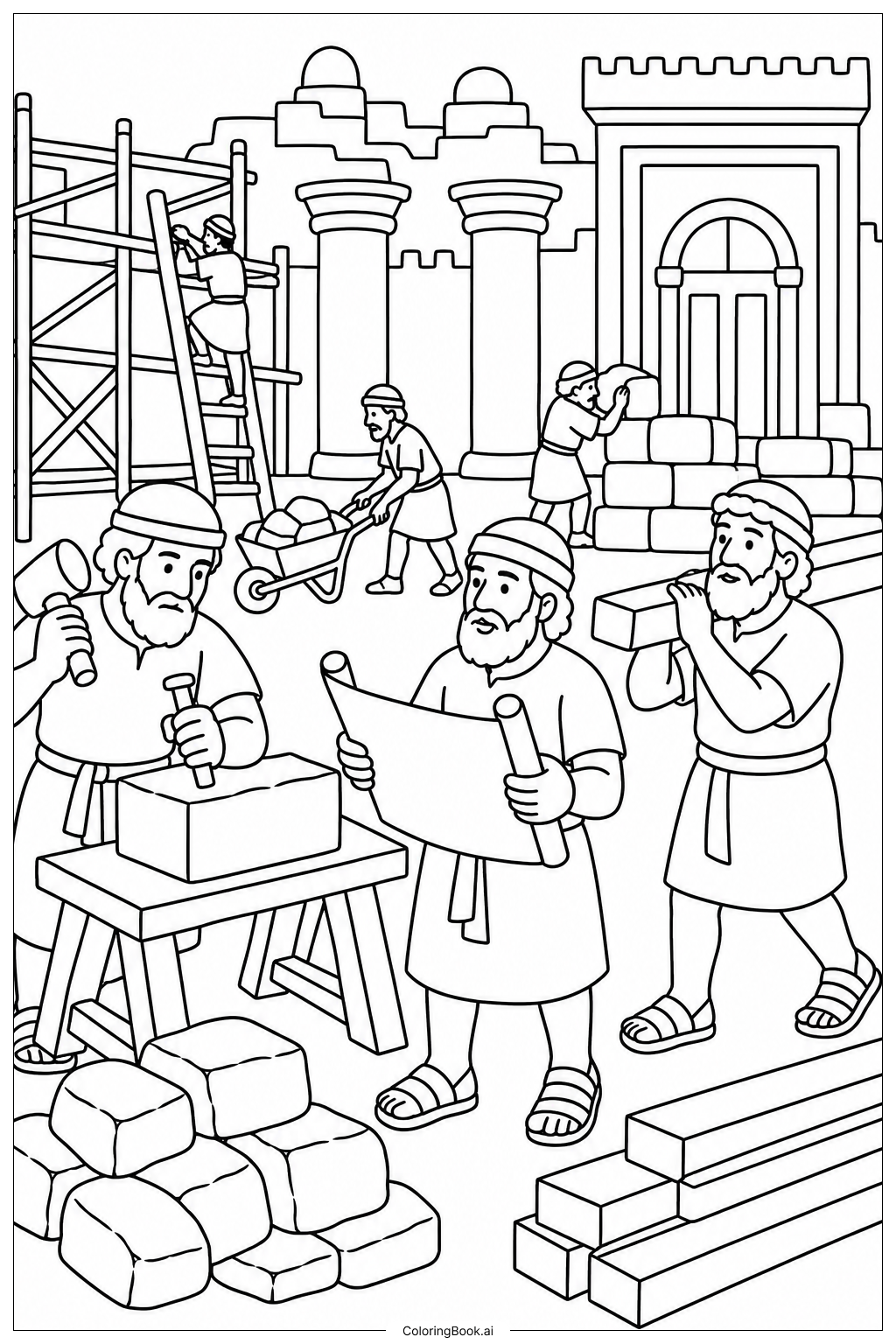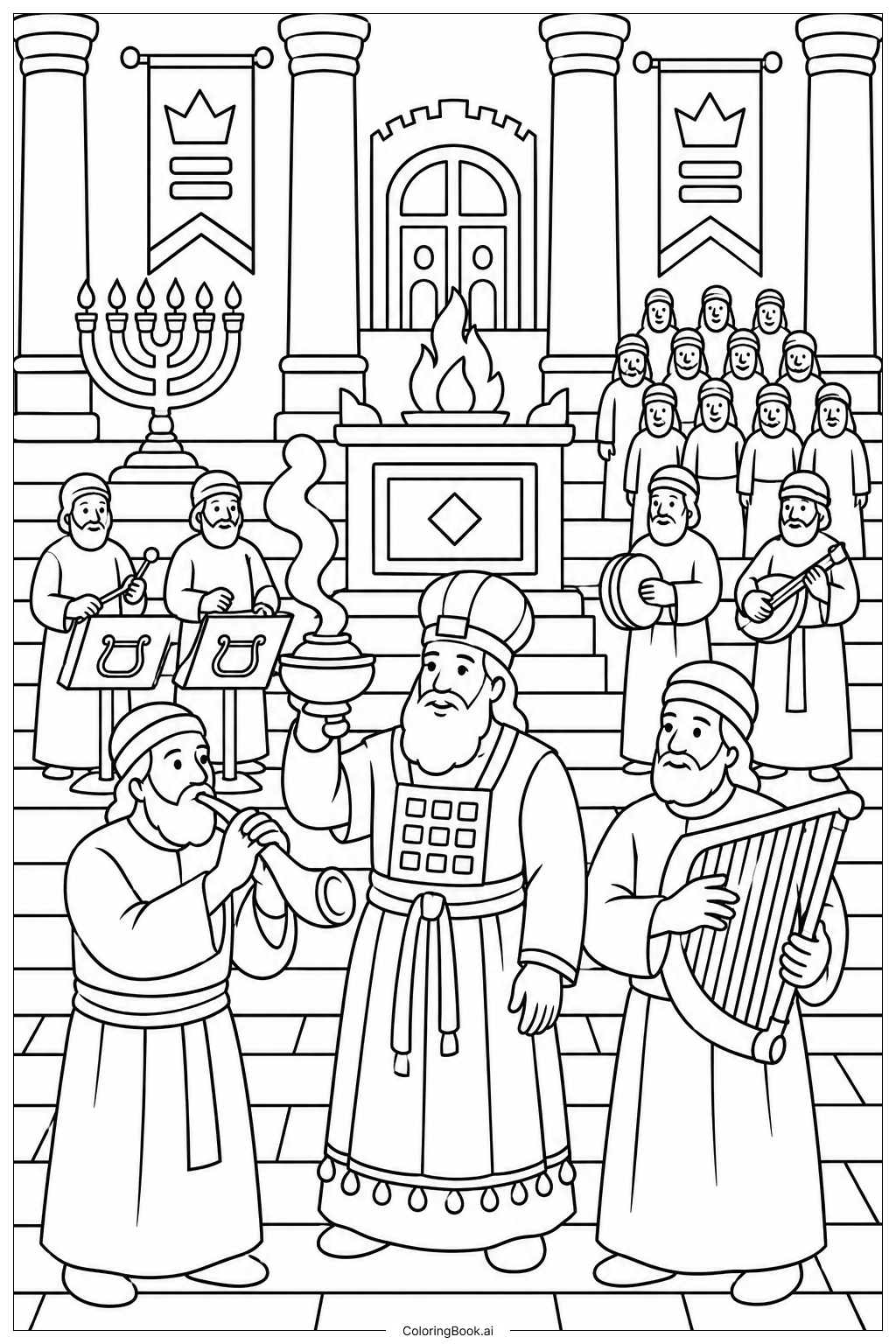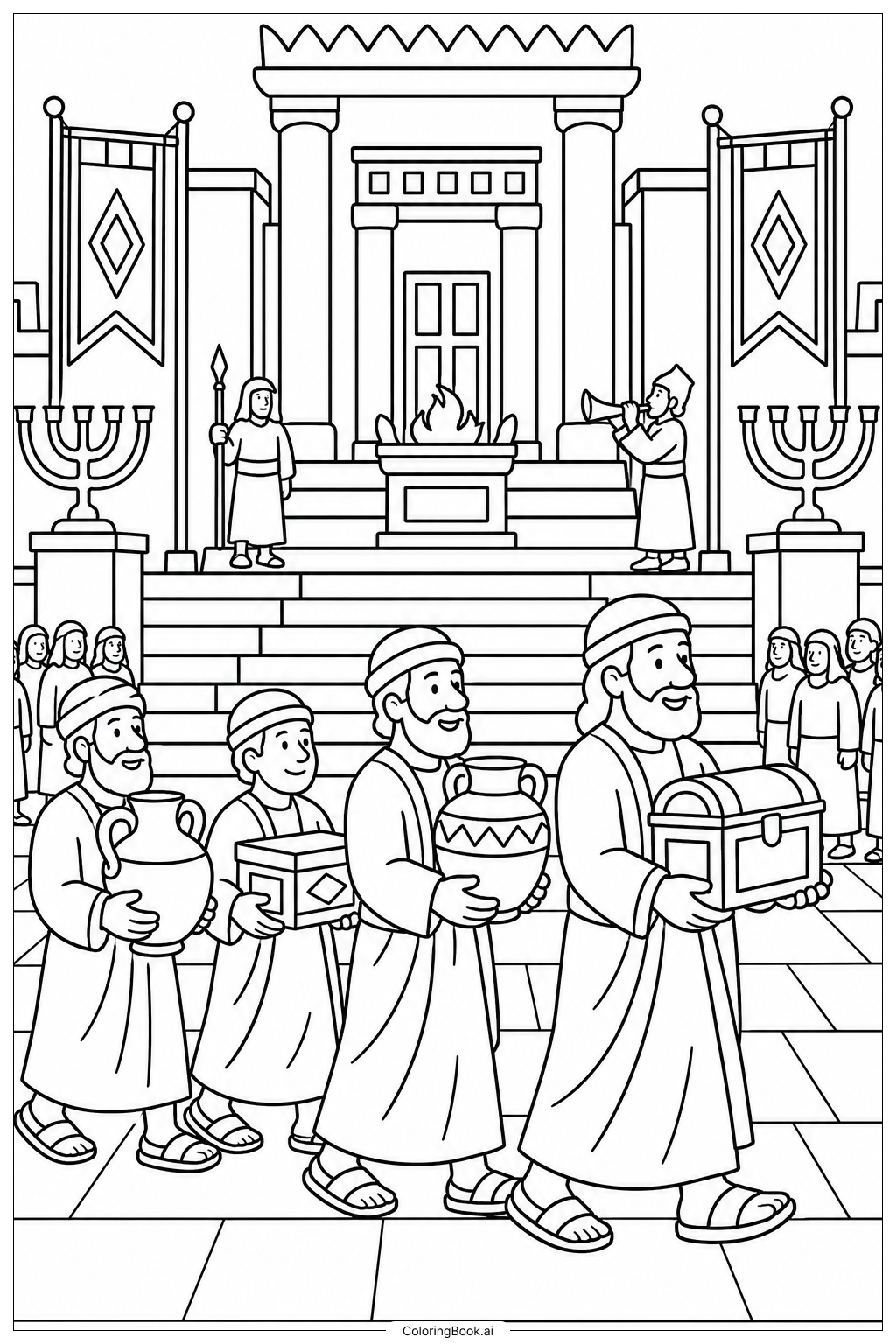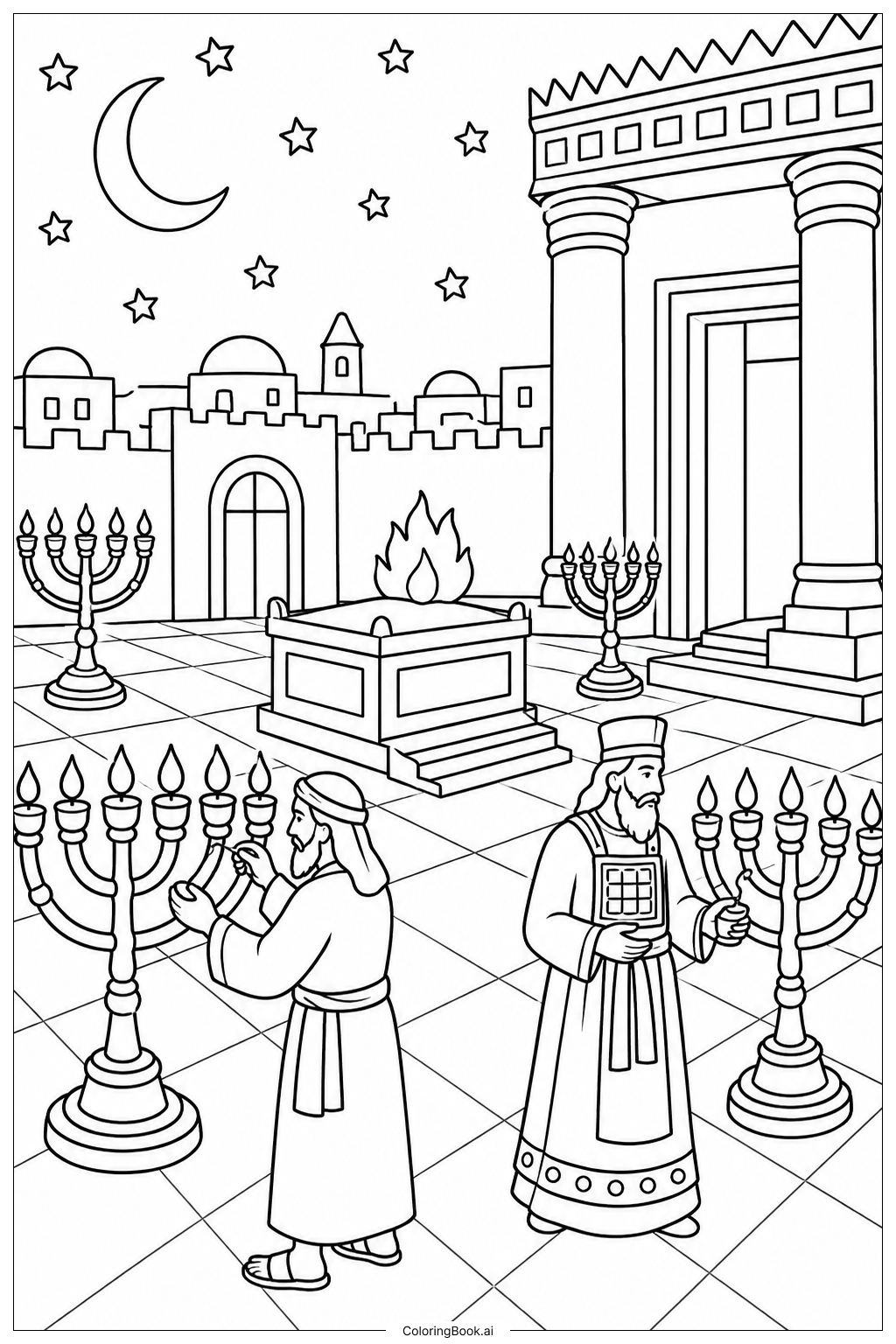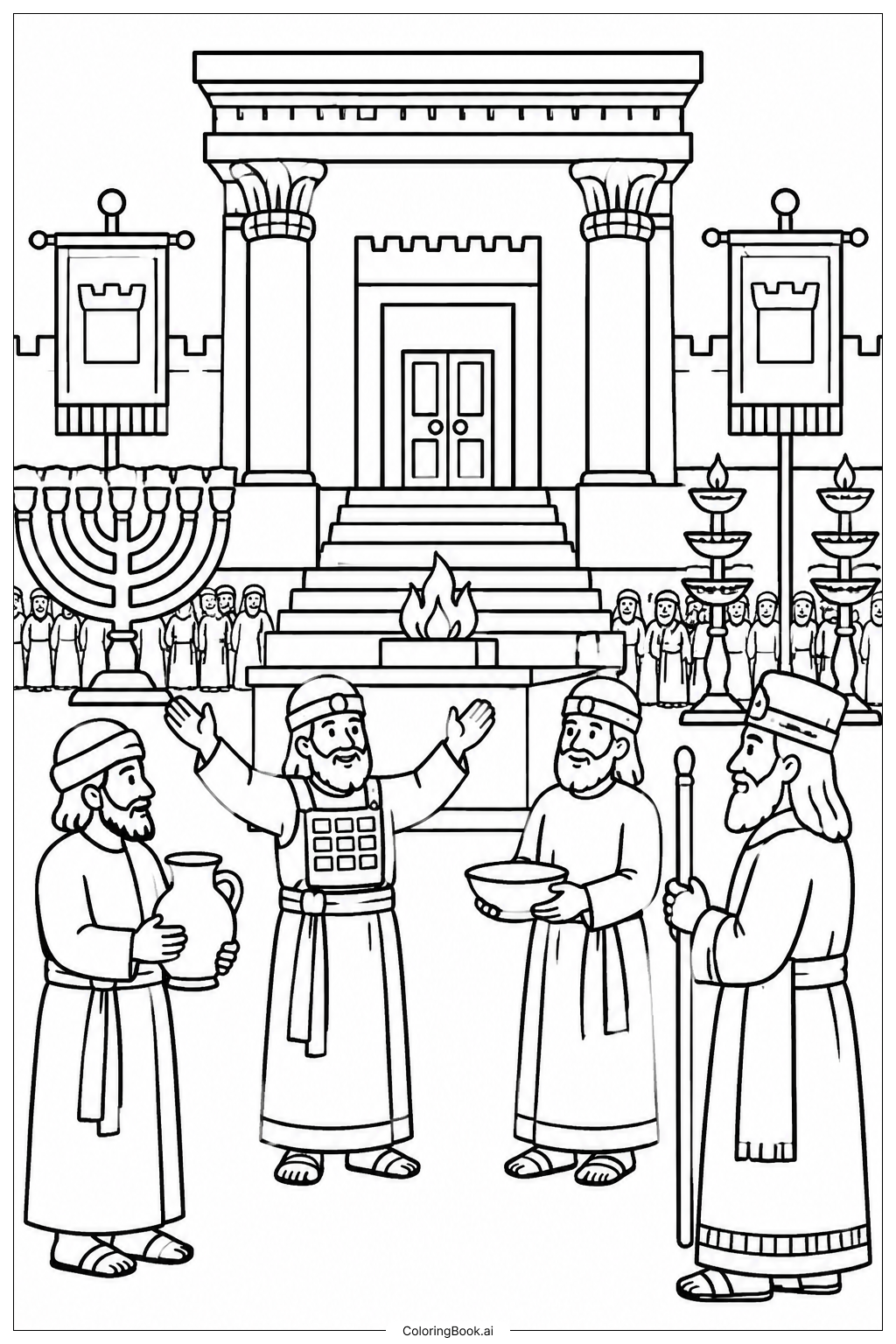
Coloring tips: How to color Ceremonial Dedication Scene Beis Hamikdash coloring page well?
Start with the large background elements like the Temple walls and sky before moving to smaller details. Use warm golden and amber tones for the stone pillars and Temple walls to give them an ancient, sacred feel. The priests' robes can be colored in deep blues, purples, and white, which were traditional colors of priestly garments. The altar can be shaded in brown and gray to look like stone or bronze. Try using light yellow or gold for any lamplight or divine glow in the scene. For the courtyard ground, sandy beige or light tan works well. Add depth by using slightly darker shades on the edges of stones and fabric folds. Boys and Girls alike can enjoy experimenting with rich, ceremonial colors to bring this holy scene to life. Take your time with the smaller figures and decorative carvings — they make the whole image feel alive.
Coloring challenges: Which parts are difficult to color and need attention for Ceremonial Dedication Scene Beis Hamikdash coloring page?
• Complex Architectural Details: The Beis Hamikdash features many intricate carved borders, pillar designs, and layered archways. Staying inside the fine lines of these decorative elements requires a steady hand and a sharp-tipped colored pencil or thin marker. Taking your time with each section will help keep the details crisp and clean.
• Multiple Overlapping Figures: The scene includes several priestly figures standing at different depths in the courtyard. Coloring overlapping figures without mudding their outlines can be tricky. It helps to color each figure one at a time and allow one area to dry before moving to the next, especially when using markers or watercolors.
• Fabric Folds and Robe Textures: The flowing robes worn by the priests have many layered folds. Capturing the light and shadow in these folds using shading or blending techniques adds realism but requires some practice. Try using two shades of the same color — one lighter and one darker — to show depth in the fabric.
• Balancing Light and Shadow on Stone Surfaces: The Temple walls and altar are made of stone, which naturally has shadows and highlights. Giving the stonework a three-dimensional look means carefully shading the edges darker while keeping the centers lighter. This balance takes patience but greatly improves the final result.
• Small Decorative Carvings and Symbols: Tiny ornamental details on the Temple walls and altar edges are some of the most challenging areas to color. Fine-tipped tools are essential here. Rushing through these small areas can cause colors to bleed outside the lines, so slow and careful strokes are key.
Benefits of coloring books: Advantages of drawing Ceremonial Dedication Scene Beis Hamikdash coloring page
Coloring this Ceremonial Dedication Scene from the Beis Hamikdash offers a wonderful blend of creative, educational, and emotional benefits for Boys, Girls, and Adults alike.
For younger children, engaging with the detailed figures and architecture helps develop fine motor skills and hand-eye coordination. Choosing colors and filling in shapes also strengthens focus and concentration.
For older children and teens, this image encourages learning about Jewish history and sacred traditions in a hands-on, visual way. As they color the priests, altar, and Temple details, they naturally absorb the story and symbolism behind the scene.
For Adults, this page offers a calming, meditative coloring experience. The intricate stonework, layered figures, and decorative elements provide a satisfying creative challenge that can reduce stress and promote mindfulness.
The ceremonial subject matter also sparks meaningful conversations between generations — parents and children can discuss the significance of the Beis Hamikdash, the priestly service, and the traditions of dedication. This makes the activity not just artistic, but deeply enriching.
Overall, this coloring page is a beautiful way to connect creativity with cultural heritage, making it a rewarding experience for the whole family.