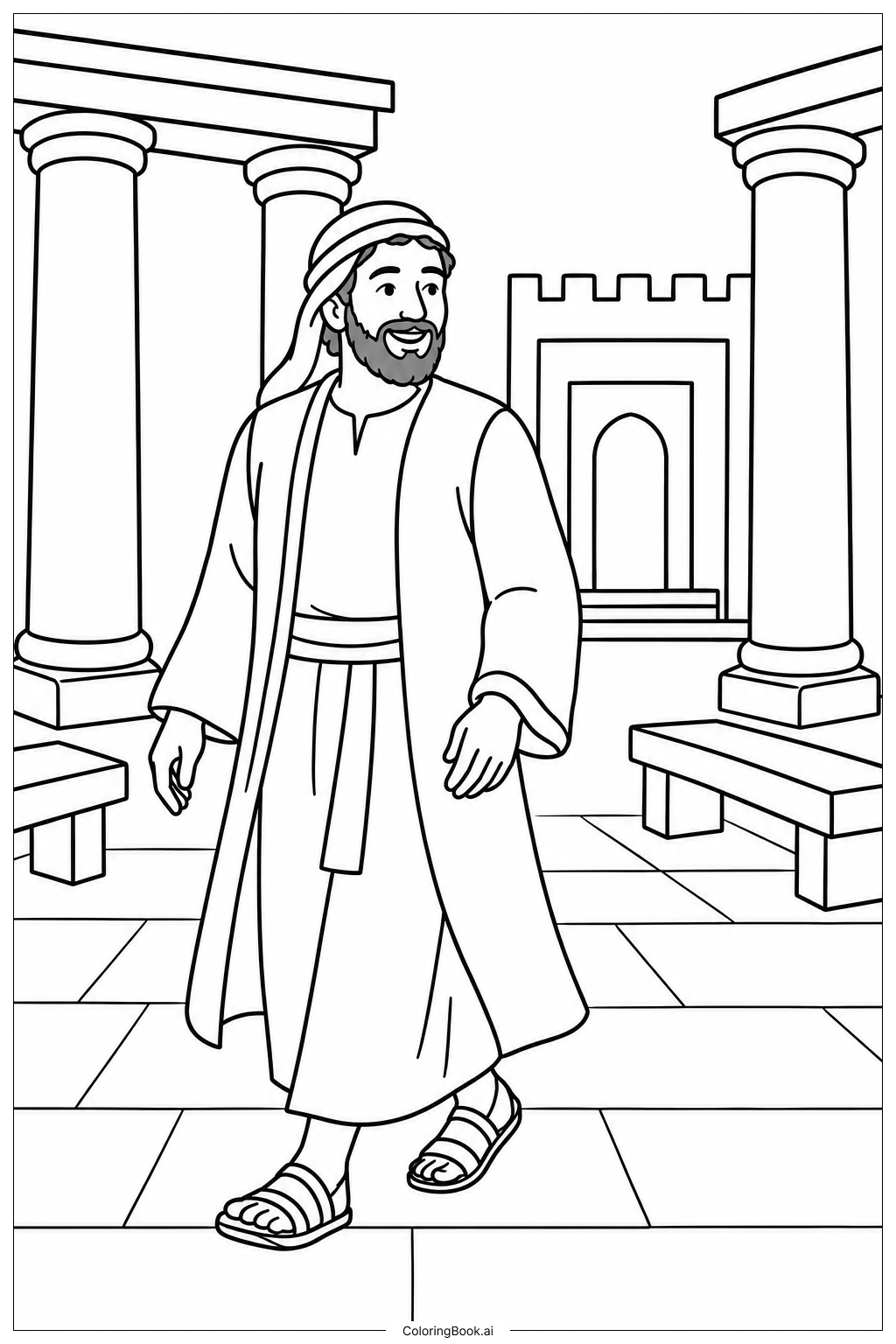
Coloring tips: How to color Temple Courtyard Scene Beis Hamikdash coloring page well?
Start with the stone architecture by using warm tones like sandy beige, light tan, and soft gold to bring the walls and columns to life. Use a slightly deeper shade of brown or gray for shadows and depth between the stones. The altar at the center can be colored in rich earthy reds and warm ochre. For the priests' robes, try white and cream with golden or blue trim to reflect their ceremonial garments. The sky above the courtyard can be a calm, bright blue with soft white clouds. Decorative details like menorahs and carvings look beautiful in shiny gold or bronze tones. Use darker shades carefully to add depth to archways and doorways. Children can keep colors simple, while older colorists can experiment with shading to create a three-dimensional, realistic look. Take your time with the fine details — they really make the scene come alive.
Coloring challenges: Which parts are difficult to color and need attention for Temple Courtyard Scene Beis Hamikdash coloring page?
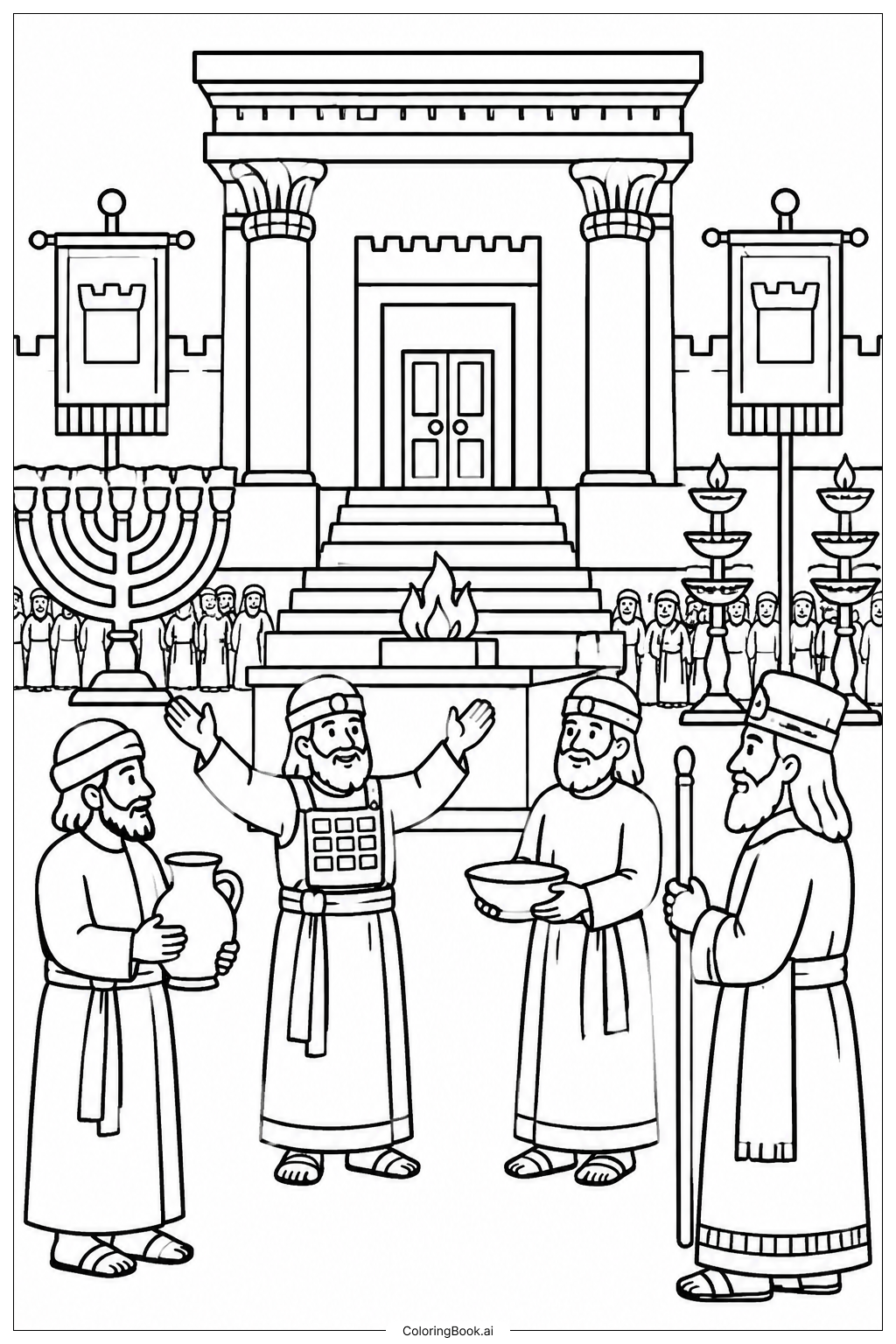
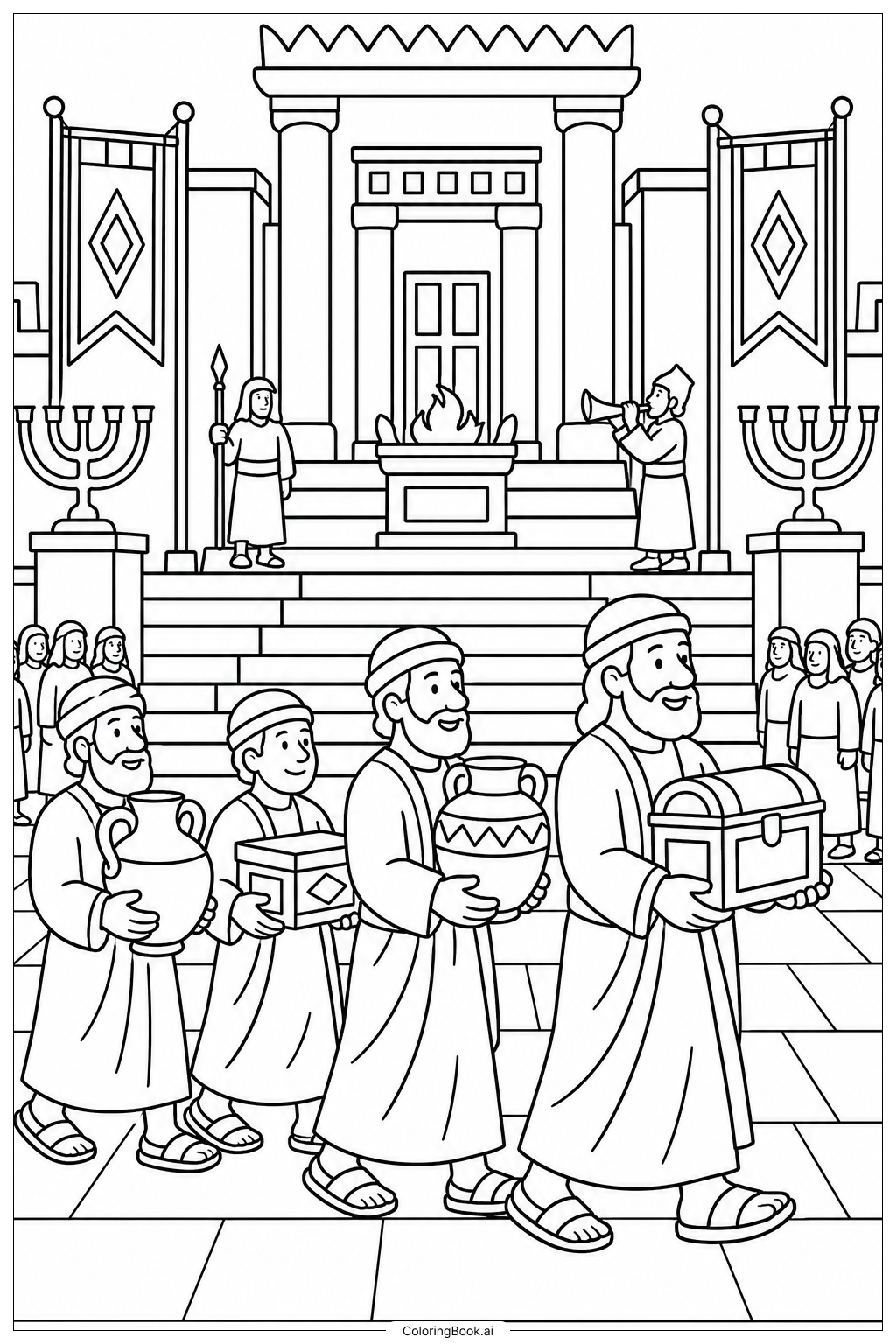
• Stone Architecture Details: The courtyard walls, columns, and steps are made up of many individual stone blocks, each with fine lines and textures. Carefully coloring each stone separately while keeping the overall palette consistent takes patience and a steady hand. Blending light and shadow across these surfaces is especially tricky for younger colorists.
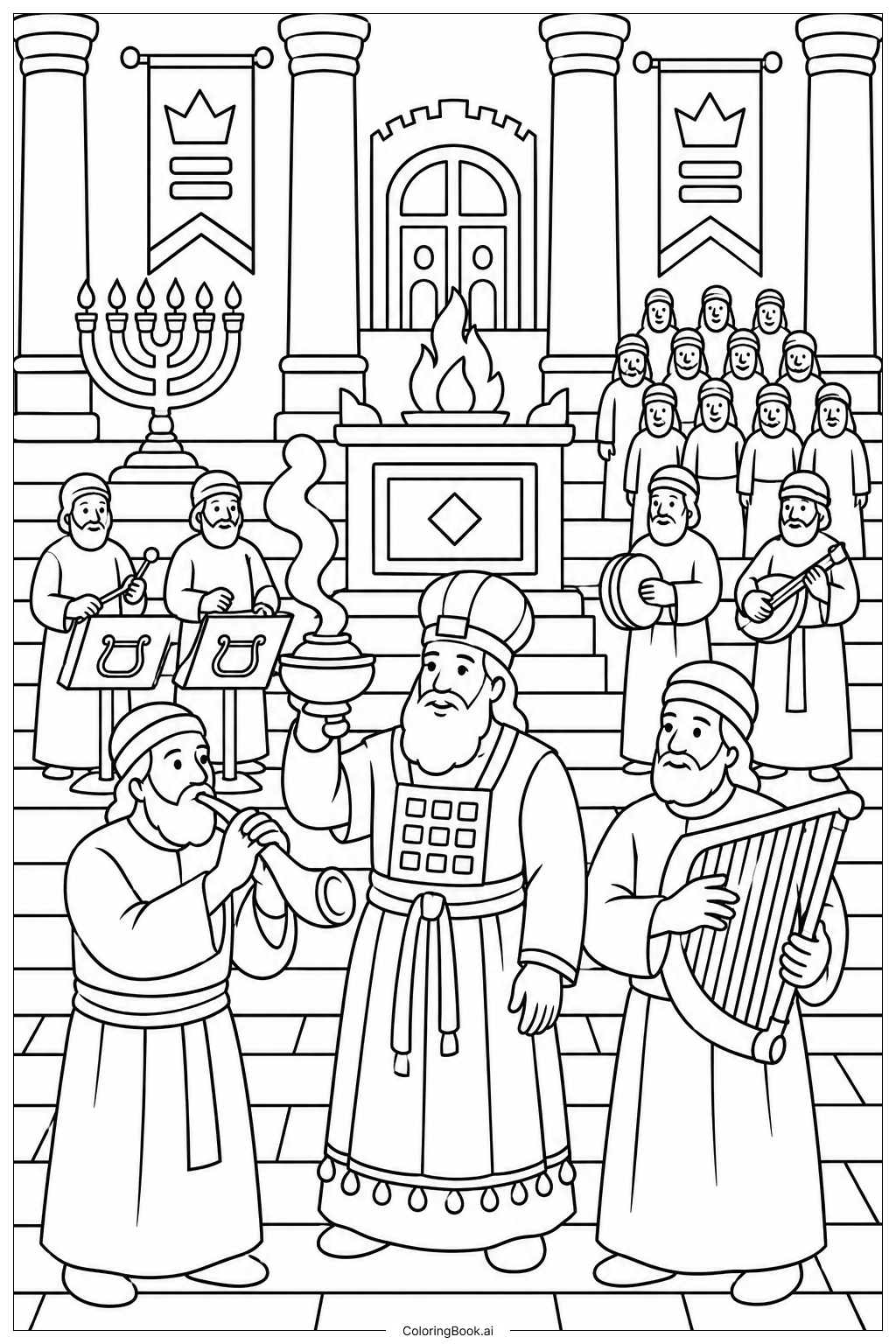
• Intricate Ceremonial Carvings: The decorative motifs, including menorahs, carvings, and ceremonial symbols embedded in the walls and pillars, are very small and closely spaced. Staying within these tiny shapes without bleeding into surrounding areas requires fine-tipped coloring tools and careful control.
• Depth and Perspective: The scene is built with layers — foreground columns, a mid-ground altar, and a background Temple structure. Creating a believable sense of distance using color alone (lighter, cooler tones for the background and warmer, richer tones up front) is a real challenge, especially for beginners.
• Priest Figures and Robes: The priestly figures are dressed in detailed ceremonial robes with layers of fabric folds. Coloring the folds and layered garments so they look natural and dimensional — rather than flat — requires thoughtful use of light and shadow tones.
• Balancing Light Sources: The open-air courtyard is lit by natural sunlight, meaning shadows fall consistently across columns, stairs, and figures. Keeping track of where the light source is and making sure shadows are applied logically throughout the entire scene is one of the hardest challenges in this image, particularly for more advanced colorists aiming for realism.
Benefits of coloring books: Advantages of drawing Temple Courtyard Scene Beis Hamikdash coloring page
Coloring this scene of the Beis Hamikdash Temple Courtyard offers a wonderful mix of creative, educational, and mindful benefits for children and adults alike. As you work through the detailed architecture and sacred imagery, you naturally build fine motor skills and hand-eye coordination, especially when navigating the small carvings and stone textures. The image encourages focus and patience, helping children develop the ability to slow down and pay careful attention to detail. For older colorists, the challenge of shading and creating depth is a genuine artistic exercise that builds real skills in color theory and technique. Beyond the technical benefits, this image connects colorists to Jewish history and tradition in a hands-on, engaging way. Learning about the Beis Hamikdash while coloring its courtyard turns a creative activity into a gentle history lesson. The calming, repetitive nature of coloring also helps reduce stress and anxiety for both children and adults, making it a great mindfulness activity. Families can color this page together, sparking meaningful conversations about faith, heritage, and ancient traditions. Overall, this coloring page is not just a creative project — it is a meaningful, enriching experience that nourishes the mind, the hands, and the heart.