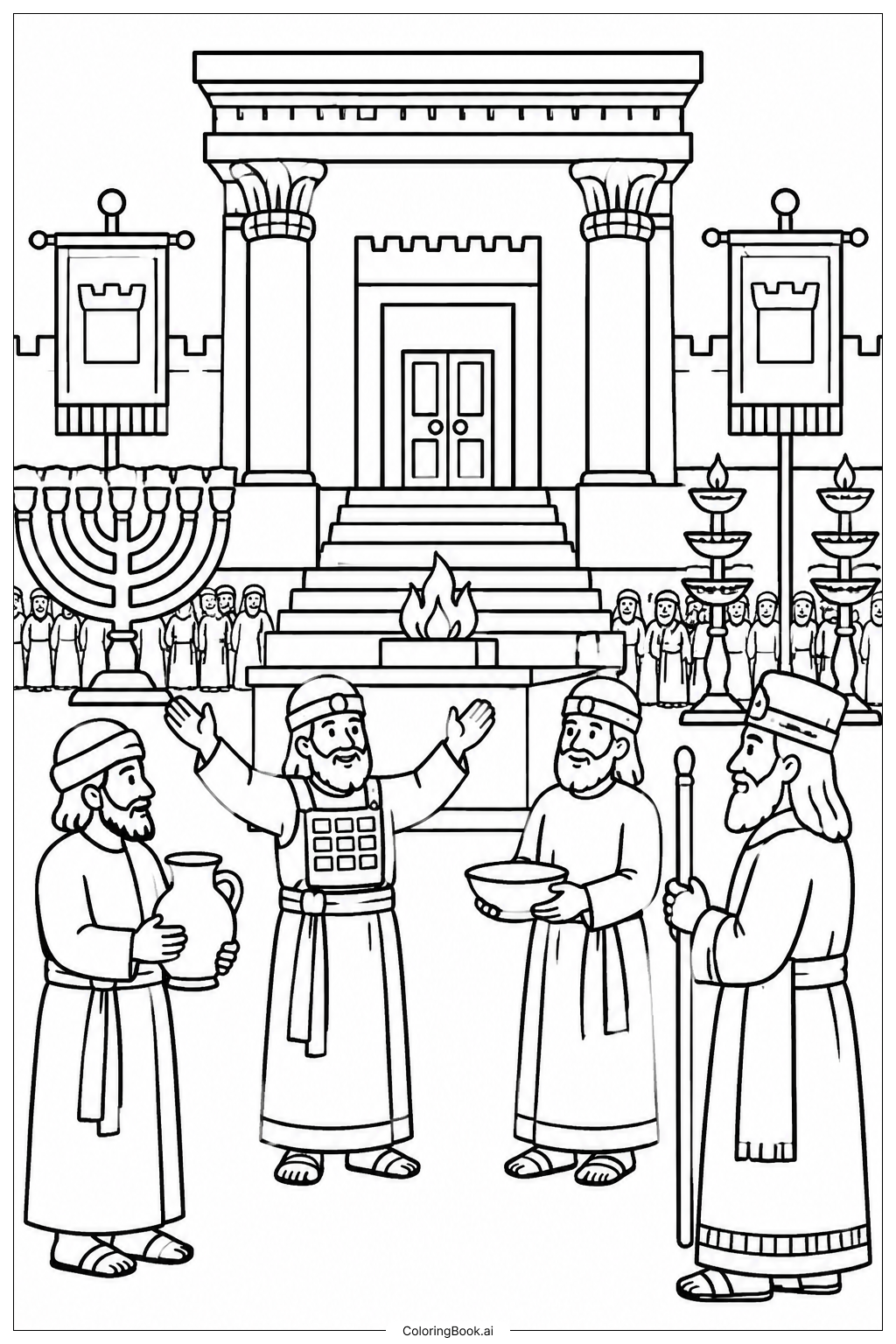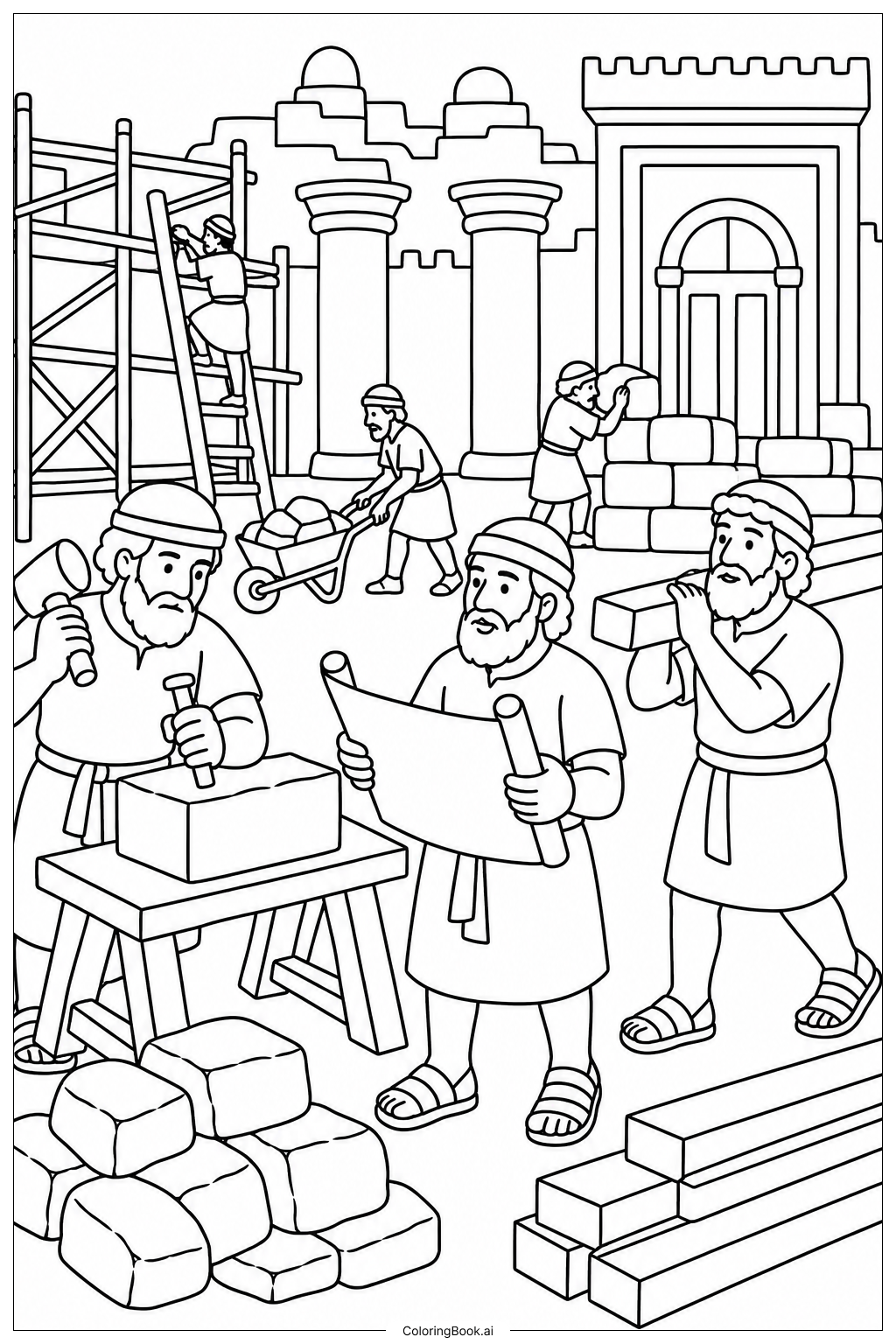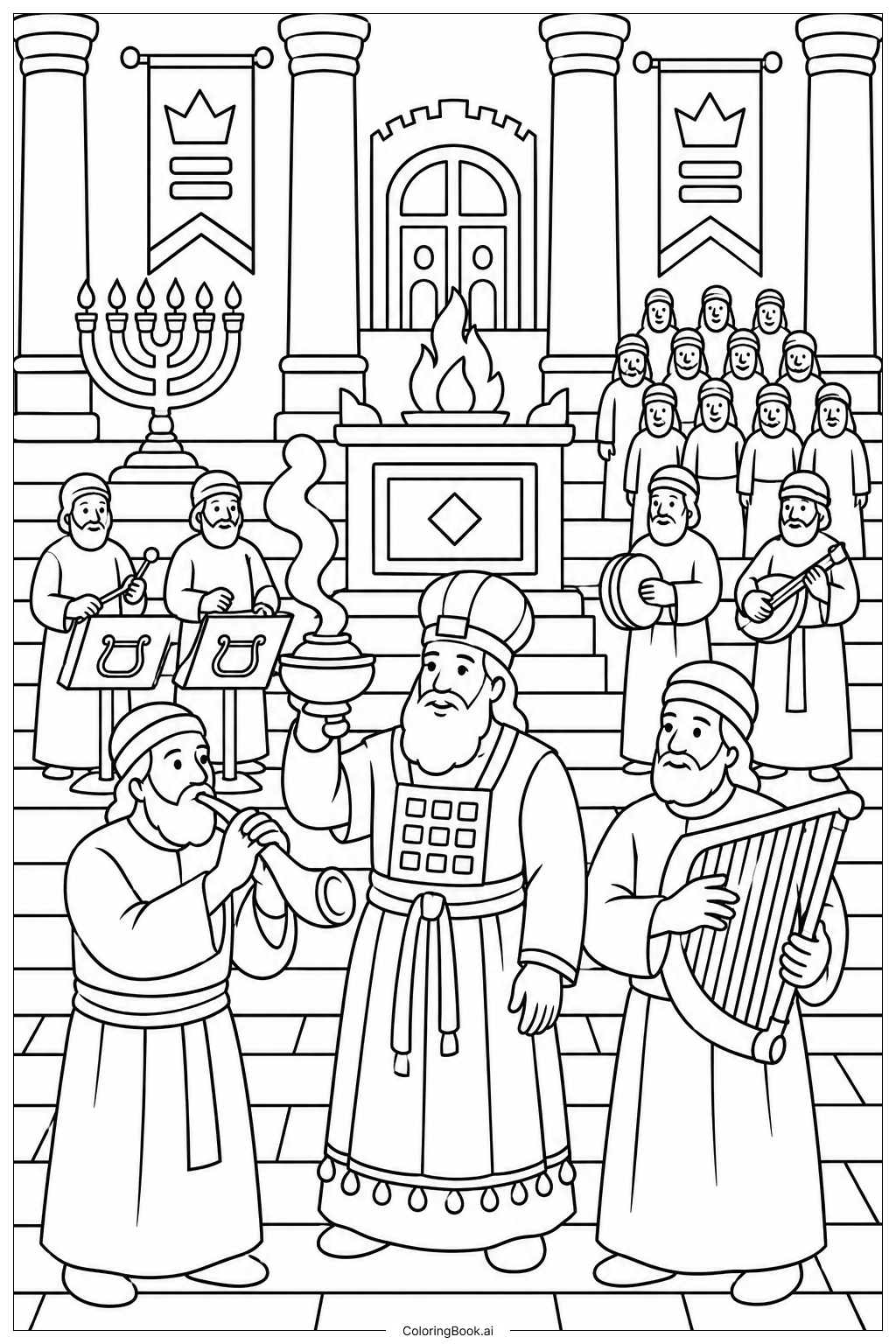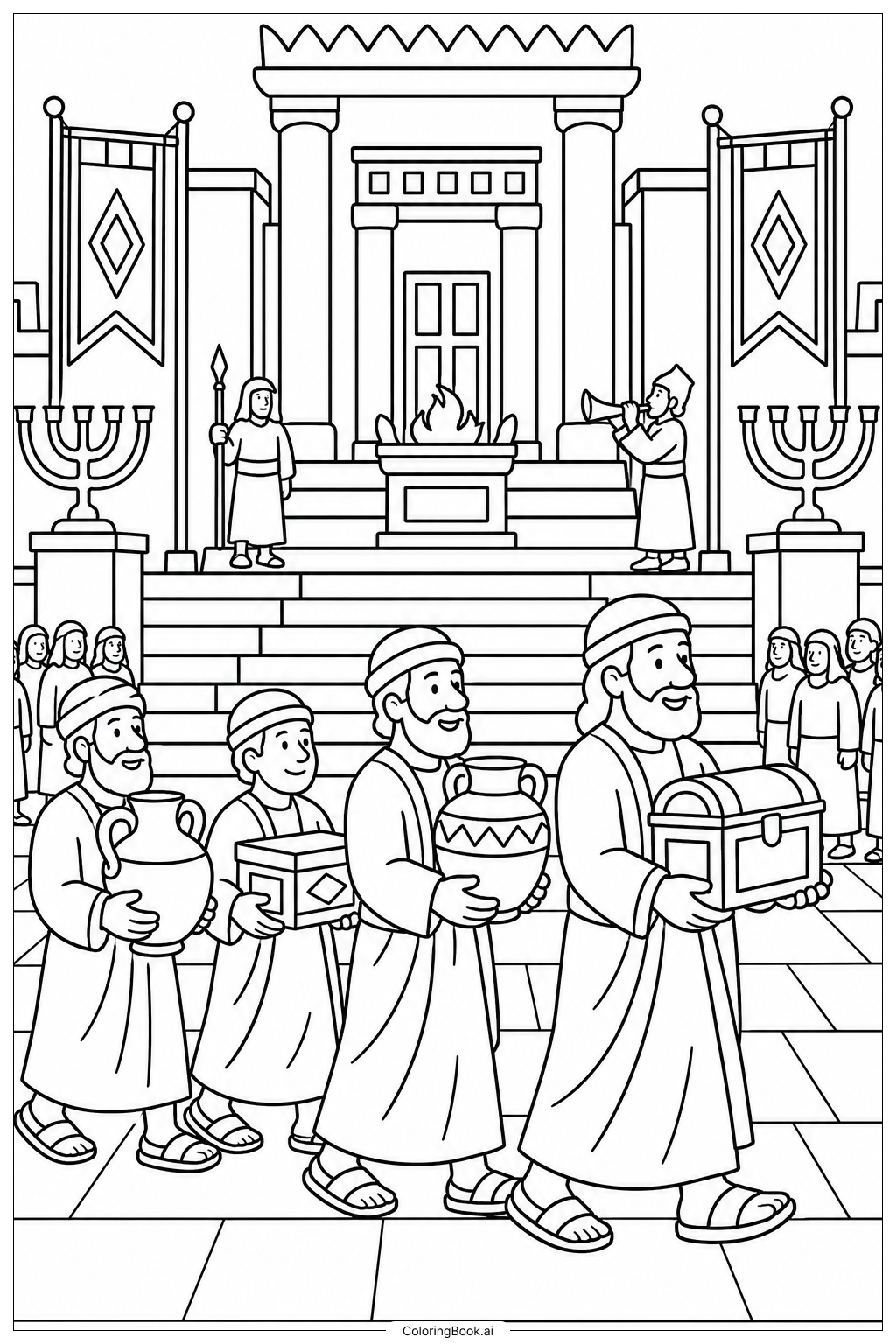
Coloring tips: How to color Stone Repair At Beis Hamikdash coloring page well?
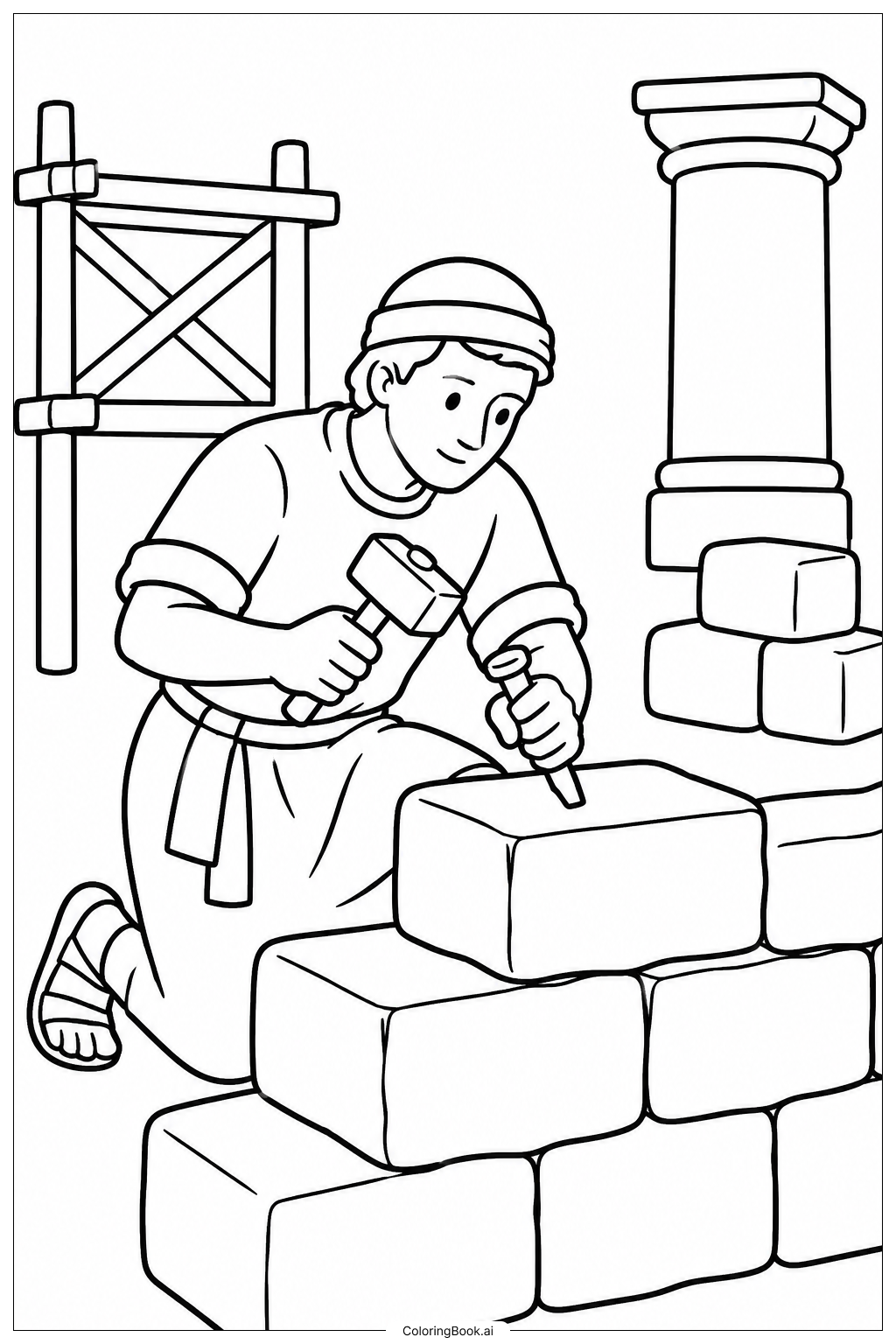
Start with the stone walls using shades of tan, beige, and warm gray to give the blocks a natural, ancient look. Add light brown and cream tones to show weathering on the stones. Use darker gray or charcoal to shade the deep grooves and joints between blocks, creating a sense of depth and texture. Color the workers' clothing in earthy tones like brown, olive green, and rust red, typical of ancient times. The wooden scaffolding and tools can be colored in medium and dark browns. For the sky in the background, use soft blues and gentle white or pale yellow to suggest a calm, holy atmosphere. Add golden or warm yellow highlights to the Temple columns and arches to show their grandeur. Take your time with each stone block — small color variations between blocks make the wall look more realistic and interesting.
Coloring challenges: Which parts are difficult to color and need attention for Stone Repair At Beis Hamikdash coloring page?
• Stone Texture Details: The stone blocks have many small carved lines and surface details. Coloring each stone individually with slightly different shades takes patience. Staying within the fine lines without smudging requires a sharp pencil or a fine-tipped marker. Children may find it helpful to use lighter pressure first and gradually build up color.
• Depth and Shading on the Wall: Creating a realistic sense of depth in a flat stone wall is challenging. The joints and gaps between stones need darker tones, while the flat surfaces of the blocks should stay lighter. Balancing these shades without making the image look muddy requires careful layering and control of color intensity.
• Figures and Clothing Folds: The workers in the scene have clothing with folds and drapery. Coloring fabric realistically means using both light and shadow tones on the same garment. The small size of some figures makes this especially tricky, as there is limited space to blend colors smoothly.
• Scaffolding and Tools: The wooden scaffolding and hand tools are detailed and contain many thin lines close together. Using a fine coloring instrument is important here. Distinguishing the wood of the scaffolding from the stone of the wall requires clear color contrast, so choosing the right brown tones matters a lot.
• Background Architecture: The Temple columns, arches, and distant walls in the background need to look slightly different from the foreground to create a sense of space. Using lighter, more muted versions of the same stone colors for the background helps push it visually behind the main scene, but achieving this balance is a subtle skill that takes practice.
Benefits of coloring books: Advantages of drawing Stone Repair At Beis Hamikdash coloring page
Coloring this scene of Stone Repair At Beis Hamikdash offers many wonderful benefits for children and Adults alike. Working on the detailed stone textures and architectural elements helps build fine motor skills and hand-eye coordination. Carefully staying within small, intricate lines strengthens focus and concentration, which can carry over into schoolwork and other tasks.
This image also sparks curiosity about history and Jewish heritage. As children color the ancient stones and hardworking craftsmen, they naturally begin to wonder about the Beis Hamikdash and its significance, making learning feel natural and fun.
Choosing the right shades for stone walls, wooden scaffolding, and clothing encourages creative thinking and decision-making. There are no wrong color choices — every child can express their own vision of this sacred scene.
The calm, repetitive motion of coloring also helps reduce stress and anxiety, providing a peaceful, focused activity for both Boys and Girls. Completing a detailed image like this gives a strong sense of accomplishment and builds confidence. Sharing the finished artwork can also open meaningful conversations between children and parents or teachers about faith, history, and the value of careful, dedicated work.