Coloring tips: How to color Priests Washing Hands Beis Hamikdash coloring page well?
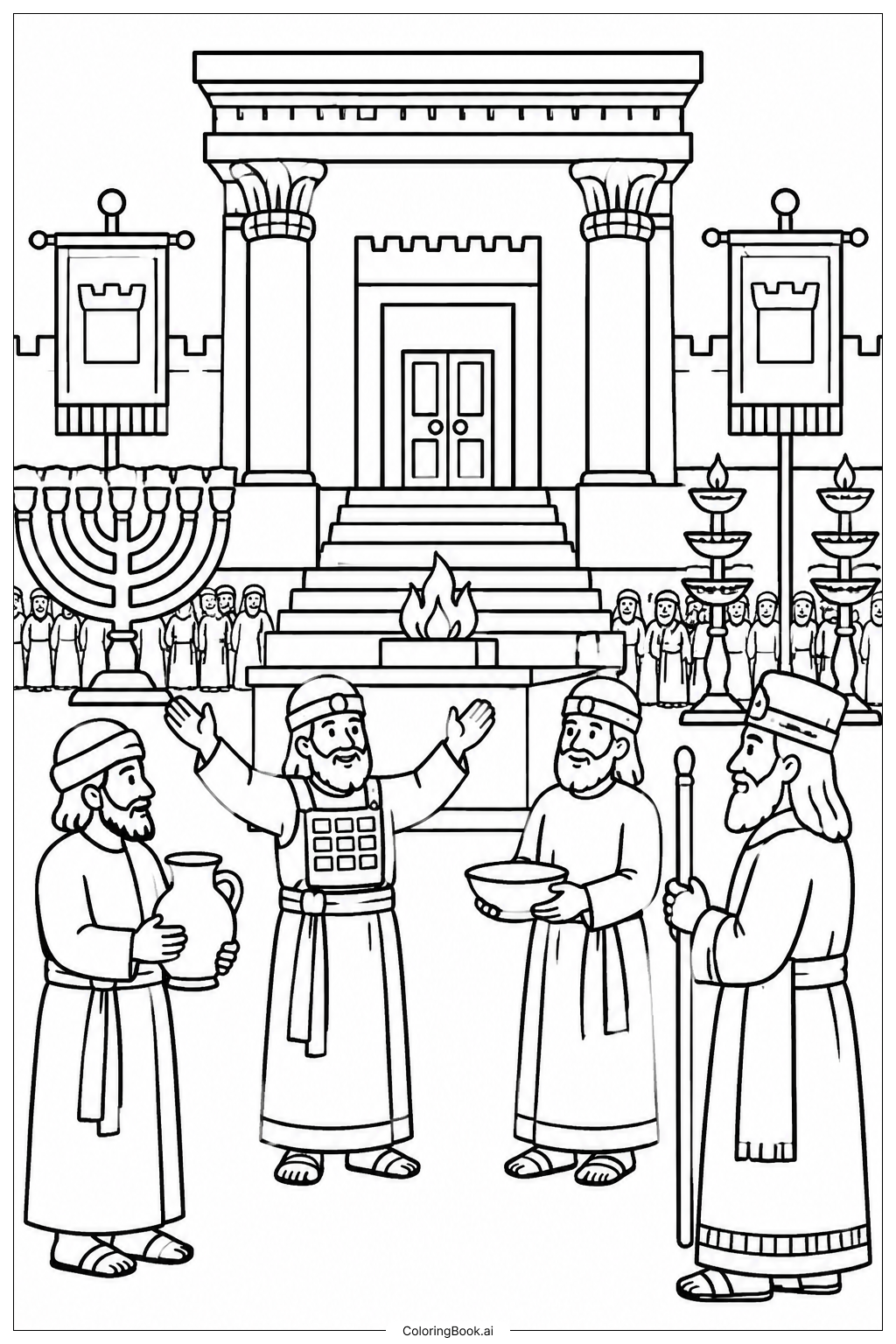
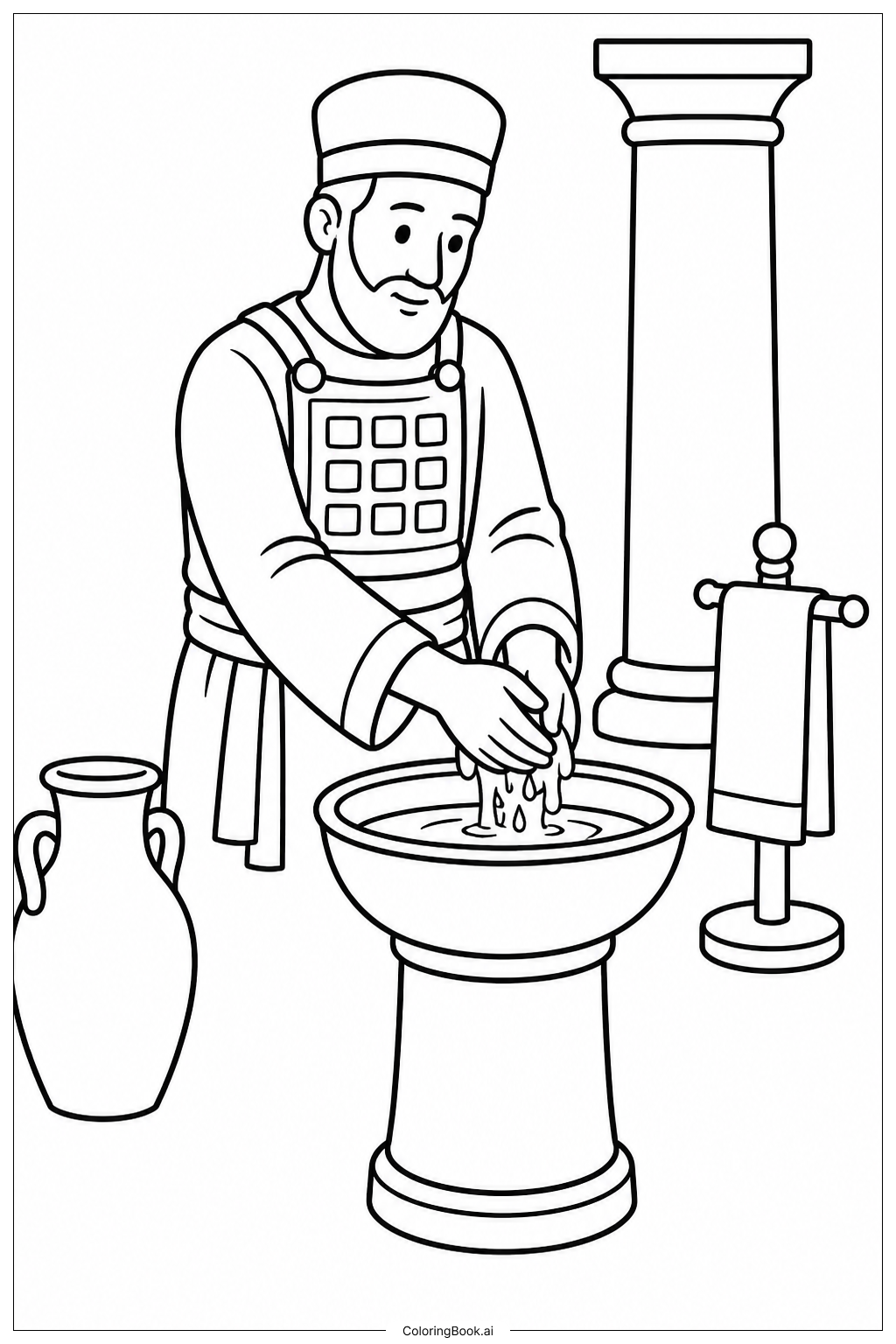
Start with the priests' garments using white, cream, or light beige for their robes to represent purity. Add golden yellow or bright gold for any decorative trim, belts, or special priestly accessories. Color their headwear in white or light colors. For the washing basin, use metallic shades like bronze, copper, or gold to show its special status. The water can be light blue or aqua with white highlights to show movement and sparkle. Temple pillars and walls work well in warm stone colors like tan, beige, or light brown. Add depth with darker browns in shadowed areas. Decorative elements can feature gold, deep blue, or purple to emphasize the temple's magnificence. The floor might be gray stone or light marble tones. Keep the overall palette dignified and reverent to match the sacred nature of the scene.
Coloring challenges: Which parts are difficult to color and need attention for Priests Washing Hands Beis Hamikdash coloring page?
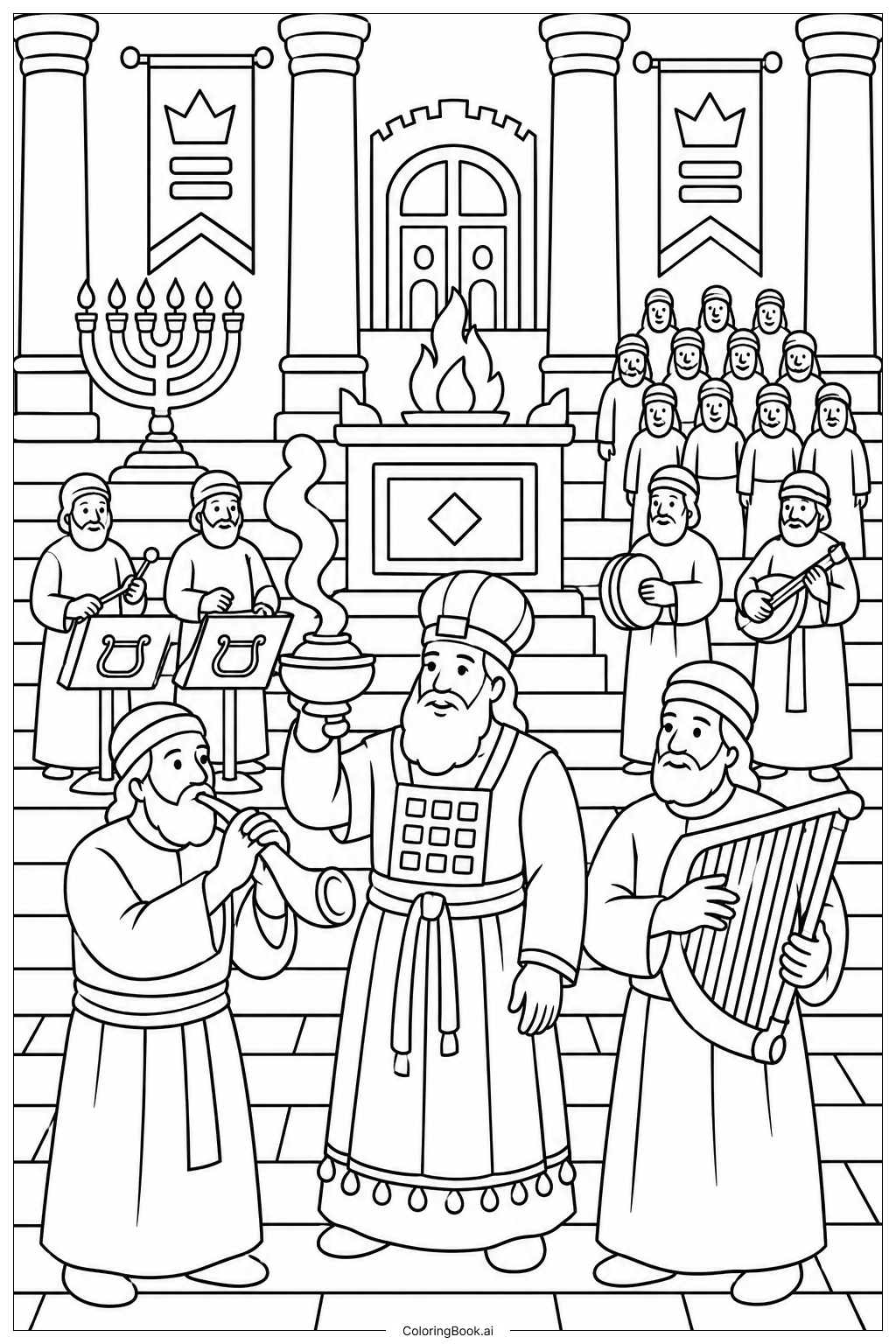
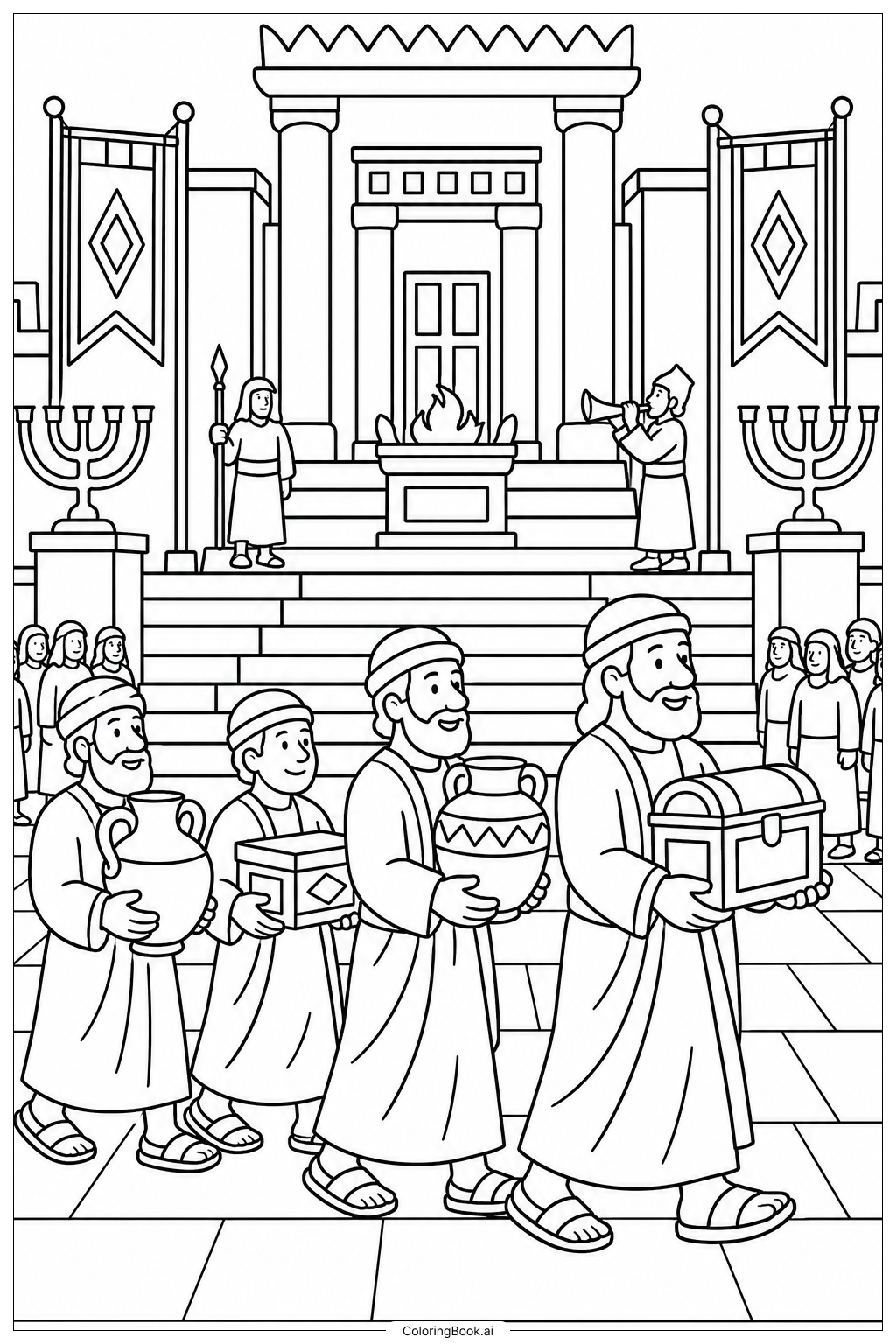
• Intricate Architectural Details: The temple structure contains numerous decorative elements including ornate pillars, carved designs, and detailed doorways that require careful coloring within small spaces. Young colorists may find it challenging to stay within the lines of these elaborate patterns while maintaining distinct colors for each architectural feature.
• Priestly Garment Textures: The priests' robes feature flowing fabric with folds, drapes, and layered clothing that need shading to appear three-dimensional. Creating realistic fabric texture through color variation demands patience and an understanding of light and shadow placement, which can be difficult for beginners.
• Water Effects: Depicting flowing water from the basin requires blending techniques to show transparency, movement, and reflective qualities. Showing water that looks liquid rather than solid involves layering light colors and leaving strategic white spaces for highlights, which challenges traditional coloring approaches.
• Multiple Figures Composition: The scene includes several priests positioned at different depths, requiring varied coloring intensity to create proper perspective. Foreground figures need stronger, brighter colors while background figures should be lighter and less detailed, a concept that requires planning.
• Metallic Basin Rendering: The ceremonial washing basin needs a metallic appearance using standard coloring materials. Creating the look of bronze or gold through color mixing and strategic highlighting tests advanced coloring skills and color theory understanding.
Benefits of coloring books: Advantages of drawing Priests Washing Hands Beis Hamikdash coloring page
Coloring this Beis Hamikdash scene offers wonderful educational value by connecting children to Jewish history and temple traditions. It helps them visualize ancient religious practices and understand the importance of ritual purity. The detailed architecture improves fine motor skills and hand-eye coordination as young artists carefully color intricate patterns. Working with the multiple figures teaches planning and organization since children must decide on color schemes that distinguish different elements. The scene encourages patience and focus during the detailed coloring process. Children learn about symmetry and pattern recognition through the temple's architectural design. This page also promotes cultural appreciation and religious literacy, sparking conversations about heritage and tradition. The calming, reverent nature of the scene can provide a meditative coloring experience that reduces stress and promotes mindfulness. Completing this complex image builds confidence and provides a sense of accomplishment while creating a beautiful artwork worthy of display.