Coloring tips: How to color Priest Before Golden Altar Beis Hamikdash coloring page well?
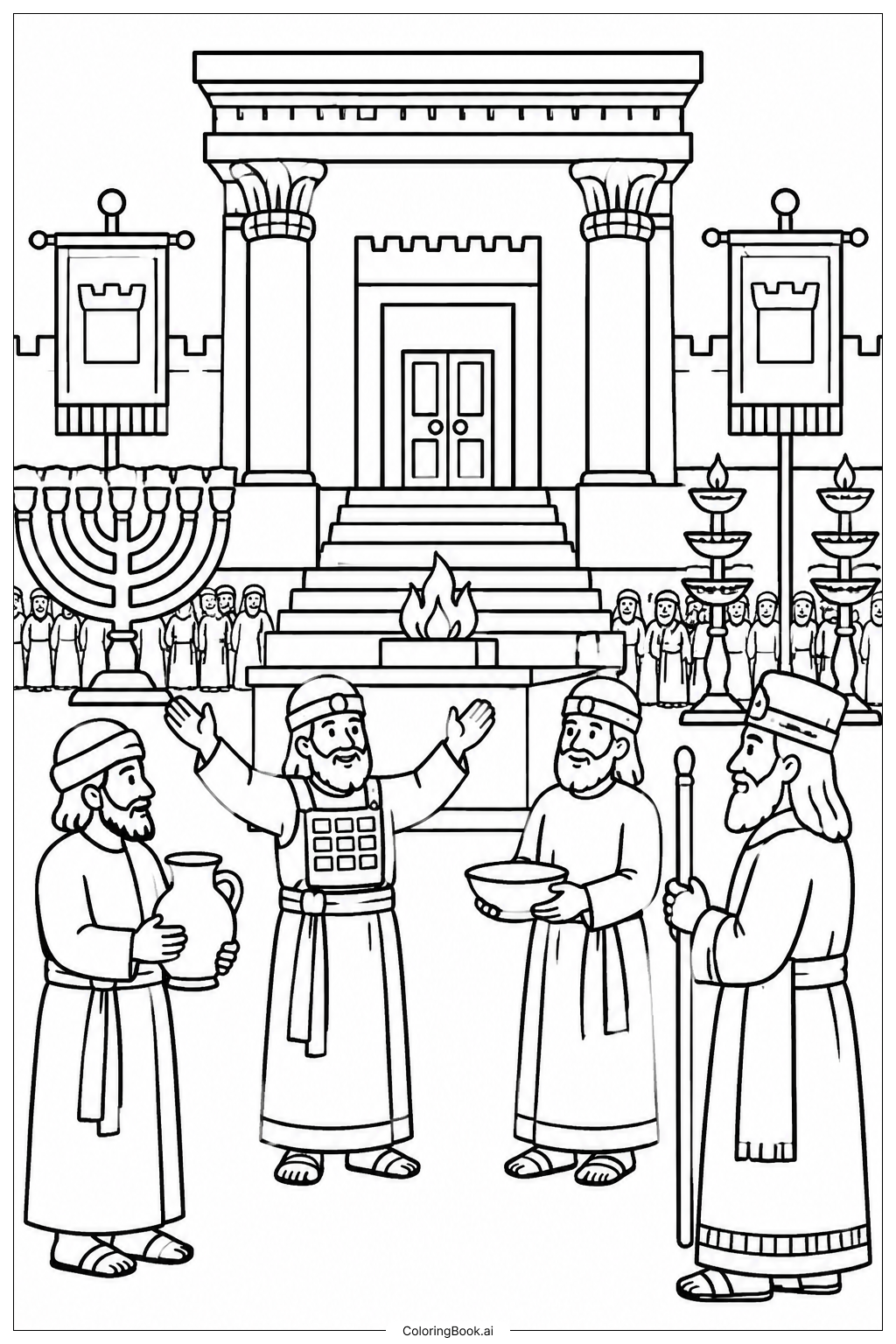
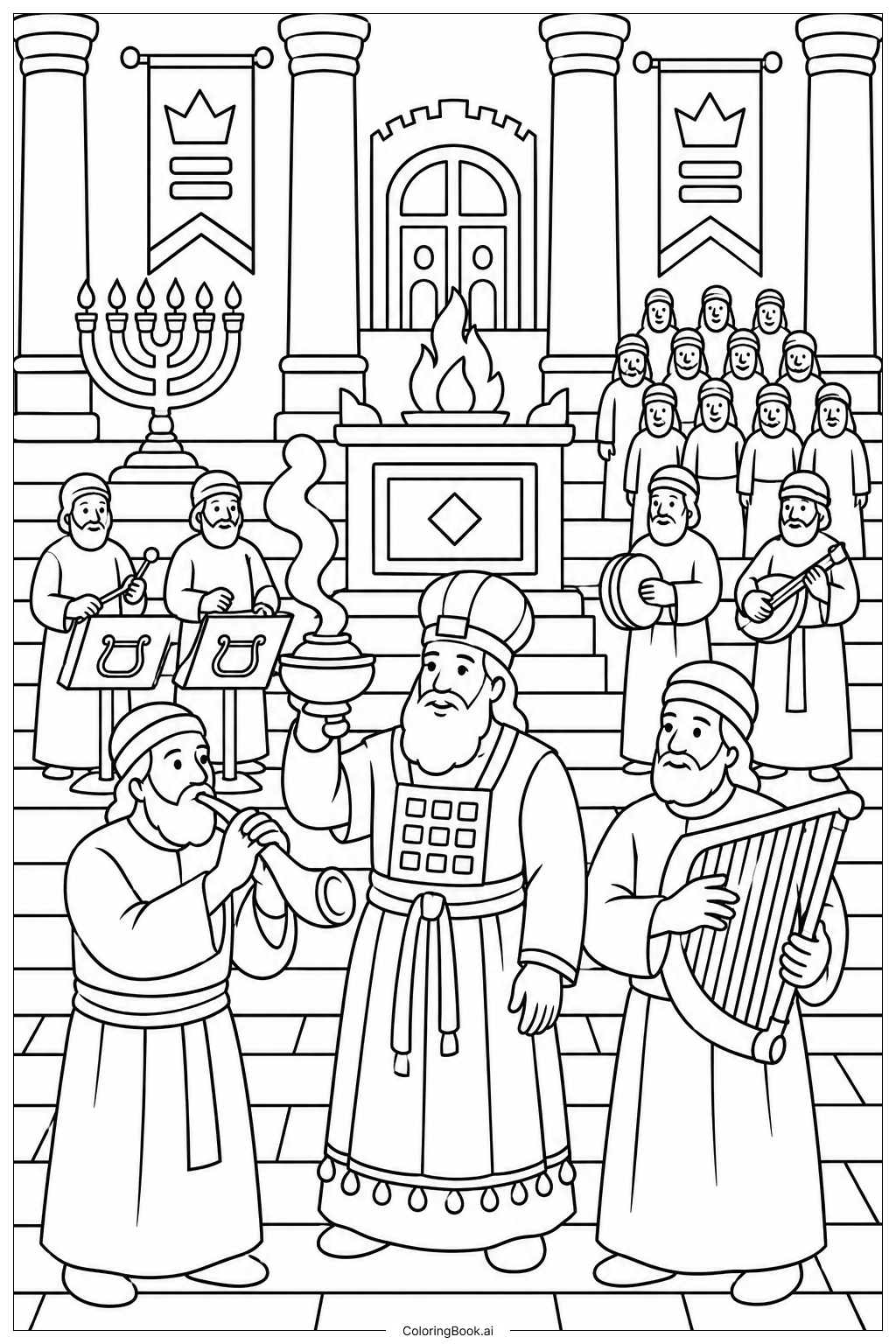
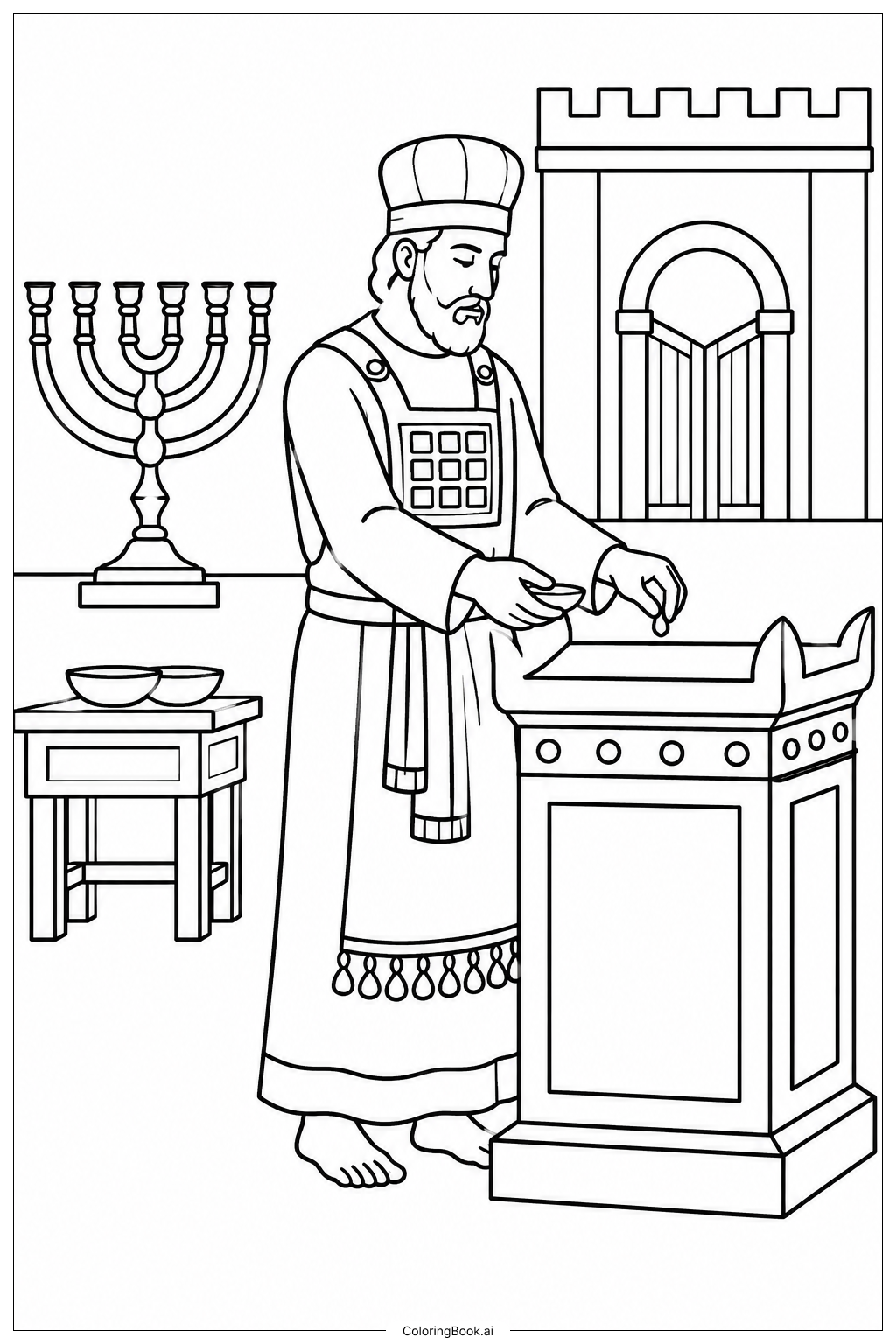
Start with the Golden Altar using warm shades of yellow, gold, and amber to bring out its sacred brilliance. Add touches of orange and brown in the shadowed areas to give it depth and dimension. For the priest's robes, use rich blues, purples, and whites — colors traditionally associated with Temple service garments. The breastplate can be decorated with bright gemstone colors like red, green, blue, and yellow. Use soft tan or beige for the priest's skin. The Temple interior columns and walls look great in warm ivory, cream, or pale stone tones. The hanging curtains can be colored in deep royal blue or crimson red. Feel free to add golden highlights throughout to make the scene feel bright and majestic. Take your time with each section and enjoy bringing this sacred moment to life.
Coloring challenges: Which parts are difficult to color and need attention for Priest Before Golden Altar Beis Hamikdash coloring page?
• Priestly Garments Detail: The priest's ceremonial clothing includes many layered elements such as the robe, sash, turban, and breastplate. Each piece has its own texture and design, which makes it tricky to color them separately without the colors bleeding into one another. Using a fine-tipped tool for the smaller areas will help keep things neat.
• Golden Altar Ornamentation: The altar is covered in intricate carved patterns and borders. Staying within these detailed lines requires a steady hand and patience. Using multiple shades of gold, yellow, and brown can help highlight the different decorative elements and give the altar a realistic, three-dimensional look.
• Temple Interior Architecture: The background features tall columns, draped curtains, and elaborate wall details. These overlapping elements can be confusing to color if you are not sure where one ends and another begins. Study the outlines carefully before choosing colors for each section to avoid making the background look flat or muddy.
• Breastplate Gemstones: The priest's breastplate traditionally contains twelve gemstones, each a different color. Coloring each small stone individually with a distinct, vivid color is a fine-motor challenge, especially for younger colorists. Colored pencils or thin markers work best here for accuracy.
• Light and Shadow Balance: The entire scene is set inside an enclosed Temple space, meaning the light source is not always obvious. Deciding where shadows fall on the priest's robes and on the altar surface requires some thought. Adding slightly darker tones on one side of each object will create a more lifelike and visually appealing result.
Benefits of coloring books: Advantages of drawing Priest Before Golden Altar Beis Hamikdash coloring page
Coloring this image of a priest before the Golden Altar in the Beis Hamikdash offers a wonderful mix of creative, educational, and spiritual benefits. As you fill in each section, you naturally learn about the rich history and traditions of the ancient Jewish Temple, making this a meaningful way to connect with cultural heritage. For children, this image introduces important concepts like sacred service, priestly roles, and Temple symbolism in a fun and hands-on way. The detailed lines of the priestly garments and altar designs provide excellent practice for fine motor skills and hand-eye coordination. Choosing the right colors for the golden altar, colorful gemstones, and layered robes encourages creative thinking and color awareness. Focusing on the intricate patterns also helps build concentration and patience, skills that carry over into everyday learning. For older colorists and adults, the scene invites quiet reflection and a deeper appreciation for the spiritual significance of the Beis Hamikdash. Overall, this coloring page turns a historical and sacred subject into an engaging, calming activity that is both enriching and enjoyable for all ages.