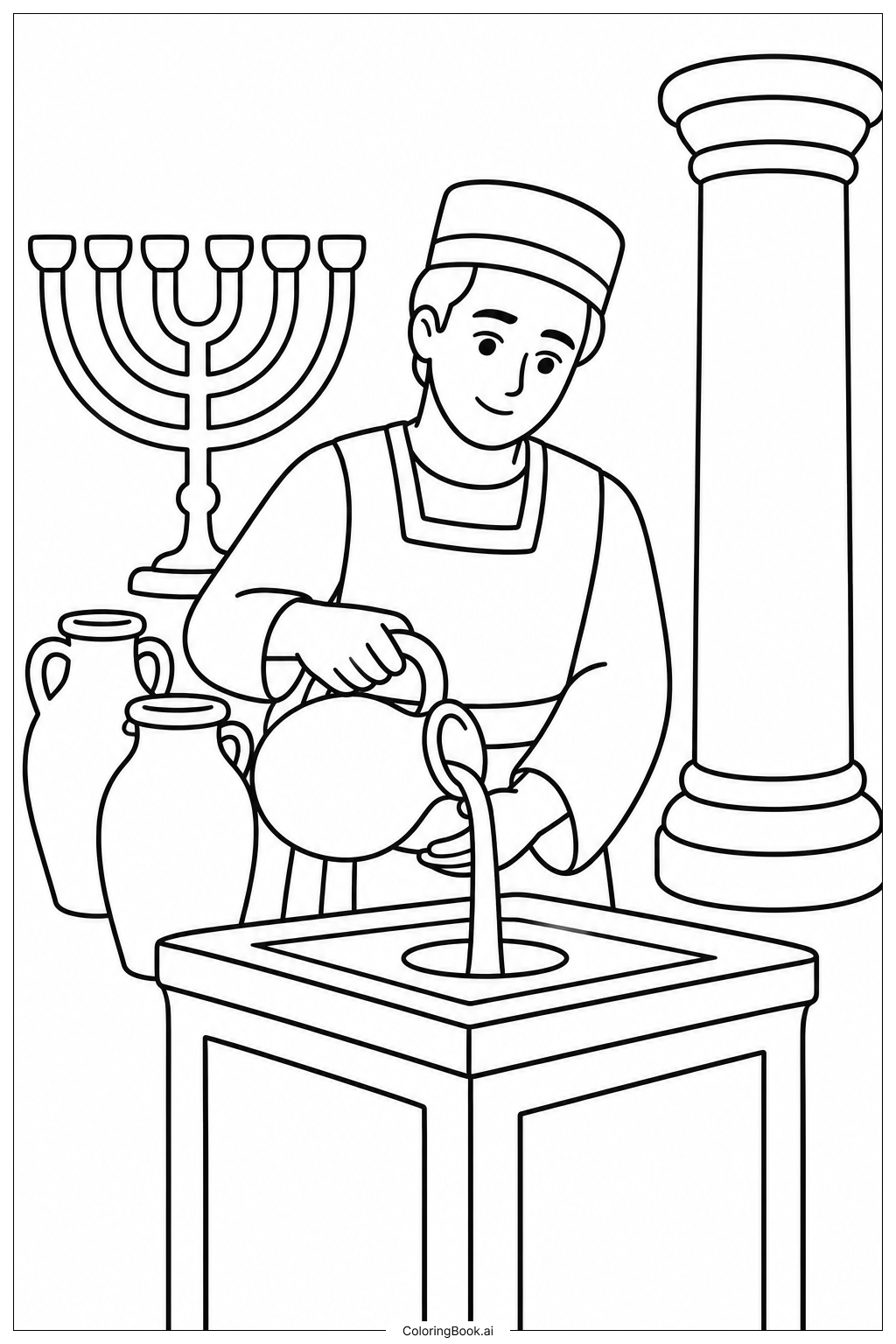
Coloring tips: How to color Oil Filling Ceremony Beis Hamikdash coloring page well?
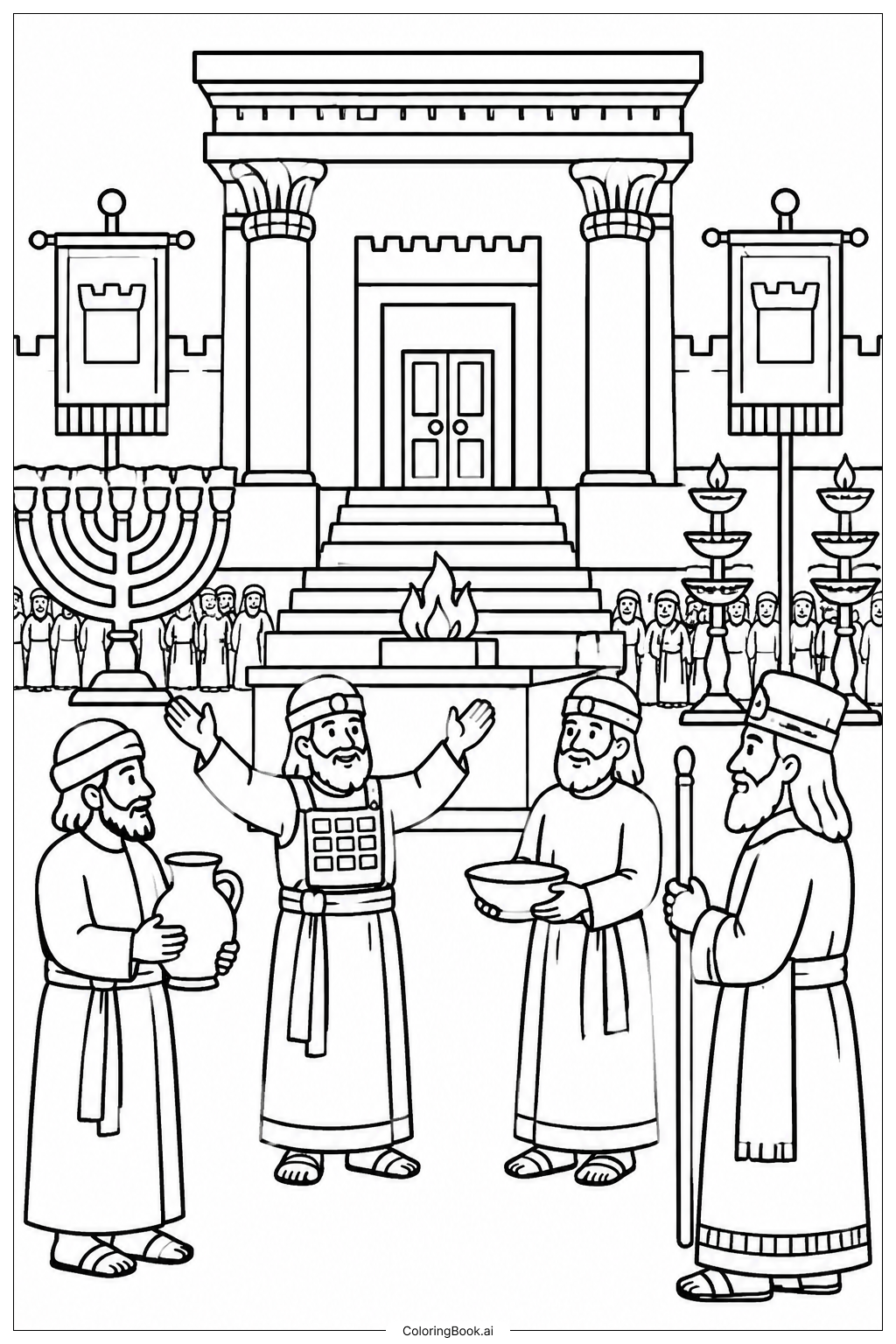
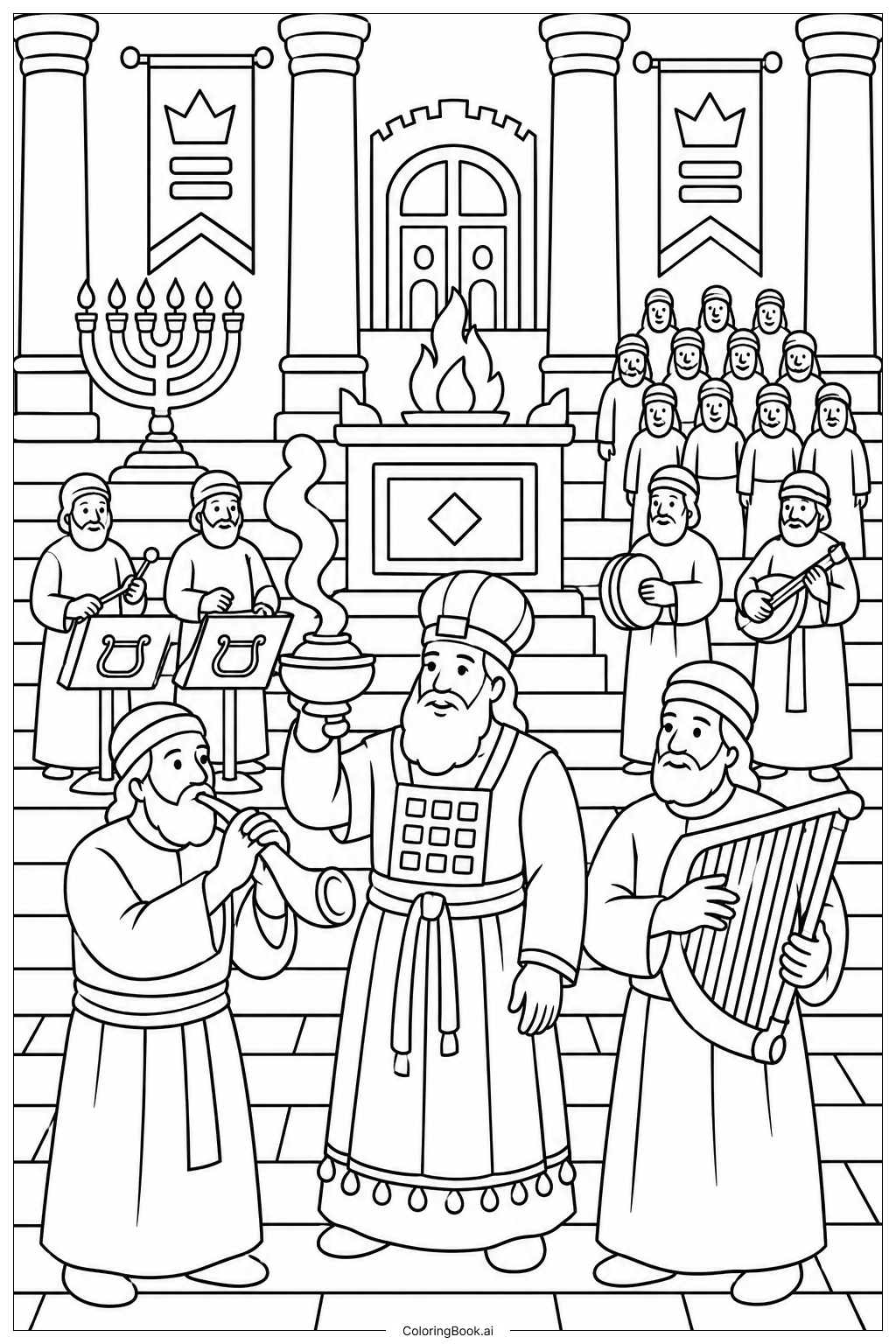
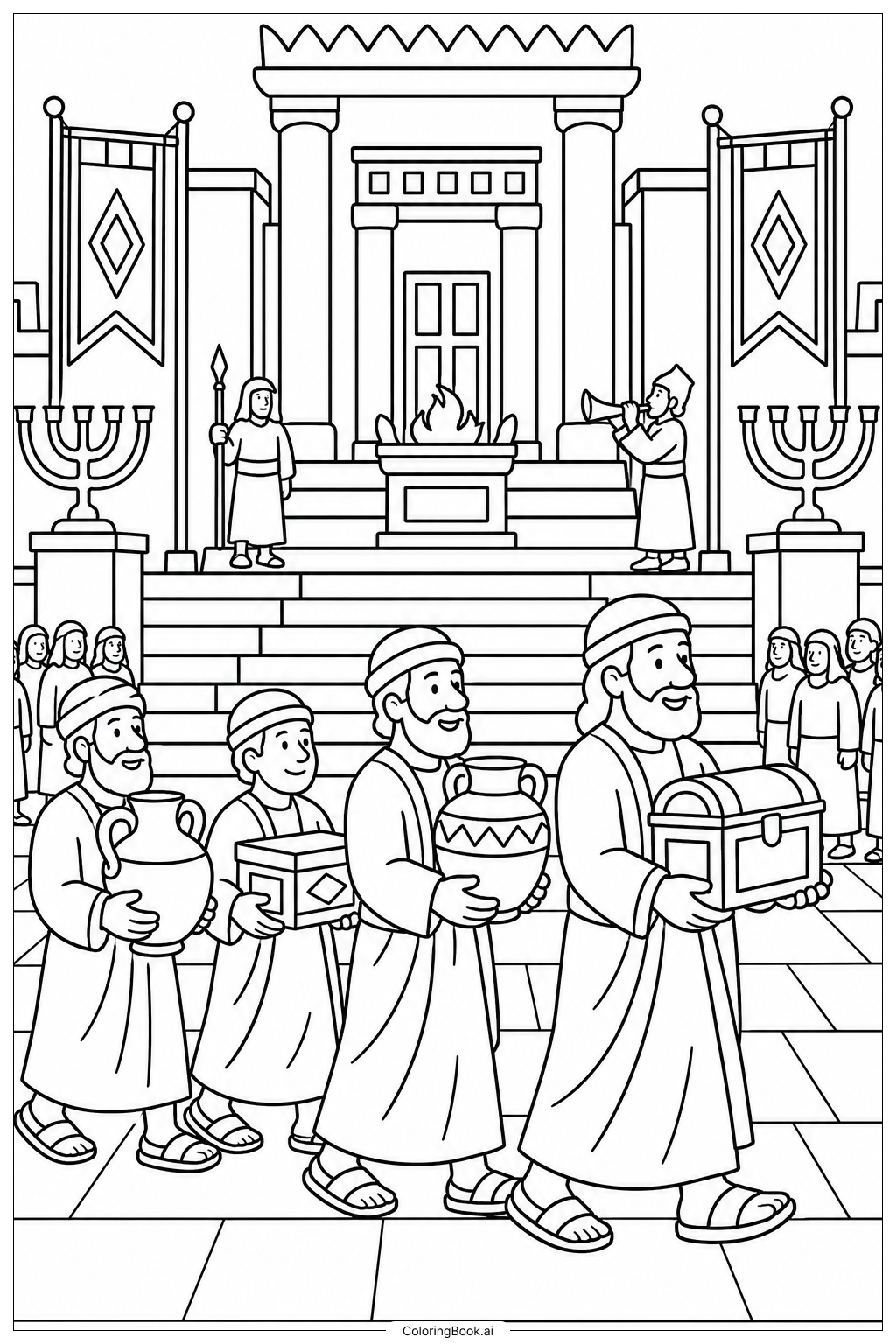
Start with the Menorah using bright gold and warm yellow tones to make it shine. Use deep amber and honey shades for the olive oil being poured. Color the Kohen's robes in white, sky blue, and rich purple, which are traditional priestly colors. Add golden accents to the belt and turban. For the Temple walls, use sandy beige and warm stone gray to give them an ancient, majestic feel. The floor can be a polished ivory or light tan. The rays of light from the Menorah look beautiful in soft pale yellow or cream. Encourage children to use warm, earthy tones throughout to capture the sacred and peaceful mood of this holy ceremony. Don't be afraid to layer colors gently for depth and glow.
Coloring challenges: Which parts are difficult to color and need attention for Oil Filling Ceremony Beis Hamikdash coloring page?
• Menorah Details: The seven-branched Menorah features intricate cups, knobs, and flowers along each arm. Staying within the small decorative sections requires a steady hand and fine-tipped colored pencils or markers. Rushing this area may cause colors to bleed into each other and lose the beautiful detail of this sacred object.
• Priestly Garments: The Kohen's robes include multiple layered sections with different colors and patterns. Keeping each section distinct — the robe, belt, breastplate, and turban — takes careful attention. Younger colorists may find it helpful to lightly outline each section before filling it in.
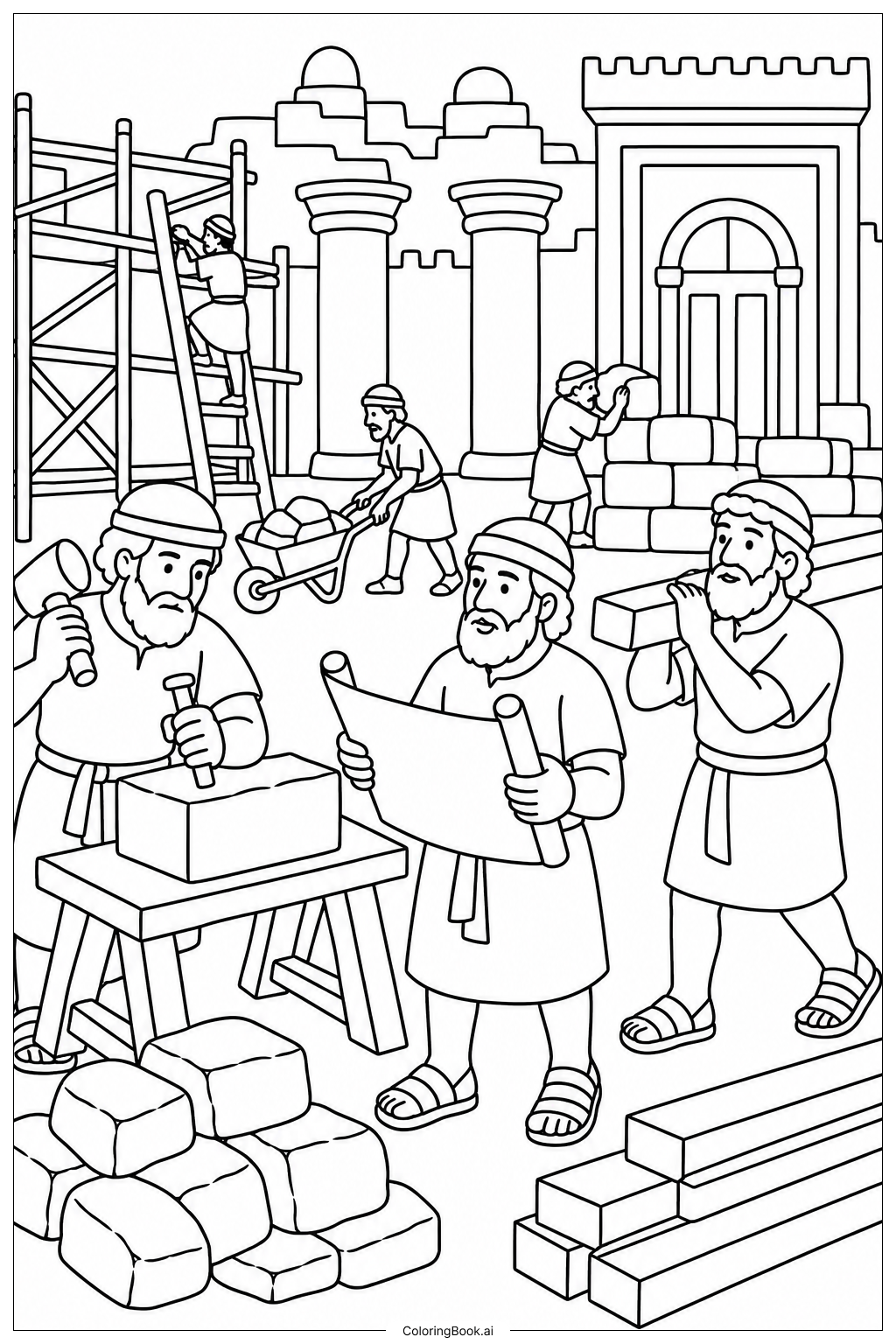
• Stone Architecture: The Temple walls and columns have textured, block-like surfaces. Showing depth and dimension in stone requires blending light and shadow tones. Using two shades of the same color — one lighter, one darker — helps create a realistic stone effect without looking flat.
• Light Rays and Glow Effect: The soft light radiating from the Menorah is one of the most expressive parts of this image. Creating a natural glow means blending colors from bright yellow at the center to softer cream toward the edges. This gradient technique can be tricky for beginners but is very rewarding with practice.
• Small Facial and Hand Features: The Kohen's face and hands are small areas with fine lines. Using sharp, thin tools and working slowly will help capture the expression of care and devotion without overcrowding these delicate features.
Benefits of coloring books: Advantages of drawing Oil Filling Ceremony Beis Hamikdash coloring page
Coloring this image of the Oil Filling Ceremony at the Beis Hamikdash offers a wonderful range of benefits for children and adults alike. For kids, it is a hands-on way to connect with Jewish history and tradition, turning learning into a creative and personal experience. As they color the Menorah, the priestly robes, and the Temple walls, they naturally absorb details about this sacred ceremony in a way that feels fun rather than like a lesson.
The intricate details of this scene — from the branching Menorah arms to the layered priestly garments — help develop fine motor skills, patience, and hand-eye coordination. Younger children build pencil control, while older colorists practice shading and color blending.
Focusing on a detailed, meaningful image also encourages mindfulness. The calm, repetitive motion of coloring helps reduce stress and promote a sense of peace and concentration. Many children find it easier to enter a focused, relaxed state through art than through words.
For families and classrooms, this coloring page opens up rich conversations about the Temple, its ceremonies, and the values of dedication and holiness. It bridges generations and keeps cultural memory alive in a joyful, accessible way. Completing the page also gives colorists a proud sense of achievement, boosting confidence and creativity.