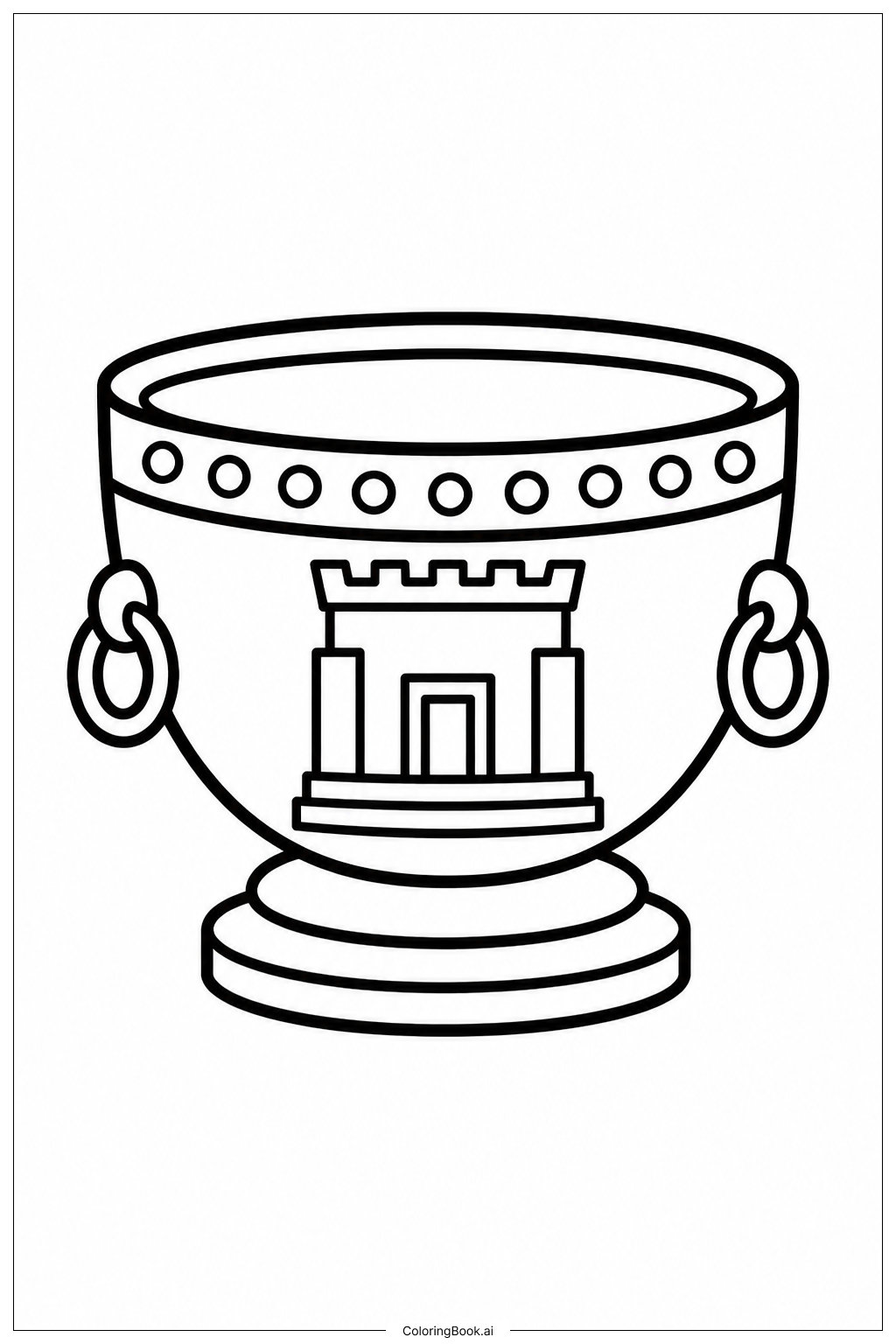
Coloring tips: How to color Large Bowl of the Beis Hamikdash coloring page well?
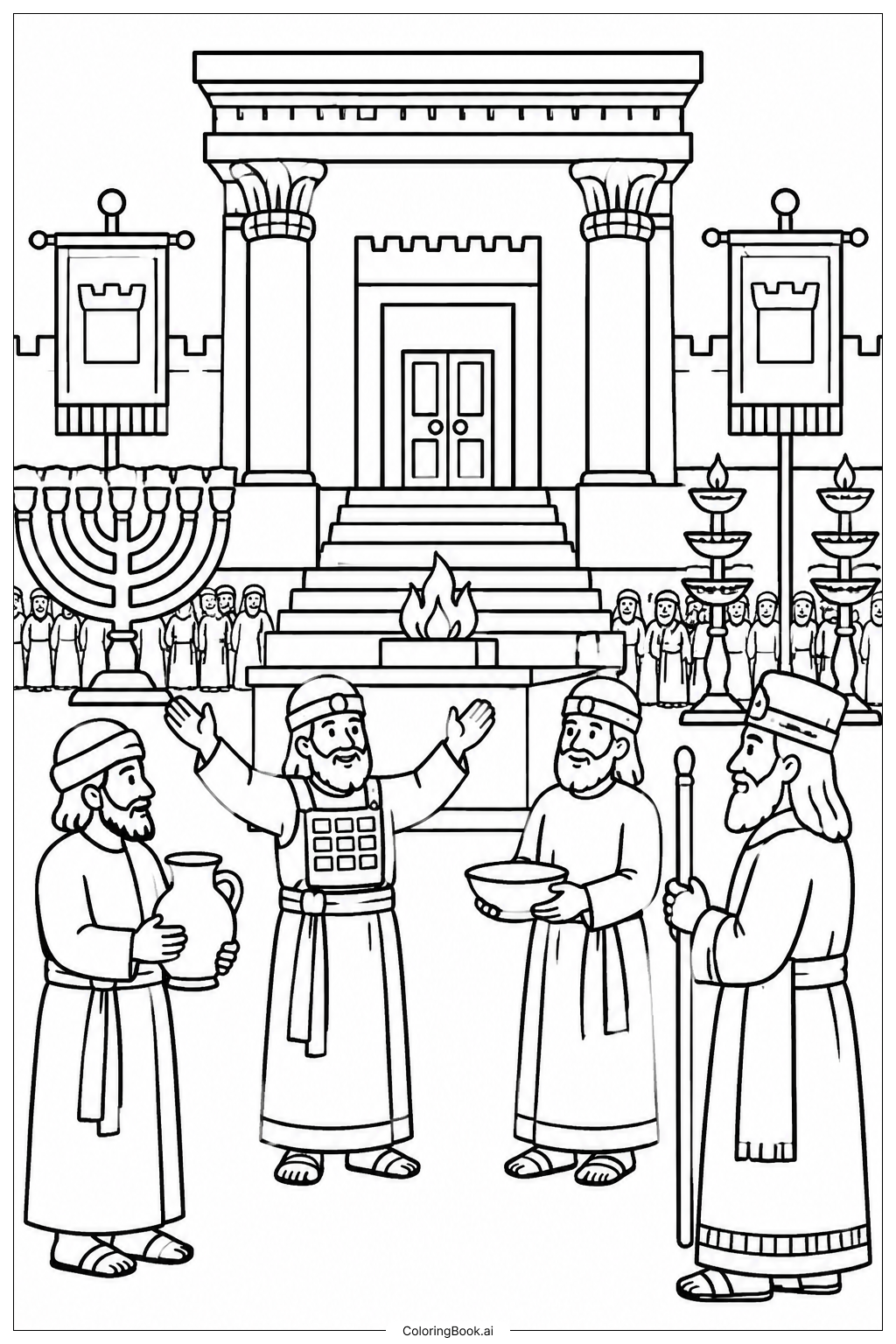
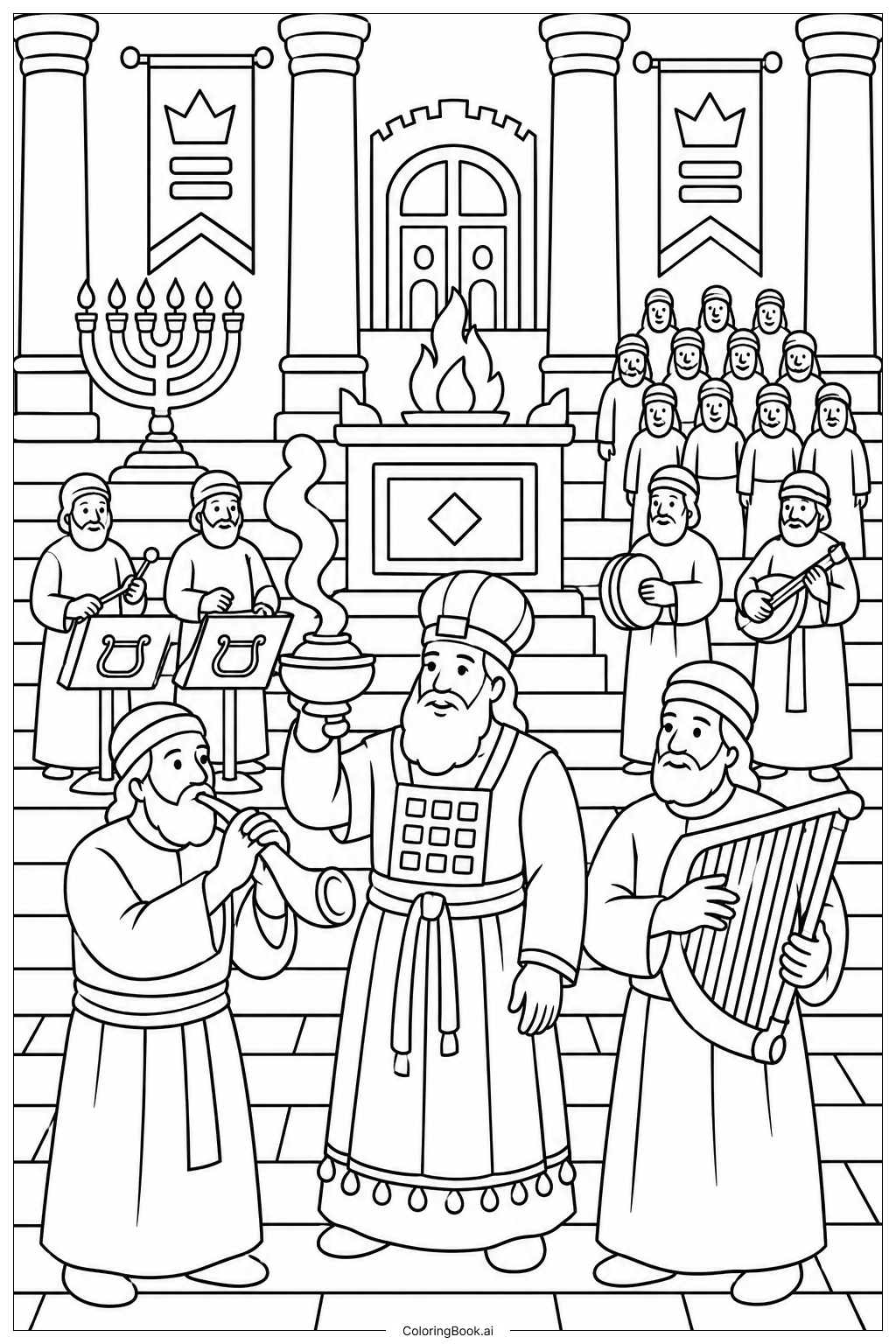
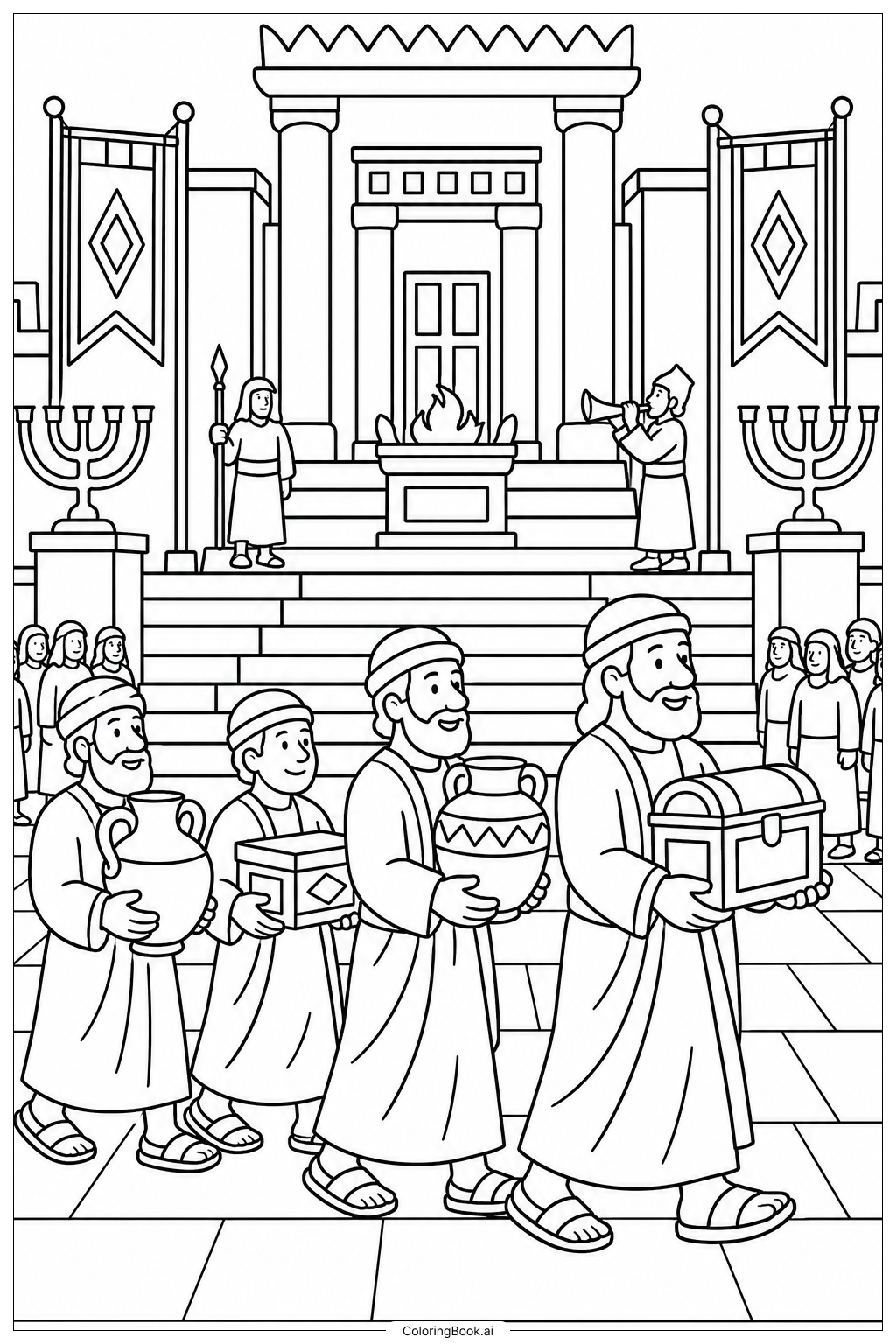
Start with the large bowl itself. Use a warm golden yellow or bronze tone to show that it was made of cast metal. You can add darker shades of brown or copper along the sides to create a sense of depth and roundness. For the decorative carvings and patterns on the rim and body, use a slightly darker shade to help them stand out. The base and supports can be colored in stone gray or sandy beige to show they are solid and strong. If there is background architecture, use soft tan, cream, or light gray for the stone walls and columns. Leave some areas lighter to show where light reflects off the shiny metal surface. Kids can keep colors simple and bold, while older colorists can blend multiple shades for a more realistic look. Adding a soft blue or turquoise wash inside the bowl can suggest the water it once held for the priests.
Coloring challenges: Which parts are difficult to color and need attention for Large Bowl of the Beis Hamikdash coloring page?
• Curved Surface Shading: The large bowl is round and wide, which makes it tricky to show its three-dimensional shape using flat color. Colorists need to apply lighter tones near the top where light hits and darker tones along the lower sides and base. Without careful shading, the bowl can look flat and lose its impressive size.
• Intricate Decorative Details: The rim and outer body of the bowl feature fine carvings and ornamental patterns. These small, detailed areas require a steady hand and thin coloring tools like fine-tipped markers or colored pencils. Filling in these tiny sections with color without going outside the lines is one of the biggest challenges for younger colorists.
• Metallic Effect: The bowl was historically made of cast bronze or metal. Recreating a convincing metallic look requires layering multiple shades — gold, bronze, copper, and dark brown — to mimic the shine and texture of real metal. This kind of color blending can be difficult for beginners.
• Base and Support Structure: The decorative base that holds the bowl has its own carved details and structural elements. Keeping the base colors distinct from the bowl itself, while still making the whole piece look unified, requires thoughtful color choices and careful attention to boundaries.
• Background Architecture: The Temple courtyard elements in the background, such as columns and stone walls, need to be colored in a way that does not overpower the main bowl. Finding the right balance between a detailed foreground and a subtle background is a challenge that requires patience and planning.
Benefits of coloring books: Advantages of drawing Large Bowl of the Beis Hamikdash coloring page
Coloring this image of the large bowl from the Beis Hamikdash offers many wonderful benefits for children and adults alike. For Boys and Girls aged 4 to 16, working with detailed lines and decorative patterns helps build fine motor skills and hand-eye coordination. Carefully staying within the lines of the intricate carvings trains patience and focus, skills that carry over into school and daily life.
This image also sparks curiosity about history and Jewish heritage. As colorists work on the page, they naturally become interested in what the Beis Hamikdash was, what the large bowl was used for, and why it was so important. This makes the activity educational as well as creative.
For older colorists and Adults, the challenge of blending metallic tones and shading a curved surface encourages artistic thinking and problem-solving. It is a calming, meditative activity that helps reduce stress while keeping the mind engaged.
Coloring sacred and historical imagery also fosters a sense of connection to tradition and culture. It is a meaningful way for families to explore their heritage together. Whether done individually or as a group, this page invites creativity, conversation, and a deeper appreciation for the beauty and craftsmanship of the Holy Temple.