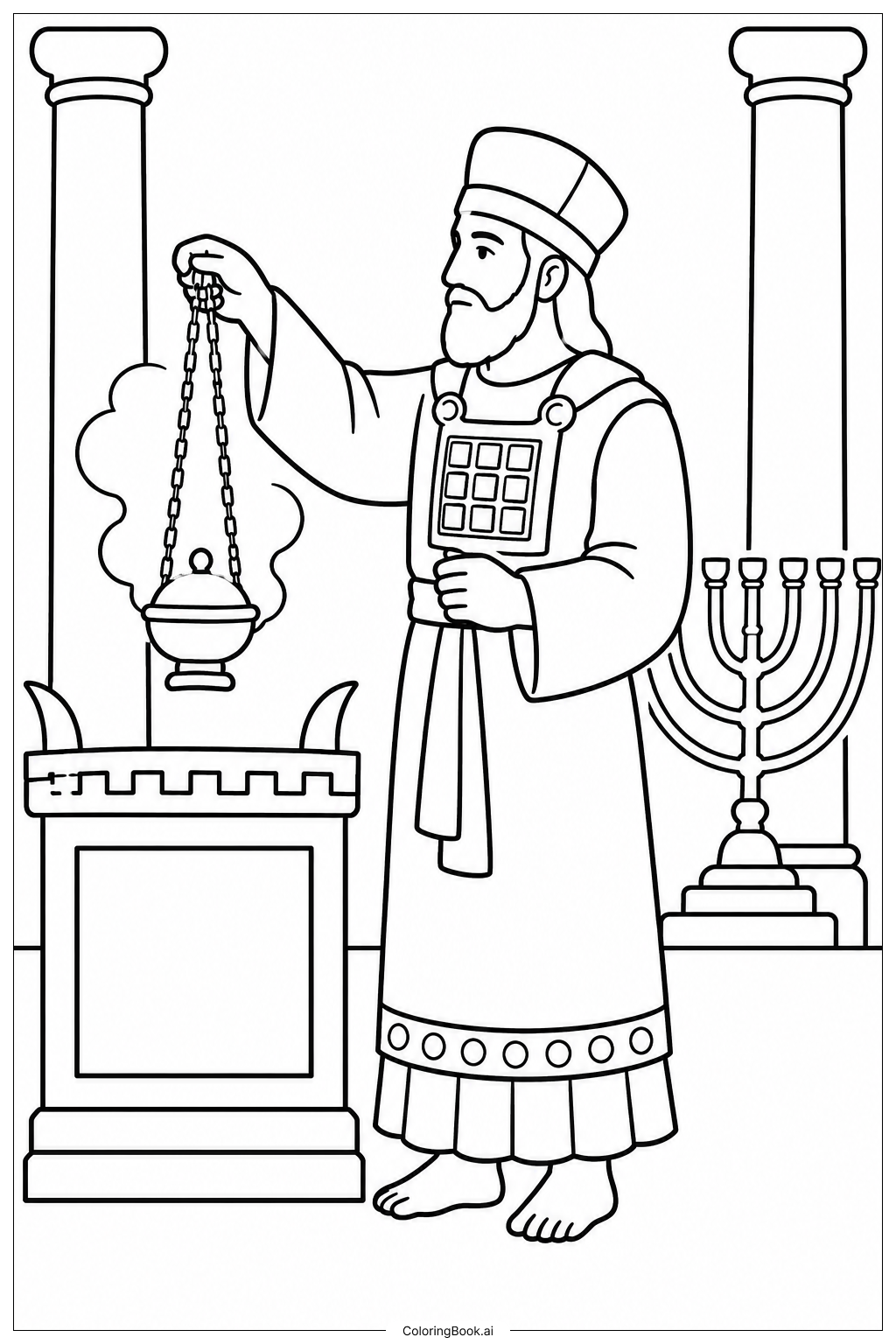
Coloring tips: How to color High Priest With Incense Beis Hamikdash coloring page well?
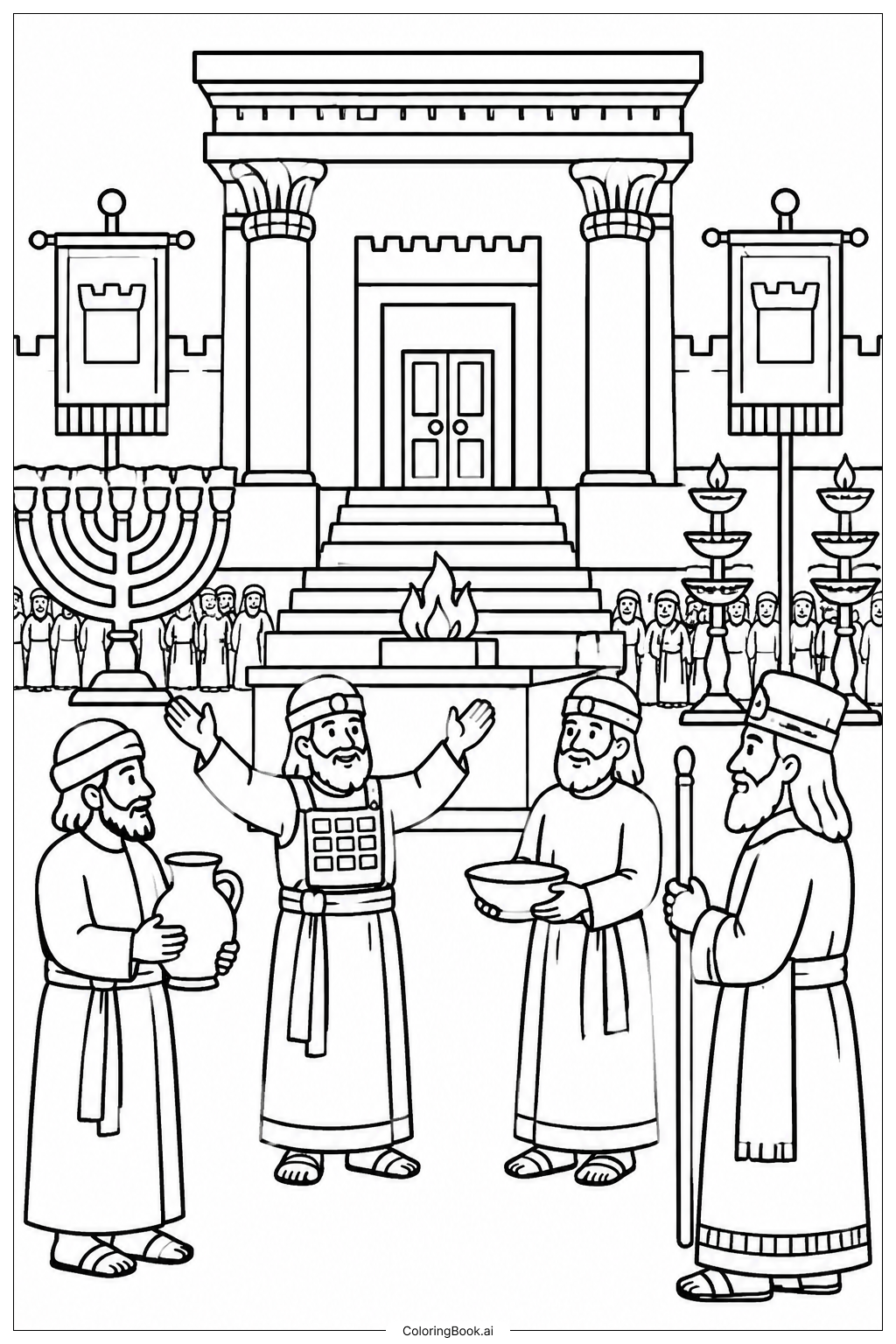
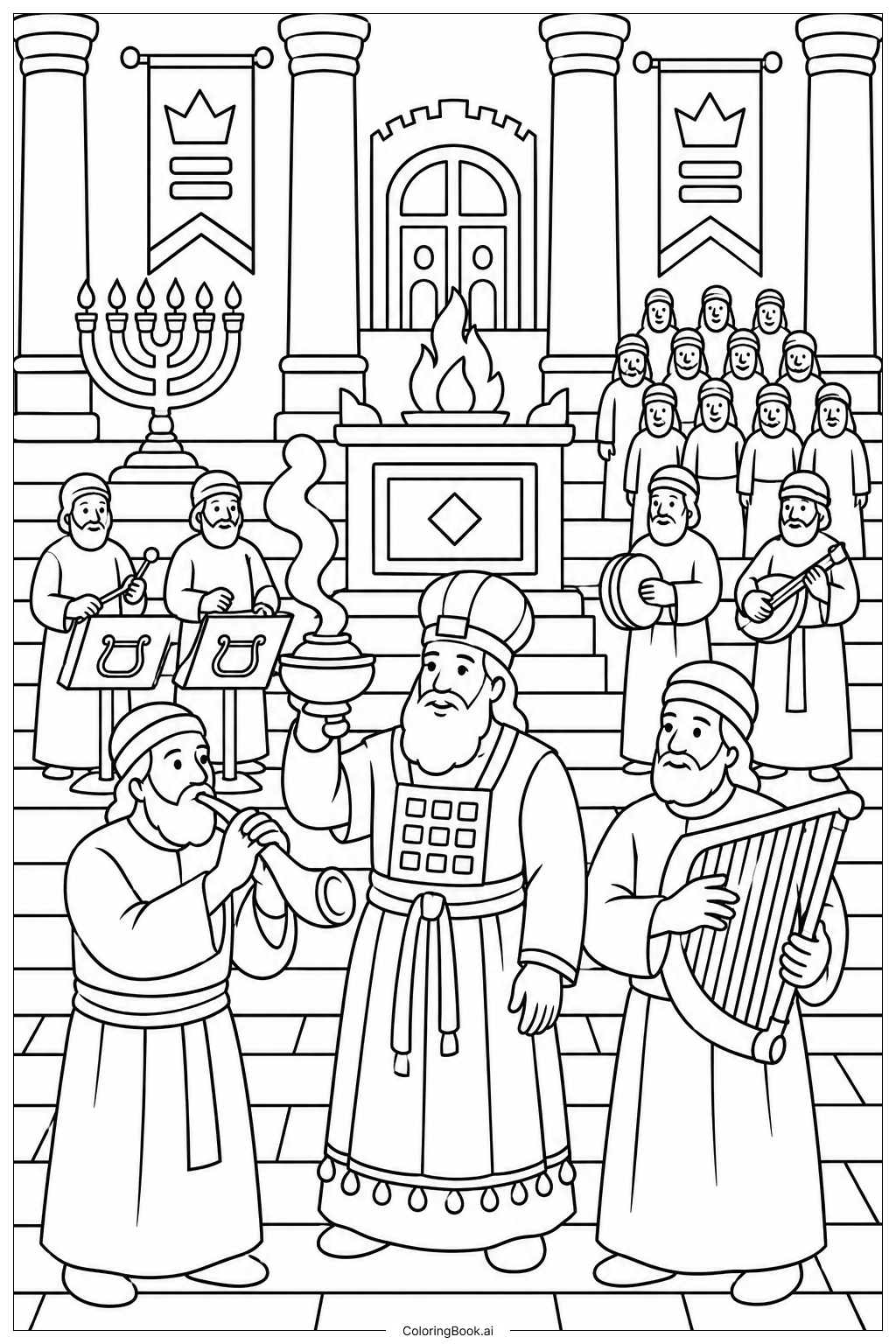
Start with the High Priest's robes. The outer robe, called the me'il, is traditionally blue, so use a rich sky blue or deep cobalt. The ephod over it can be done in gold, sky blue, purple, and scarlet red. For the breastplate, use twelve different colors to represent each of the twelve gemstones — try red, green, blue, yellow, purple, orange, and more. Color the turban white and add a bright gold band across the front. The censer can be golden or bronze, with soft orange and yellow for the glowing coals and pale gray for the rising smoke. For the Temple walls and pillars, use warm stone tones like tan, beige, and light brown. Add depth with shading in soft gray. Keep the background calm and neutral so the High Priest stands out as the focal point. Take your time with the breastplate — it is the most colorful and exciting part of the whole image.
Coloring challenges: Which parts are difficult to color and need attention for High Priest With Incense Beis Hamikdash coloring page?
• Intricate Vestment Details: The High Priest's garments are layered and highly detailed, with multiple overlapping sections including the robe, ephod, breastplate, and sash. Keeping each layer visually distinct requires careful color selection and steady hands, especially where the edges of different garments meet closely.
• Breastplate Gemstones: The breastplate contains twelve individual gemstone settings, each representing one of the twelve tribes of Israel. Each stone should ideally be a different color. Coloring these tiny squares neatly without bleeding into the surrounding gold frame is one of the most precise challenges in the image.
• Incense Smoke Effect: The wisps of smoke rising from the censer are delicate, curving lines that require a light touch. Achieving a soft, translucent look for the smoke using pencils or markers takes patience. Blending light gray with white or leaving areas uncolored can help create a realistic, airy smoke effect.
• Gold Accents Throughout: Many elements — the breastplate, the crown on the turban, the censer, and various decorative borders — should appear golden. Maintaining a consistent and believable gold tone across so many different parts of the image, without it looking flat or muddy, is a real coloring challenge.
• Temple Architecture Background: The pillars, walls, and stone floors of the Beis Hamikdash in the background require careful shading to give a sense of depth and three-dimensional space. Using multiple tones of the same color family, such as light tan and warm brown, helps suggest stonework without overwhelming the central figure.
Benefits of coloring books: Advantages of drawing High Priest With Incense Beis Hamikdash coloring page
Coloring this image of the High Priest in the Beis Hamikdash offers a rich and meaningful experience for children and Adults alike. It introduces young colorists to the beauty and significance of Jewish history and tradition in an accessible, hands-on way. As they carefully fill in the details of the sacred vestments and Temple setting, children develop fine motor skills and hand-eye coordination, especially when working on small details like the breastplate gemstones and the curling incense smoke.
The image also encourages focus and patience. Because so many elements require careful attention — layered garments, tiny gems, delicate smoke wisps — colorists learn to slow down and work methodically. This kind of mindful, detail-oriented activity is a great way to build concentration skills.
For older Boys and Girls, the image sparks curiosity about the role of the Kohen Gadol, the significance of each garment, and the layout of the Holy Temple. It becomes more than just a coloring activity — it becomes a gentle introduction to history, culture, and spiritual concepts.
For Adults, this page offers a calming, meditative experience. The intricate details provide a satisfying creative challenge, and the subject matter carries deep spiritual meaning. Coloring it can be a reflective, even inspiring activity that connects the colorist to a rich and ancient tradition.