Coloring tips: How to color Festival Of Sukkot At Beis Hamikdash coloring page well?
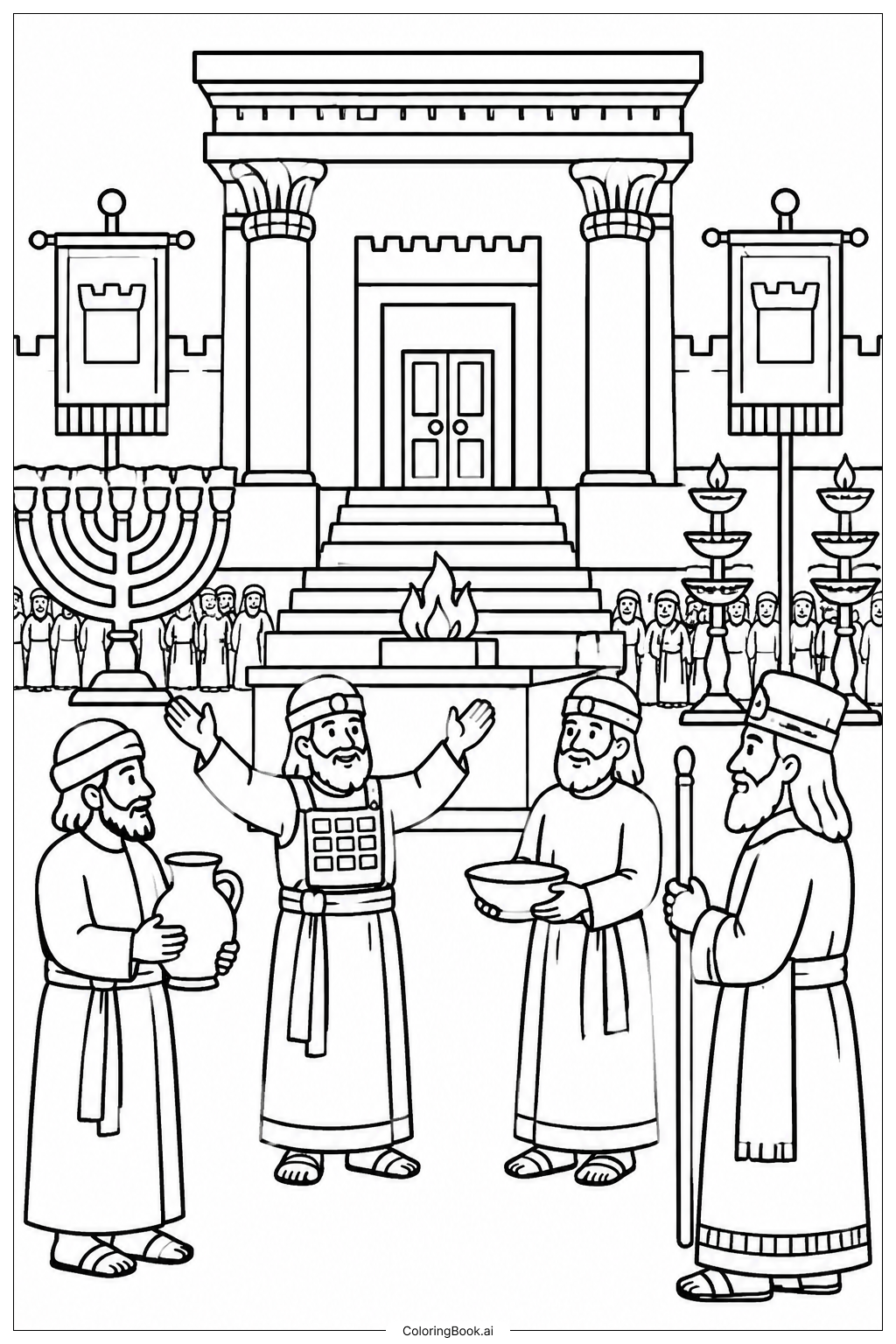
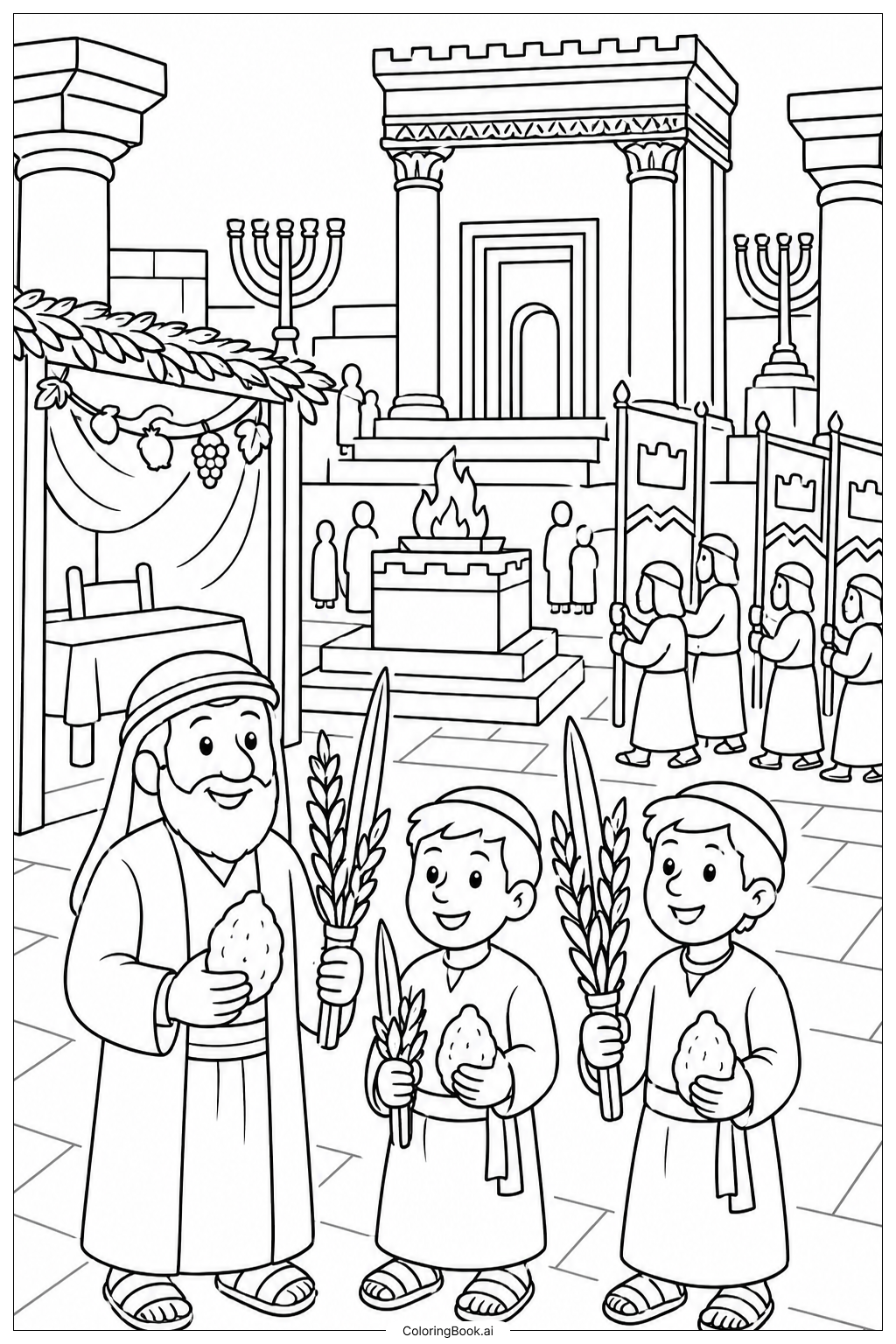
Start with the large Temple building in the background. Use warm golden and sandy tan shades for the stone walls and columns to give the Beis Hamikdash a majestic look. For the sky behind the Temple, try a soft blue or sunset orange to set a warm, festive mood. Color the sukkah walls in light brown or wood tones, and fill the hanging decorations with bright reds, oranges, yellows, and greens to show ripe fruits and fresh leaves. The people's robes look great in earthy tones like cream, brown, and deep blue. Use bright green for the lulav palm branch and a cheerful yellow for the etrog citrus fruit. Add small pops of color to jewelry, sandals, and clothing edges to bring each figure to life. Kids can keep colors simple and bold, while older colorists can try shading to add depth and texture to the stonework and fabric folds. There is no wrong way — have fun with it!
Coloring challenges: Which parts are difficult to color and need attention for Festival Of Sukkot At Beis Hamikdash coloring page?
• Temple Architecture Details: The Beis Hamikdash features many intricate architectural elements such as layered columns, carved arches, and decorative stonework. Staying within these fine lines requires a steady hand and a sharp colored pencil or fine-tip marker. Rushing through these sections may cause colors to bleed into neighboring areas and reduce the overall impact of the grand structure.
• Sukkah Decorations and Foliage: The sukkah roof and hanging decorations involve overlapping leaves, branches, and fruits of various shapes and sizes. Coloring these areas without muddying the colors together takes patience. Try working from the background elements forward, allowing each layer to dry before moving to the next, especially if using markers or watercolors.
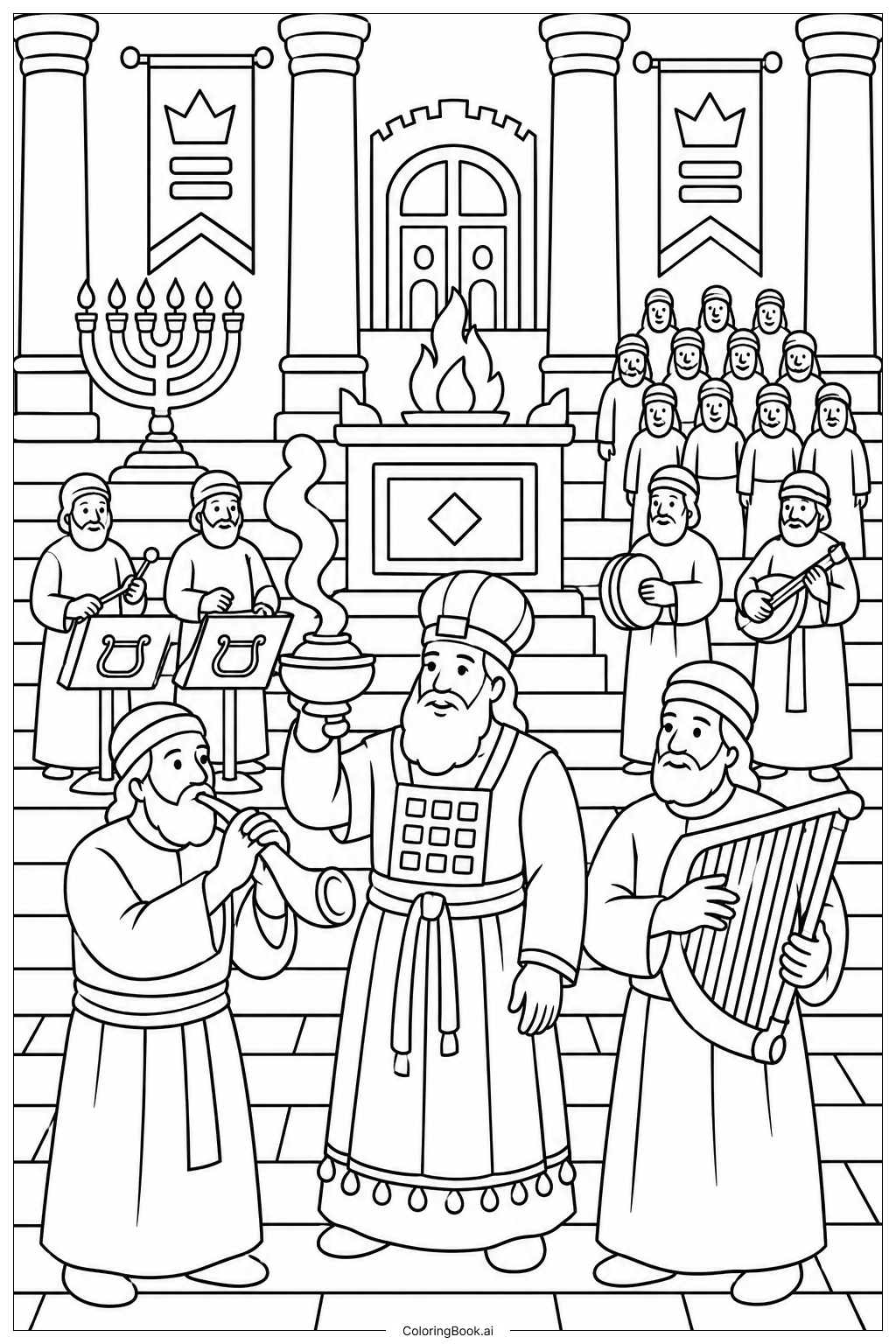
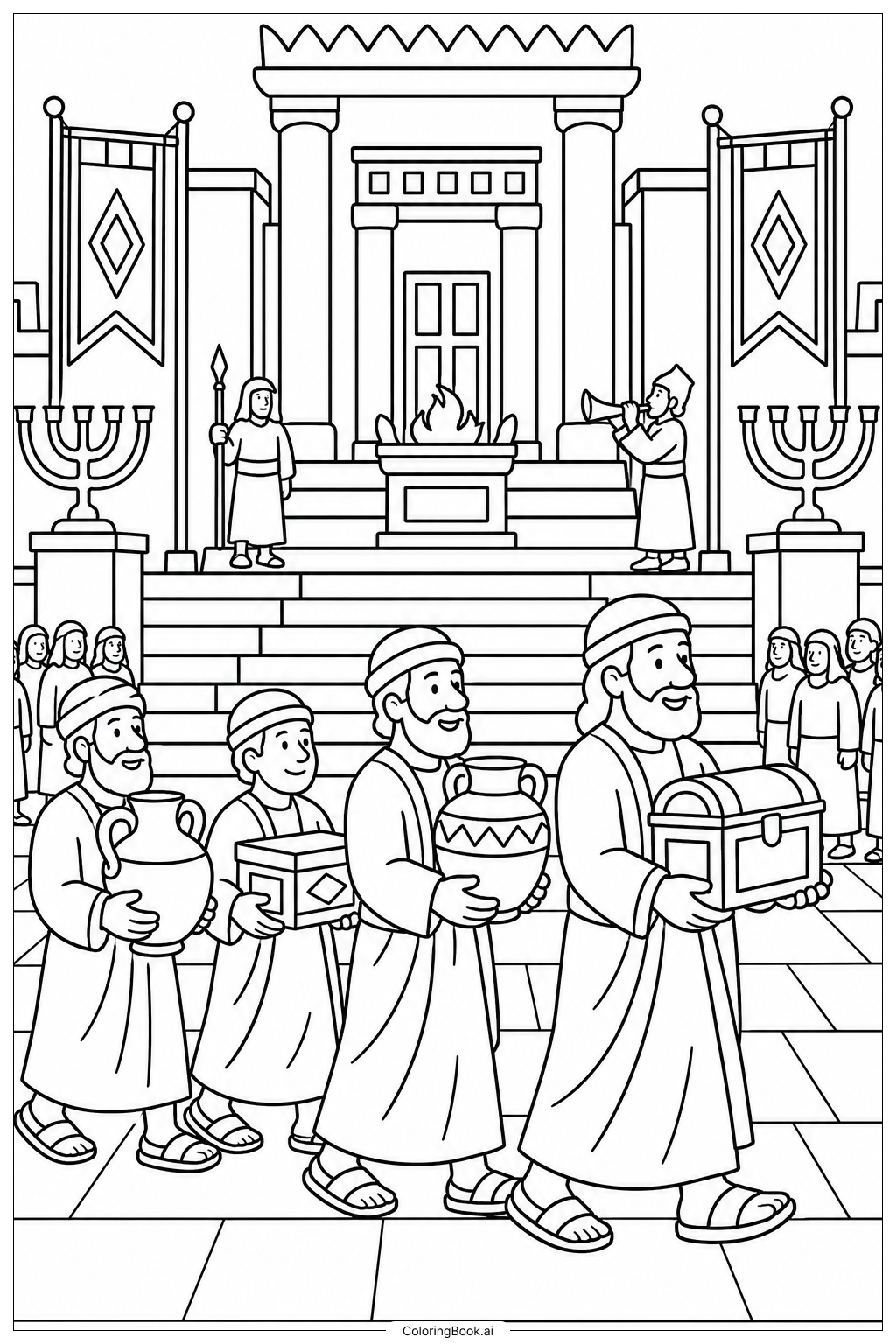
• Crowd of Figures and Robes: Multiple figures appear in the scene, each wearing flowing robes with folds and drapes. Distinguishing one person from another using color variety is important. Choosing a range of complementary tones for each figure's clothing helps separate them visually and adds life to the crowd scene.
• The Four Species: The lulav, etrog, hadassah, and aravah are small but significant details held by the figures. These items are close together and require precise coloring to make each one look distinct. Using different shades of green for the leaves and a clear yellow for the etrog will help each element stand out clearly.
• Foreground and Background Depth: Balancing light and dark tones across the foreground crowd and the background Temple is one of the bigger challenges. Using lighter shades for the distant Temple and richer, deeper tones for the closer figures creates a natural sense of depth and perspective that makes the whole scene feel alive.
Benefits of coloring books: Advantages of drawing Festival Of Sukkot At Beis Hamikdash coloring page
Coloring this Festival of Sukkot at Beis Hamikdash page offers a wonderful mix of creative, educational, and personal benefits for children and adults alike. As you color, you naturally learn about Jewish history and tradition, exploring the meaning of the Sukkot holiday and the significance of the ancient Beis Hamikdash in a hands-on, visual way. This makes the activity both fun and meaningful.
For younger children, working through the various details of the scene helps build fine motor skills and hand-eye coordination. Choosing colors and filling in different sections encourages creative thinking and decision-making in a low-pressure environment.
For older kids and adults, the complexity of the architectural elements and crowd scene offers a satisfying challenge. Focusing on shading, depth, and color harmony turns the page into a genuine artistic project that builds patience and concentration.
The act of coloring itself is calming. It gives the mind a chance to slow down, reduce stress, and enter a relaxed, focused state. Many people find repetitive coloring motions to be meditative and soothing.
Sharing the finished page with family or using it as part of a holiday celebration adds a social and cultural dimension. It becomes a conversation starter about heritage, faith, and the beauty of tradition. Overall, this is a coloring experience that nourishes creativity, culture, and calm all at once.