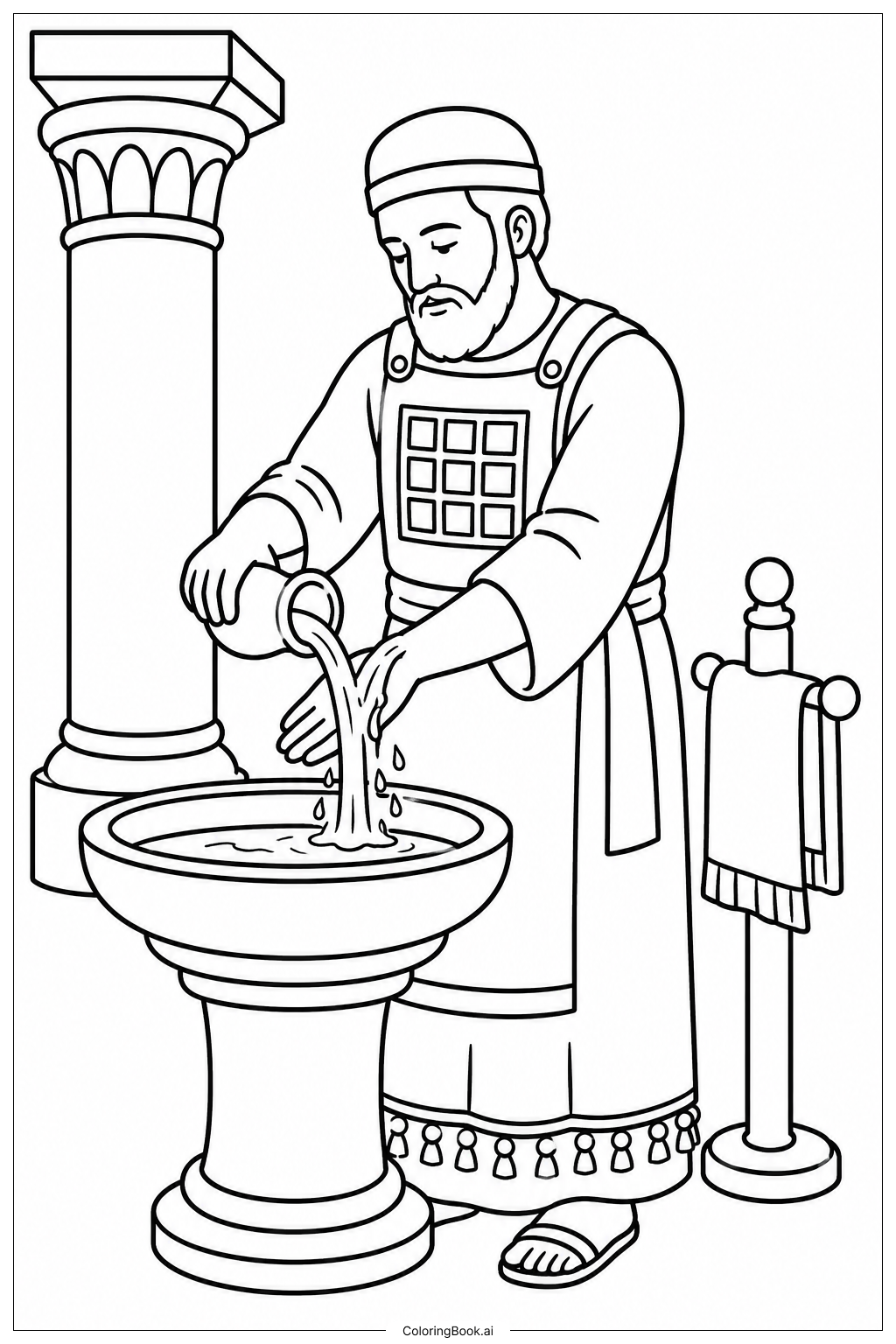
Coloring tips: How to color Cleansing Ritual At Beis Hamikdash coloring page well?
Start with the priest's robes. Use white for the base linen garments and add soft gold or cream tones for the outer vestments. The large bronze laver can be colored in warm copper and bronze shades. For the temple columns and stone flooring, try light gray, beige, or sandy tones to suggest aged stone. Add gentle shadows with a slightly darker shade of the same color to give depth to the archways and carved surfaces. The ritual vessels nearby can be colored in gold or silver. Keep the background sky soft and bright, using pale blue or warm yellow to suggest a clear, holy day. Encourage children to take their time with the finer details and enjoy the peaceful, thoughtful process of bringing this sacred scene to life.
Coloring challenges: Which parts are difficult to color and need attention for Cleansing Ritual At Beis Hamikdash coloring page?
• Priestly Garments and Layering: The priest's robes have multiple layers, including a linen tunic, a belt, and an outer garment. Keeping each layer visually distinct using subtle color variations requires patience and a careful hand. Young colorists may find it tricky to stay within the fine boundary lines separating each fabric layer.
• Bronze Laver Surface Details: The large ceremonial basin features curved surfaces and decorative engravings. Capturing the metallic sheen of bronze using standard coloring tools is challenging. Blending copper, brown, and orange tones smoothly across a curved shape takes practice and color awareness.
• Stone Architecture and Columns: The temple columns and floor tiles contain repeating geometric and carved patterns. Coloring these consistently without losing the sense of depth and dimension requires careful attention. It is easy to accidentally color adjoining sections the same tone, flattening the three-dimensional feel of the stonework.
• Ritual Vessels and Small Objects: The smaller objects arranged in the scene, such as bowls, jugs, and stands, have intricate outlines and narrow spaces between them. Using fine-tipped tools to fill these tiny areas cleanly without smudging nearby sections is a real coloring challenge, especially for younger children.
• Overall Tonal Balance: Because much of the scene relies on earthy, neutral tones like stone gray, cream, and bronze, achieving a balanced and visually appealing result without making the image look flat or muddy is the biggest overall challenge. Colorists must thoughtfully vary their shades to keep the composition lively and harmonious.
Benefits of coloring books: Advantages of drawing Cleansing Ritual At Beis Hamikdash coloring page
Coloring this image of the Cleansing Ritual At Beis Hamikdash offers a wonderful blend of creative, educational, and personal benefits for children and adults alike. As colorists work through the detailed scene, they naturally improve their fine motor skills and hand-eye coordination, especially when navigating the intricate outlines of garments, vessels, and stonework. The activity also encourages patience and focused attention, helping children develop concentration in a relaxed and enjoyable way. Learning about the sacred spaces and rituals of the Beis Hamikdash through art makes history and tradition feel tangible and meaningful. Children can connect with a rich cultural and spiritual heritage while expressing themselves creatively. For adults, the rhythmic process of coloring detailed architectural and ceremonial elements provides a calming, meditative experience that can reduce stress and quiet the mind. The image also sparks curiosity and meaningful conversations about ancient traditions, faith, and the importance of ritual in daily life. Whether used in a classroom, at home, or during a religious study session, this coloring page is a gentle and enriching way to explore history and spirituality through the simple joy of color.