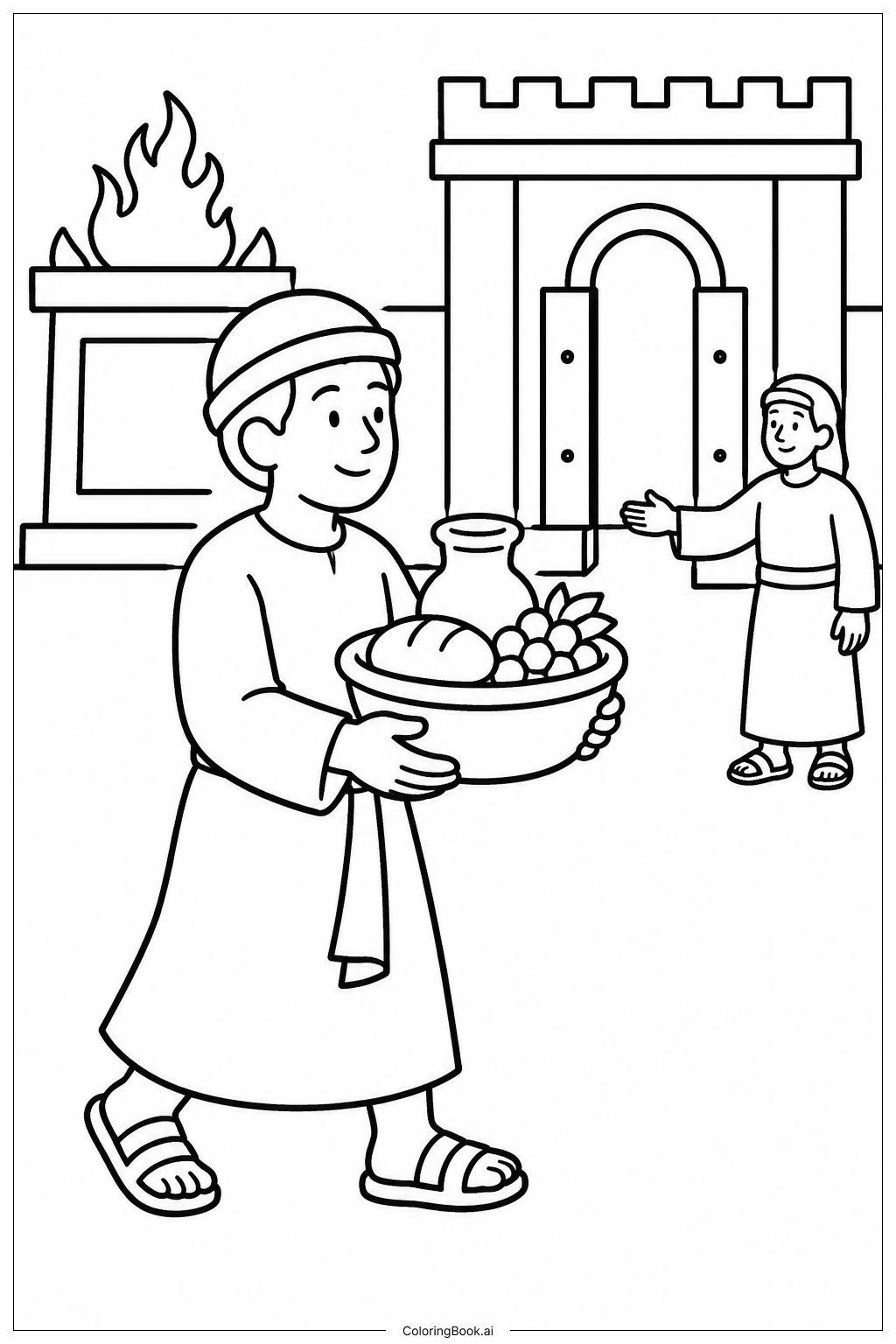
Coloring tips: How to color Carrying Offerings at the Beis Hamikdash coloring page well?
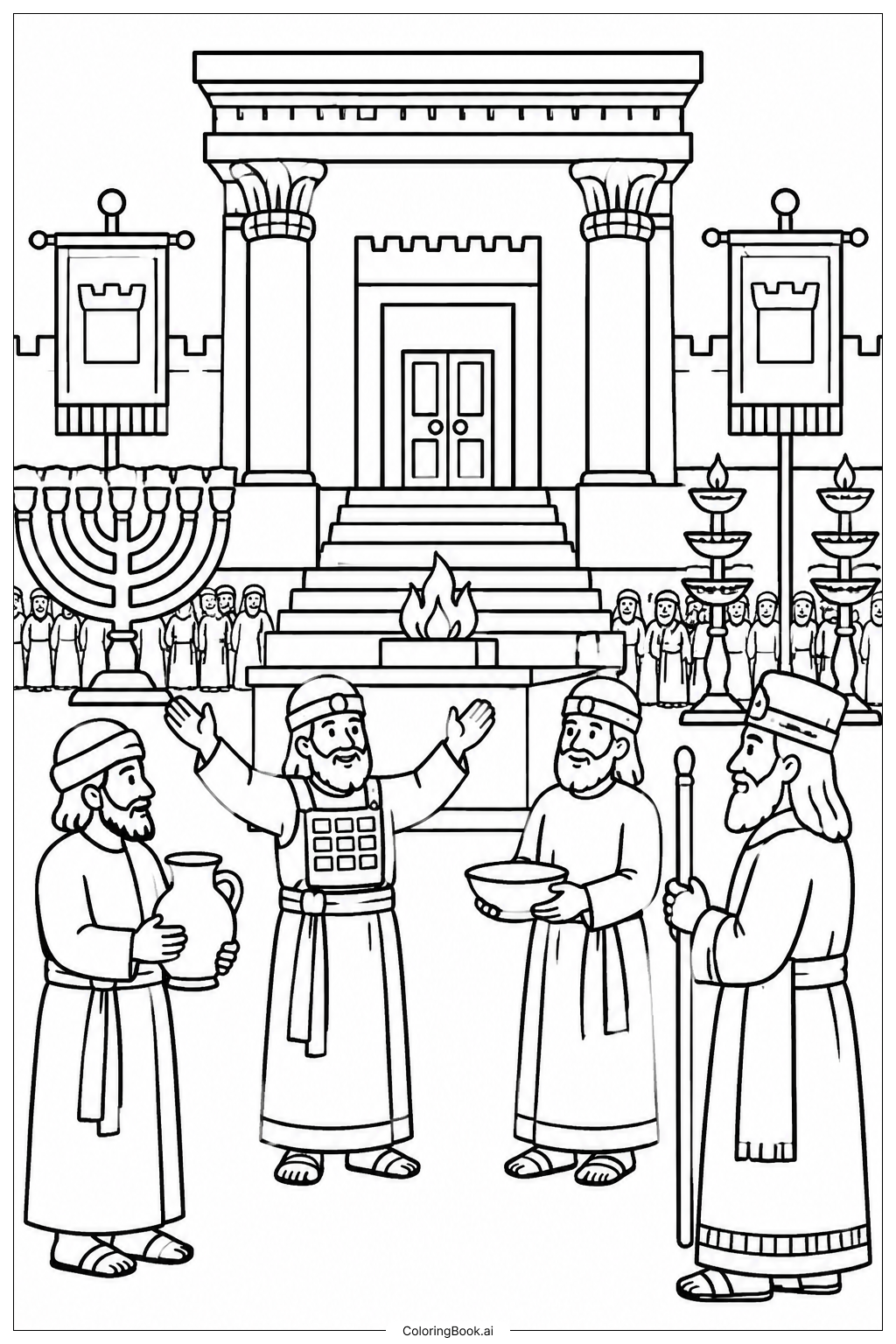
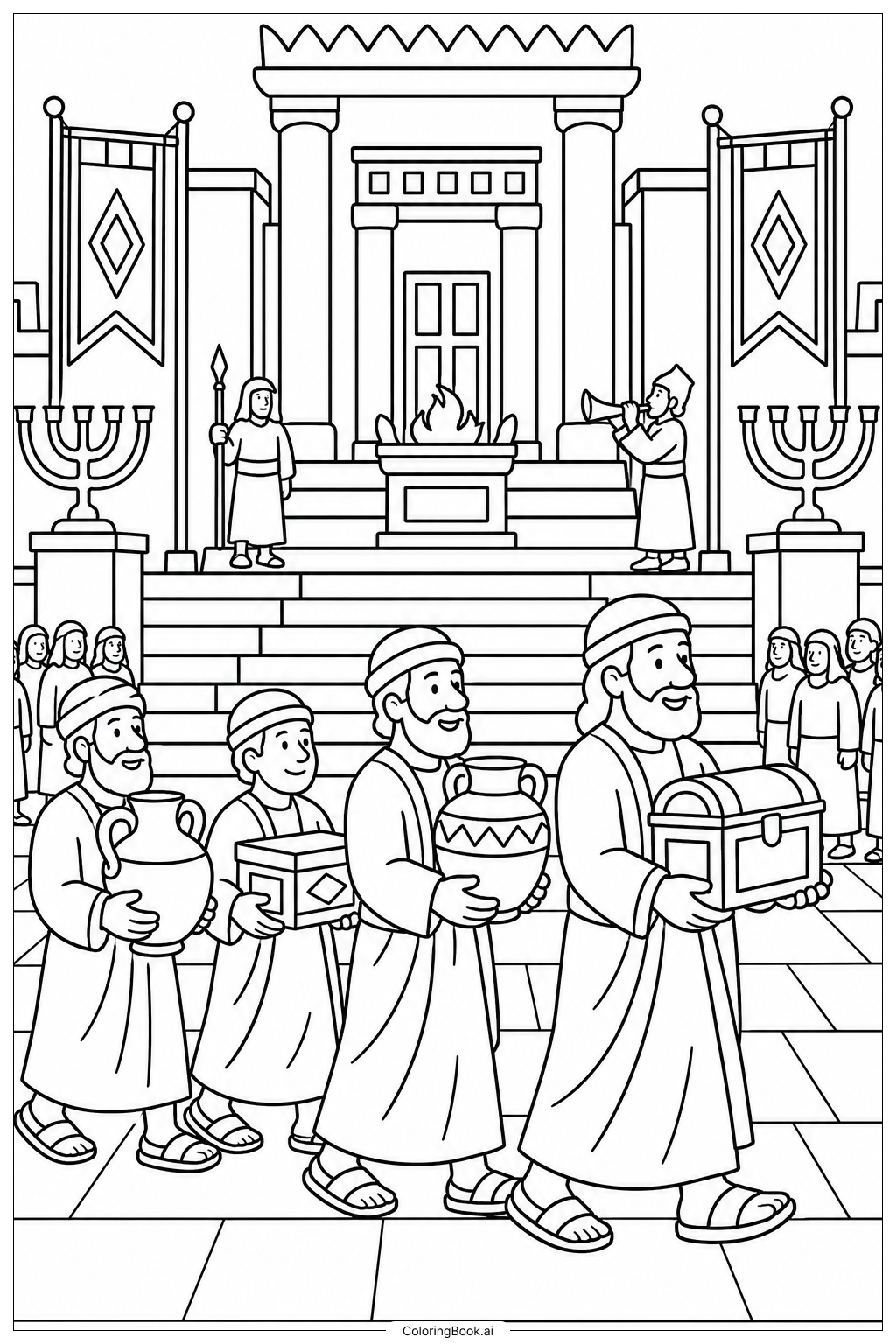
Start with the sky and stone background using soft blues, warm tans, and sandy beige tones to set a calm, ancient atmosphere. Use creamy white and gold for the Temple columns and walls to give them a grand, holy feel. For the priestly robes, try deep blues, rich purples, and warm reds — colors closely associated with Temple service garments. Add golden yellow to the vessels, trays, and decorative trim on the clothing. The offerings themselves, such as fruits and grain, can be colored in warm oranges, yellows, and soft greens. Use light brown and gray for the stone floor and pathways. Take your time with the figures' faces and hands, using soft peachy skin tones. Keep your colors consistent throughout the scene to create a unified, reverent mood that honors the beauty and holiness of the Beis Hamikdash.
Coloring challenges: Which parts are difficult to color and need attention for Carrying Offerings at the Beis Hamikdash coloring page?
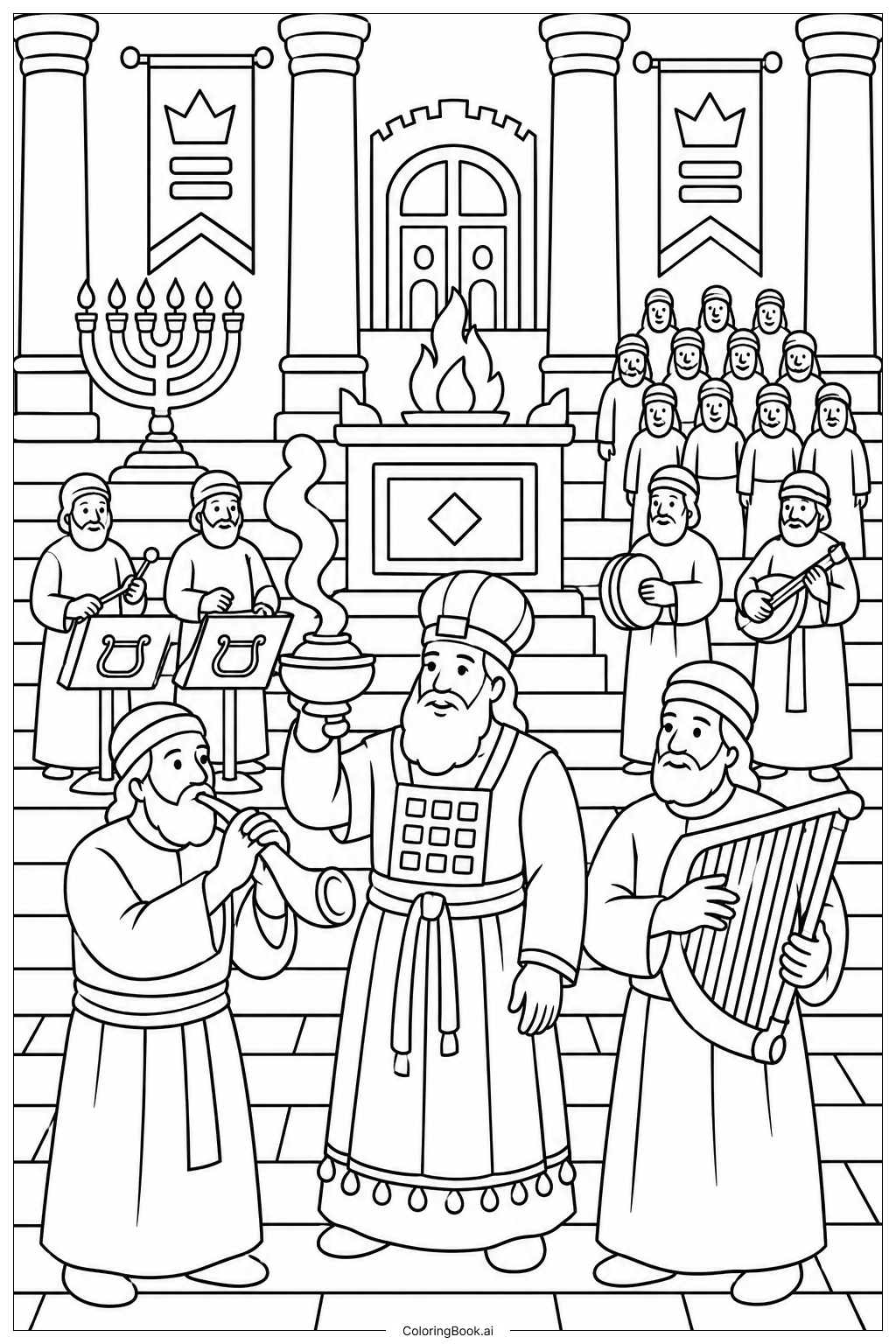
• Intricate Garment Details: The priestly and ceremonial robes are filled with fine folds, layered fabric, and decorative borders. Staying within the small lines of each garment section requires patience and a sharp, fine-tipped coloring tool. Using colored pencils rather than markers will help achieve better control in these tight areas.
• Complex Architectural Background: The Temple columns, archways, and stone walls have many overlapping lines and geometric patterns. Deciding where one surface ends and another begins can be tricky. It helps to lightly plan your color zones before filling them in, so the architecture reads clearly and does not get muddled.
• Small Vessel and Offering Details: The trays, bowls, and offering items are relatively small within the overall scene. Coloring them neatly without bleeding into surrounding areas demands a steady hand. Fine-tipped tools or sharpened pencils work best for these miniature elements.
• Maintaining Color Harmony Across Figures: With multiple figures in the scene, keeping a consistent color palette across all of them can be challenging. It is easy for the image to feel scattered if each figure uses completely different colors. Choosing two or three main robe colors and repeating them thoughtfully across the group helps create visual unity.
• Balancing Light and Shadow on Stone Surfaces: The stone pathways and walls benefit from subtle shading to look three-dimensional. Applying a single flat color can make these surfaces look dull. Layering a slightly darker tone along edges and corners, while keeping the centers lighter, adds depth and makes the setting feel more realistic and immersive.
Benefits of coloring books: Advantages of drawing Carrying Offerings at the Beis Hamikdash coloring page
Coloring this scene from the Beis Hamikdash offers a wonderful blend of creative, educational, and spiritual benefits for children and families alike.
On a creative level, the rich variety of textures in this image — flowing robes, carved stone, ornate vessels — gives colorists the chance to practice blending, shading, and working with a wide range of colors. These skills build fine motor control and artistic confidence over time.
Educationally, engaging with this image sparks curiosity about Jewish history and tradition. As children color, parents and teachers can share stories about the Temple service, the meaning of offerings, and the significance of the Beis Hamikdash in Jewish life. This makes coloring an interactive learning experience, not just a quiet activity.
From a mindfulness perspective, the focused, detailed nature of this page encourages slow, deliberate work. Spending time on each small section helps children and adults alike practice patience, concentration, and calm — skills that carry over into daily life.
For Jewish families, this image also carries meaningful cultural and spiritual value. Bringing the scene to life with color can deepen a child's connection to heritage, tradition, and faith in a hands-on, joyful way. It turns a piece of history into something personal and memorable.